Argentina Macro Daily(Beta Mode)
MERVAL Slips as Global Commodities Decline
Market Snapshot
| Asset | Level | Change |
|---|---|---|
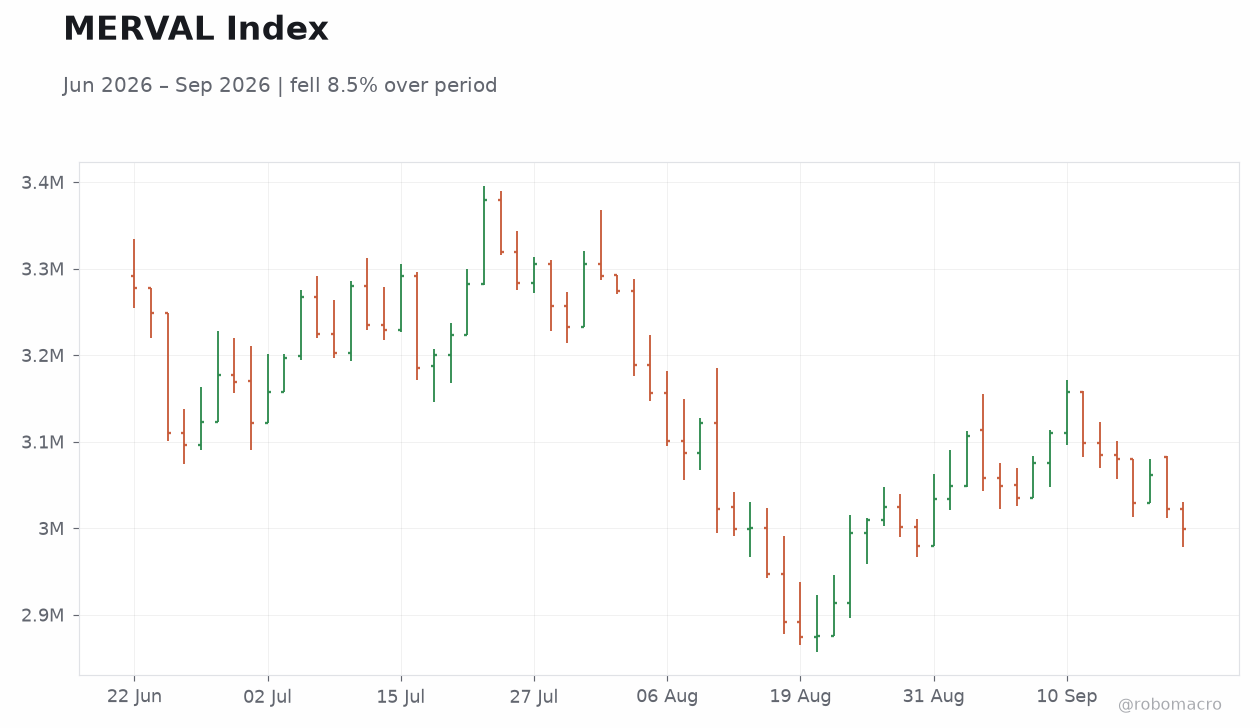
| MERVAL | 2,998,956.00 | -0.76% |
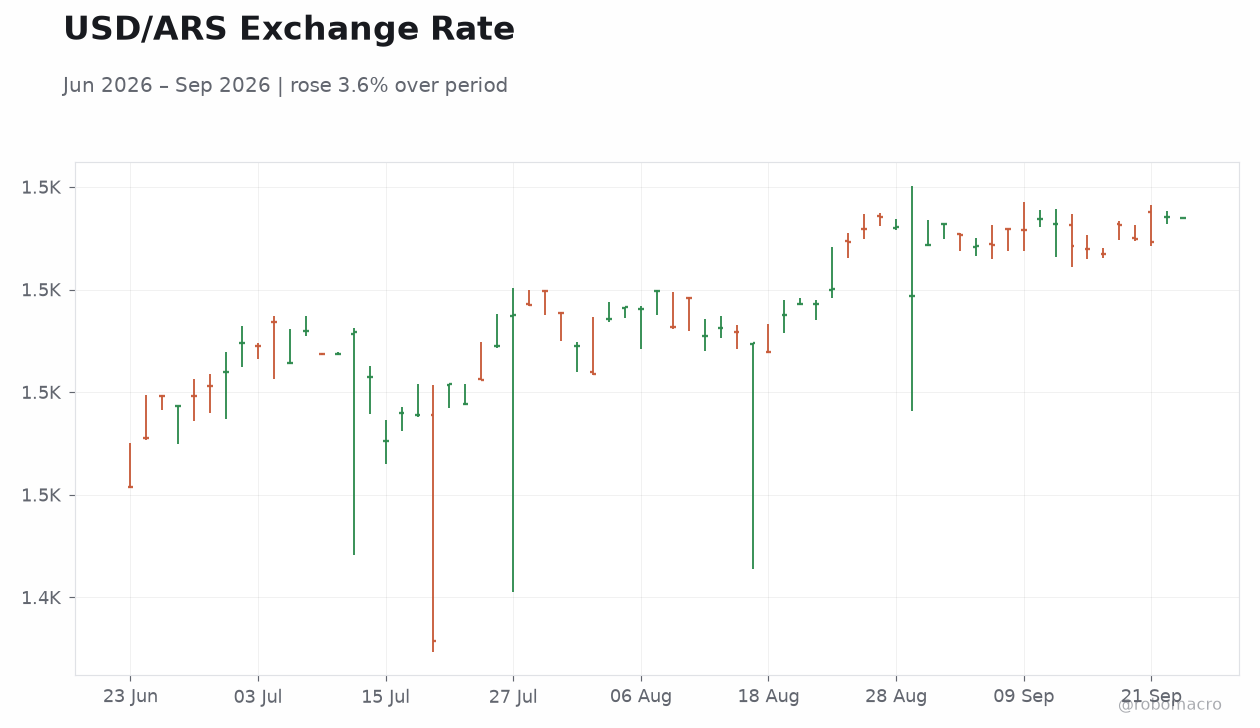
| USD/ARS | 1,514.00 | -0.02% |
| EUR/ARS | 1,730.92 | -0.29% |
| Gold | 4,355.90 | -0.47% |
| Brent Crude | 95.52 | -3.76% |
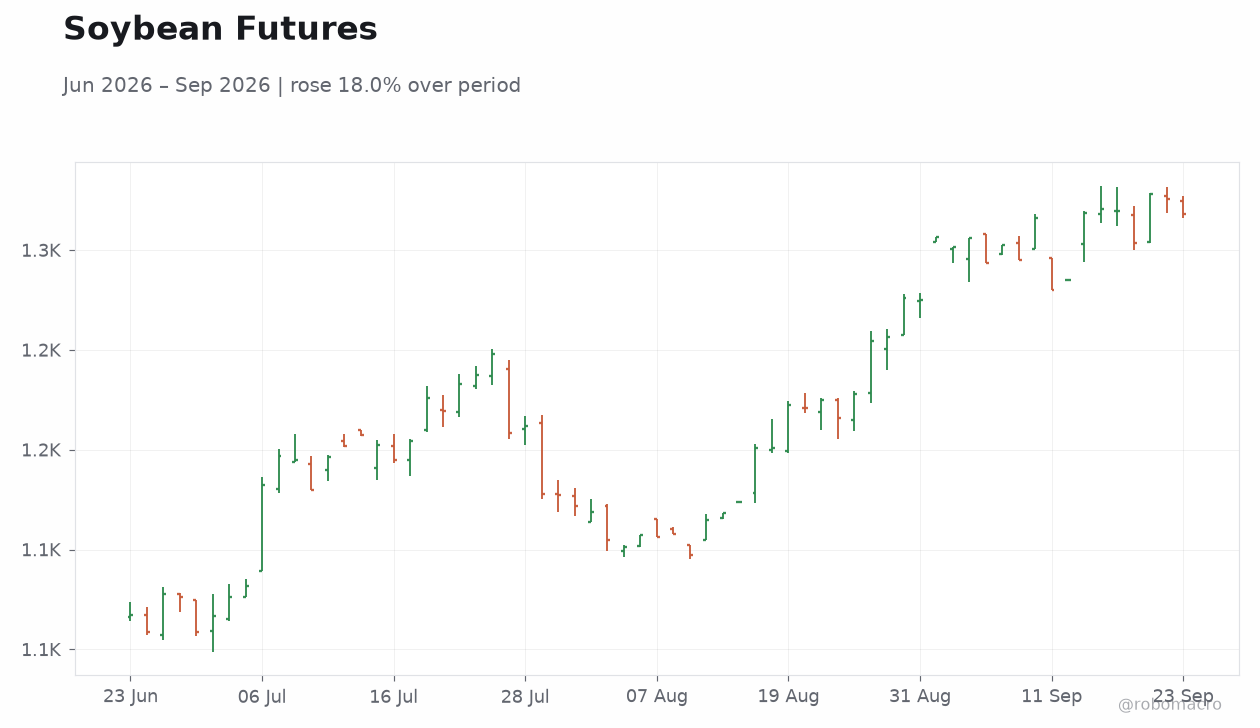
| Soybean | 1,318.00 | -0.57% |
| Bitcoin | 85,821.97 | -0.41% |
| Argentina 10Y | - | - |
Prior Economic Events
| Data | Prior | Cons | Actual |
|---|---|---|---|
| No events available | |||
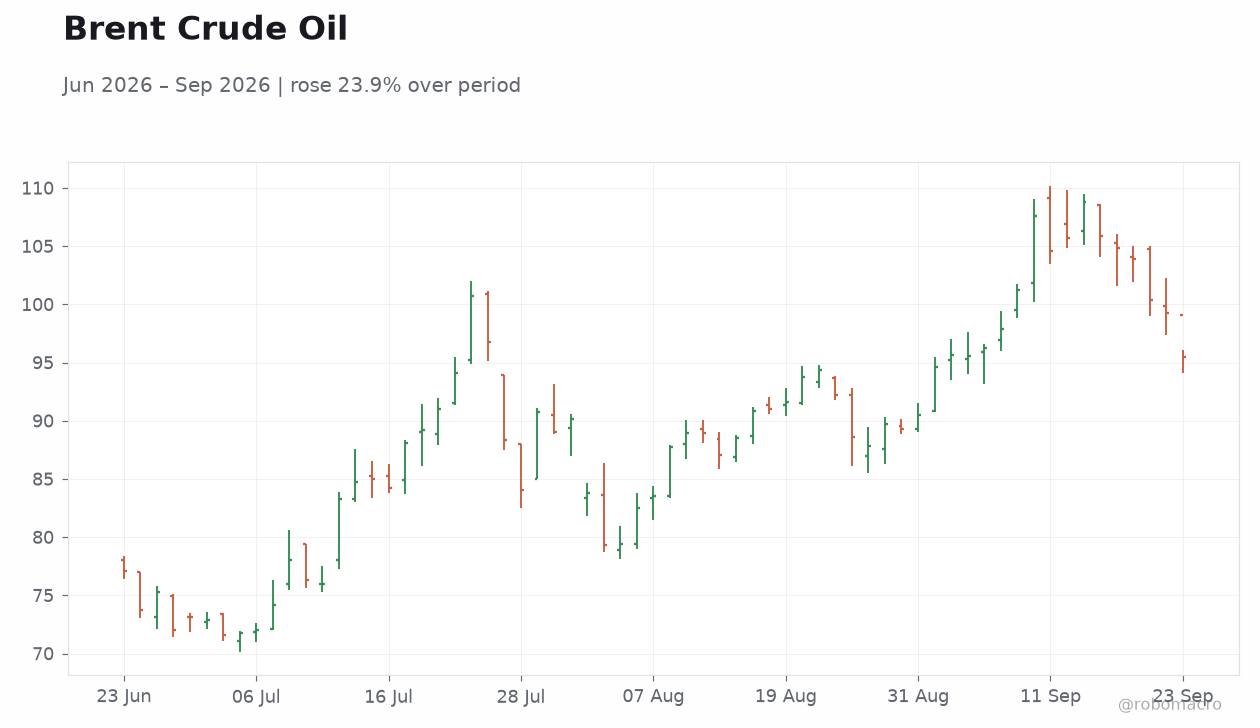 Brent Crude Oil | Type: market_hloc | USD/bbl: 95.5 (2026-09-23) | Range: 71.57–108.8 | Trend(5pt): 77.08,84.23,83.55,90.49,95.5
Today's Economic Events
| Data | Prior | Cons | Time |
|---|---|---|---|
| No events available | |||
- MERVAL falls 0.76% to 2,998,956 while USD/ARS holds at 1,514.00
- Argentina CPI YoY stands at 33.5% as of August 31 with no fresh prints
- Calendar remains empty through September 24, leaving markets data-light
Yesterday's Recap
Argentine equities closed lower on September 22 as the MERVAL index dropped 0.76% to 2,998,956. The peso showed resilience, with USD/ARS easing just 0.02% to 1,514.00 and EUR/ARS declining 0.29% to 1,730.92. Brent Crude’s 3.76% drop to 95.52 pressured energy-related sentiment, while soybean prices slipped 0.57% to 1,318.00, trimming export revenue expectations.
Gold’s 0.47% decline to 4,355.90 offered little offset for local portfolios. No economic releases appeared on the calendar, so price action reflected global commodity moves rather than domestic data. Bitcoin’s 0.41% fall to 85,821.97 added to the cautious tone across risk assets.
The Day Ahead
The schedule for September 23 and 24 lists zero Argentina-specific releases or policy events. Traders will therefore focus on external commodity prices and any BCRA communications that surface. Soybean and Brent levels remain key inputs for export and fiscal forecasts.
Global central-bank commentary from New Zealand and Australia could influence emerging-market risk appetite. Markets will watch for any signals on the next steps in fiscal consolidation or IMF program reviews.
Other Economic Notes
Inflation at 33.5% YoY continues to shape expectations for real interest rates and peso stability. Fiscal consolidation efforts gain importance as soybean export proceeds face pressure from lower international prices. The absence of new data leaves analysts reliant on monthly inflation trends and reserve accumulation metrics to gauge BCRA policy space.
External financing conditions tied to the IMF program stay central to near-term debt dynamics. Commodity revenue shortfalls could widen the fiscal gap if prices remain subdued.
Global Macro News
New Zealand’s central bank flagged risks that near-term inflation may exceed estimates as oil prices surge, according to Bloomberg. Australia’s central bank warned that inflation risks may be materialising, raising the prospect of tighter policy ahead. The Philippines central bank faces a possible final 25-basis-point hike amid lingering peso and inflation pressures.
↓ p.2