Argentina Macro Daily(Beta Mode)
Milei's UN Broadside Overshadows Quiet Markets
Market Snapshot
| Asset | Level | Change |
|---|---|---|
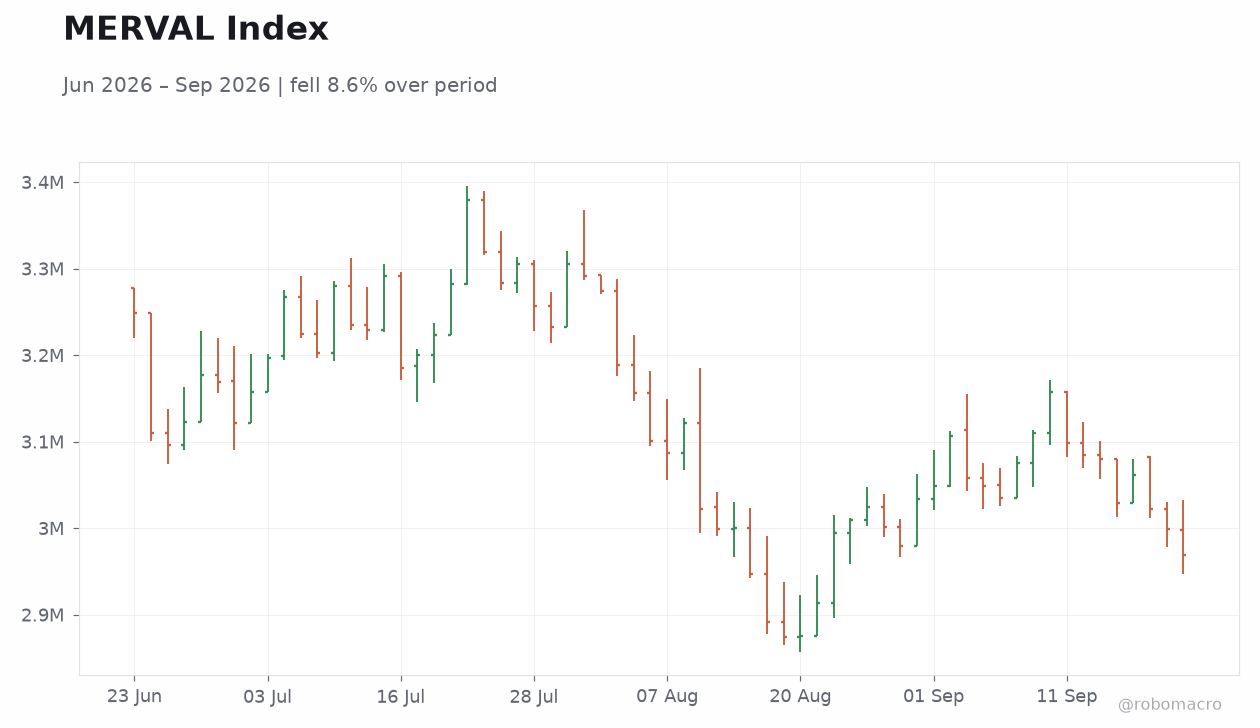
| MERVAL | 2,969,546.00 | -0.98% |
| USD/ARS | 1,515.50 | +0.08% |
| EUR/ARS | 1,725.24 | -0.47% |
| Gold | 4,296.20 | -0.51% |
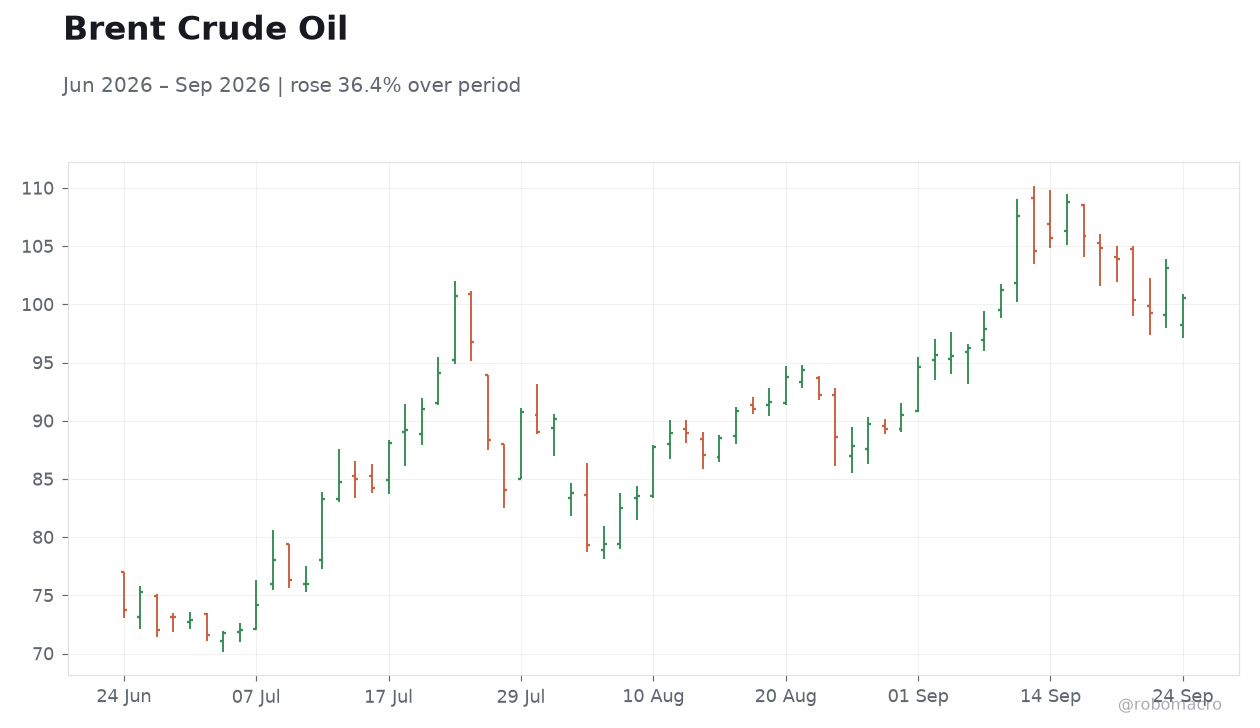
| Brent Crude | 100.69 | -2.32% |
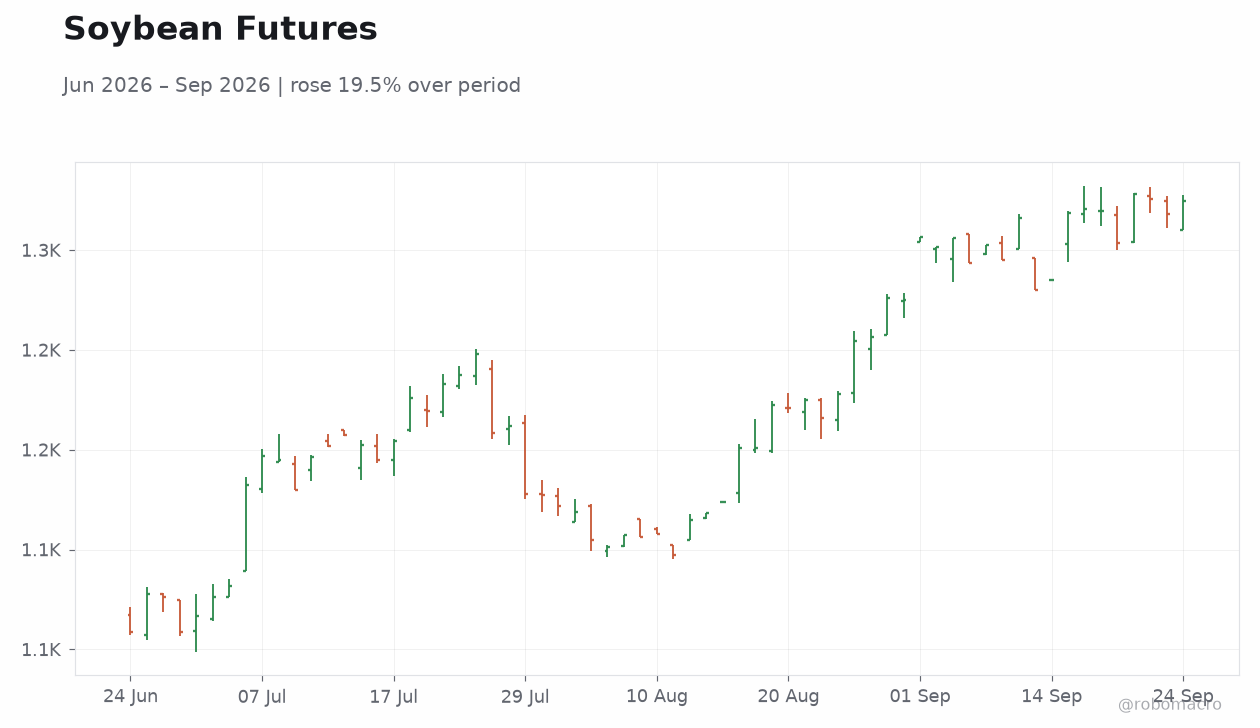
| Soybean | 1,324.25 | +0.47% |
| Bitcoin | 83,605.85 | -0.92% |
| Argentina 10Y | - | - |
Prior Economic Events
| Data | Prior | Cons | Actual |
|---|---|---|---|
| No events available | |||
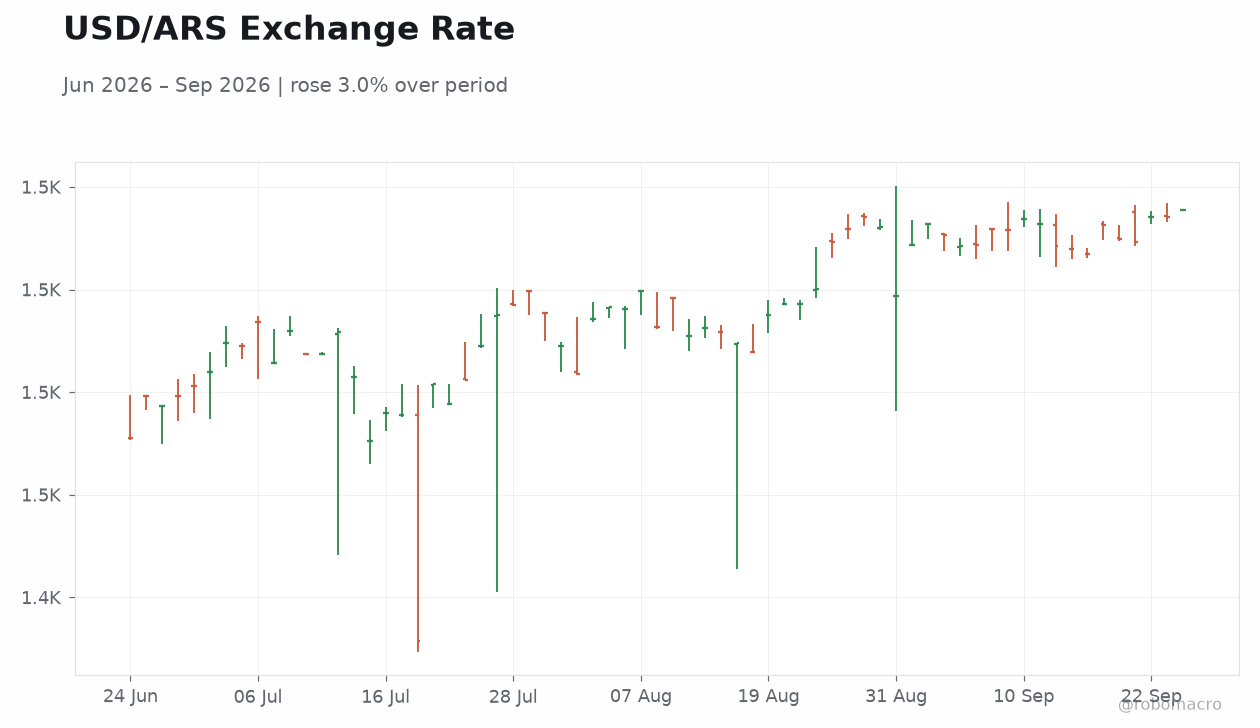 USD/ARS Exchange Rate | Type: market_hloc | ARS per USD: 1516 (2026-09-24) | Range: 1432–1516 | Trend(6pt): 1471,1476,1500,1499,1514,1516
Today's Economic Events
| Data | Prior | Cons | Time |
|---|---|---|---|
| No events available | |||
- MERVAL slips 0.98% to 2,969,546 as trading stays thin
- USD/ARS edges 0.08% higher to 1,515.50 while peso holds range
- Milei tells UN Argentina will act alone on Falklands dispute
Yesterday's Recap
Argentine markets recorded modest moves on an empty economic calendar. The MERVAL index declined 0.98% to finish at 2,969,546.00. USD/ARS advanced 0.08% to 1,515.50 while EUR/ARS eased 0.47% to 1,725.24.
President Javier Milei used his UN General Assembly speech to condemn the organisation and declare that Argentina would take matters into its own hands on the Falklands. Brent Crude fell 2.32% to 100.69 and soybeans rose 0.47% to 1,324.25. No inflation prints or reserve data appeared to shift expectations.
The session reflected steady local liquidity conditions with limited external flows. Gold eased 0.51% to 4,296.20 and Bitcoin declined 0.92% to 83,605.85, underscoring subdued risk appetite across asset classes.
The Day Ahead
No official data releases are scheduled for 24 or 25 September. Traders will focus on any follow-up comments from the Milei administration after the UN address. Commodity price swings in soybeans and oil will continue to influence export revenue expectations.
The absence of fresh statistics leaves BCRA policy expectations anchored to prior communications. Market participants will monitor peso liquidity and any Treasury bill auctions for signs of funding pressure. With zero events listed across the three-day window, attention stays on external drivers such as global bond yields and oil supply concerns.
Other Economic Notes
August CPI stood at 33.5% year-on-year, confirming the ongoing disinflation path. Fiscal consolidation remains central to restoring market access and supporting IMF programme compliance. Soybean export proceeds continue to provide the main source of hard-currency inflows.
Real wage recovery stays gradual and limits near-term consumption momentum. External buffers depend on sustained trade surpluses and limited debt issuance. The quiet domestic data calendar reinforces that reserve accumulation and exchange-rate stability remain the immediate policy priorities.
Global Macro News
Norway’s central bank raised its policy rate 25 basis points to 4.5% and left the door open for further tightening. ↓ p.2