Argentina Macro Daily(Beta Mode)
Poverty Rate Climbs to 32.3% Under Milei
Market Snapshot
| Asset | Level | Change |
|---|---|---|
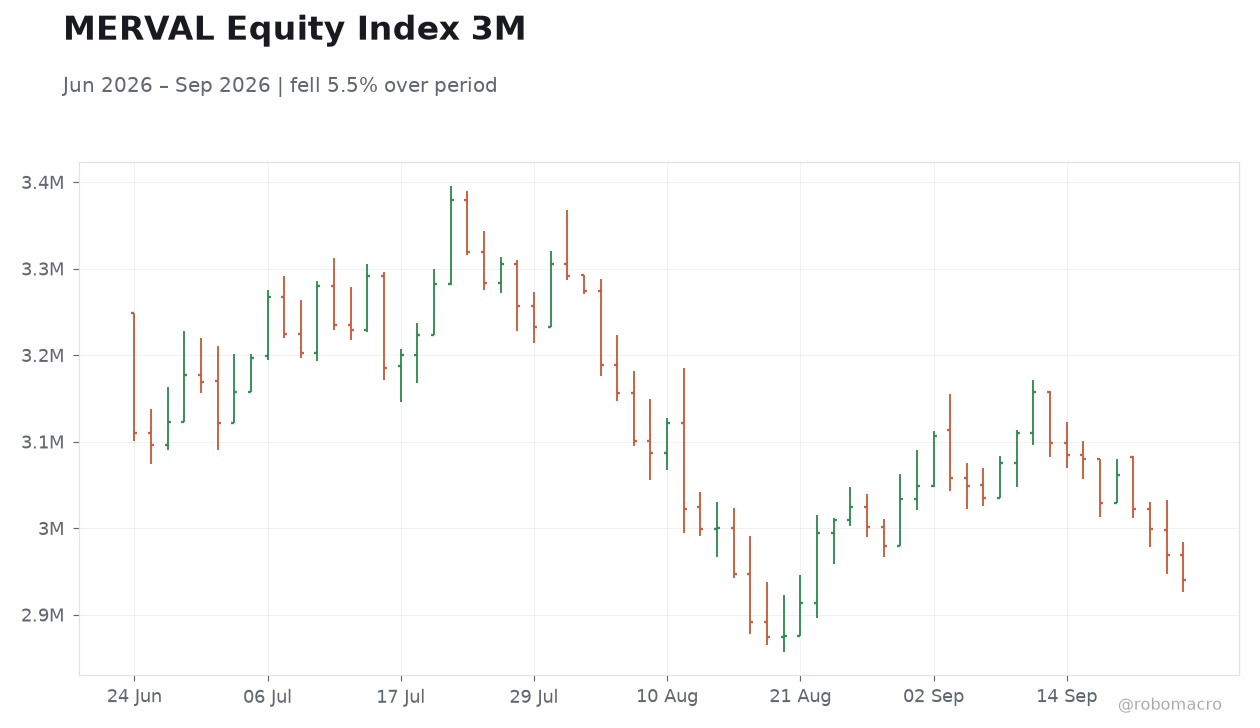
| MERVAL | 2,939,964.00 | -1.00% |
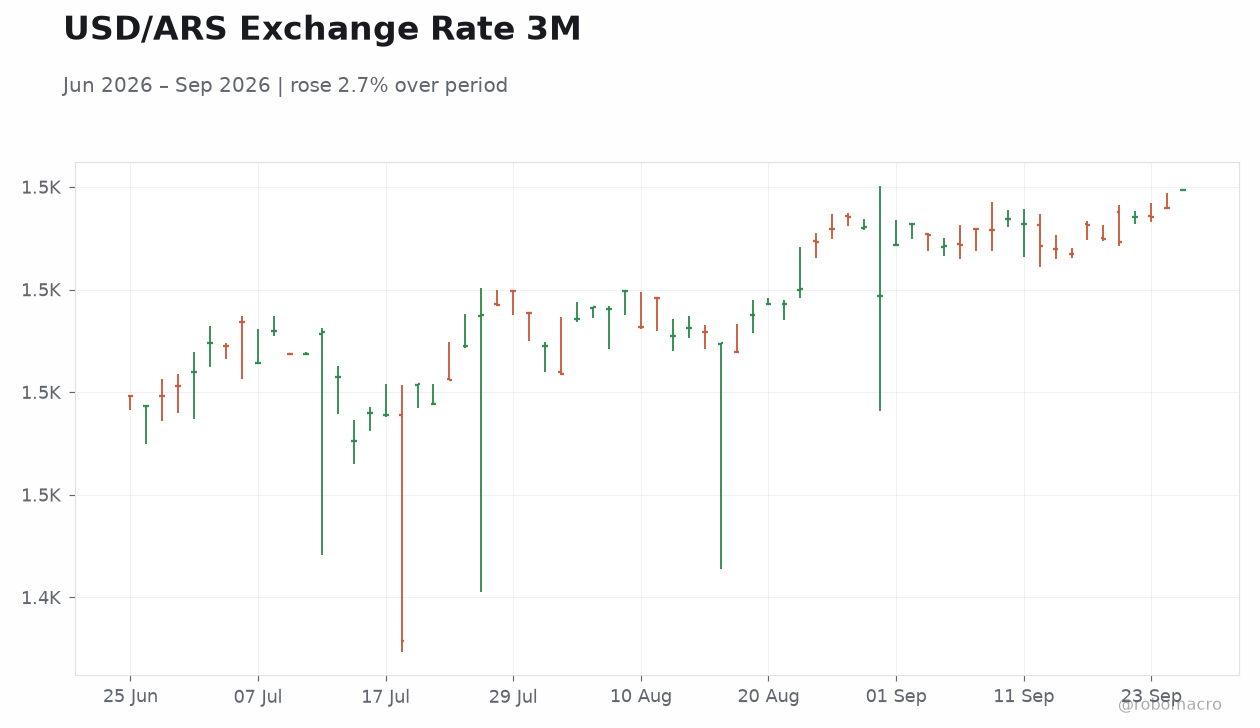
| USD/ARS | 1,519.50 | +0.23% |
| EUR/ARS | 1,727.58 | +0.12% |
| Gold | 4,329.60 | +0.74% |
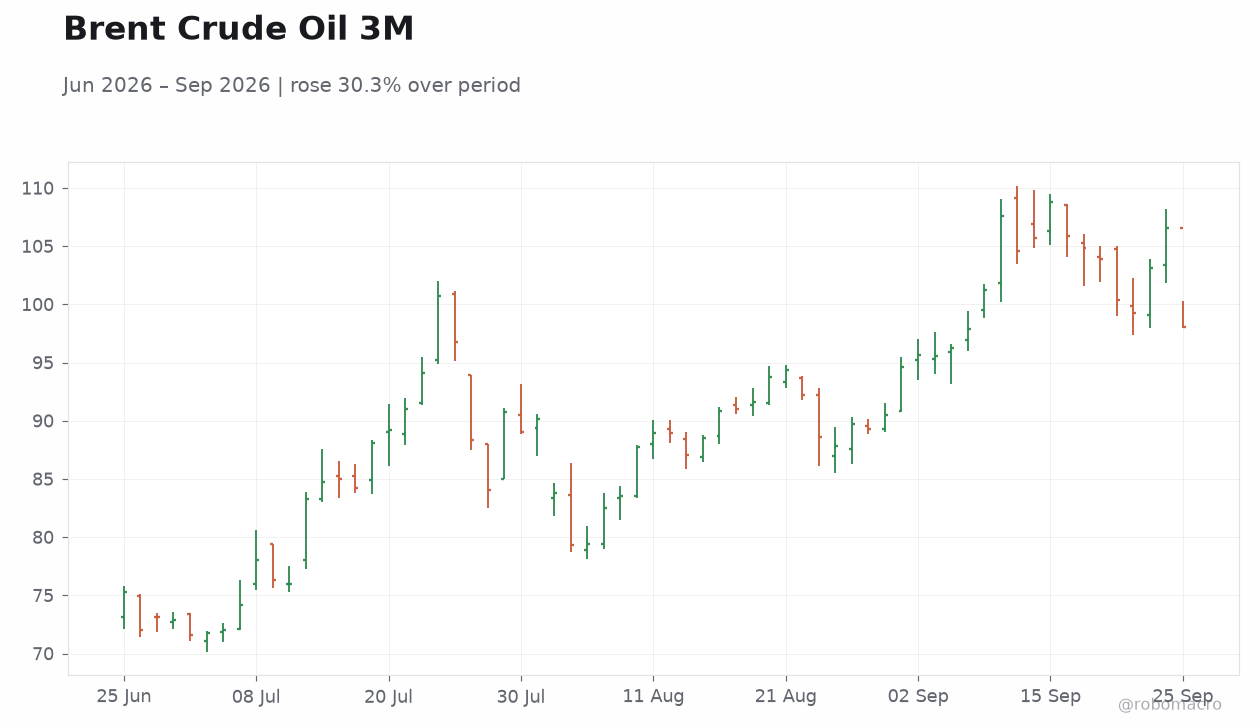
| Brent Crude | 97.98 | -8.09% |
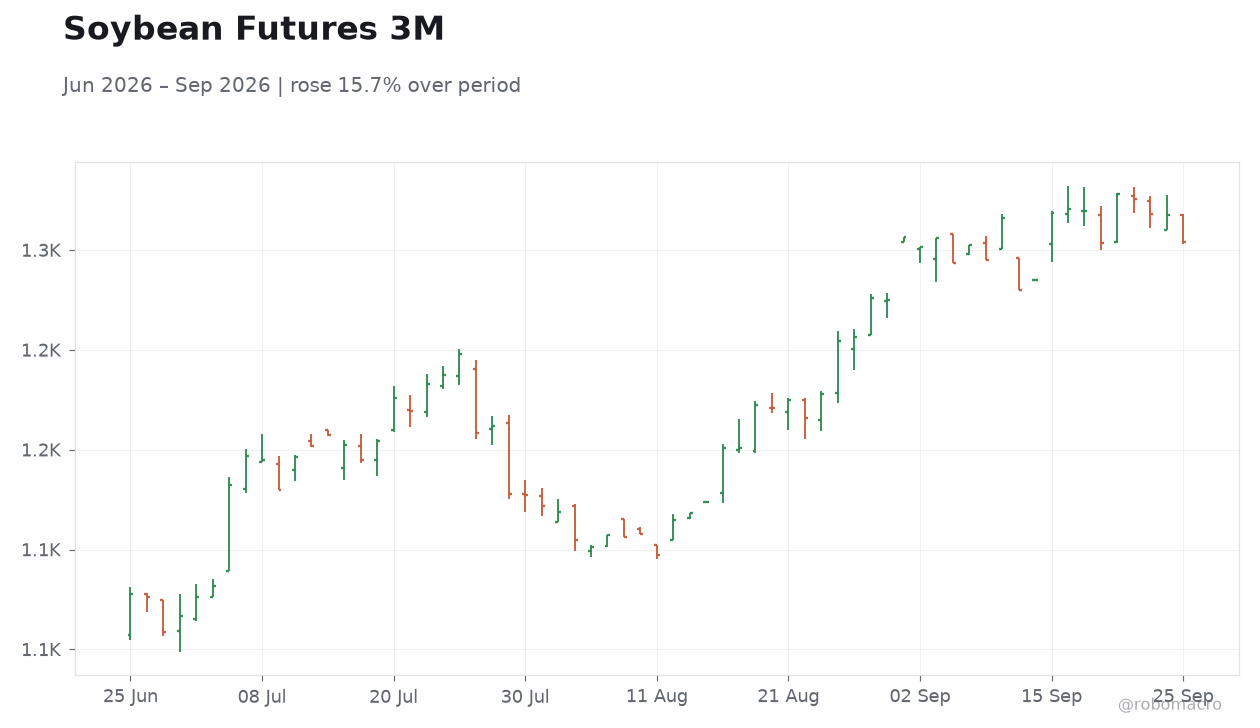
| Soybean | 1,304.50 | -0.99% |
| Bitcoin | 84,703.16 | +0.38% |
| Argentina 10Y | - | - |
Prior Economic Events
| Data | Prior | Cons | Actual |
|---|---|---|---|
| No events available | |||
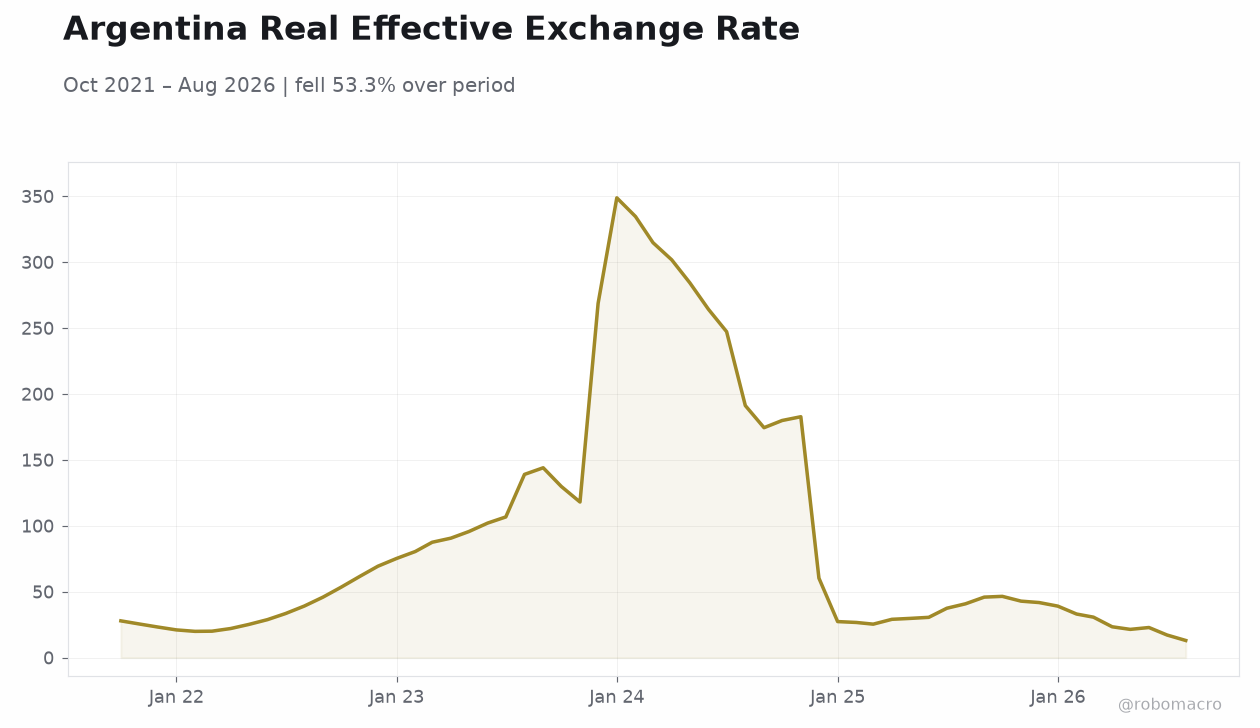 Argentina Real Effective Exchange Rate | Type: macro_line | Index: 13.05 (2026-08-01) | Range: 13.05–348.8 | Trend(6pt): 27.93,69.37,334.6,29.11,22.89,13.05
Today's Economic Events
| Data | Prior | Cons | Time |
|---|---|---|---|
| No events available | |||
- Argentina’s poverty rate rose to 32.3% in H1 2026 from 28.2% prior
- MERVAL fell 1% while USD/ARS gained 0.23% to 1,519.50
- Brent crude dropped 8.09% as soybean prices slipped 0.99%
Yesterday's Recap
Official statistics released on 24 September showed Argentina’s poverty rate climbing to 32.3% in the first half of 2026 from 28.2% in the previous six months. Extreme poverty increased to 7.5% from 6.3%, while 44.5% of children aged 14 and under were classified as poor. The MERVAL index closed at 2,939,964.00, down 1.00% on the session.
USD/ARS advanced 0.23% to 1,519.50 and EUR/ARS rose 0.12% to 1,727.58. Gold gained 0.74% to 4,329.60 while Brent crude fell sharply by 8.09% to 97.98. Soybean futures declined 0.99% to 1,304.50.
Argentina’s August CPI stood at 33.5% year-over-year, underscoring persistent price pressures that continue to erode real household incomes.
The Day Ahead
The economic calendar lists no data releases or policy events for 25 September. Markets will therefore focus on external drivers including global commodity prices and emerging-market flows. Soybean export proceeds remain a key watchpoint given their contribution to central-bank reserves.
Any movement in the peso will be monitored for signs of renewed pressure ahead of month-end fiscal payments. Investors are also tracking IMF programme reviews that could influence near-term financing conditions. Quiet domestic data flow leaves room for global risk sentiment to dictate local asset moves.
Other Economic Notes
Fiscal consolidation efforts under the current administration continue to face headwinds from rising poverty levels that may increase social spending demands. Soybean export volumes provide the main source of foreign-currency inflows and remain critical for reserve accumulation. The 33.5% year-over-year CPI print highlights the challenge of restoring price stability while output contracts.
Broader themes include the sustainability of the IMF programme and the pace of reserve rebuilding through trade surpluses. These factors will shape investor views on the durability of recent peso stability.
Global Macro News
Norway’s central bank raised its policy rate and signalled a possible further hike, adding to divergence among global central banks. Energy prices remain a key inflation risk across advanced economies according to recent WSJ reporting. ↓ p.2