Argentina Macro Daily(Beta Mode)
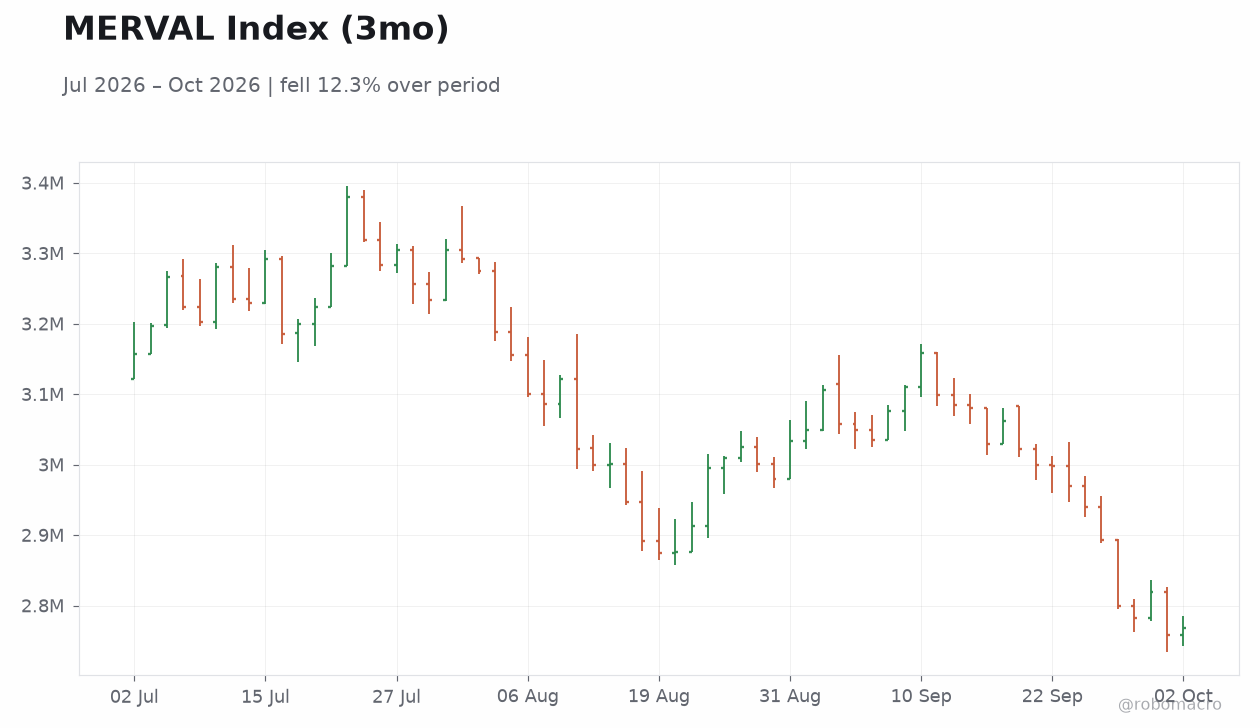
MERVAL Gains on Citizenship Investment Plan
Market Snapshot
| Asset | Level | Change |
|---|---|---|
| MERVAL | 2,767,663.00 | +0.32% |
| USD/ARS | 1,524.25 | -0.04% |
| EUR/ARS | 1,711.42 | -0.22% |
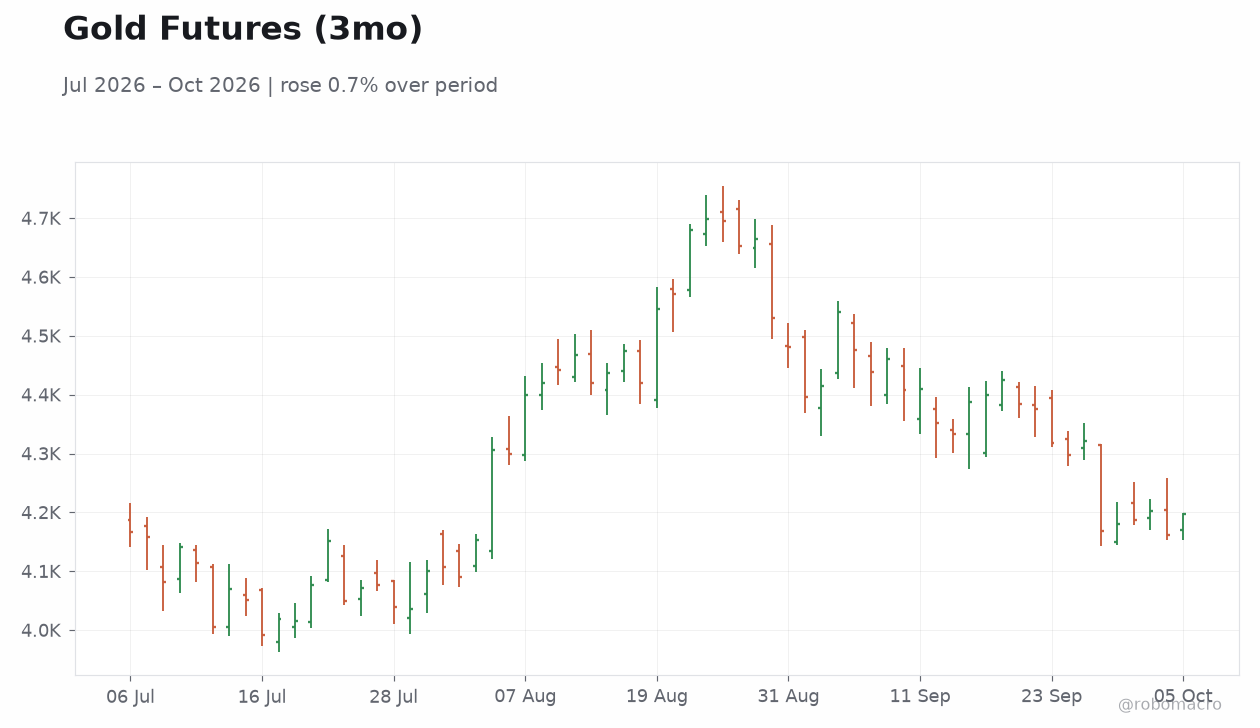
| Gold | 4,195.90 | +0.81% |
| Brent Crude | 102.23 | -0.02% |
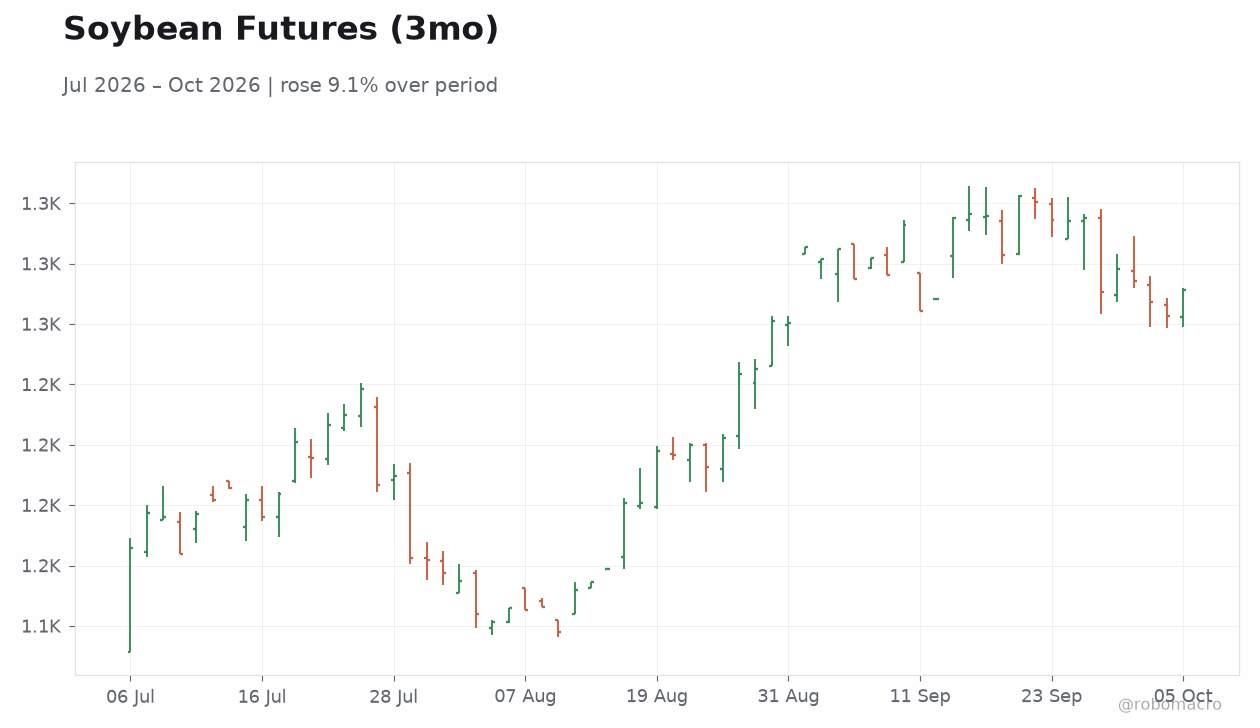
| Soybean | 1,290.00 | +0.92% |
| Bitcoin | 86,019.37 | -0.53% |
| Argentina 10Y | - | - |
Prior Economic Events
| Data | Prior | Cons | Actual |
|---|---|---|---|
| No events available | |||
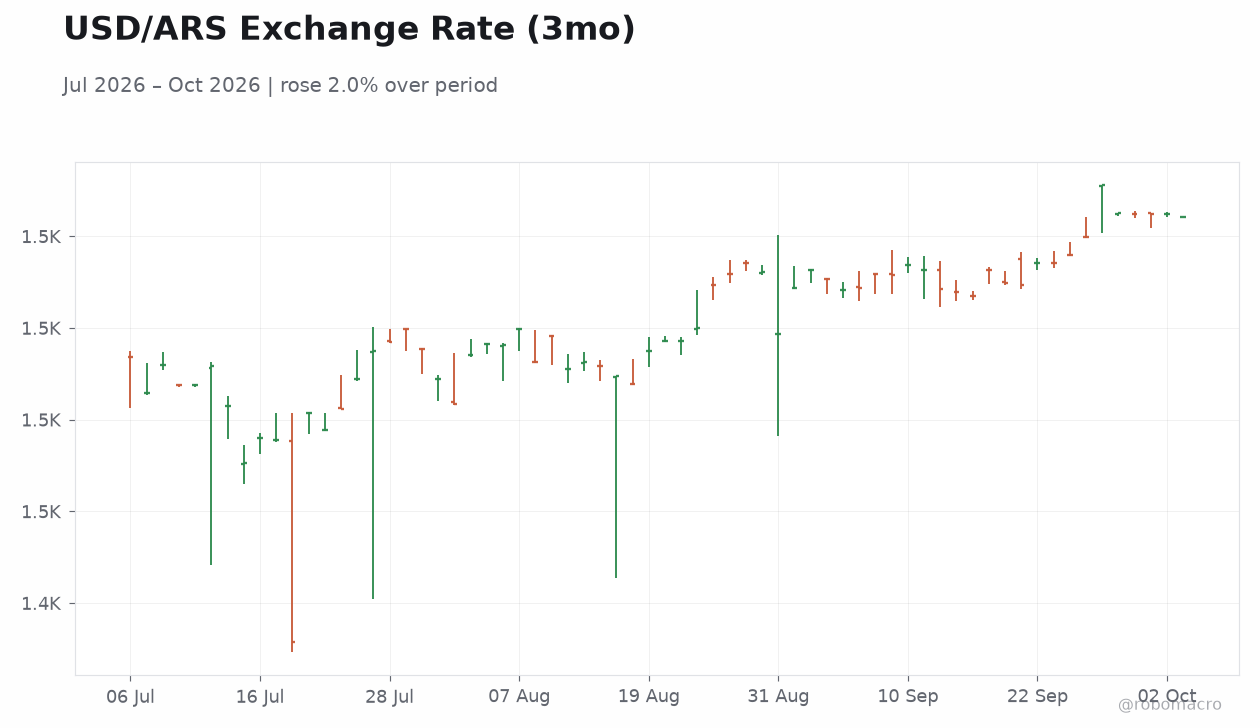 USD/ARS Exchange Rate (3mo) | Type: market_hloc | ARS per USD: 1524 (2026-10-05) | Range: 1432–1531 | Trend(6pt): 1494,1497,1495,1514,1525,1524
Today's Economic Events
| Data | Prior | Cons | Time |
|---|---|---|---|
| No events available | |||
- MERVAL rose 0.32% to 2,767,663 while USD/ARS eased 0.04% to 1,524.25.
- Argentina launched a $350,000 passports-for-investment scheme to attract foreign capital amid high debt.
- No economic data printed yesterday; CPI YoY stood at 33.5% as of August 2026.
Yesterday's Recap
Argentine equities advanced modestly with the MERVAL index closing at 2,767,663.00, up 0.32% on the session. The peso showed slight firmness as USD/ARS finished at 1,524.25, declining 0.04%, while EUR/ARS fell 0.22% to 1,711.42. Commodity moves offered mixed support, with soybean prices rising 0.92% to 1,290.00 and gold climbing 0.81% to 4,195.90, whereas Brent crude slipped 0.02% to 102.23.
No macroeconomic releases occurred on October 4, leaving the calendar empty and providing no fresh prints against consensus. The absence of data releases left markets focused on the new citizenship-by-investment program announced to draw wealthy foreigners and ease fiscal pressures. Broader equity and currency stability reflected limited domestic catalysts and steady external commodity demand.
The Day Ahead
October 5 carries no scheduled Argentine data releases or policy events, so trading will proceed without official prints. Tomorrow’s calendar is likewise empty, extending the quiet period into mid-week. Market participants will therefore monitor external commodity flows and any follow-up statements on the passports-for-investment scheme.
Attention may shift to soybean export volumes and fiscal consolidation signals in the absence of inflation or activity data. The BCRA is not expected to alter liquidity measures or issue new guidance until fresh statistics emerge.
Other Economic Notes
The $350,000 citizenship program mirrors initiatives in high-debt peers and aims to channel foreign capital into Argentina’s strained public finances. With CPI YoY at 33.5% through August, price pressures remain elevated and continue to shape household spending and real wage dynamics. Fiscal consolidation efforts under the current administration seek to narrow deficits while preserving primary surpluses, though debt sustainability hinges on sustained export receipts.
Soybean export competitiveness stays central to reserve accumulation and peso stability given the crop’s weight in the trade balance. The new investment scheme could supplement traditional capital inflows if regulatory clarity and tax incentives hold.