Argentina Macro Daily(Beta Mode)
MERVAL Surges as Peso Holds Steady
Market Snapshot
| Asset | Level | Change |
|---|---|---|
| MERVAL | 2,869,488.00 | +3.68% |
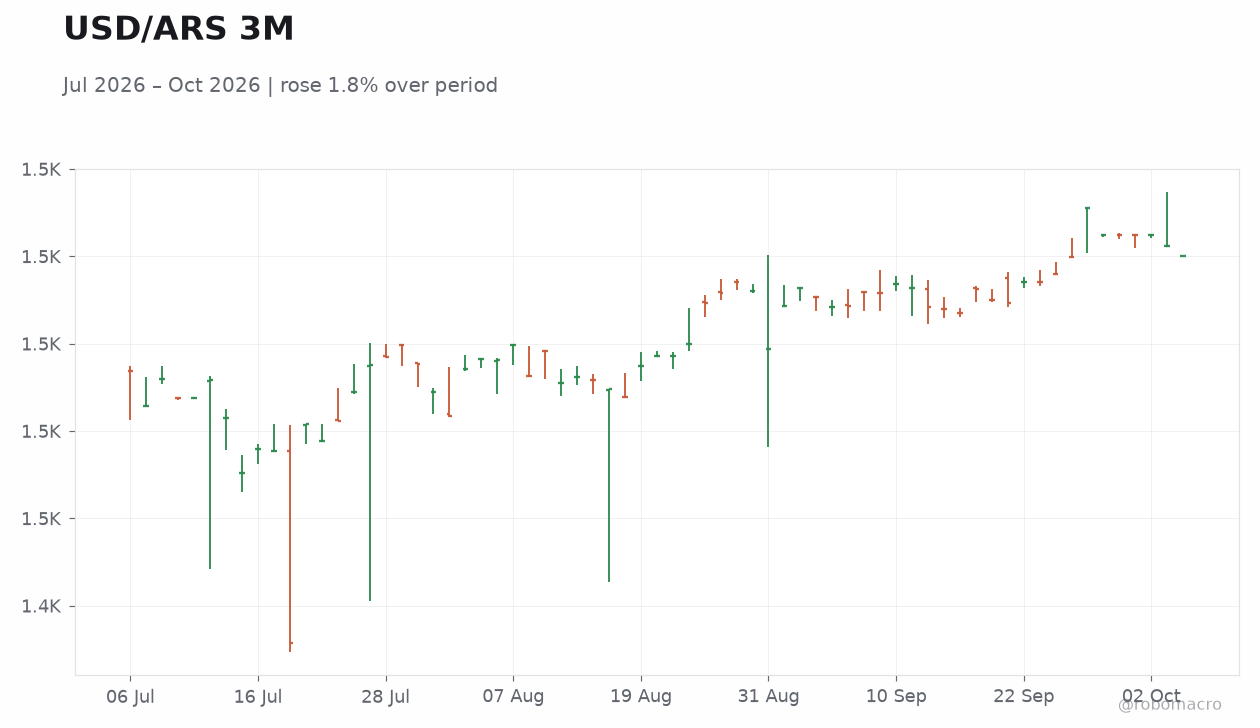
| USD/ARS | 1,520.00 | -0.15% |
| EUR/ARS | 1,705.01 | +2.53% |
| Gold | 4,181.10 | +0.58% |
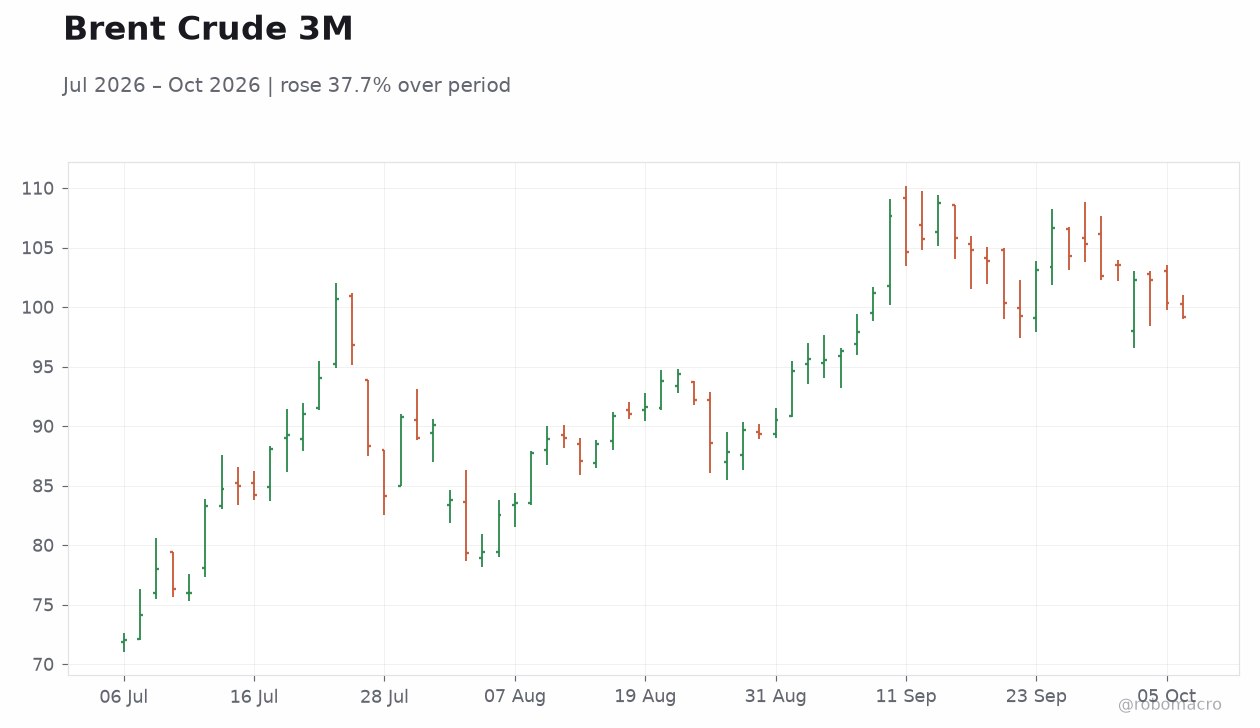
| Brent Crude | 99.07 | -1.25% |
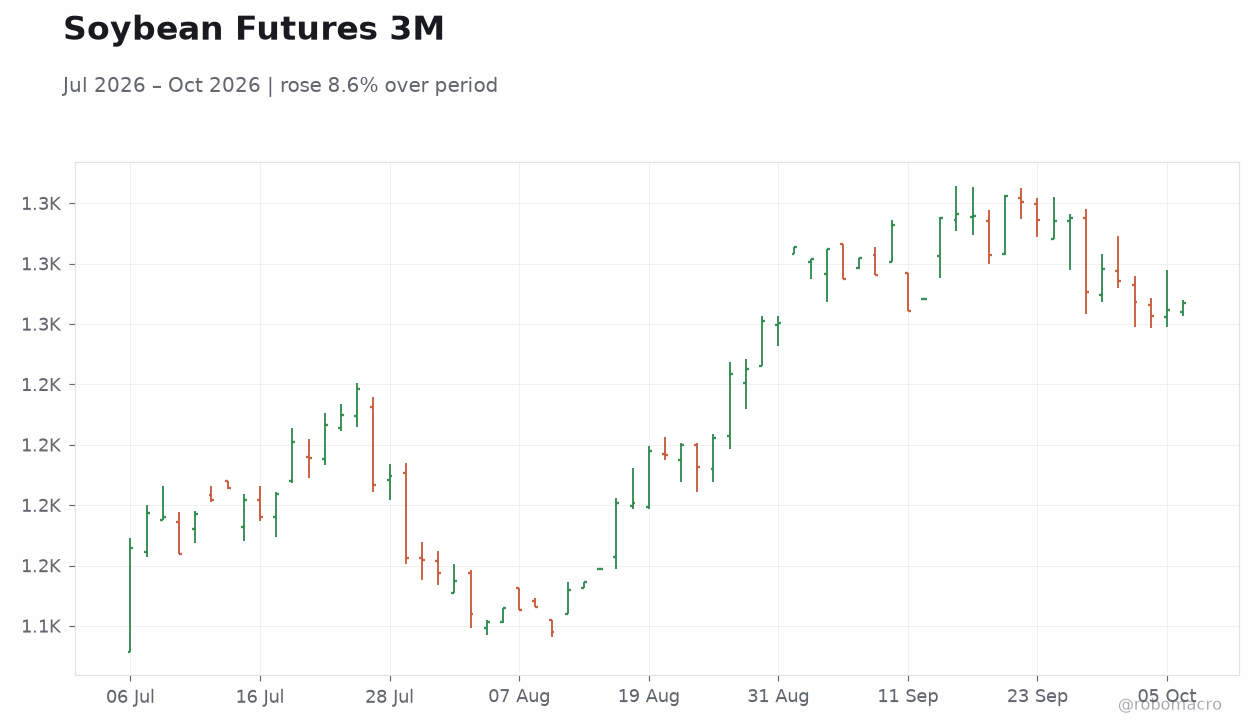
| Soybean | 1,283.25 | +0.20% |
| Bitcoin | 85,997.41 | +0.25% |
| Argentina 10Y | - | - |
Prior Economic Events
| Data | Prior | Cons | Actual |
|---|---|---|---|
| No events available | |||
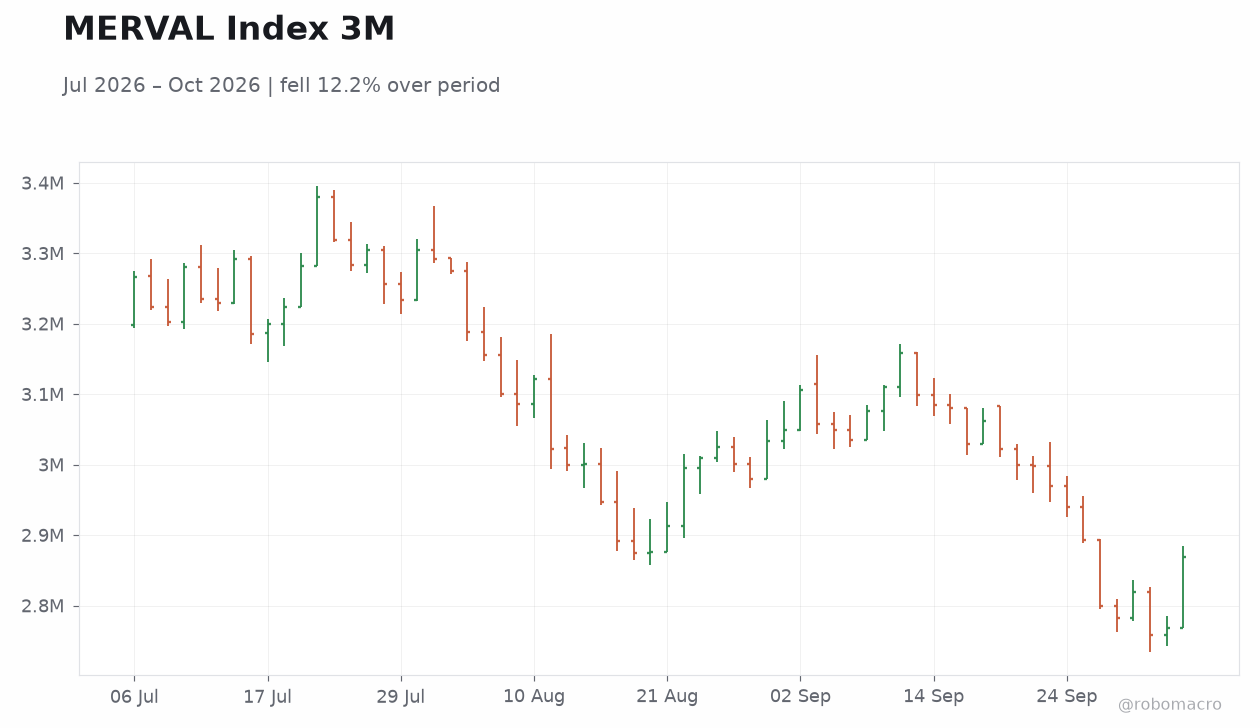 MERVAL Index 3M | Type: market_hloc | MERVAL: 2.869e+06 (2026-10-05) | Range: 2.759e+06–3.38e+06 | Trend(5pt): 3.267e+06,3.233e+06,2.913e+06,3.085e+06,2.869e+06
Today's Economic Events
| Data | Prior | Cons | Time |
|---|---|---|---|
| No events available | |||
- MERVAL rose 3.68% to 2,869,488 while USD/ARS eased 0.15% to 1,520.
- No data releases occurred yesterday, leaving August CPI at 33.5% YoY.
- Soybean prices edged higher, supporting export revenue prospects.
Yesterday's Recap
Equity markets delivered a strong session with the MERVAL index climbing 3.68% to close at 2,869,488.00. The peso showed resilience as USD/ARS slipped 0.15% to 1,520.00 while EUR/ARS advanced 2.53% to 1,705.01. Commodity markets offered mixed signals for Argentine exports, with soybean futures rising 0.20% to 1,283.25 and Brent crude declining 1.25% to 99.07.
Gold gained 0.58% to 4,181.10, providing a modest buffer for reserve management. No economic indicators were published, so market participants focused on price action rather than fresh data surprises. The absence of releases left fiscal consolidation efforts and soybean export flows as the dominant themes guiding sentiment.
Bitcoin added 0.25% to 85,997.41, reflecting limited spillover into risk assets.
The Day Ahead
The calendar remains empty of scheduled Argentine releases for October 06, offering no new prints on activity, inflation or trade. Traders will monitor peso liquidity conditions and any updates on soybean export registrations. Attention stays on fiscal consolidation progress under the current administration and potential IMF program reviews.
Commodity price movements, particularly soybeans and energy, will continue to shape external accounts. Market participants expect steady intervention signals from the BCRA to maintain exchange-rate stability. Broader regional developments in Brazil may also influence cross-border capital flows.
Other Economic Notes
The Milei administration’s RIGI regime continues to draw foreign interest in lithium, copper and natural gas projects, bolstering medium-term fiscal revenue prospects. Export proceeds from soybeans remain central to reserve accumulation and debt-service capacity. Persistent inflation at 33.5% YoY keeps real wage erosion in focus and limits domestic demand recovery.
Fiscal consolidation efforts target primary surpluses to reduce reliance on monetary financing. External accounts benefit from stable commodity prices, though any sustained drop in Brent could pressure the trade balance.