Argentina Macro Daily(Beta Mode)
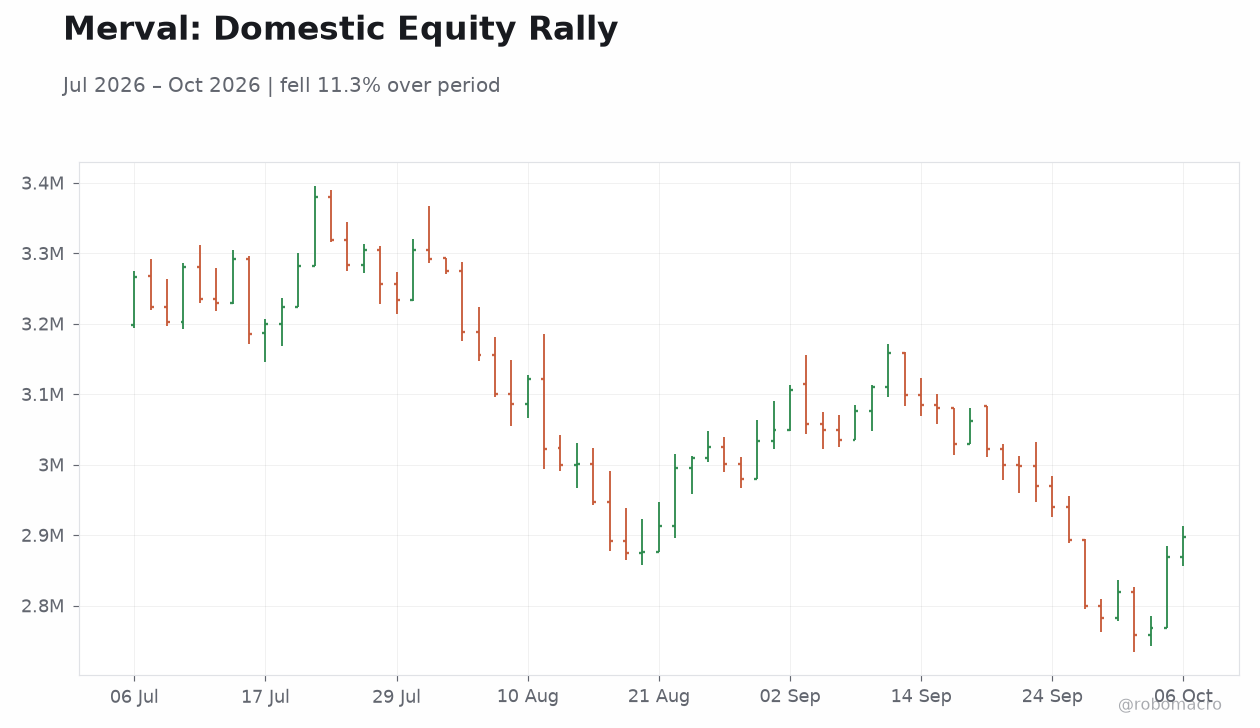
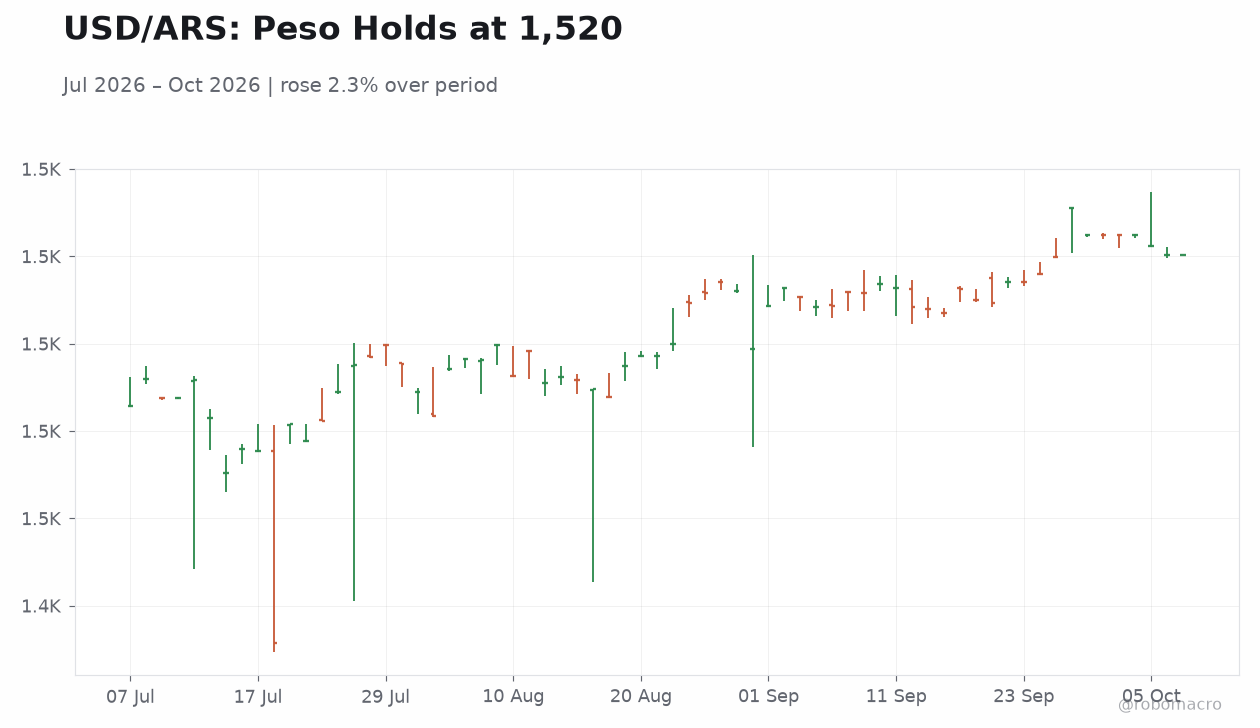
Merval Grinds Higher as Peso Holds at 1,520
Market Snapshot
| Asset | Level | Change |
|---|---|---|
| MERVAL | 2,896,853.00 | +0.95% |
| USD/ARS | 1,520.25 | +0.00% |
| EUR/ARS | 1,708.37 | +0.18% |
| Gold | 4,146.20 | -0.98% |
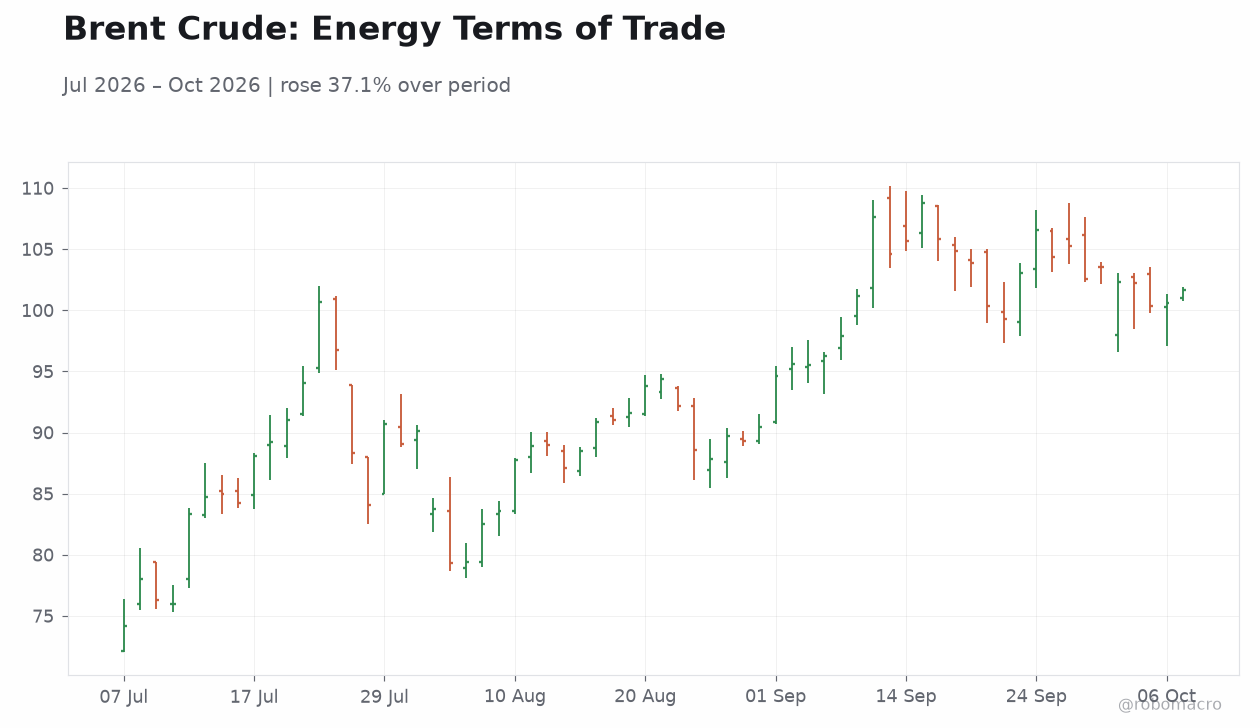
| Brent Crude | 101.54 | +0.95% |
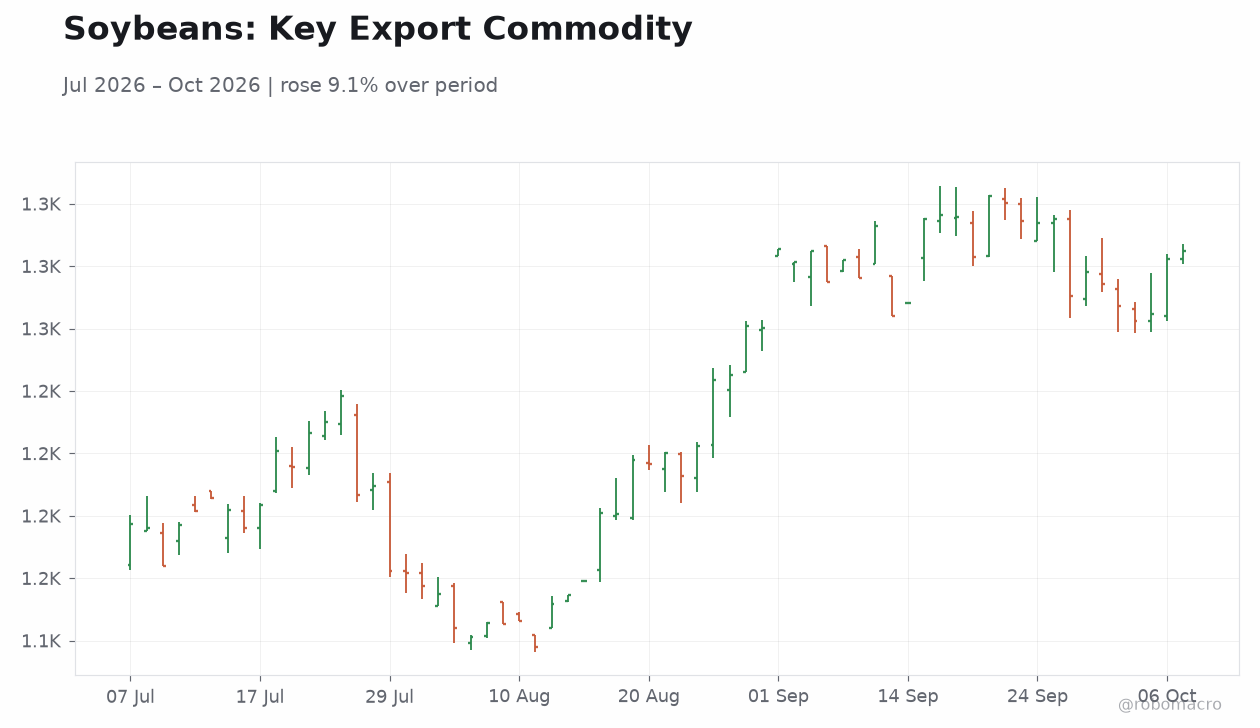
| Soybean | 1,305.75 | +0.21% |
| Bitcoin | 83,896.88 | -1.94% |
| Argentina 10Y | - | - |
Prior Economic Events
| Data | Prior | Cons | Actual |
|---|---|---|---|
| No events available | |||
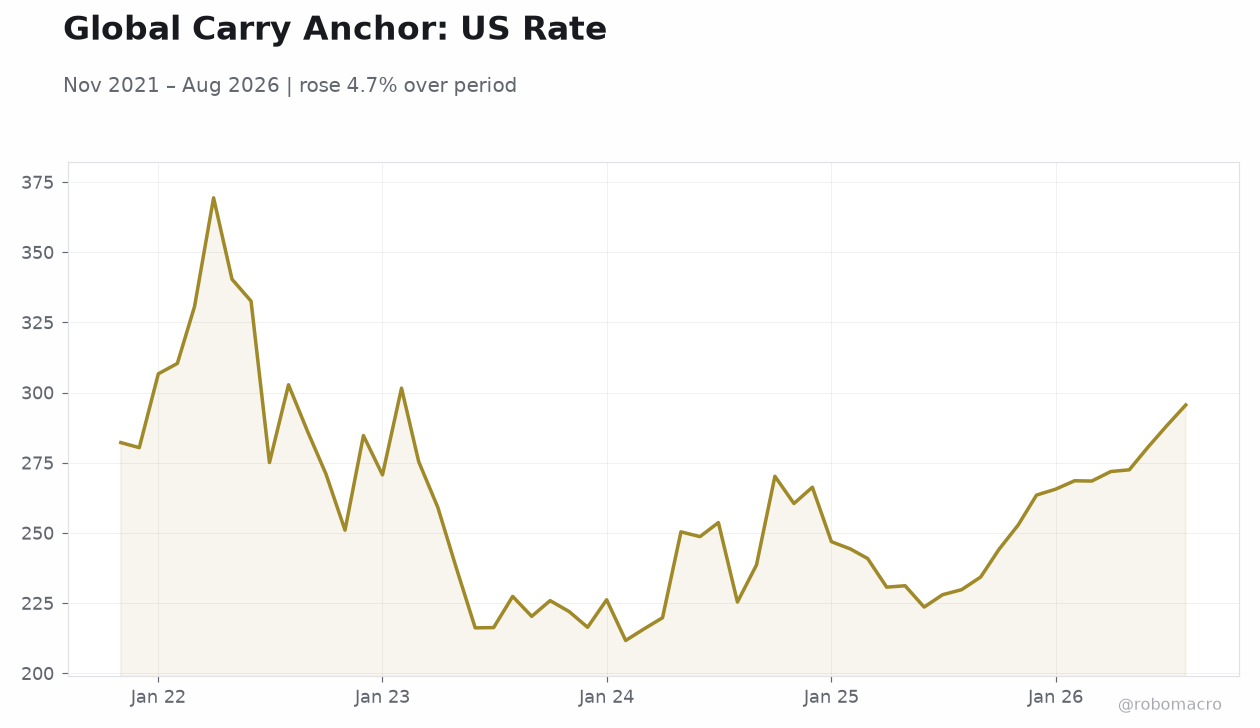 Global Carry Anchor: US Rate | Type: macro_line | US Long Rate (%): 295.6 (2026-08-01) | Range: 211.7–369.4 | Trend(6pt): 282.2,270.7,215.7,231.2,288.2,295.6
Today's Economic Events
| Data | Prior | Cons | Time |
|---|---|---|---|
| No events available | |||
- Merval gains 0.95% to 2,896,853 while USD/ARS holds steady at 1,520.25
- Milei advances foreign-ownership liberalisation; Falklands oil policy outlined
- Brent near $101.54 supports energy terms of trade; soybeans firm at 1,305.75
Yesterday's Recap
Argentine equities ground higher on Tuesday, with the Merval adding 0.95% to close at 2,896,853.00, extending the domestic rally even as global risk appetite softened. The peso was the picture of stability, with USD/ARS unchanged at 1,520.25, suggesting the managed-band regime and BCRA's accumulation strategy continue to anchor the currency. Crossed rates told a slightly different story: EUR/ARS rose 0.18% to 1,708.37, hinting at modest dollar softness against the euro rather than any ARS-specific strength.
Commodity moves were constructive for the external accounts — Brent crude climbed 0.95% to $101.54, buoying Vaca Muerta-linked revenue prospects, while soybeans ticked up 0.21% to 1,305.75, supporting the export-led dollar inflow pipeline that underpins reserve accumulation. Gold fell 0.98% to $4,146.20 as the safe-haven bid cooled, and Bitcoin dropped 1.94% to $83,896.88, a reminder that high-beta assets remain vulnerable even as Argentine equities decouple. No official statistics were released, leaving the market session as the day's main event.
The Day Ahead
The calendar is quiet, with no scheduled statistical releases or policy announcements on the domestic docket. Attention shifts to secondary market dynamics: desks will watch whether the Merval's grind higher pulls provincial and corporate paper along with it, and whether the peso's stability at 1,520 attracts carry flows into short-dated instruments. BCRA operations — repos, Leliq rollovers, and any communication on monetary aggregates — will be scrutinised for signals on the pace of peso liability management.
Internationally, the IMF's October World Economic Outlook cycle is approaching, which historically frames programme reviews and any adjustments to reserve targets. Traders should also monitor follow-through on foreign-investment measures, following Foreign Minister Pablo Quirno's comments on Falklands offshore oil policy, for implications for energy sector sentiment. With no domestic prints, global rates and commodity direction will dominate the tape.
Other Economic Notes
President Milei's push to remove restrictions on foreign ownership of land and natural resources is generating domestic political friction, with protesters citing 'foreignisation' concerns in rural provinces — a tension worth monitoring as the administration courts foreign investors. ↓ p.2