Argentina Macro Daily(Beta Mode)
IMF Deal Advances as Peso Firms
Market Snapshot
| Asset | Level | Change |
|---|---|---|
| MERVAL | 2,848,945.00 | -0.35% |
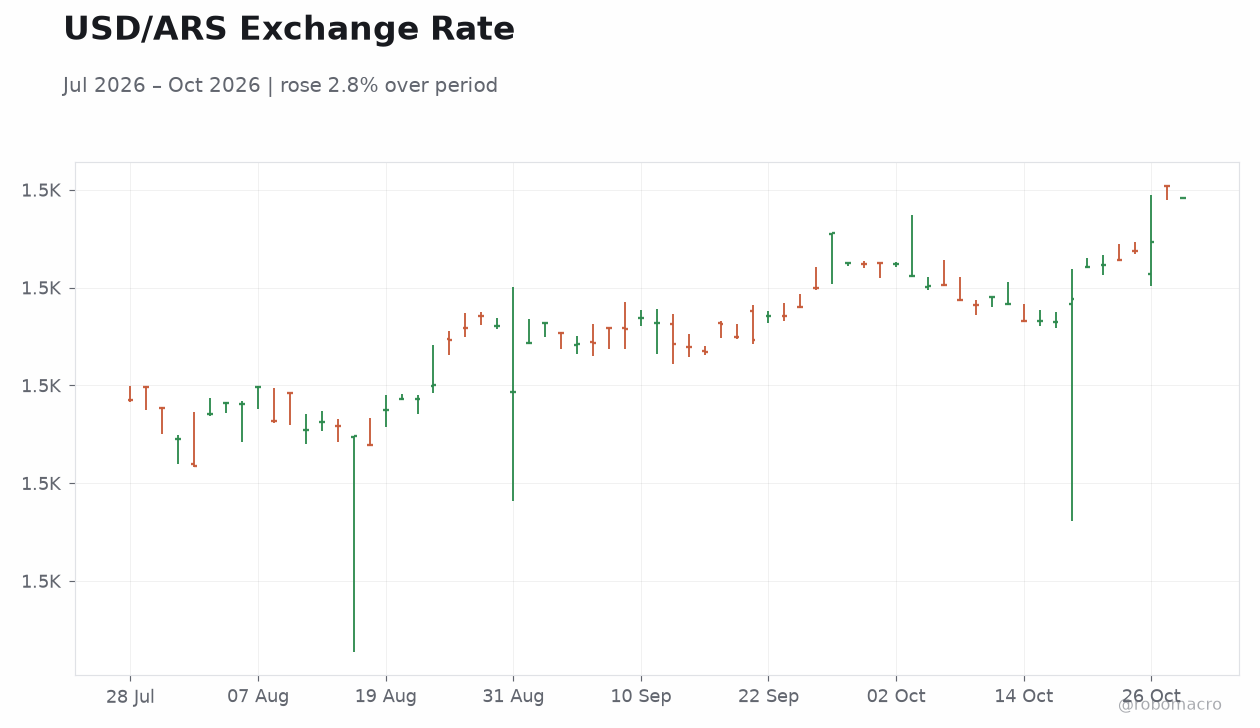
| USD/ARS | 1,538.25 | -0.16% |
| EUR/ARS | 1,710.72 | -0.63% |
| Gold | 4,067.30 | -0.18% |
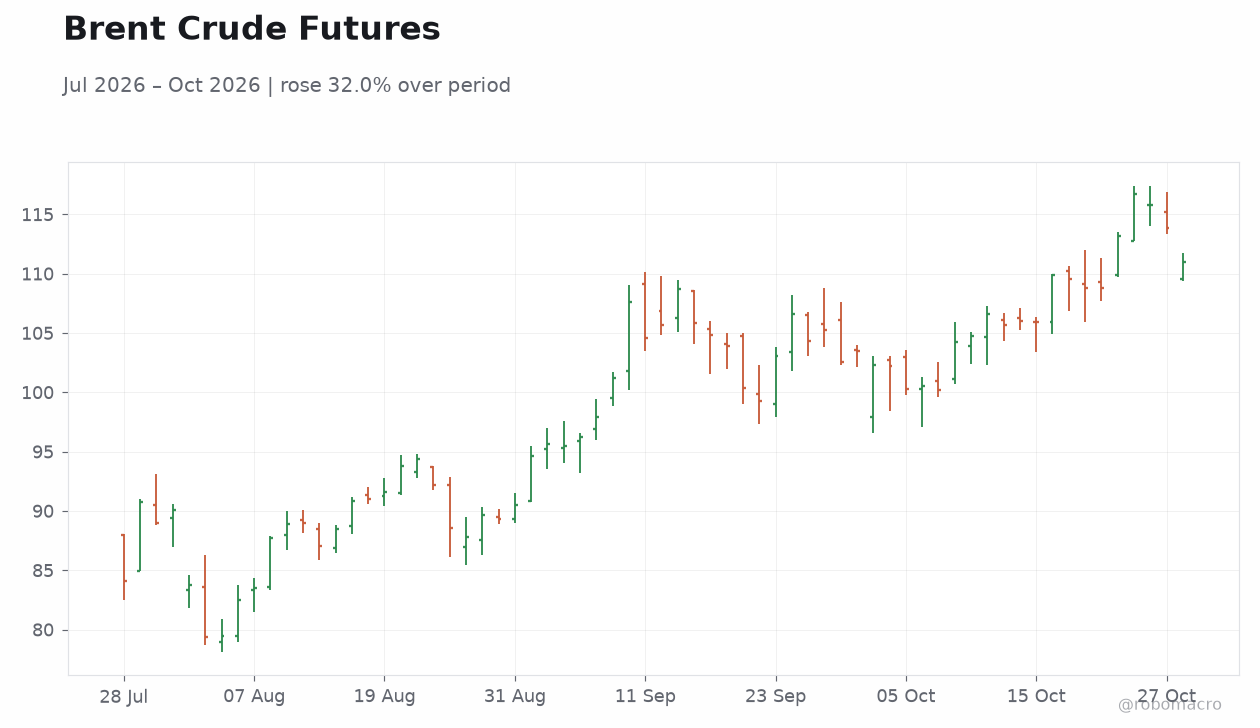
| Brent Crude | 110.94 | -2.58% |
| Soybean | 1,246.50 | +1.40% |
| Bitcoin | 81,345.24 | +0.67% |
| Argentina 10Y | - | - |
Prior Economic Events
| Data | Prior | Cons | Actual |
|---|---|---|---|
| No events available | |||
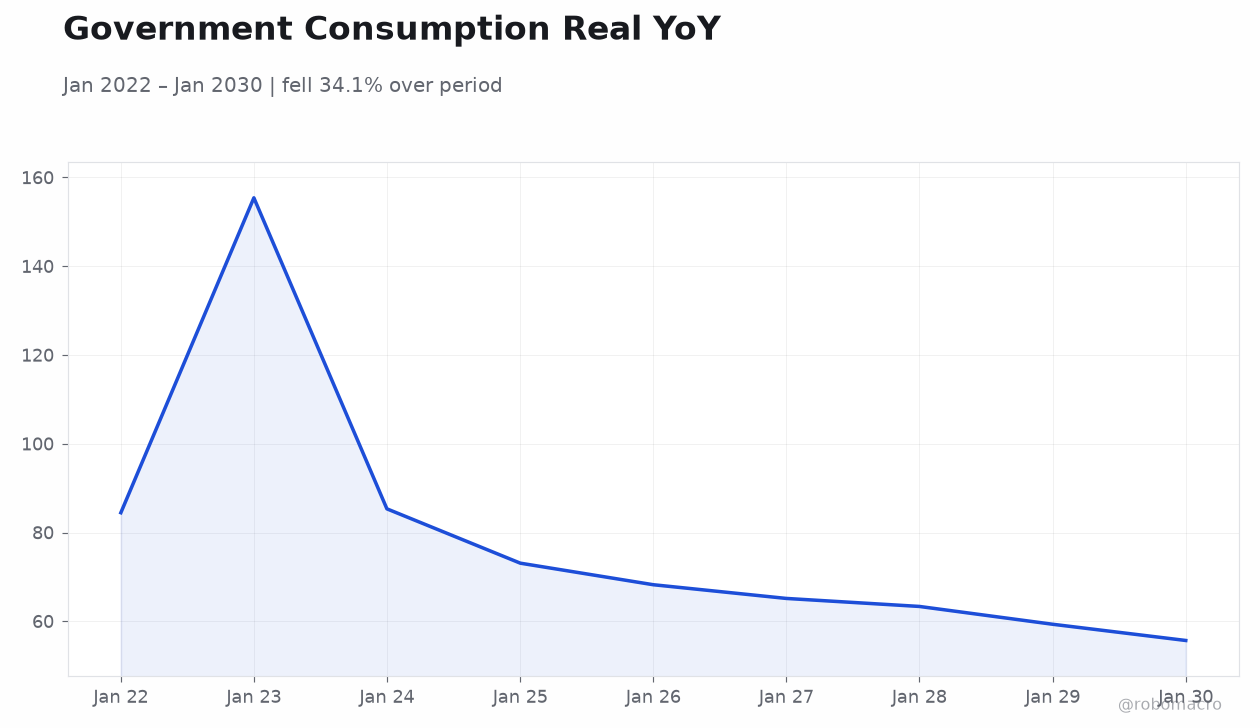
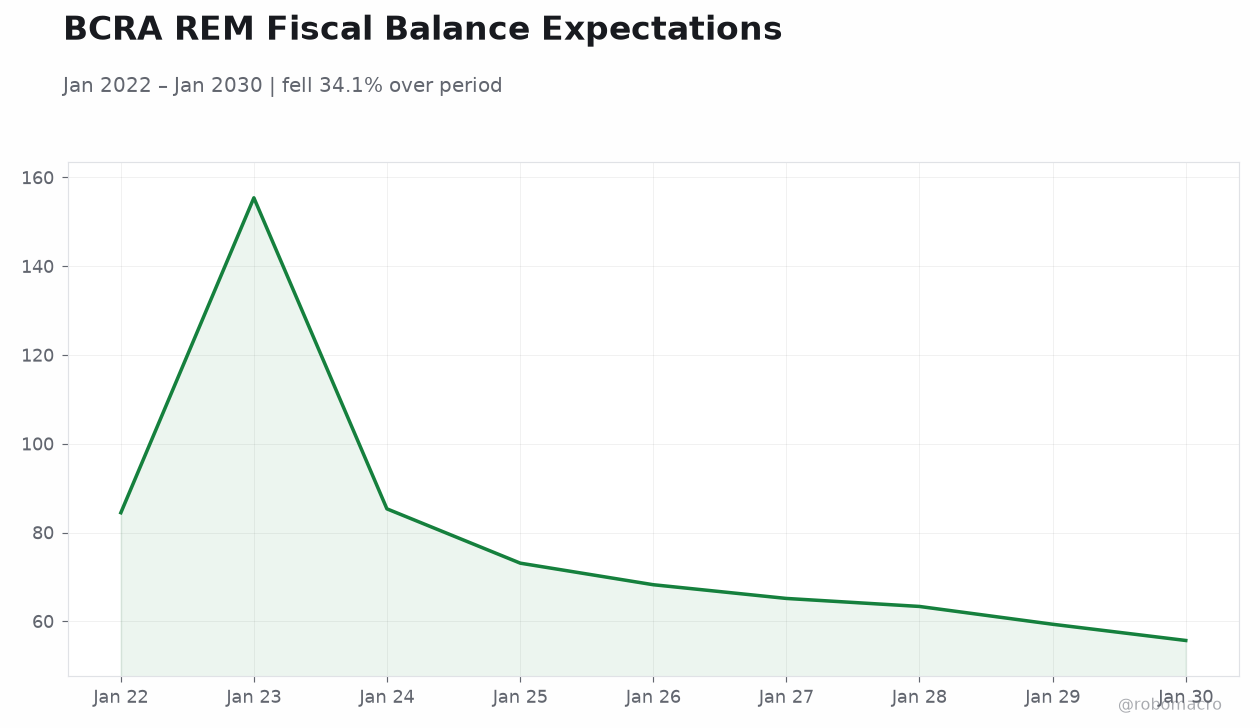
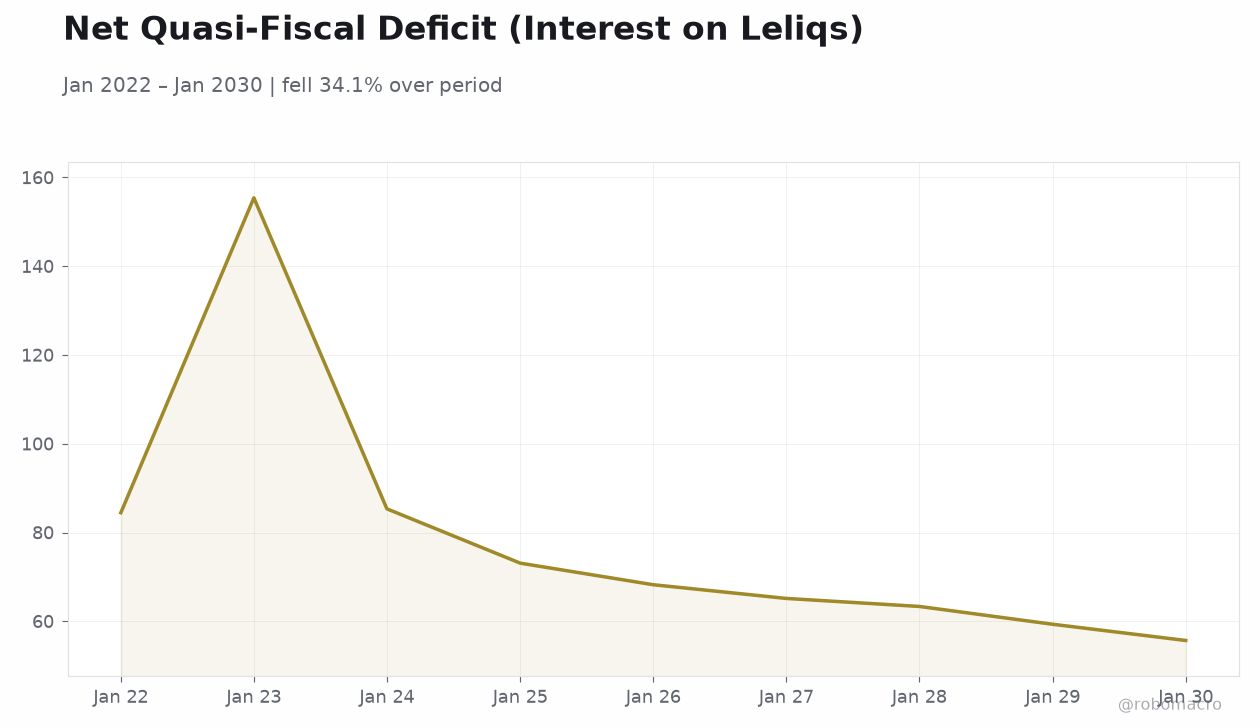 Net Quasi-Fiscal Deficit (Interest on Leliqs) | Type: macro_line | Net Quasi-Fiscal Deficit (Interest on Leliqs): 55.67 (2030-01-01) | Range: 55.67–155.4 | Trend(5pt): 84.46,85.33,68.23,63.34,55.67
Today's Economic Events
| Data | Prior | Cons | Time |
|---|---|---|---|
| No events available | |||
- IMF staff-level agreement on third review of $20bn programme could unlock ~$900mn, though market return prospects dim
- Peso firmed 0.16% to 1,538.25/USD; MERVAL slipped 0.35% to 2,848,945
- Soybean complex rallied 1.40% while Brent crude tumbled 2.58%, reshaping Argentina's external terms of trade
Yesterday's Recap
Argentina's asset complex traded a quiet session with no scheduled domestic data releases, leaving price action to reflect positioning around the IMF headline flow. The MERVAL gave back 0.35% to close at 2,848,945, a modest pullback that nonetheless keeps the index near recent highs. The peso strengthened 0.16% to 1,538.25 per dollar, extending a gradual appreciation trend as the crawling-band regime continues to anchor FX expectations.
The euro cross fell 0.63% to 1,710.72, reflecting broader dollar dynamics rather than idiosyncratic Argentina flow. In commodities, soybean prices rose 1.40% to 1,246.50, a constructive signal for the Rosario export complex and forward FX liquidation. Brent crude dropped 2.58% to 110.94, a mixed development — cheaper energy imports help the trade balance, but the move signals softer global demand.
The Argentina 10-year yield was not quoted in the data feed, leaving the curve's direction unconfirmed for the session.
The Day Ahead
The domestic calendar is empty for Thursday, October 29, with no scheduled Argentina data releases, meaning markets will again trade off external flow and IMF-related headlines. Attention will centre on any official confirmation of the staff-level agreement's timing and disbursement mechanics, which could set the tone for sovereign bonds and the parallel FX spread. Traders will also watch the crawling-band pace for signals on BCRA reserve accumulation strategy.
With no local prints to anchor positioning, the peso and MERVAL will likely take direction from global risk appetite and commodity moves. Soybean follow-through matters given the export complex's role in hard-currency generation.
Other Economic Notes
The IMF staff-level agreement on the third review of Argentina's $20bn programme is the dominant macro theme, with roughly $900mn potentially unlocked — a critical bridge for reserve coverage. Bloomberg Economics notes the deal tones down language even as market return prospects dim, suggesting the Fund is prioritising programme continuity over ambitious reform milestones. Fiscal consolidation remains the anchor of the programme, and the government's primary-balance trajectory will be scrutinised as social spending pressures build.
↓ p.2