RoboMacro ResearchAlso todaySee the FX Daily

Argentina Macro Daily(Beta Mode)

November 04, 2026 robomacro.com

Peso Drifts, IPO Pipeline Stalls

MERVAL2,848,945.00-0.35%
USD/ARS1,550.50+0.33%
EUR/ARS1,745.07+0.90%
Gold4,053.00+2.86%

Market Snapshot

AssetLevelChange
MERVAL2,848,945.00-0.35%
USD/ARS1,550.50+0.33%
EUR/ARS1,745.07+0.90%
Gold4,053.00+2.86%
Brent Crude101.83-1.71%
Soybean1,203.25+0.02%
Bitcoin78,440.44+1.42%
Argentina 10Y--

Prior Economic Events

Data Prior Cons Actual
No events available
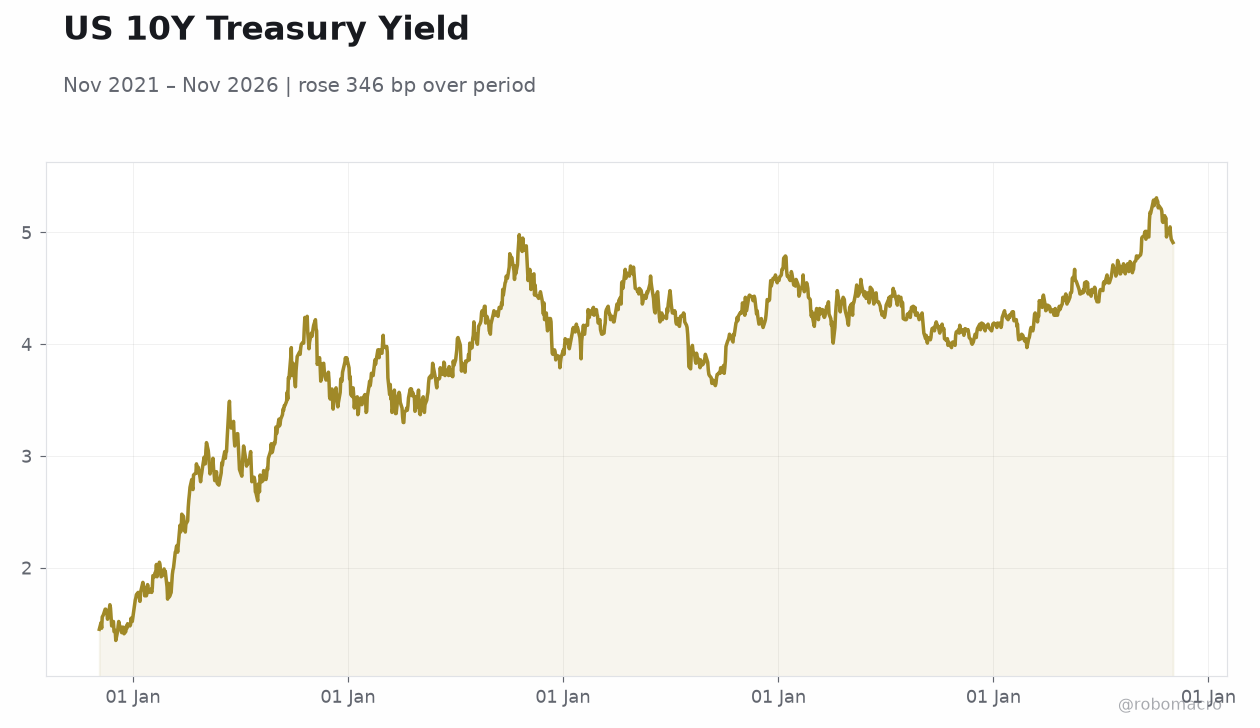
US 10Y Treasury YieldUS 10Y Treasury Yield | Type: macro_line | 10Y Yield (%): 4.91 (2026-11-02) | Range: 1.35–5.31 | Trend(6pt): 1.45,3.67,4.5,4.22,4.94,4.91

Today's Economic Events

Data Prior Cons Time
No events available
  • USD/ARS edged up 0.33% to 1,550.50 as the peso continues its slow grind weaker, with EUR/ARS up 0.90% to 1,745.07.
  • MERVAL slipped 0.35% to 2,848,945, with Argentine equities under pressure as the global IPO window tightens.
  • Gold surged 2.86% to $4,053/oz while Brent fell 1.71% to $101.83, a mixed commodity backdrop for Argentina's export complex.

Yesterday's Recap

Argentine markets delivered a subdued session on Tuesday, with the MERVAL easing 0.35% to 2,848,945 as equity investors remained cautious amid a broader risk-off tone in emerging markets. The peso weakened modestly, with USD/ARS rising 0.33% to 1,550.50, while EUR/ARS climbed 0.90% to 1,745.07, reflecting both domestic FX demand and euro strength against the dollar. The most notable development came from Bloomberg's report that two Argentine energy companies have shelved planned US initial public offerings, a blow to hopes of reviving the country's long-dormant equity capital markets pipeline.

Commodities offered little directional clarity: gold jumped 2.86% to $4,053/oz on safe-haven demand, while Brent crude dropped 1.71% to $101.83, weighing on energy-linked assets. Soybean prices were essentially flat at $1,203.25, providing no fresh catalyst for the agricultural export complex. Bitcoin gained 1.42% to $78,440, a marginal positive for risk sentiment but hardly a driver for Argentine assets.

The calendar was empty, leaving markets to trade on external flows and positioning.

The Day Ahead

Wednesday's Argentine calendar is again light, with no scheduled domestic data releases, meaning markets will take their cue from external developments and FX flows. Traders will watch the USD/ARS fix closely for any acceleration in the crawl, particularly given the recent uptick in euro-cross demand. The MERVAL's ability to hold the 2.8 million level will be a key technical test, with energy names likely to underperform if Brent remains under pressure.

Local bond markets will look for any signal from the BCRA on reserve accumulation and sterilization operations. With no domestic prints to digest, attention shifts to global risk appetite and any headlines on the IMF programme review timeline.

Other Economic Notes

Argentina's disinflation trajectory remains the anchor of the macro story, with CPI at 33.4% year-on-year as of September, a marked improvement from prior years but still elevated by regional standards. ↓ p.2
Page 1

Argentina Macro Daily(Beta Mode)

November 04, 2026 robomacro.com
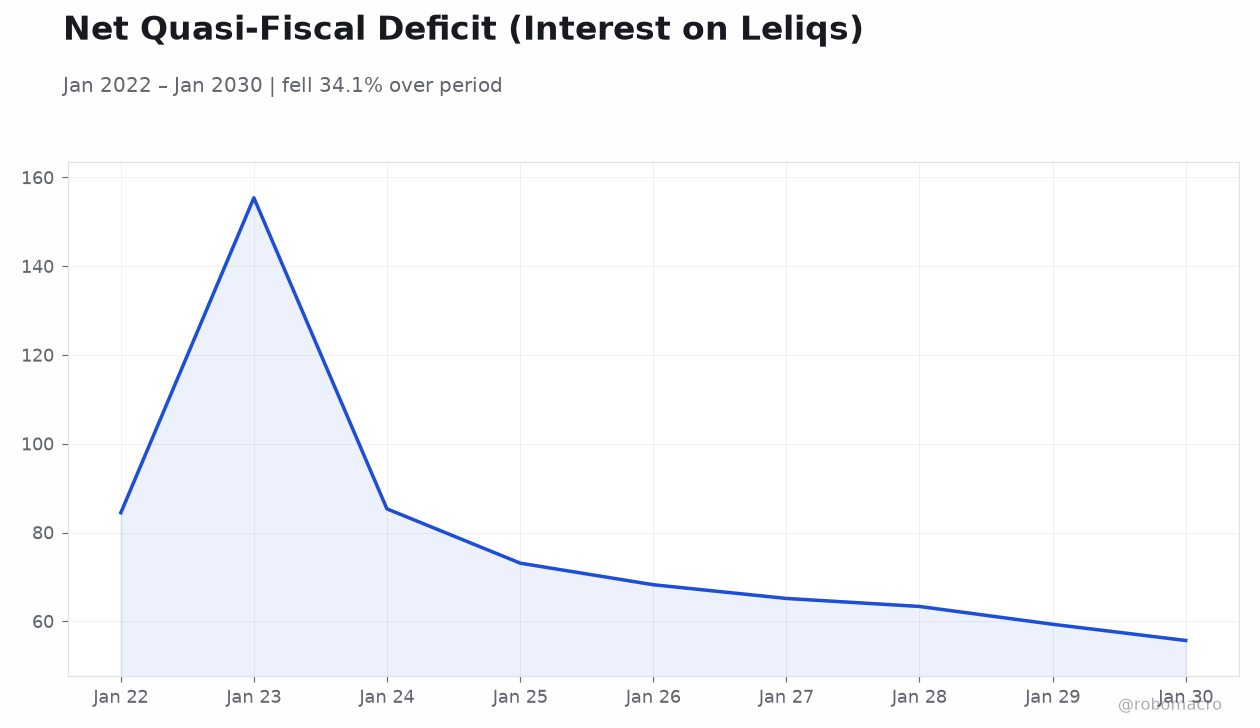
Net Quasi-Fiscal Deficit (Interest on Leliqs) Net Quasi-Fiscal Deficit (Interest on Leliqs) | Type: macro_line | Net Quasi-Fiscal Deficit (Interest on Leliqs): 55.67 (2030-01-01) | Range: 55.67–155.4 | Trend(5pt): 84.46,85.33,68.23,63.34,55.67
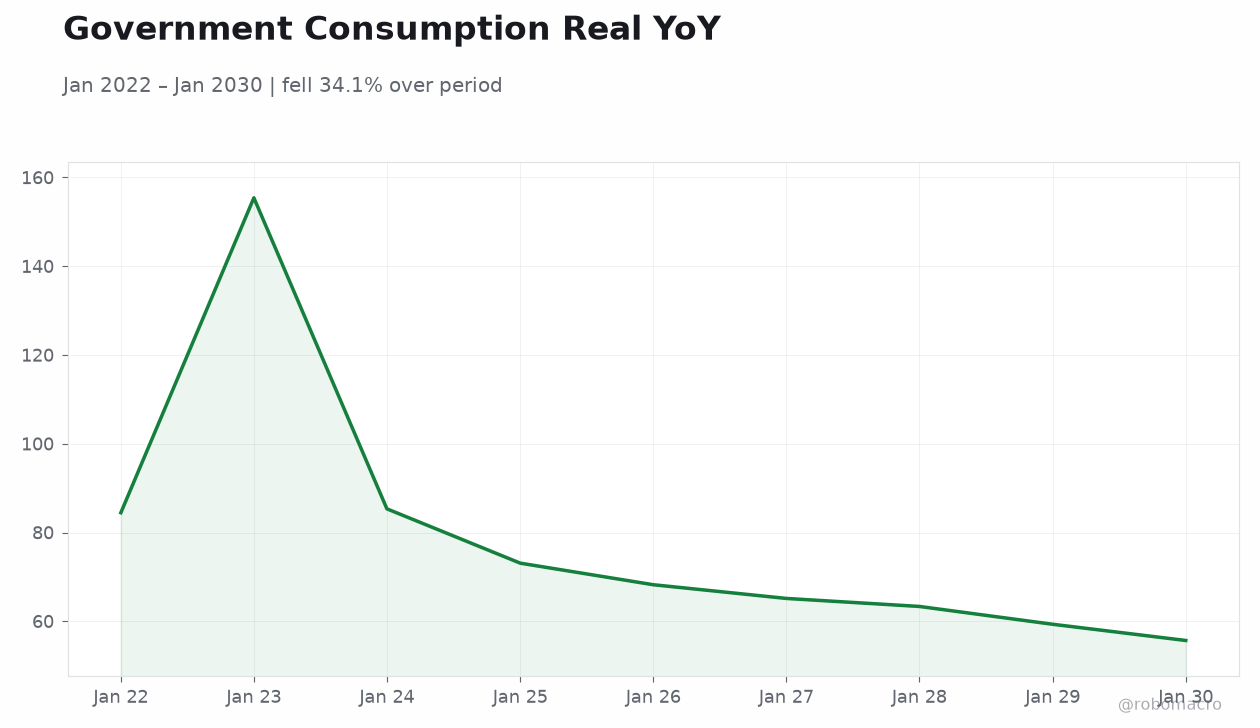
Government Consumption Real YoY Government Consumption Real YoY | Type: macro_line | Government Consumption Real YoY: 55.67 (2030-01-01) | Range: 55.67–155.4 | Trend(5pt): 84.46,85.33,68.23,63.34,55.67
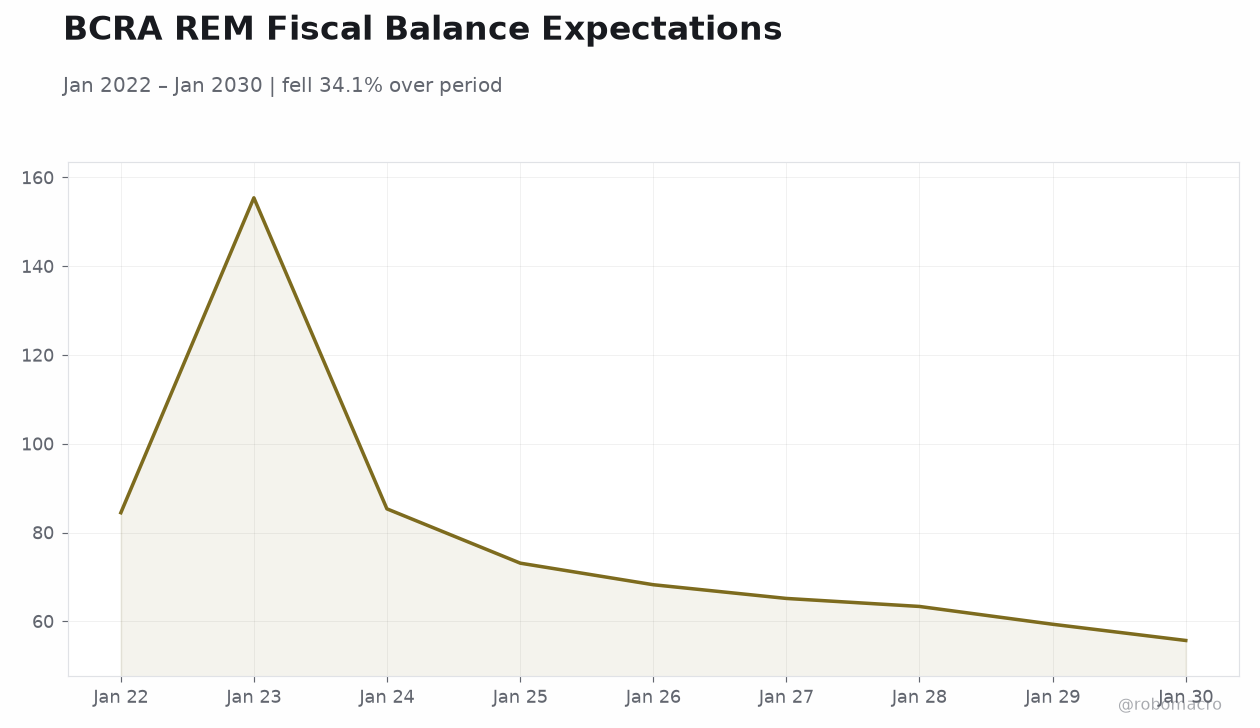
BCRA REM Fiscal Balance Expectations BCRA REM Fiscal Balance Expectations | Type: macro_line | BCRA REM Fiscal Balance Expectations: 55.67 (2030-01-01) | Range: 55.67–155.4 | Trend(5pt): 84.46,85.33,68.23,63.34,55.67
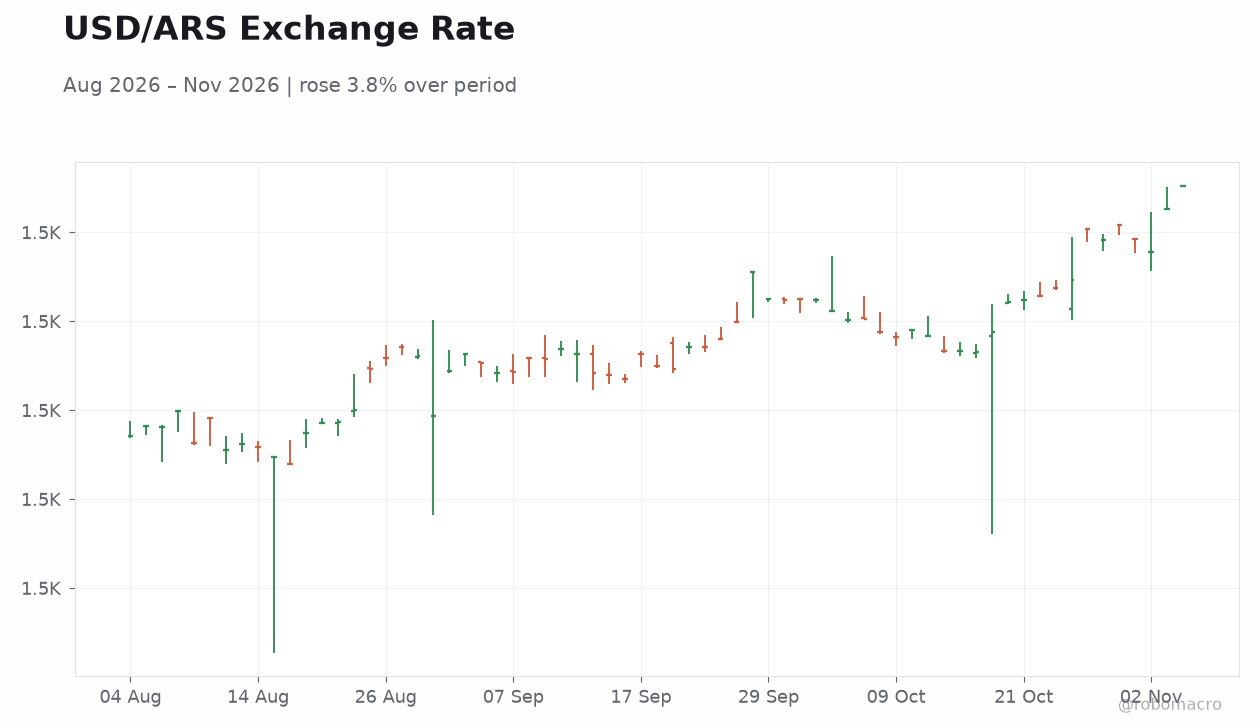
USD/ARS Exchange Rate USD/ARS Exchange Rate | Type: market_hloc | USD/ARS: 1550 (2026-11-04) | Range: 1488–1550 | Trend(6pt): 1494,1512,1513,1516,1536,1550

Other Economic Notes (continued)

The fiscal consolidation effort continues to be the linchpin of the IMF programme, and market participants are focused on whether the government can sustain primary surpluses through the politically sensitive months ahead. Soybean export receipts remain a critical source of hard currency, and the flat price action at $1,203.25 offers little incremental support for reserve accumulation. The stalled IPO pipeline is a reminder that Argentina's capital account normalization remains fragile, with equity inflows dependent on global risk appetite rather than domestic fundamentals alone.

Global Macro News

A synchronized tightening wave is building across major central banks, with the Bank of Japan, Sweden's Riksbank, and the Reserve Bank of Australia all signaling or delivering rate hikes amid persistent inflation. The Riksbank raised its policy rate to 2%, while Australia lifted rates to an 18-year high, citing elevated inflation and geopolitical risk from the Middle East conflict. The Bank of Japan headlines suggest December tightening is increasingly likely across major central banks, a backdrop that keeps global financial conditions tight.

In Brazil, Lula's election victory has prompted economists to reassess the growth outlook, with GDP seen averaging 1.7% through 2028 and inequality flagged as a structural drag. UK equities are set to avoid the worst of the global selloff, per Bloomberg, suggesting some regional divergence in risk appetite. For Argentina, a tighter global backdrop raises the cost of external financing and complicates the path to re-entering international capital markets.

Sponsored by Arbitrage Search
Page 2

Argentina Macro Daily(Beta Mode)

November 04, 2026 robomacro.com

Continuation

BCRA Watch

The Central Bank of Argentina has maintained a cautious, data-dependent stance, with no policy rate change signaled in the current window and the committee's forward guidance emphasizing the disinflation path anchored by the 33.4% CPI print. The BCRA's communication continues to stress reserve accumulation and FX flexibility as core objectives, with the crawling peg serving as the primary nominal anchor. Recent peso dynamics — a 0.33% daily depreciation against the dollar — suggest the BCRA is tolerating gradual FX adjustment rather than defending a hard level.

Markets should interpret the absence of rate signals as a commitment to real positive rates, which supports local bond carry but caps equity multiples. The BCRA's sterilization operations will be key to watch, as excessive liquidity absorption could tighten domestic credit conditions. Overall, the BCRA's stance is consistent with a gradualist stabilization strategy, but the lack of explicit forward guidance on the pace of crawl adjustment leaves FX volatility risk elevated.

Sponsored by Arbitrage Search
Page 3