Argentina Macro Daily(Beta Mode)
Peso Holds Firm as Oil Output Surges
Market Snapshot
| Asset | Level | Change |
|---|---|---|
| MERVAL | 2,848,945.00 | -0.35% |
| USD/ARS | 1,543.50 | -0.11% |
| EUR/ARS | 1,700.01 | -0.44% |
| Gold | 3,859.70 | -0.68% |
| Brent Crude | 92.31 | -3.68% |
| Soybean | 1,225.25 | -1.43% |
| Bitcoin | 64,293.93 | -1.55% |
| Argentina 10Y | - | - |
Prior Economic Events
| Data | Prior | Cons | Actual |
|---|---|---|---|
| No events available | |||
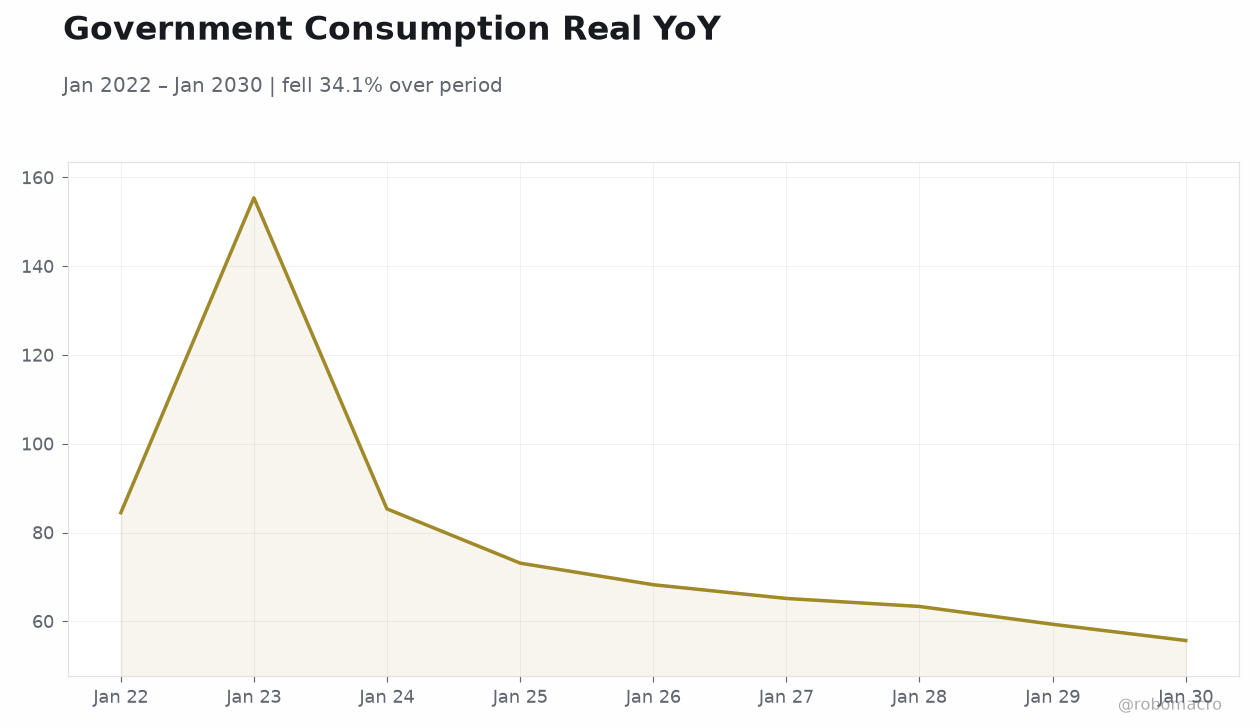 Government Consumption Real YoY | Type: macro_line | Government Consumption Real YoY: 55.67 (2030-01-01) | Range: 55.67–155.4 | Trend(5pt): 84.46,85.33,68.23,63.34,55.67
Today's Economic Events
| Data | Prior | Cons | Time |
|---|---|---|---|
| No events available | |||
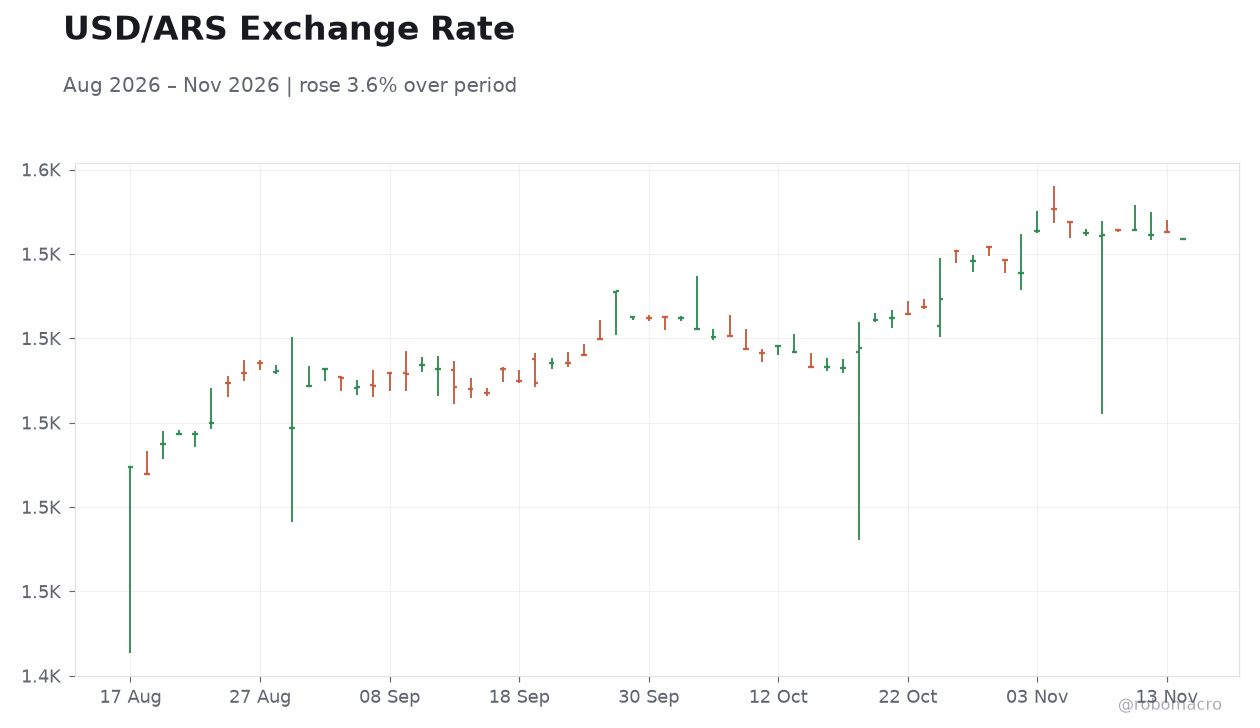
- USD/ARS slipped 0.11% to 1,543.50 while EUR/ARS fell 0.44%, signaling persistent peso demand despite a soft global risk backdrop.
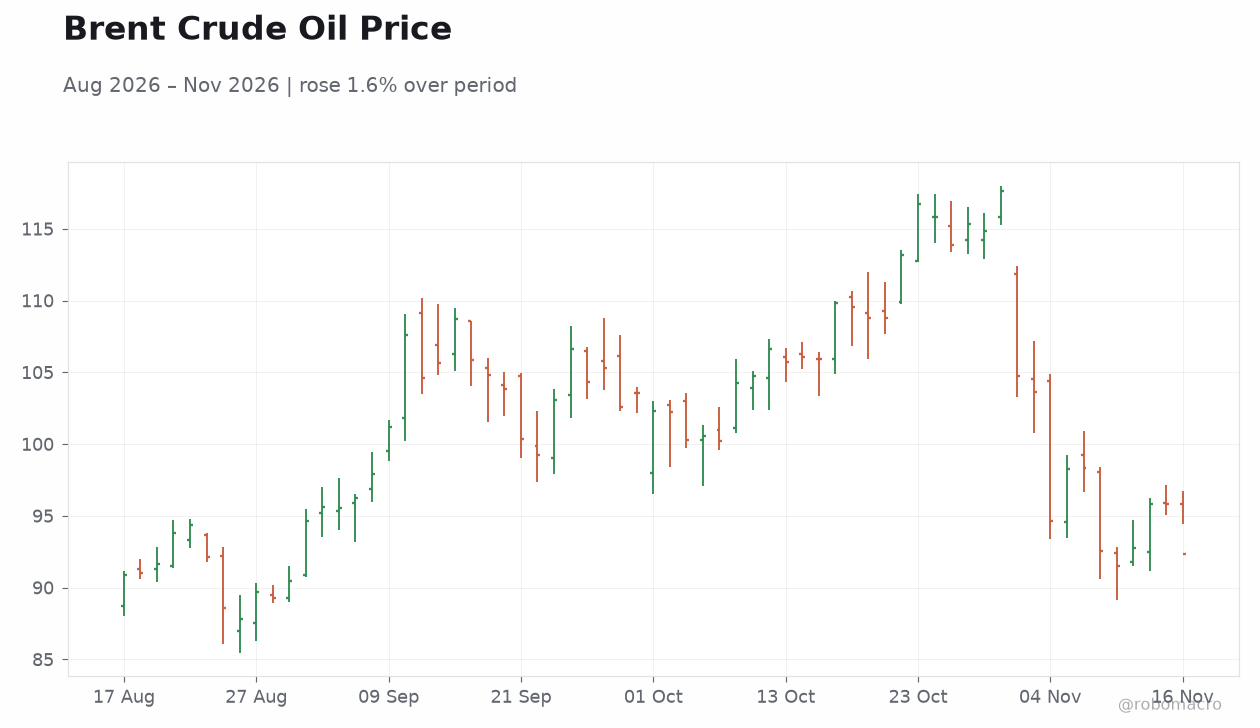
- Brent crude tumbled 3.68% to $92.31, a headwind for Vaca Muerta-linked equities and provincial royalty revenue.
- Argentina 10Y yield data was unavailable in the feed; watch for the next auction to re-establish the curve benchmark.
Yesterday's Recap
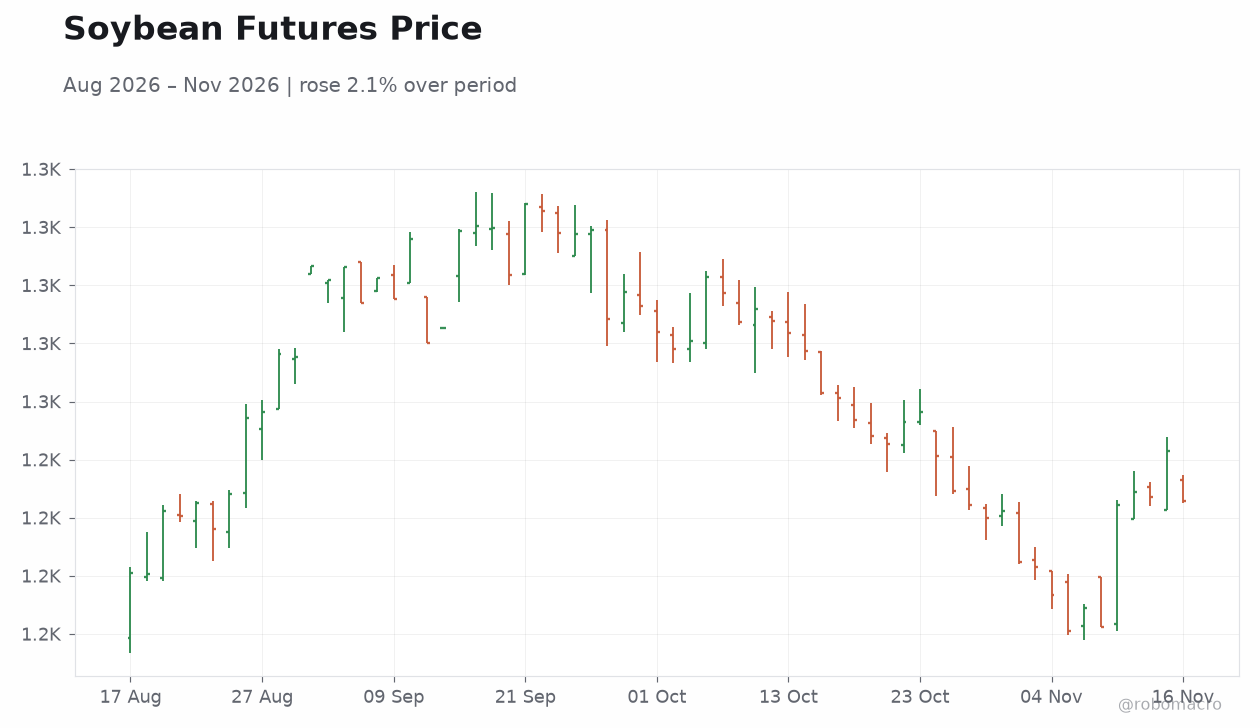
Argentine markets opened the week with a defensive tone, as the MERVAL shed 0.35% to close at 2,848,945 points, tracking weaker global risk appetite rather than any domestic catalyst. The peso strengthened modestly against both major currencies, with USD/ARS easing 0.11% to 1,543.50 and EUR/ARS down 0.44% to 1,700.01, consistent with continued FX settlement from the export complex. Commodity-linked assets bore the brunt of the selling: Brent crude collapsed 3.68% to $92.31, soybeans fell 1.43% to $1,225.25, and gold dropped 0.68% to $3,859.70.
Bitcoin's 1.55% decline to $64,293.93 reinforced the broader de-risking mood. No official Argentine data releases were scheduled for the session, leaving price action driven by positioning and external cues. The 10-year sovereign yield was not quoted in the feed, so the curve's next clearing point will come from the upcoming auction calendar.
The Day Ahead
The Argentine calendar is empty for Tuesday, November 17, with no scheduled INDEC, BCRA, or Treasury releases, so attention shifts to secondary-market pricing and any Ministry of Economy financing announcements. Traders will watch the FX wholesale channel for signs of whether Monday's peso firmness persists, particularly given the soft commodity tape. Provincial and corporate debt auctions may fill the void, and any BCRA reserve data published intraday will be scrutinized for confirmation that export dollars are still flowing in.
With no domestic prints to anchor sentiment, Argentine assets will likely take their direction from US rates and the crude complex.
Other Economic Notes
Argentina's oil story remains the brightest structural theme, with industry projections pointing to crude output breaching one million barrels per day in the first quarter of 2027 and averaging roughly 1.2 million thereafter. That trajectory matters for the trade balance and for the fiscal consolidation path, since energy exports are a growing hard-currency earner alongside the traditional soy complex. However, Monday's 3.68% Brent selloff is a reminder that Vaca Muerta economics are sensitive to global benchmarks, and a sustained price slide would trim both corporate margins and provincial royalty receipts.
The fiscal anchor remains intact, but the government's reserve accumulation strategy depends heavily on the agricultural and energy export mix holding up.