Argentina Macro Daily(Beta Mode)
Peso Drifts as BCRA Holds Fire
Market Snapshot
| Asset | Level | Change |
|---|---|---|
| MERVAL | 2,848,945.00 | -0.35% |
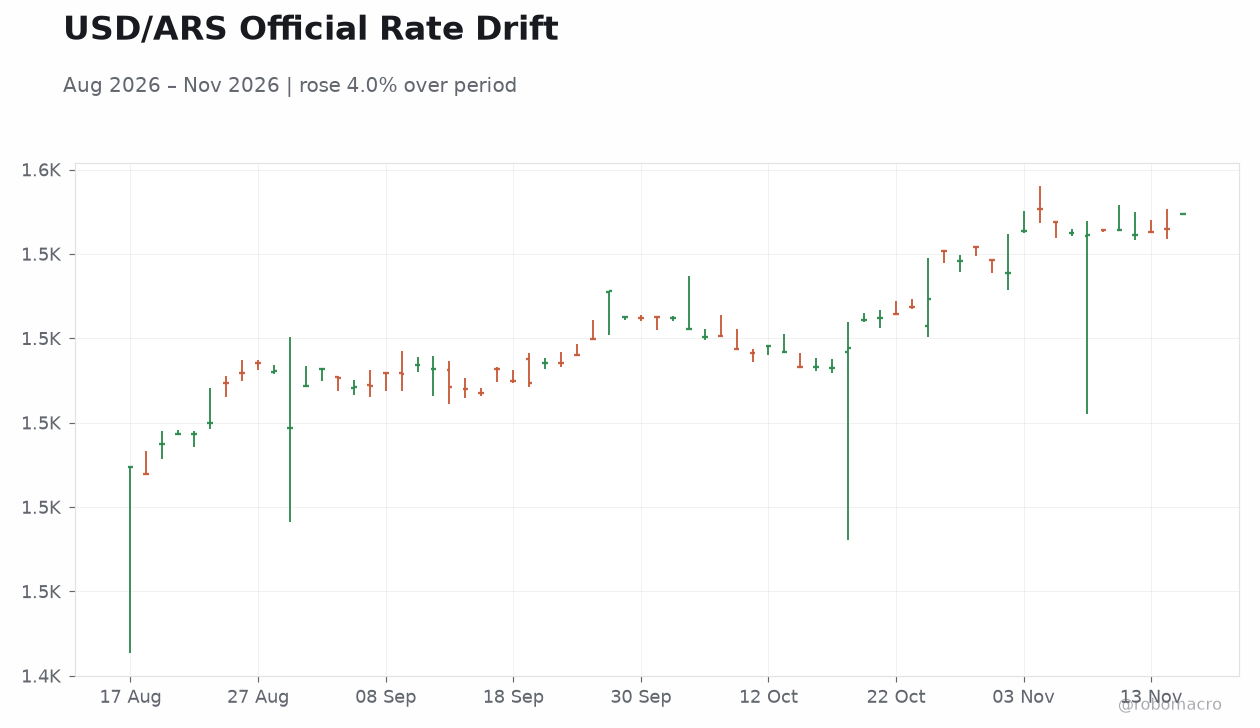
| USD/ARS | 1,549.50 | +0.23% |
| EUR/ARS | 1,705.27 | +0.05% |
| Gold | 3,869.90 | +0.44% |
| Brent Crude | 92.53 | +0.10% |
| Soybean | 1,228.25 | -0.06% |
| Bitcoin | 64,196.28 | -1.02% |
| Argentina 10Y | - | - |
Prior Economic Events
| Data | Prior | Cons | Actual |
|---|---|---|---|
| No events available | |||
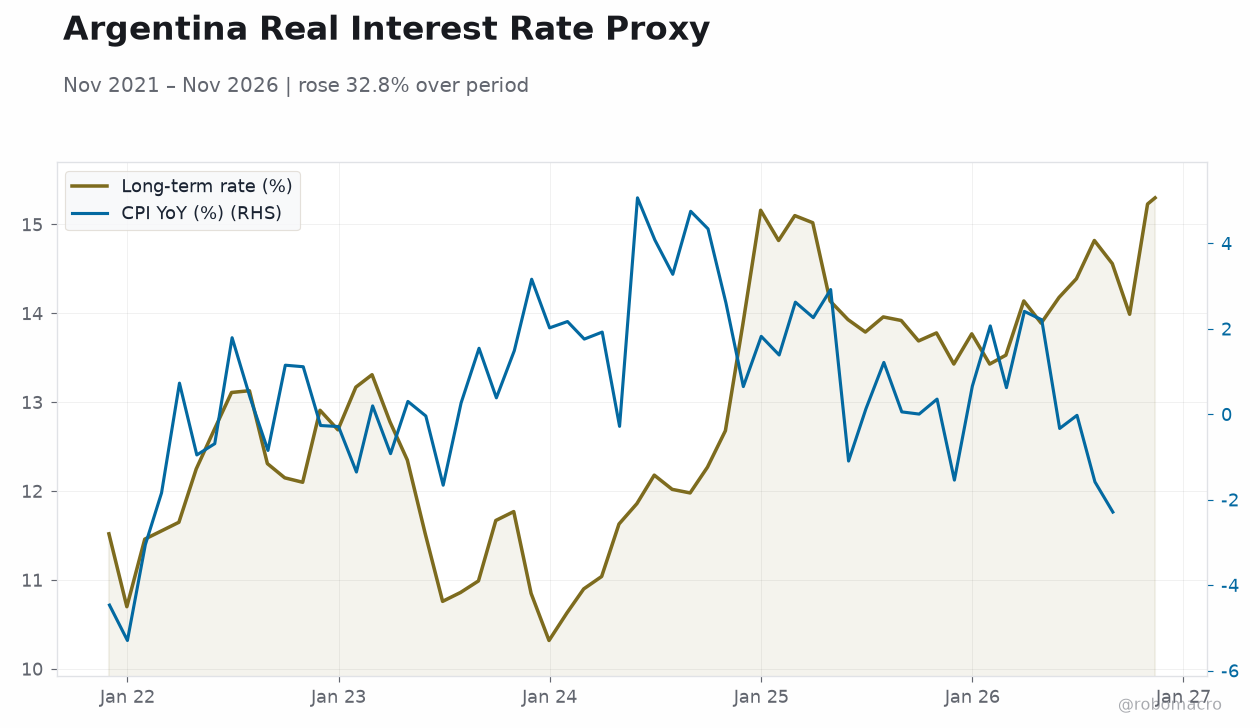
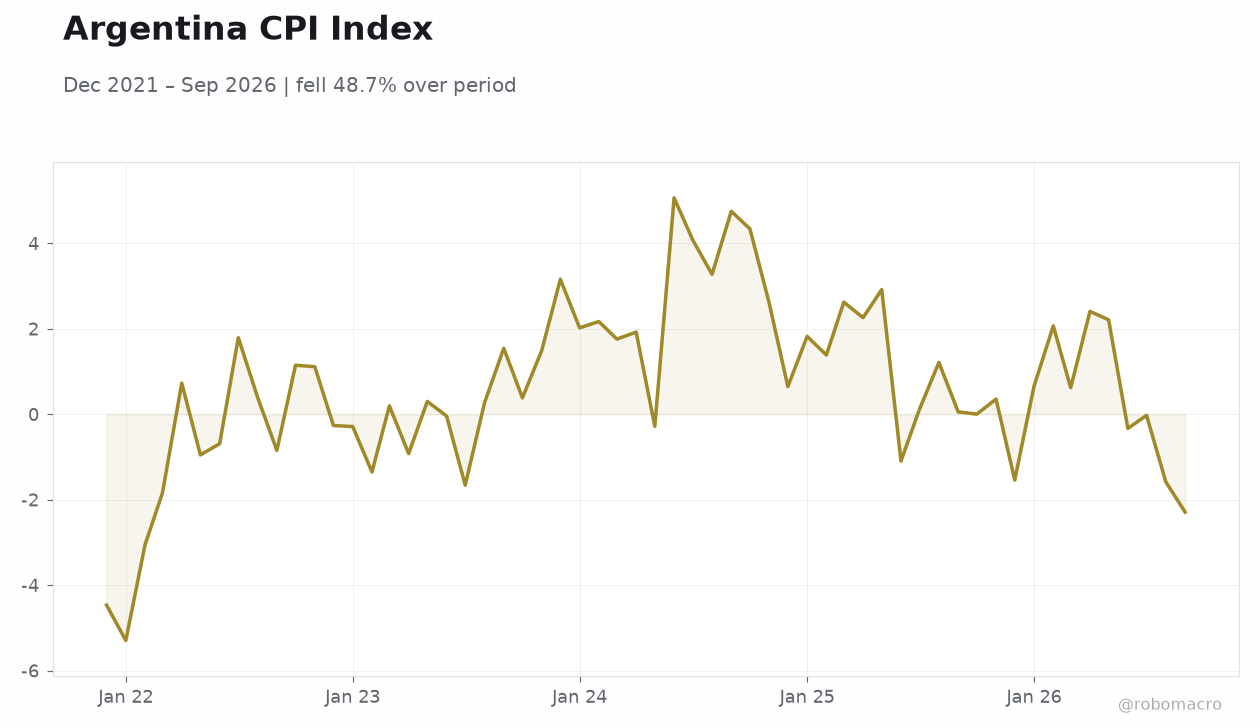 Argentina CPI Index | Type: macro_line | CPI YoY (%): -2.289 (2026-09-01) | Range: -5.294–5.066 | Trend(6pt): -4.466,-1.352,1.923,-1.095,-1.582,-2.289
Today's Economic Events
| Data | Prior | Cons | Time |
|---|---|---|---|
| No events available | |||
- USD/ARS edges to 1,549.50 (+0.23%) with MERVAL off 0.35% as markets await fresh BCRA signals
- CPI YoY stands at 33.1% (Oct 2026), anchoring the disinflation narrative but keeping real-rate debate alive
- Soybean complex flat, Brent firm at $92.53; global risk tone mixed on Fed caution and Japan stagnation
Yesterday's Recap
Argentina's calendar was empty on Monday, leaving markets to trade on positioning and external cues. The MERVAL closed at 2,848,945, down 0.35%, with volume light and no single sector driving the move. The peso weakened modestly, with USD/ARS at 1,549.50 (+0.23%) and EUR/ARS at 1,705.27 (+0.05%), a controlled drift consistent with the crawling-band framework rather than any stress signal.
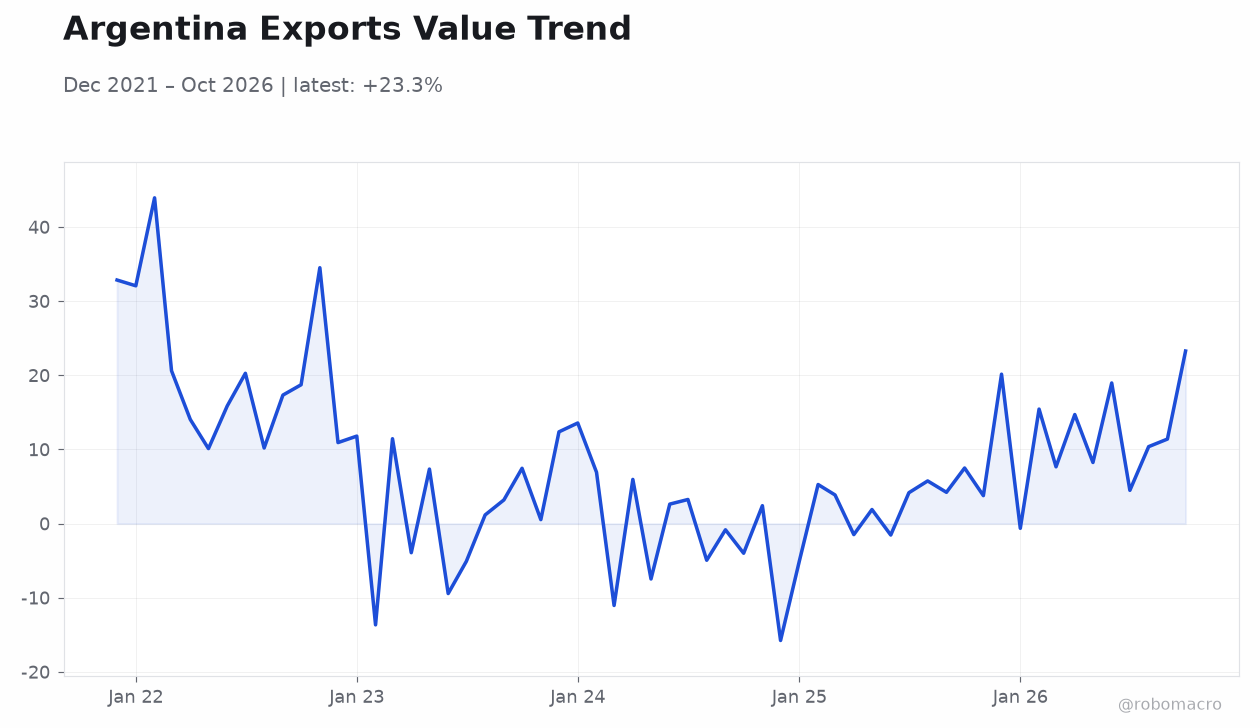
Sovereign bonds showed no quoted yield change in the data feed, though the 10-year remains the key marker for country-risk appetite. Gold rose 0.44% to $3,869.90, a supportive backdrop for Argentina's reserves composition. Brent crude ticked up 0.10% to $92.53, while soybeans slipped 0.06% to $1,228.25 — the export complex is essentially flat, offering no fresh FX tailwind.
Bitcoin fell 1.02% to $64,196, a reminder that crypto-linked demand for pesos remains marginal.
The Day Ahead
Tuesday's domestic calendar is again thin, with no scheduled Argentine data releases, so the session will be driven by BCRA communication and secondary-market flows. Traders will watch the official wholesale FX rate and the parallel spread for any widening that would signal demand pressure. The BCRA's daily reserve and monetary-base publications remain the practical read on sterilization and liquidity management.
With no local print to anchor direction, peso positioning will likely track the dollar index and emerging-market risk appetite. Bond desks will focus on whether the 10-year yield holds its recent range, given the absence of fresh fiscal data. Expect range-bound trading in the MERVAL unless a BCRA statement or external shock forces a repricing.
Other Economic Notes
The disinflation path remains the central macro story, with CPI at 33.1% YoY as of October 2026 — a level that keeps the real policy rate firmly positive but leaves room for debate on how fast the BCRA can ease. Fiscal consolidation continues to anchor the IMF programme narrative, and market participants are watching primary-spending discipline as the key condition for continued disbursements. Soybean export receipts remain the primary hard-currency engine, and with the crush complex flat, FX supply is steady rather than abundant.
↓ p.2