RoboMacro ResearchAlso todaySee the Commodities Daily

Argentina Macro Daily(Beta Mode)

November 19, 2026 robomacro.com

Peso Slides as BCRA Holds Firm

MERVAL2,848,945.00-0.35%
USD/ARS1,559.00+0.44%
EUR/ARS1,709.41+0.18%
Gold3,736.20-0.15%

Market Snapshot

AssetLevelChange
MERVAL2,848,945.00-0.35%
USD/ARS1,559.00+0.44%
EUR/ARS1,709.41+0.18%
Gold3,736.20-0.15%
Brent Crude89.77-2.37%
Soybean1,220.75+0.33%
Bitcoin63,741.23+1.20%
Argentina 10Y--

Prior Economic Events

Data Prior Cons Actual
No events available
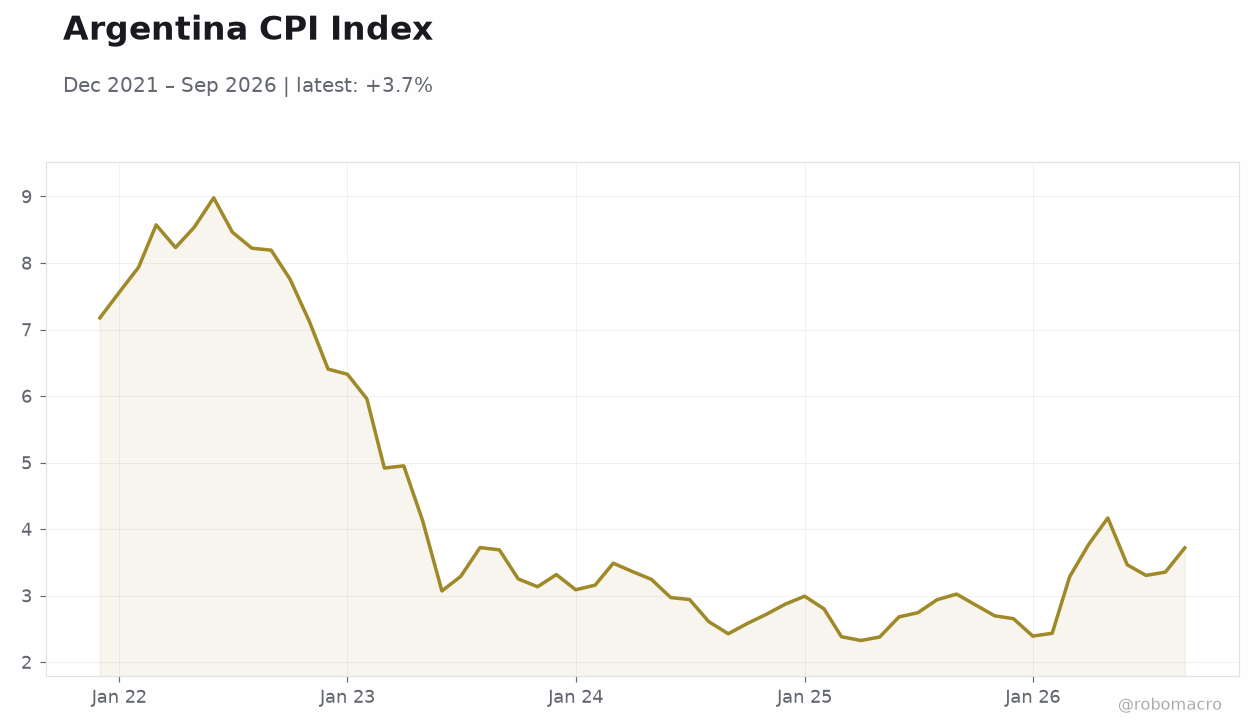
Argentina CPI IndexArgentina CPI Index | Type: macro_line | CPI YoY (%): 3.717 (2026-09-01) | Range: 2.325–8.979 | Trend(5pt): 7.174,5.958,3.361,2.68,3.717

Today's Economic Events

Data Prior Cons Time
No events available
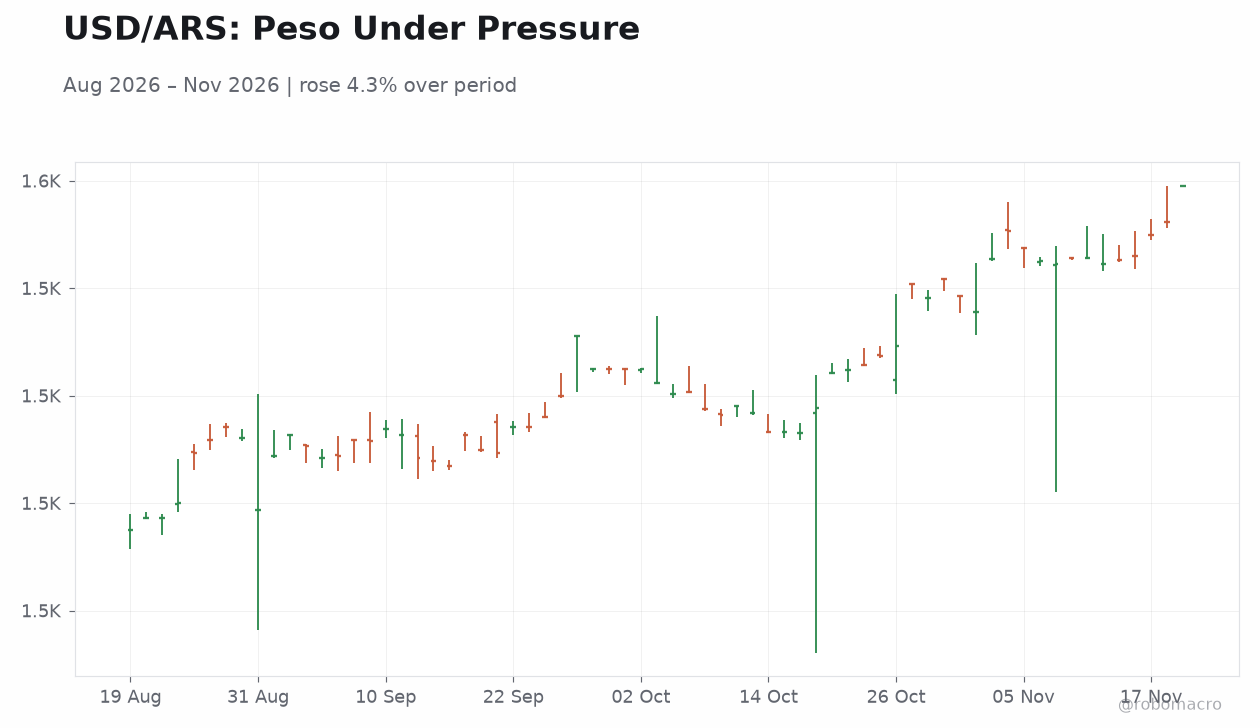
  • USD/ARS rose 0.44% to 1,559 as the peso weakened despite a stable global risk backdrop
  • MERVAL slipped 0.35% to 2,848,945, tracking softer regional sentiment and lower Brent crude
  • BCRA continues to emphasize reserve accumulation and disinflation anchoring; CPI YoY stands at 33.1%

Yesterday's Recap

Argentine markets delivered a mixed session on November 18, with the MERVAL shedding 0.35% to close at 2,848,945 points as investors rotated out of cyclical names amid softer commodity prices. The peso came under modest pressure, with USD/ARS rising 0.44% to 1,559, reflecting persistent demand for hard currency despite the BCRA's crawling peg framework. EUR/ARS edged up 0.18% to 1,709.41, mirroring broad dollar strength against the euro.

Brent crude fell sharply by 2.37% to $89.77 per barrel, a headwind for Argentina's energy sector equities but a modest tailwind for import costs. Soybean futures gained 0.33% to $1,220.75, offering marginal support to the agricultural export complex that remains central to FX reserve accumulation. No official Argentine data releases were scheduled for the session, leaving price action driven by positioning and external cues.

The Argentina 10Y benchmark did not print a yield level in the available data.

The Day Ahead

The calendar for November 19 is devoid of scheduled Argentine macroeconomic releases, leaving markets to digest external developments and positioning flows. Traders will focus on secondary market dynamics in sovereign bonds and the peso's intraday behavior around the BCRA's intervention bands. With no domestic data to anchor sentiment, attention shifts to global risk appetite and commodity price action, particularly soybean and energy complexes.

The BCRA's daily FX operations will remain the primary signal for near-term peso direction. Market participants will also monitor any informal commentary from Economy Ministry officials regarding the fiscal trajectory and reserve targets.

Other Economic Notes

Argentina's disinflation path remains the cornerstone of the macro narrative, with CPI YoY at 33.1% as of October 2026, a marked improvement from prior years but still elevated by historical standards. The fiscal consolidation program continues to anchor investor confidence, though the social and political costs of subsidy reductions remain a latent risk. Soybean export revenues are critical for reserve accumulation, and the marginal gain in futures prices provides modest relief.

↓ p.2
Page 1

Argentina Macro Daily(Beta Mode)

November 19, 2026 robomacro.com
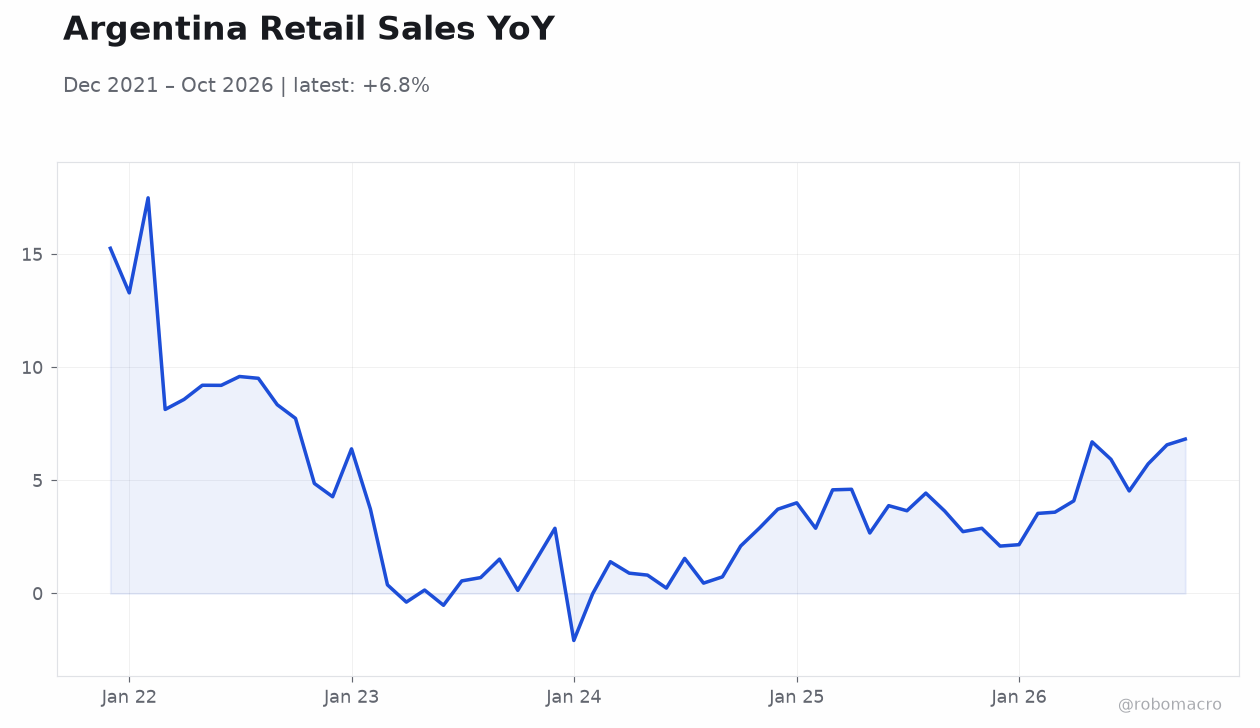
Argentina Retail Sales YoY Argentina Retail Sales YoY | Type: macro_line | Retail Sales YoY (%): 6.823 (2026-10-01) | Range: -2.082–17.49 | Trend(6pt): 15.26,3.726,0.8947,3.88,5.725,6.823
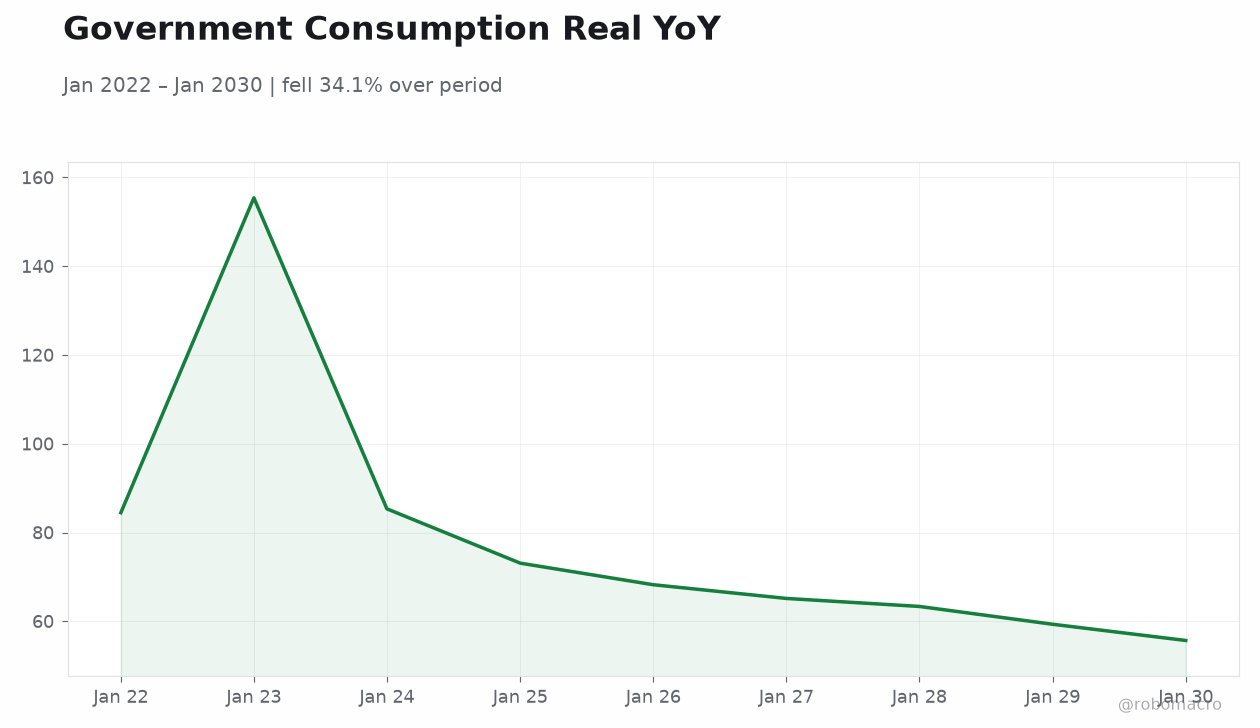
Government Consumption Real YoY Government Consumption Real YoY | Type: macro_line | Government Consumption Real YoY: 55.67 (2030-01-01) | Range: 55.67–155.4 | Trend(5pt): 84.46,85.33,68.23,63.34,55.67
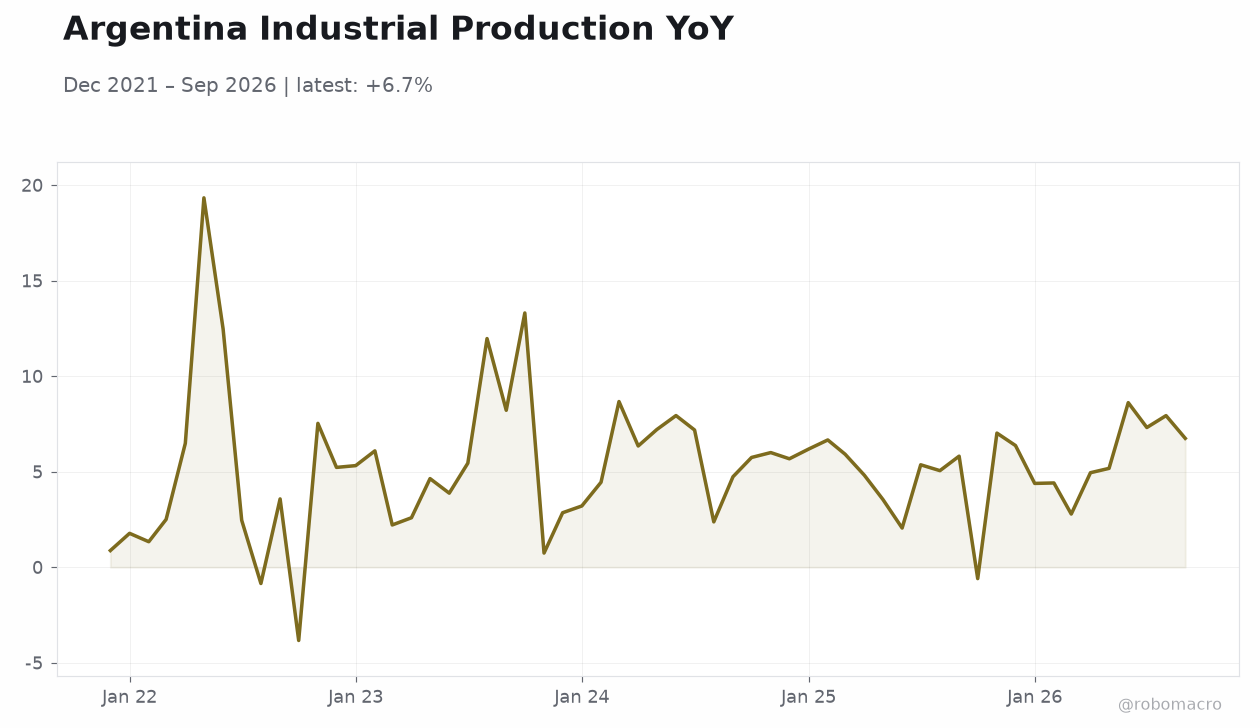
Argentina Industrial Production YoY Argentina Industrial Production YoY | Type: macro_line | Industrial Production YoY (%): 6.745 (2026-09-01) | Range: -3.835–19.33 | Trend(6pt): 0.8722,6.091,6.346,2.051,7.935,6.745
USD/ARS: Peso Under Pressure USD/ARS: Peso Under Pressure | Type: market_hloc | USD/ARS: 1559 (2026-11-19) | Range: 1495–1559 | Trend(6pt): 1495,1514,1525,1529,1550,1559

Other Economic Notes (continued)

The energy sector faces headwinds from lower Brent crude, which could pressure provincial royalty revenues and corporate margins. Reserve adequacy remains the binding constraint on monetary policy flexibility, and the BCRA's ability to accumulate hard currency will determine the pace of any further easing.

Global Macro News

Global central bank rhetoric turned hawkish, with the Bank of Japan governor signaling that rates should continue rising, reinforcing expectations for tighter Japanese monetary conditions. The Reserve Bank of New Zealand flagged elevated inflation and an uneven recovery, echoing the broader theme of sticky price pressures across developed markets. In the U.S., the Fed is poised to raise rates further to stem inflation, a dynamic that strengthens the dollar and complicates Argentina's reserve-building strategy.

Indonesia's central bank hiked rates to support the rupiah, illustrating how emerging markets are defending currencies amid dollar strength. Asian equities traded mixed as higher-rate expectations and tech-sector caution weighed on sentiment. Goldman Sachs projects India's GDP growth slowing to 7.2% in 2027 with inflation at 5.7%, underscoring the uneven nature of the global disinflation cycle.

For Argentina, a firmer dollar backdrop raises the cost of imported inputs and narrows the room for peso appreciation.

Sponsored by Arbitrage Search
Page 2

Argentina Macro Daily(Beta Mode)

November 19, 2026 robomacro.com

Continuation

BCRA Watch

The Central Bank of Argentina continues to prioritize reserve accumulation and disinflation credibility, maintaining a cautious stance on monetary easing despite the notable decline in CPI to 33.1% YoY. Recent BCRA communications emphasize that the crawling peg regime remains the primary nominal anchor, with FX intervention used to smooth volatility rather than defend a fixed level. The committee has signaled that rate decisions will remain data-dependent, with future easing contingent on sustained disinflation and reserve accumulation.

Markets interpret this as a gradualist approach, with no imminent shift in the policy stance. The peso's modest depreciation on November 18 is consistent with the BCRA's tolerance for gradual nominal adjustment, though persistent dollar demand could test the bank's intervention capacity. Forward guidance remains anchored to fiscal consolidation progress and the IMF program's quantitative targets, which constrain any premature loosening.

For markets, the BCRA's steady hand supports short-end bond stability but limits the scope for aggressive duration gains until reserve buffers improve materially.

Sponsored by Arbitrage Search
Page 3