Argentina Macro Daily(Beta Mode)
Peso Slides as Global Risk-Off Bites
Market Snapshot
| Asset | Level | Change |
|---|---|---|
| MERVAL | 2,848,945.00 | -0.35% |
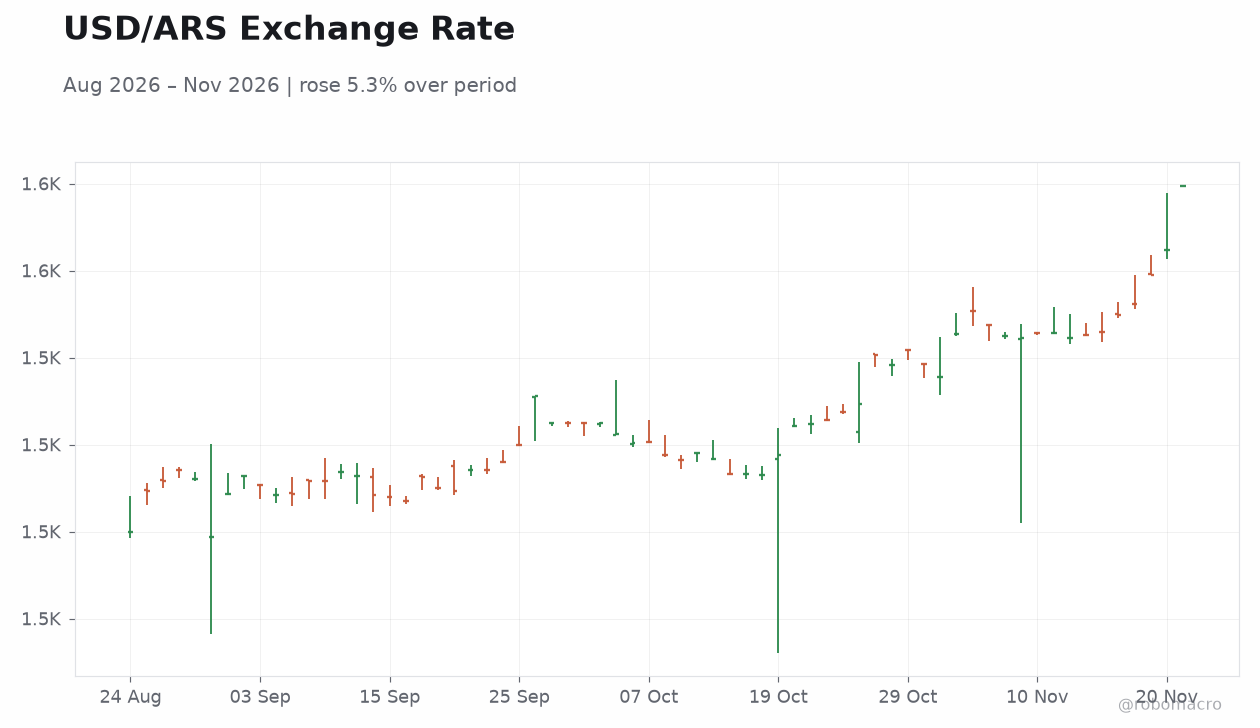
| USD/ARS | 1,579.50 | +0.94% |
| EUR/ARS | 1,734.11 | +1.05% |
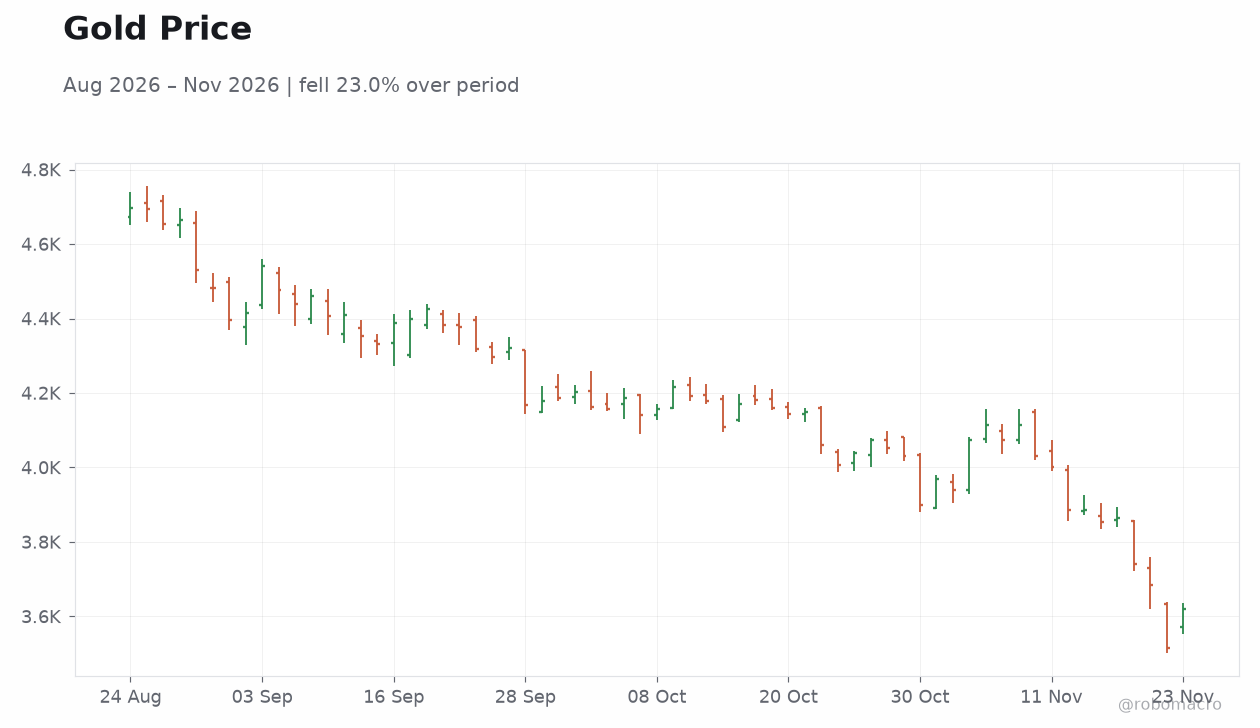
| Gold | 3,620.20 | +2.98% |
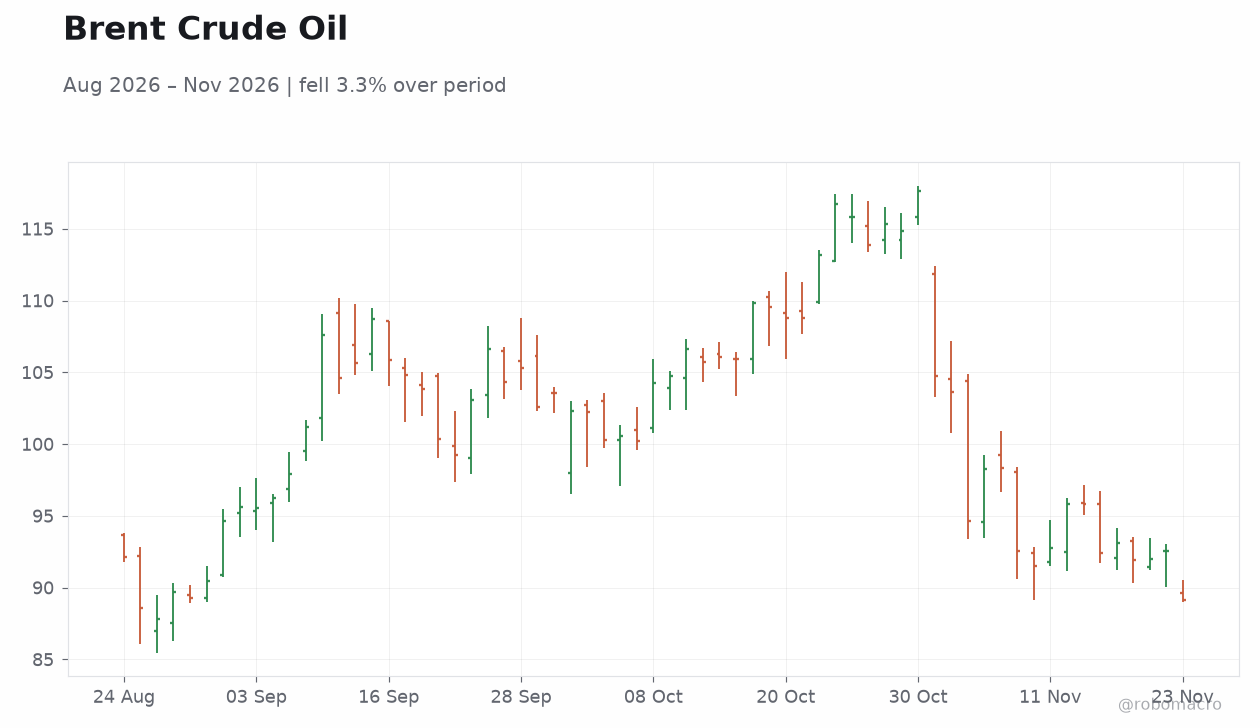
| Brent Crude | 89.20 | -3.64% |
| Soybean | 1,227.50 | +0.55% |
| Bitcoin | 61,505.81 | +0.56% |
| Argentina 10Y | - | - |
Prior Economic Events
| Data | Prior | Cons | Actual |
|---|---|---|---|
| No events available | |||
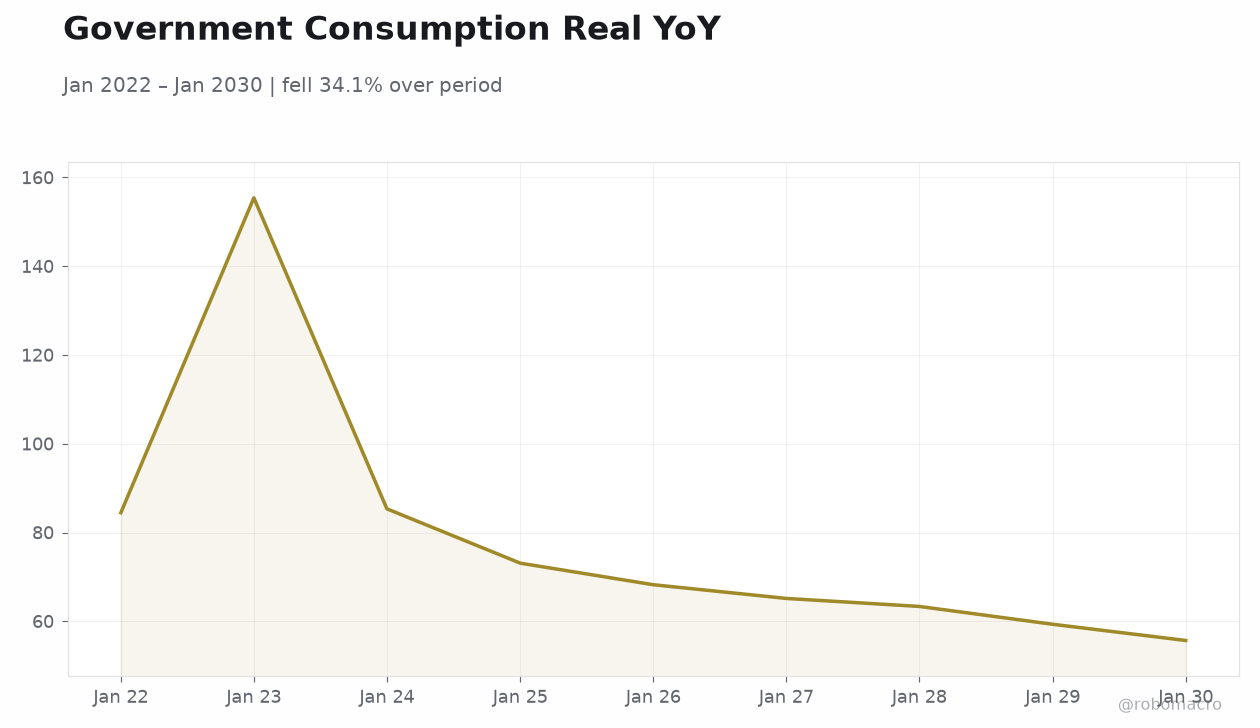 Government Consumption Real YoY | Type: macro_line | Government Consumption Real YoY: 55.67 (2030-01-01) | Range: 55.67–155.4 | Trend(5pt): 84.46,85.33,68.23,63.34,55.67
Today's Economic Events
| Data | Prior | Cons | Time |
|---|---|---|---|
| No events available | |||
- USD/ARS jumps 0.94% to 1,579.50 as global risk aversion deepens Argentina's vulnerability
- MERVAL slips 0.35% to 2,848,945 while gold surges 2.98% on safe-haven demand
- Bloomberg flags Argentine bonds slipping into distress amid election anxiety and global turmoil
Yesterday's Recap
Argentine markets opened the week under pressure as a broad global flight from risk assets caught the country at a vulnerable moment. The peso weakened, with USD/ARS climbing 0.94% to 1,579.50 and EUR/ARS rising 1.05% to 1,734.11, reflecting both external dollar strength and persistent local demand for hard currency. The MERVAL equity index edged down 0.35% to 2,848,945, with losses concentrated in financial and energy names sensitive to the global selloff.
Bloomberg reported that Argentine sovereign bonds slipped deeper into distress territory, extending a selloff fueled by anxiety over next year's election and the broader global risk-off backdrop. Gold's 2.98% rally to $3,620.20 underscored the defensive positioning dominating portfolios, while Brent crude's 3.64% drop to $89.20 offered mixed signals for Argentina's energy-export ambitions. Soybean prices firmed 0.55% to $1,227.50, providing modest support to the agricultural export complex that remains a critical source of hard-currency inflows.
No official Argentine data releases were scheduled for the session, leaving market sentiment driven entirely by external factors and positioning ahead of key events later this week.
The Day Ahead
The Argentine calendar remains light on Tuesday, November 24, with no major official data releases scheduled, leaving markets to digest external developments and positioning flows. Traders will focus on secondary market dynamics in sovereign bonds, watching whether distress-level spreads stabilize or extend their recent widening. The peso will remain under scrutiny, with the BCRA's managed float and intervention strategy in focus as the currency tests the 1,580 level.
Agricultural export data and daily BCRA reserve movements will be monitored for signs of hard-currency accumulation. With no domestic catalysts, global risk sentiment and commodity price action will likely dictate the session's tone.
Other Economic Notes
Argentina's inflation trajectory remains a critical variable, with CPI running at 33.1% year-over-year as of October 2026, reflecting the ongoing disinflation process under the current policy framework. ↓ p.2