Argentina Macro Daily(Beta Mode)
Milei Bans BCRA Printing as Recession Bites
Market Snapshot
| Asset | Level | Change |
|---|---|---|
| MERVAL | 2,848,945.00 | -0.35% |
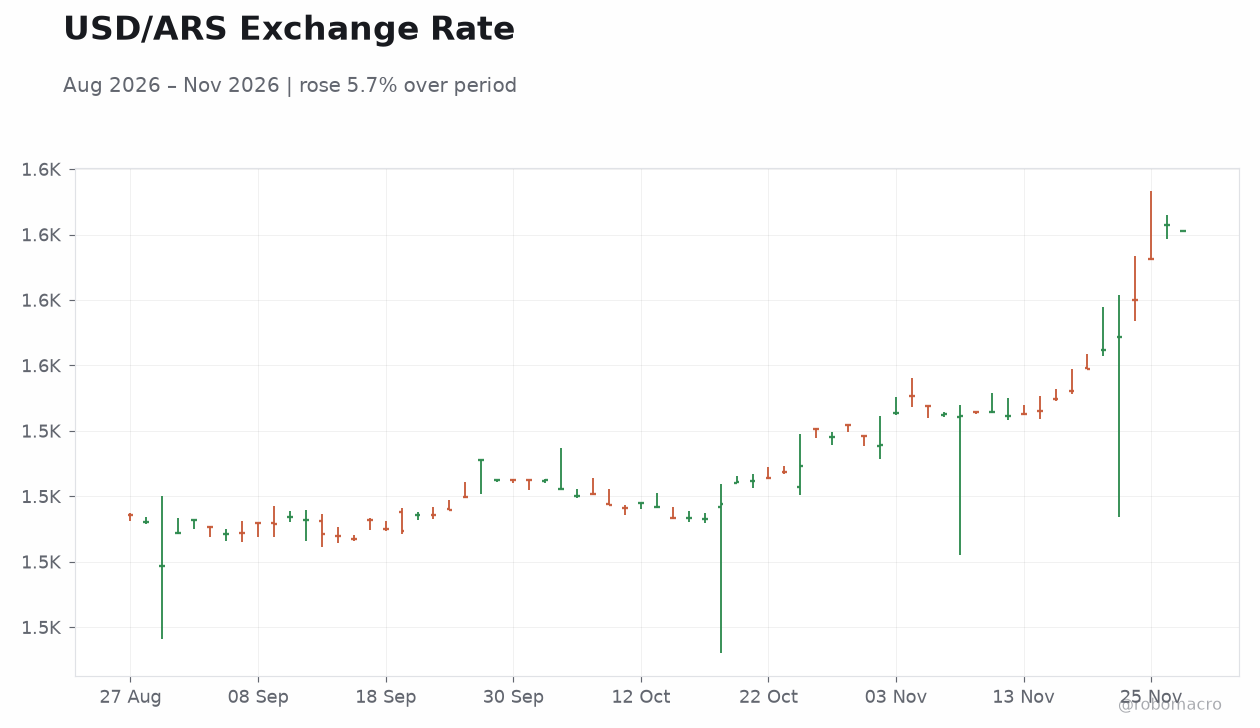
| USD/ARS | 1,601.00 | -0.12% |
| EUR/ARS | 1,756.77 | -0.10% |
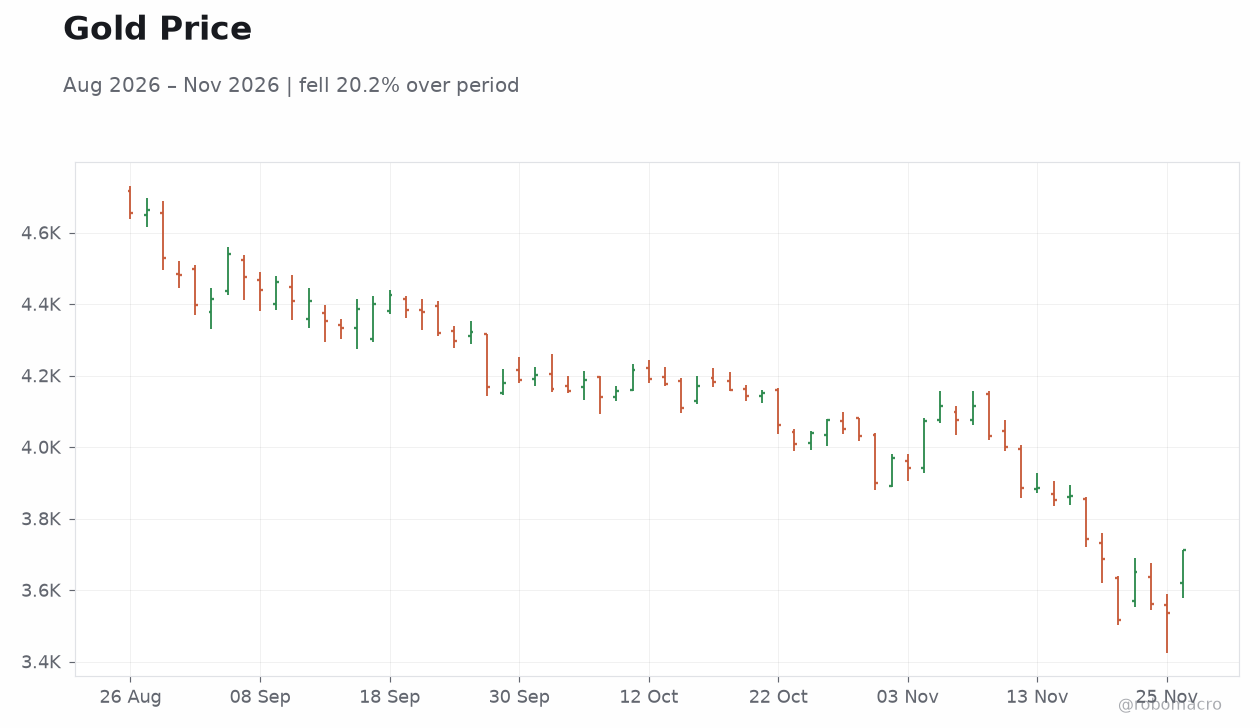
| Gold | 3,709.10 | +4.90% |
| Brent Crude | 92.44 | -2.29% |
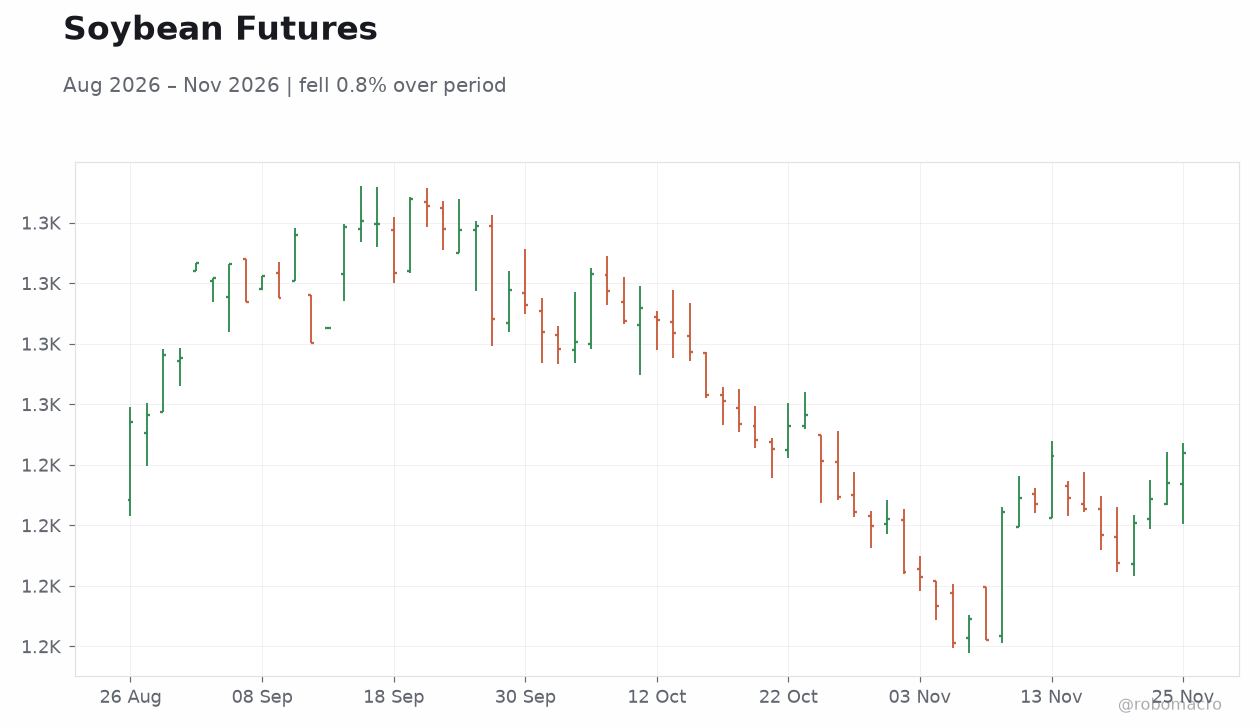
| Soybean | 1,244.00 | +0.81% |
| Bitcoin | 61,645.81 | +1.90% |
| Argentina 10Y | - | - |
Prior Economic Events
| Data | Prior | Cons | Actual |
|---|---|---|---|
| No events available | |||
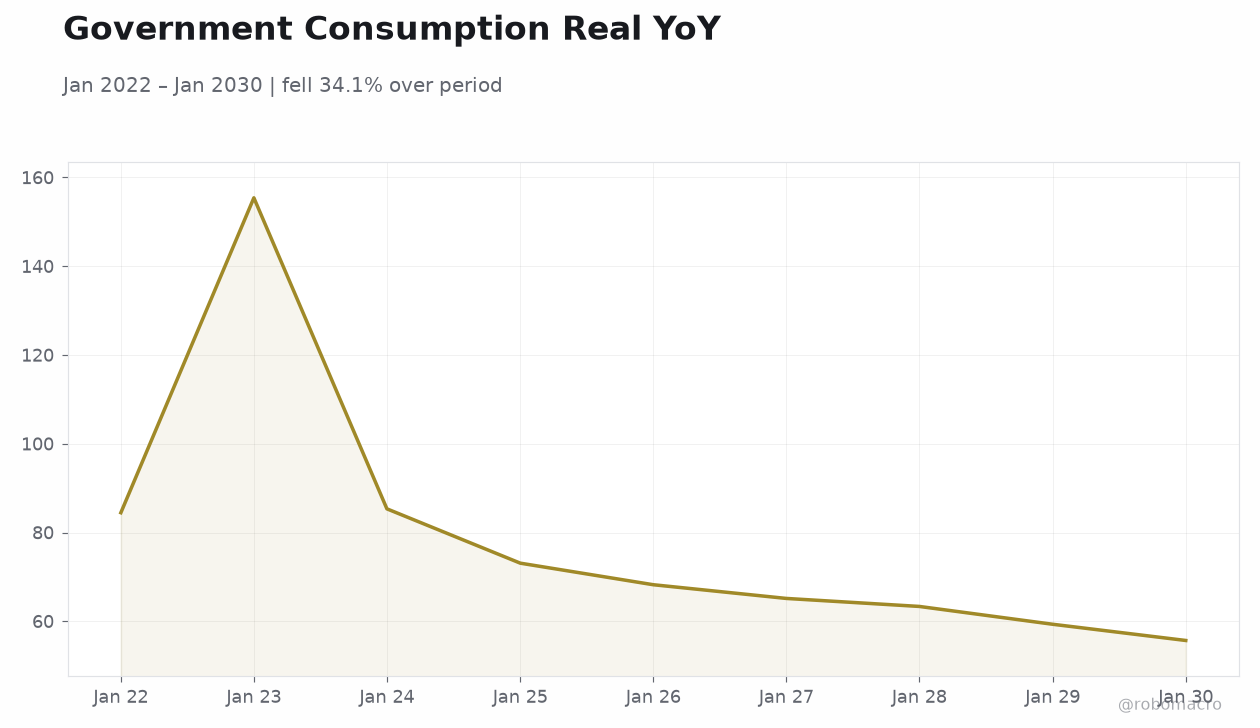 Government Consumption Real YoY | Type: macro_line | Government Consumption Real YoY: 55.67 (2030-01-01) | Range: 55.67–155.4 | Trend(5pt): 84.46,85.33,68.23,63.34,55.67
Today's Economic Events
| Data | Prior | Cons | Time |
|---|---|---|---|
| No events available | |||
- Congress approves ban on central bank financing of the Treasury, a structural anchor against fiscal dominance
- Argentina slips into technical recession even as disinflation continues, with CPI at 33.1% YoY
- Peso holds near 1,601/USD; MERVAL softens while gold surges on global risk hedging
Yesterday's Recap
Argentine markets closed mixed on Thursday, with the MERVAL easing 0.35% to 2,848,945 points as investors digested confirmation that Argentina has entered a technical recession despite the Milei government's reform push. The peso was marginally firmer, with USD/ARS slipping 0.12% to 1,601.00 and EUR/ARS down 0.10% to 1,756.77, suggesting continued managed FX dynamics rather than sharp directional pressure. Sovereign bonds showed no quoted yield change in the data feed, leaving the curve anchored ahead of fresh fiscal signals.
The standout domestic catalyst was congressional approval of the ban on central bank money printing for the government, a landmark institutional reform passed without the president's own congressional majorities. Gold's 4.90% jump to $3,709.10 underscored demand for hard-asset hedges, a theme that resonates with Argentine savers. Soybean futures rose 0.81% to $1,244.00, modestly supportive for the export complex that underpins FX accumulation.
Brent crude fell 2.29% to $92.44, easing imported energy costs.
The Day Ahead
The calendar is empty for Friday, November 27, with no scheduled Argentine data releases, leaving markets to trade off the legislative fallout from the central bank financing ban. Attention will center on secondary-market sovereign bond pricing as investors assess whether the reform lowers long-run inflation risk premia. FX desks will watch whether the peso's quiet firmness persists into the weekend, particularly given thin holiday-adjacent liquidity.
With no prints due, positioning flows and any BCRA communication will dominate the session. Traders will also monitor the RIGI approval of Argentina LNG, a $50.75 billion investment, for sentiment spillover into energy names.
Other Economic Notes
The approval of Argentina LNG into the RIGI regime marks the largest investment under the incentive framework, with over 1,400 wells planned in Neuquén and LNG exports from the Gulf of San Matías via two liquefaction vessels. This is a multi-year balance-of-payments positive that could materially shift the energy trade balance toward surplus. ↓ p.2