Brazil Macro Daily(Beta Mode)
Industrial Output Slips, BRL Strengthens
Market Snapshot
| Asset | Level | Change |
|---|---|---|
| Bovespa | 174,266.00 | +0.86% |
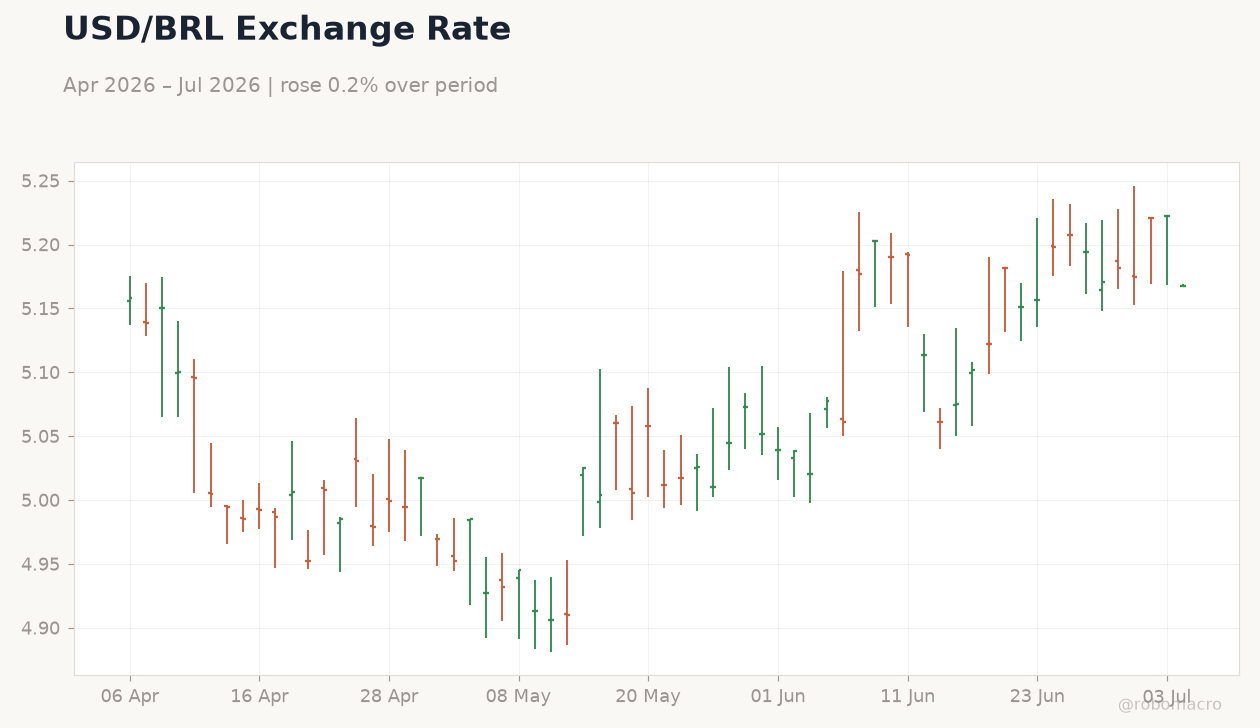
| USD/BRL | 5.17 | -1.04% |
| EUR/BRL | 5.91 | -0.89% |
| Vale | 14.99 | +0.60% |
| Petrobras | 16.11 | +0.75% |
| WTI Crude | 68.51 | -0.26% |
| Gold | 4,163.00 | +1.22% |
| Bitcoin | 62,840.55 | -1.11% |
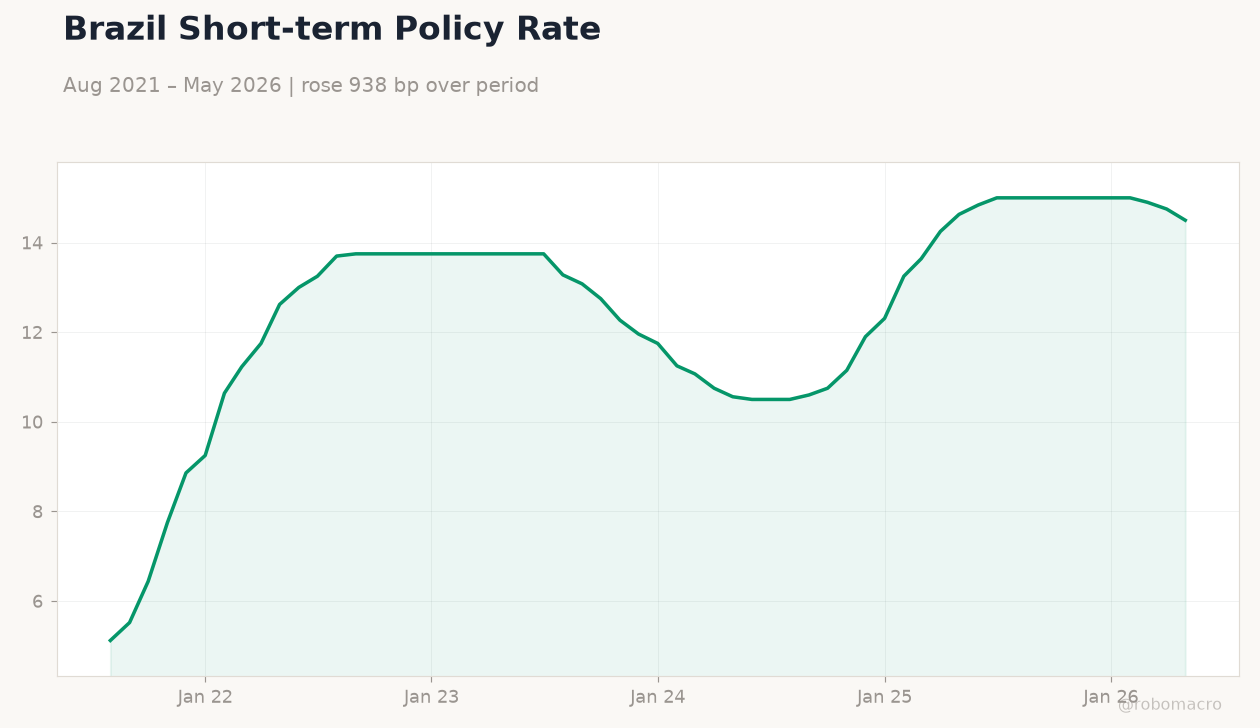
| Brazil Short-term Rate | 14.50% | -1.69% |
| Brazil Long-term Rate | - | - |
Prior Economic Events
| Data | Prior | Cons | Actual |
|---|---|---|---|
| No events available | |||
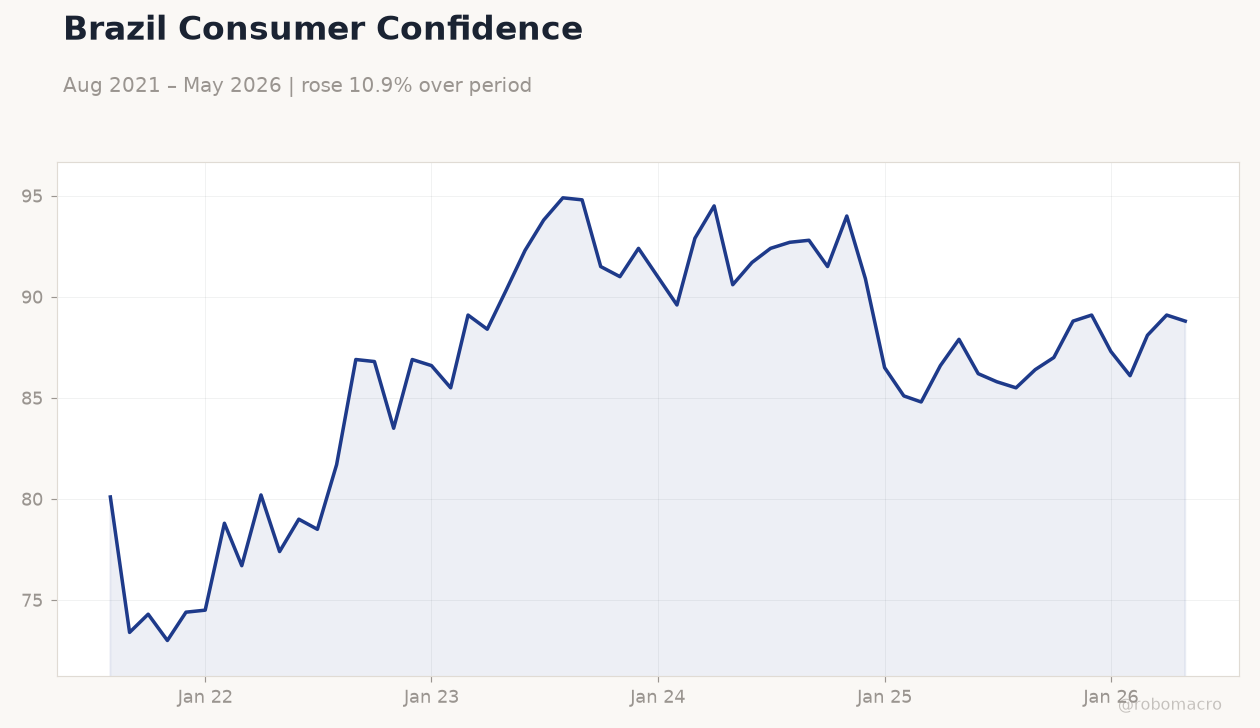 Brazil Consumer Confidence | Type: macro_line | Index: 88.8 (2026-05-01) | Range: 73–94.9 | Trend(6pt): 80.1,86.8,92.4,85.1,89.1,88.8
Today's Economic Events
| Data | Prior | Cons | Time |
|---|---|---|---|
| Wednesday (2026-07-08) | |||
| Retail Sales Month-over-Month | -1.50 | - | 04:00 |
| Friday (2026-07-10) | |||
| Inflation Rate Month-over-Month | 0.58 | - | 04:00 |
| Inflation Rate Year-over-Year | 4.72 | - | 04:00 |
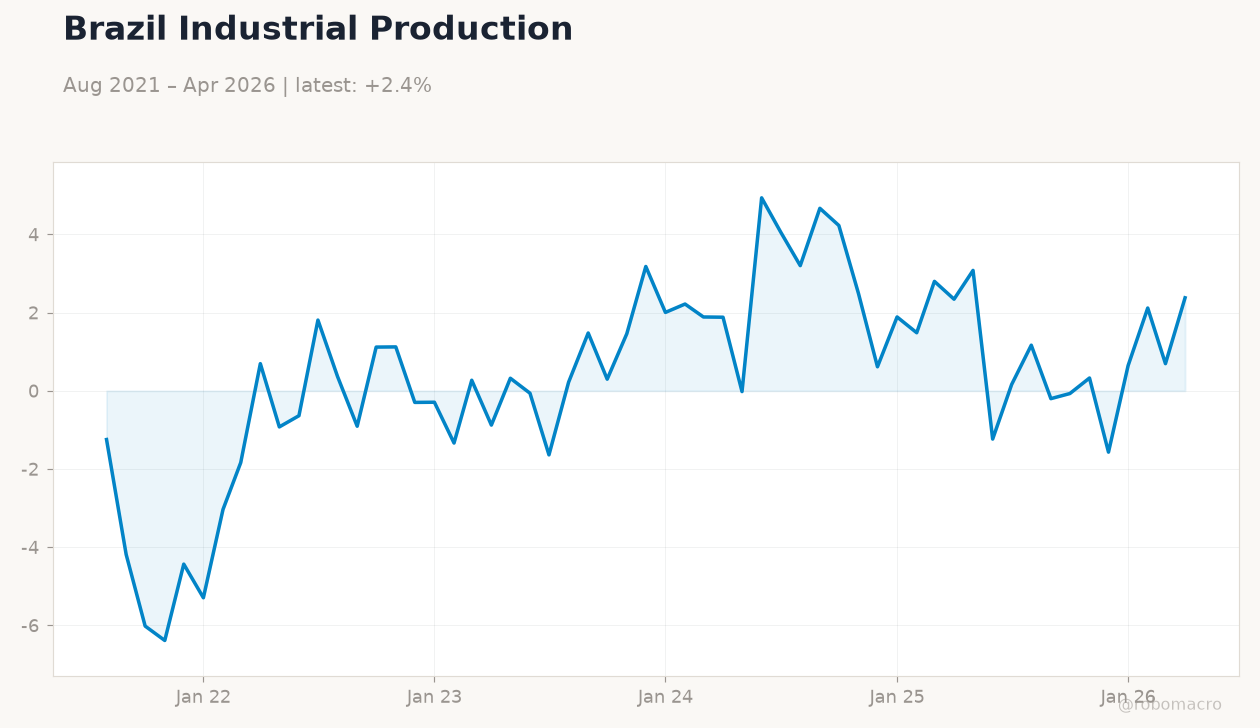
- Brazil industrial production contracted 0.2% in May, missing forecasts and marking the first decline since December 2025.
- Bovespa advanced 0.86% to 174,266 while USD/BRL fell 1.04% to 5.17 on firm commodity prices.
- Selic rate remains at 14.50% with markets pricing gradual cuts later in 2026.
Yesterday's Recap
Brazil reported a 0.2% contraction in industrial output for May, the first negative reading since late 2025 and below consensus expectations. Equity markets responded positively as Bovespa climbed 0.86% to close at 174,266, led by gains in Vale and Petrobras. The Brazilian real strengthened sharply, with USD/BRL dropping 1.04% to 5.17 and EUR/BRL easing 0.89% to 5.91.
Short-term rates held steady at 14.50%, down 1.69% on the day, reflecting anchored policy expectations. WTI crude slipped 0.26% to 68.51 while gold rose 1.22% to 4,163, supporting exporter valuations. No major data releases occurred on July 5, leaving market moves driven by the industrial print and global commodity flows.
Bitcoin declined 1.11% to 62,840.55 amid broader risk sentiment.
The Day Ahead
Retail sales month-over-month data are scheduled for release on July 8 at 04:00 ET, with markets watching for signs of consumer resilience after the industrial contraction. Inflation rate month-over-month and year-over-year prints follow on July 10, both carrying medium impact and likely to shape near-term BCB pricing. No COPOM minutes or senior speeches are listed in the immediate calendar.
Analysts will assess whether the soft tax-reform rollout announced earlier offsets any downside risks in activity data. Trade and fiscal updates remain absent, keeping focus on the inflation trajectory and its implications for the Selic path.
Other Economic Notes
Brazil plans a gradual introduction of the tax reform’s new selective levy, aiming to limit near-term price pressures while broadening the revenue base. Usiminas emphasized steel’s structural role in the economy, highlighting long-term capacity strategies that could support industrial exports. CVC Brasil continues to serve as a barometer for travel spending and broader consumer health amid mixed activity signals.
The government’s ecological transformation plan has mobilized over R$500 billion in sustainable financing through 2025, attracting private capital to green projects. These initiatives unfold against persistent questions over fiscal sustainability ahead of the 2026 elections.