Brazil Macro Daily(Beta Mode)
El Niño Fuels Inflation, Sparks Fiscal Concerns
Market Snapshot
| Asset | Level | Change |
|---|---|---|
| Bovespa | 173,346.81 | +0.52% |
| USD/BRL | 5.14 | -0.77% |
| EUR/BRL | 5.90 | -0.44% |
| Vale | 15.09 | +0.67% |
| Petrobras | 16.26 | +0.93% |
| WTI Crude | 69.83 | +1.87% |
| Gold | 4,185.50 | +0.73% |
| Bitcoin | 62,991.79 | -1.57% |
| Brazil Short-term Rate | 14.50% | -1.69% |
| Brazil Long-term Rate | - | - |
Prior Economic Events
| Data | Prior | Cons | Actual |
|---|---|---|---|
| No events available | |||
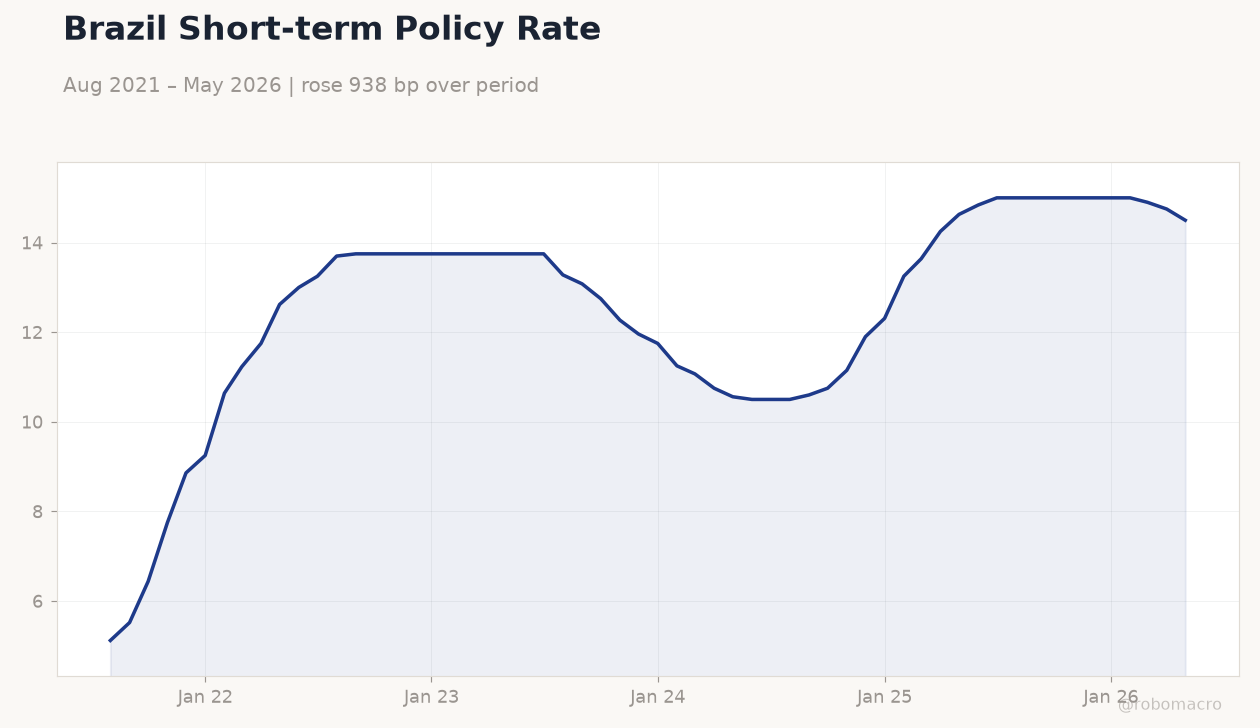 Brazil Short-term Policy Rate | Type: macro_line | %: 14.5 (2026-05-01) | Range: 5.12–15 | Trend(6pt): 5.12,13.75,11.96,13.25,14.75,14.5
Today's Economic Events
| Data | Prior | Cons | Time |
|---|---|---|---|
| Wednesday (2026-07-08) | |||
| Retail Sales Month-over-Month | -1.50 | - | 04:00 |
| Friday (2026-07-10) | |||
| Inflation Rate Month-over-Month | 0.58 | 0.32 | 04:00 |
| Inflation Rate Year-over-Year | 4.72 | 4.80 | 04:00 |
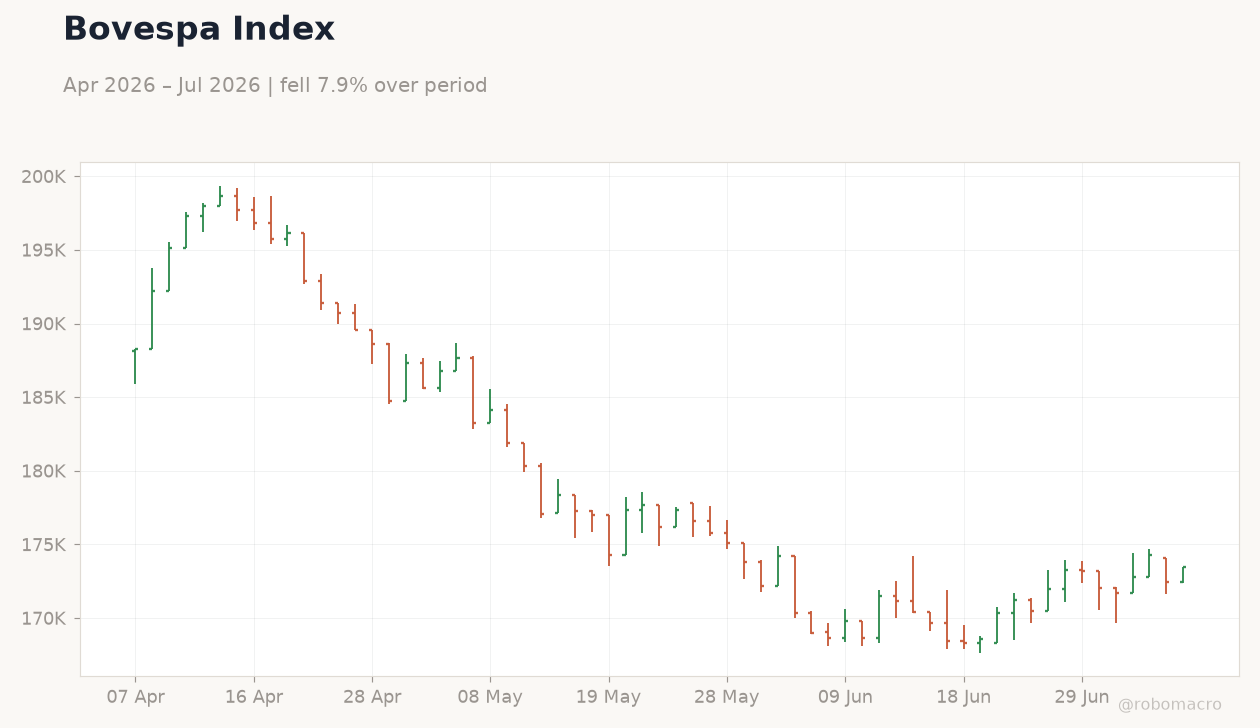
- Bovespa rose 0.52% to 173,346.81 as iron ore and oil prices lifted Vale and Petrobras
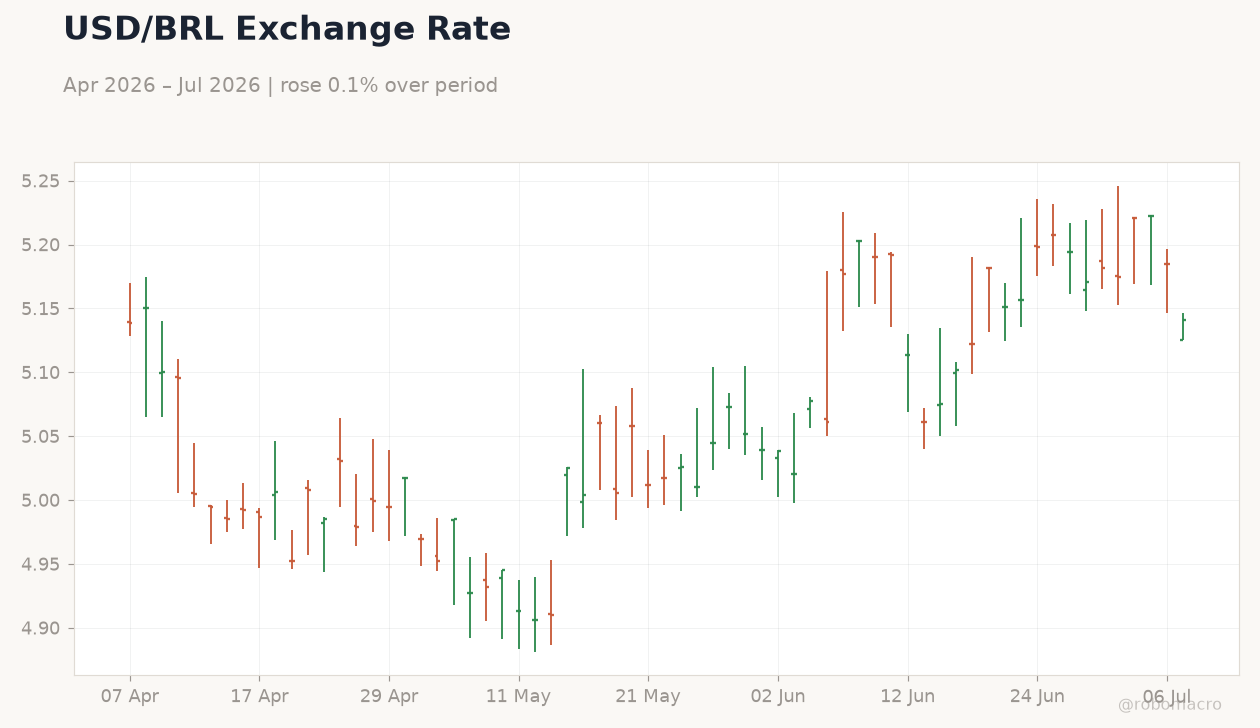
- USD/BRL fell 0.77% to 5.14 while the short-term rate held at 14.50%
- Retail sales data due tomorrow and IPCA release on Friday will test inflation expectations ahead of potential Selic easing
Yesterday's Recap
No economic data releases occurred on 6 July. Equity markets advanced with Bovespa gaining 0.52% to close at 173,346.81, supported by Vale rising 0.67% and Petrobras climbing 0.93%. The Brazilian real strengthened, sending USD/BRL down 0.77% to 5.14 and EUR/BRL lower by 0.44% to 5.90.
WTI crude added 1.87% to 69.83, providing a tailwind for commodity-linked exporters. The Brazil short-term rate remained unchanged at 14.50%. Gold advanced 0.73% while Bitcoin declined 1.57%, reflecting mixed risk sentiment.
Market participants focused on positioning ahead of the coming inflation print rather than reacting to fresh domestic releases.
The Day Ahead
Retail sales month-over-month for May will be published at 04:00 ET on 8 July, following a -1.5% reading in the prior month. Traders will monitor the print for signs of consumer resilience after recent rate stability. On 10 July the IPCA inflation figures are scheduled, with month-over-month consensus at 0.32% versus 0.58% previously and year-over-year expected at 4.80% against 4.72%.
Markets will scrutinize the breakdown for evidence of El Niño-driven food and energy pressures. Any upside surprise could reduce the perceived room for near-term Selic cuts. The BCB’s inflation targeting framework remains the key lens for interpreting the data.
Other Economic Notes
A strong El Niño episode is raising both near-term inflation and longer-term fiscal risks through higher energy and agricultural costs. The UN has highlighted scope for tourism to lift its contribution to GDP, offering a structural growth channel if infrastructure and security improve. Fiscal sustainability concerns persist as higher inflation could widen subsidies and debt-service costs.
Policymakers face a narrow path between containing price pressures and supporting activity in an economy still reliant on commodity exports. Iron ore, soybeans and crude remain central to external balances and currency stability.