Brazil Macro Daily(Beta Mode)
Brazilian Real Strengthens Ahead of Inflation Data
Market Snapshot
| Asset | Level | Change |
|---|---|---|
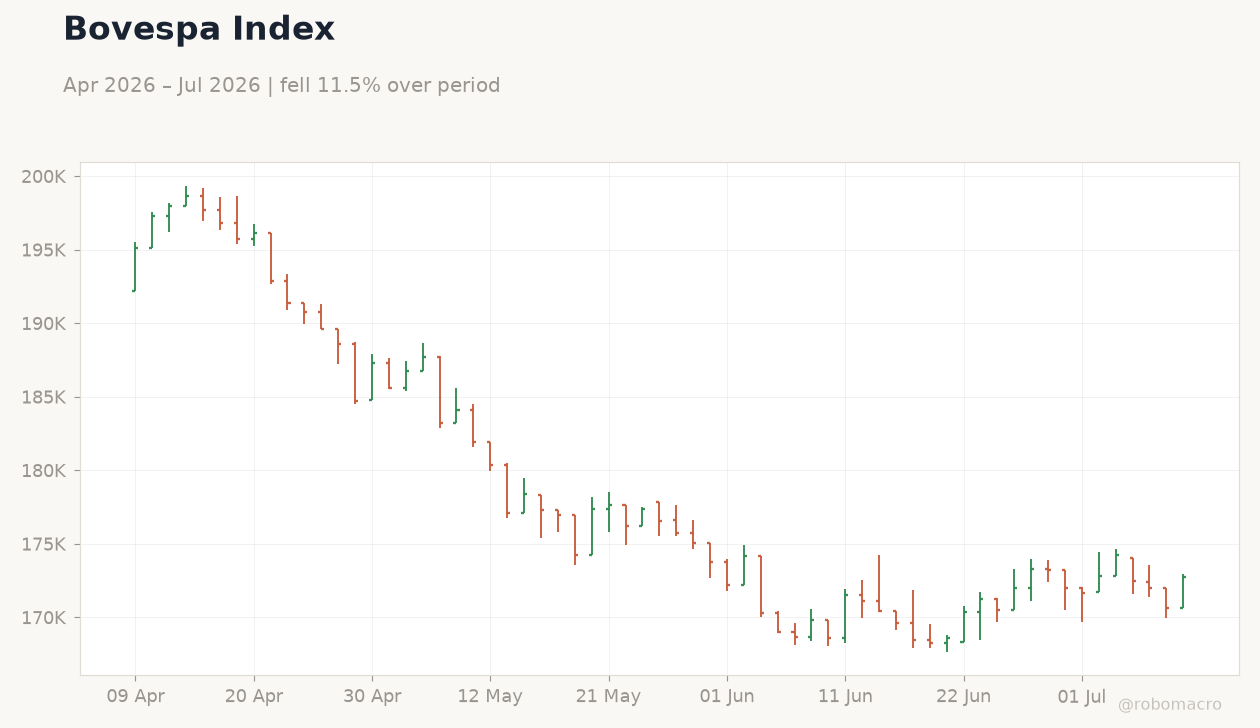
| Bovespa | 172,742.00 | +1.22% |
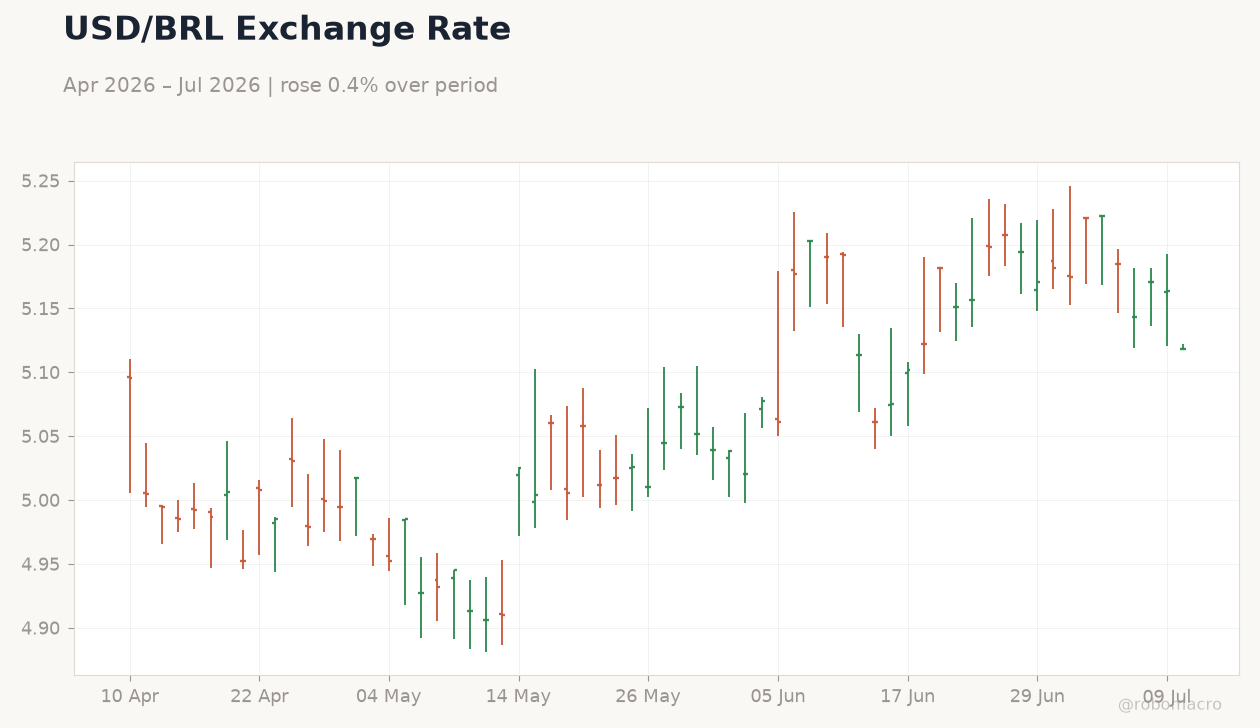
| USD/BRL | 5.12 | -0.87% |
| EUR/BRL | 5.85 | -0.70% |
| Vale | 14.22 | +1.21% |
| Petrobras | 17.03 | -1.22% |
| WTI Crude | 72.05 | -0.04% |
| Gold | 4,105.90 | -0.60% |
| Bitcoin | 64,180.57 | +1.56% |
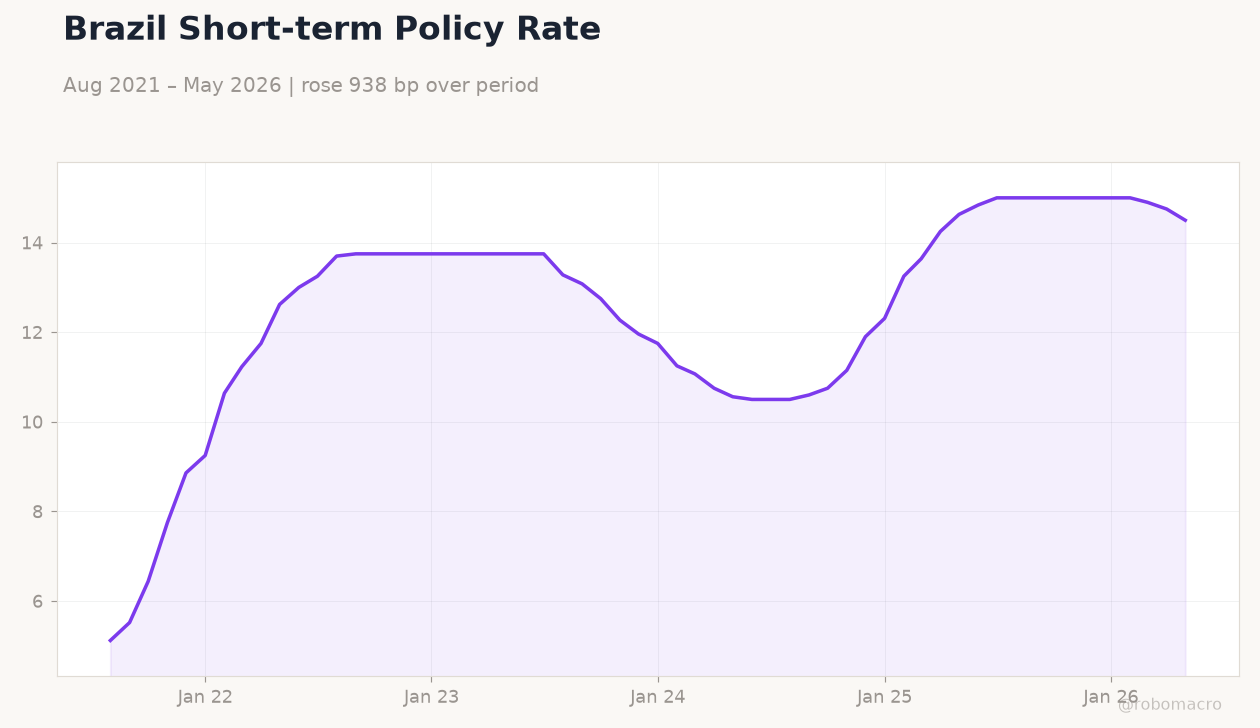
| Brazil Short-term Rate | 14.50% | -1.69% |
| Brazil Long-term Rate | - | - |
Prior Economic Events
| Data | Prior | Cons | Actual |
|---|---|---|---|
| No events available | |||
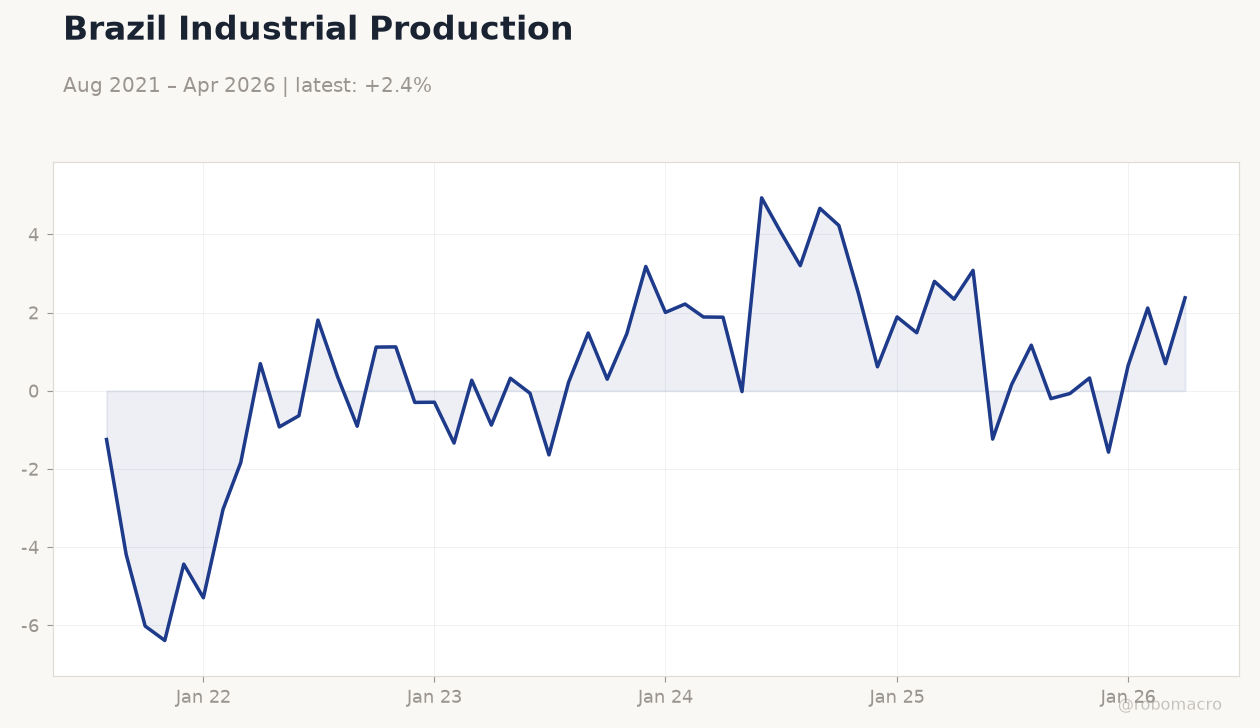 Brazil Industrial Production | Type: macro_line | YoY %: 2.38 (2026-04-01) | Range: -6.386–4.937 | Trend(5pt): -1.245,1.119,3.181,1.486,2.38
Today's Economic Events
| Data | Prior | Cons | Time |
|---|---|---|---|
| Inflation Rate Month-over-Month | 0.58 | 0.31 | 04:00 |
| Inflation Rate Year-over-Year | 4.72 | 4.80 | 04:00 |
- Bovespa rises 1.22% to 172,742 while USD/BRL falls 0.87% to 5.12 on favorable flows.
- June inflation MoM and YoY releases due today with consensus at 0.31% and 4.80%.
- Short-term rates ease to 14.50% as markets price lower Selic path ahead.
Yesterday's Recap
Bovespa advanced 1.22% to close at 172,742, supported by gains in financials and mining names. USD/BRL declined 0.87% to 5.12 while EUR/BRL fell 0.70% to 5.85, reflecting reduced currency pressure. Vale shares climbed 1.21% to 14.22 on firmer iron-ore futures, whereas Petrobras dropped 1.22% to 17.03 amid softer crude.
The Brazil short-term rate eased 1.69% to 14.50%, signaling lower policy-rate expectations. WTI crude held near 72.05 with minimal change and gold slipped 0.60% to 4,105.90. Bitcoin rose 1.56% to 64,180.57, adding to risk-on sentiment.
No economic data prints occurred on July 9, leaving markets focused on positioning ahead of inflation figures.
The Day Ahead
Markets will receive June inflation data at 04:00 ET, with MoM expected to slow to 0.31% from 0.58% and YoY to rise modestly to 4.80% from 4.72%. The releases carry medium impact and will update 2026 inflation expectations directly. No other Brazil-specific events appear on the calendar for July 10.
Retail sales and industrial production figures remain scheduled for later in the week. Traders will monitor whether the inflation surprise alters odds of an August Selic adjustment.
Other Economic Notes
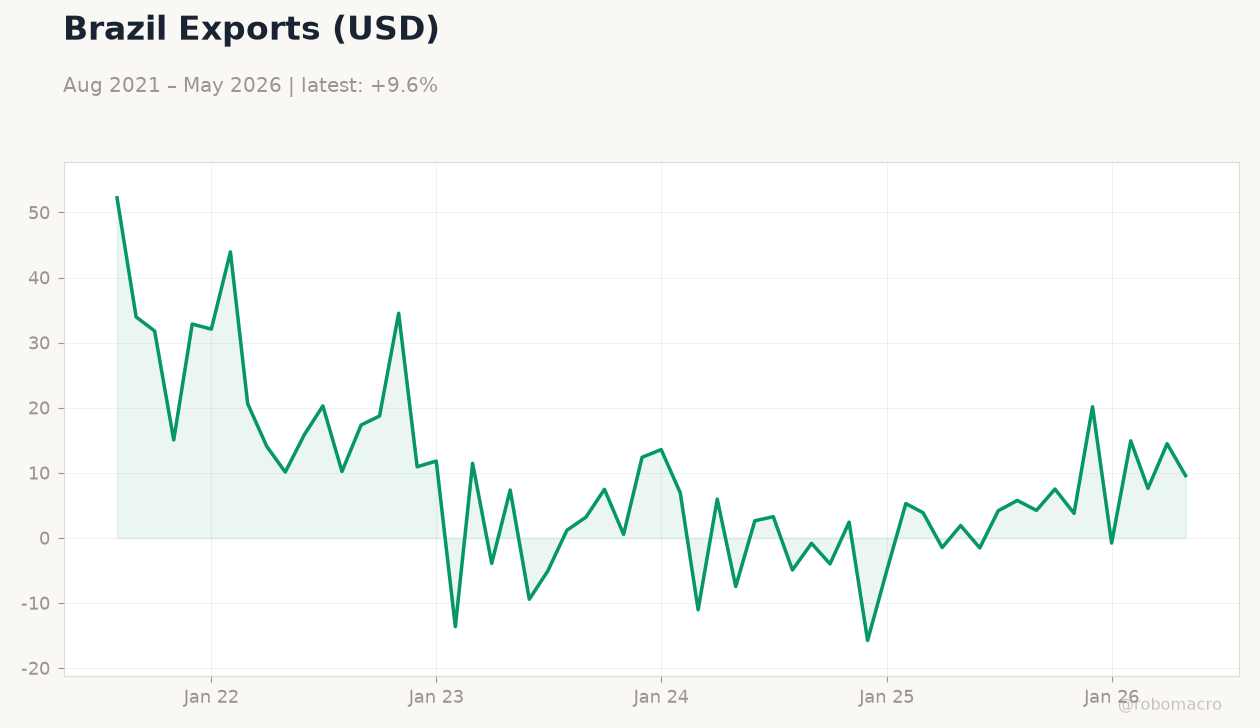
The IMF upgraded its Latin America growth forecast and highlighted diverging paths between Brazil and Mexico. Brazil’s May trade surplus hit record levels on soybean and oil exports, supporting the external balance. Fiscal issuance plans for NTN-F bonds in Q3 remain consistent with the primary-deficit target.
Digital-inclusion metrics show persistent gaps in access across regions, though these carry limited near-term market impact. Commodity-export resilience continues to anchor the current-account outlook.
Global Macro News
Senator Flávio Bolsonaro requested a delay in proposed U.S. tariffs on Brazilian goods until after the October election. A Brazilian-led consortium acquired Russell Investments for $2.8 billion to expand technology capabilities.
<i>↓ p.2</i>