Brazil Macro Daily(Beta Mode)
Inflation Relief Spurs Brazil Rate-Cut Bets
Market Snapshot
| Asset | Level | Change |
|---|---|---|
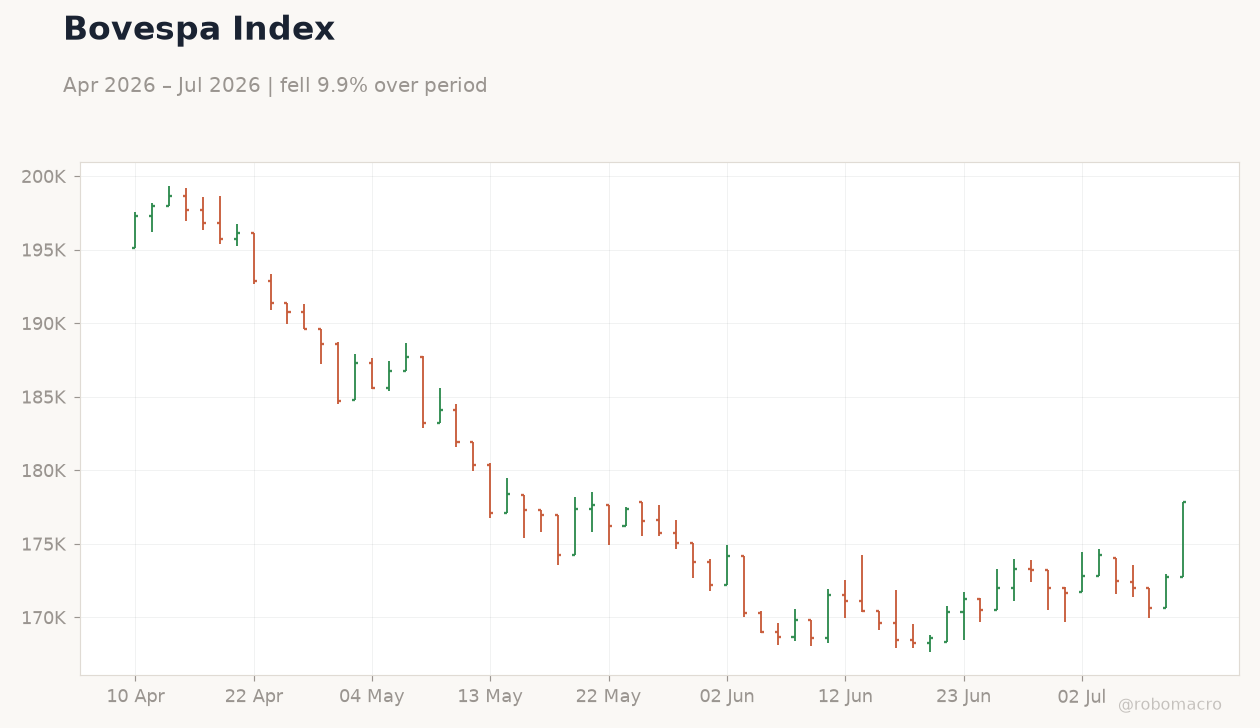
| Bovespa | 177,866.00 | +2.97% |
| USD/BRL | 5.11 | -0.51% |
| EUR/BRL | 5.82 | -0.71% |
| Vale | 14.46 | +1.69% |
| Petrobras | 17.32 | +1.70% |
| WTI Crude | 72.99 | +2.21% |
| Gold | 4,085.20 | -0.46% |
| Bitcoin | 63,114.66 | -1.01% |
| Brazil Short-term Rate | 14.50% | -1.69% |
| Brazil Long-term Rate | - | - |
Prior Economic Events
| Data | Prior | Cons | Actual |
|---|---|---|---|
| No events available | |||
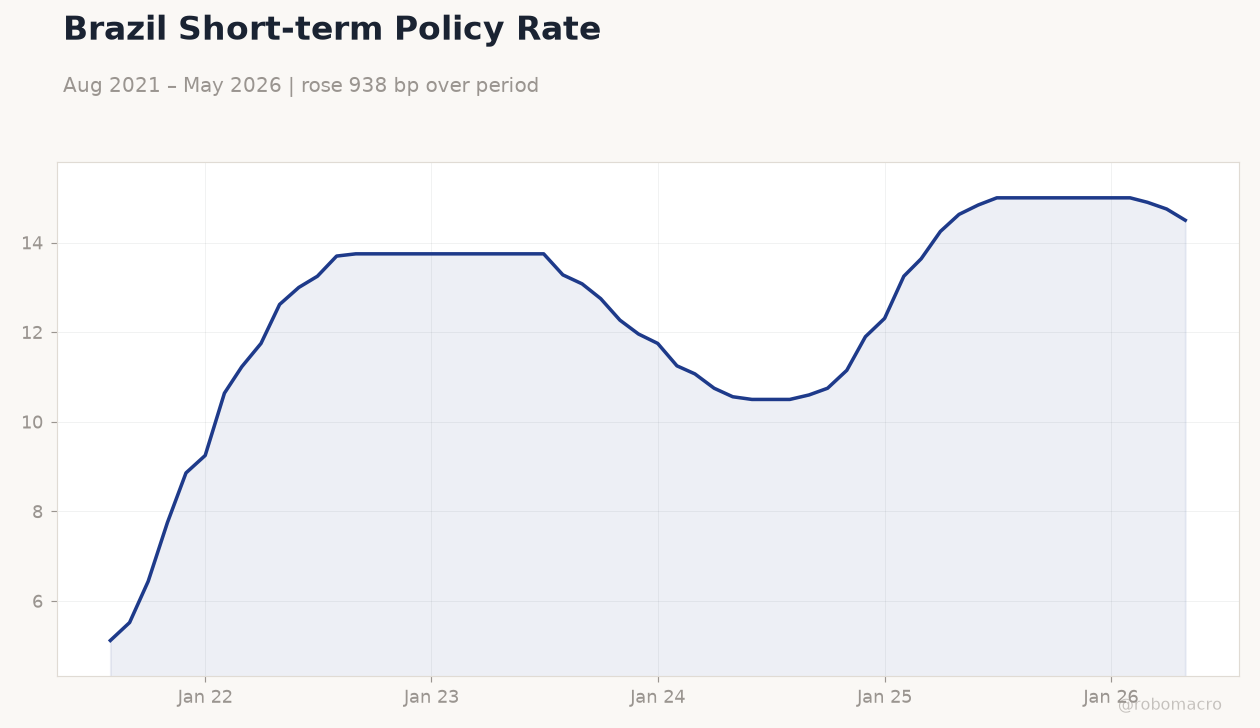 Brazil Short-term Policy Rate | Type: macro_line | %: 14.5 (2026-05-01) | Range: 5.12–15 | Trend(6pt): 5.12,13.75,11.96,13.25,14.75,14.5
Today's Economic Events
| Data | Prior | Cons | Time |
|---|---|---|---|
| Business Confidence Index | 46.70 | - | 14:00 |
| Thursday (2026-07-16) | |||
| Retail Sales Month-over-Month | -1.50 | - | 04:00 |
- June IPCA slowdown reinforces August Selic cut odds
- Bovespa jumps 2.97% to 177,866 as USD/BRL drops to 5.11
- IMF lifts 2026 growth forecast to 2.4%
Yesterday's Recap
June IPCA printed softer than expected, pulling the annual rate to 4.64% and easing pressure on the 14.50% Selic. Equity markets responded immediately, with Bovespa surging 2.97% to 177,866 while Vale and Petrobras each gained more than 1.6%. The real strengthened, sending USD/BRL down 0.51% to 5.11 and EUR/BRL 0.71% lower to 5.82.
Short-term rates eased 1.69% to 14.50% as DI futures priced a higher probability of near-term easing. WTI crude rose 2.21% to 72.99, supporting commodity exporters, while gold slipped 0.46%. The move lower in breakevens reflected reduced inflation risk premia after the June print.
No COPOM speakers appeared, leaving the data as the dominant driver. Itaú shares approached R$500 billion market value on the broad rally.
The Day Ahead
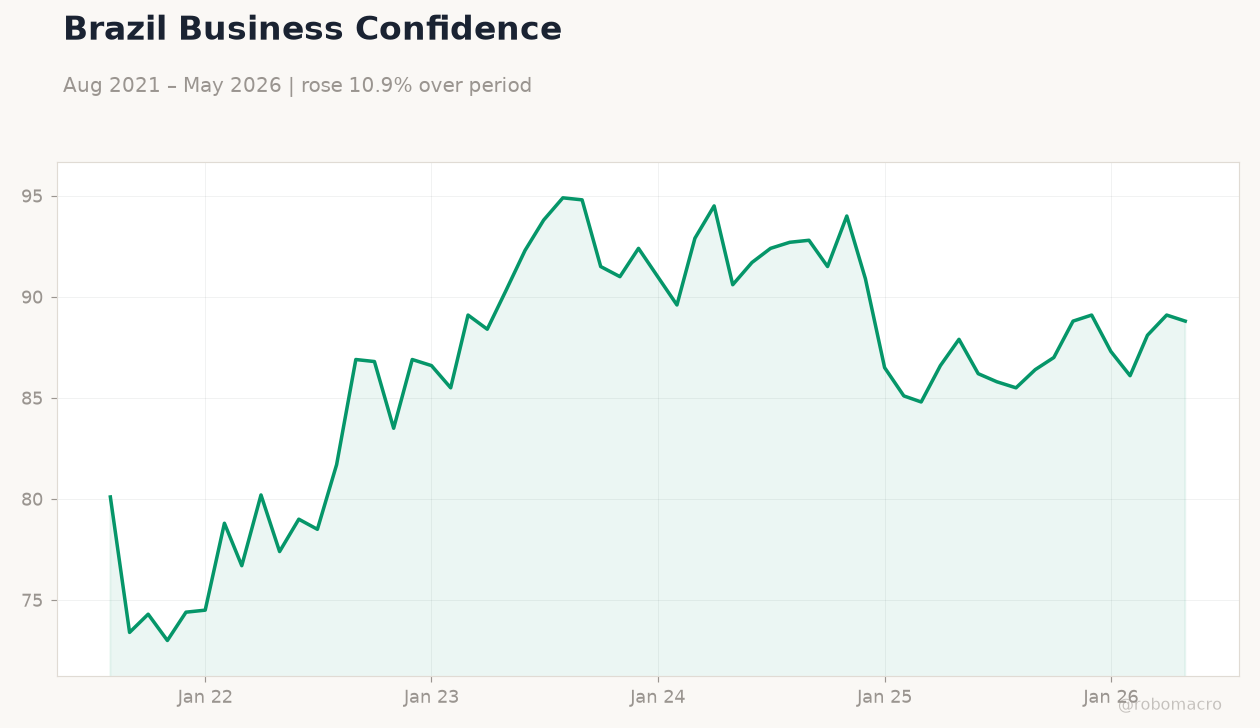
Markets will focus on the 14:00 Business Confidence Index release, which carries medium impact and follows a 46.7 prior. The reading will help gauge corporate sentiment ahead of potential policy easing. Attention then shifts to the 16 July Retail Sales MoM figure, last reported at -1.5%.
A firm print could reinforce the dovish tilt already priced into DI futures. No COPOM minutes or speeches are scheduled through mid-week. Traders will also monitor oil prices for any renewed upside pressure on the inflation outlook.
Other Economic Notes
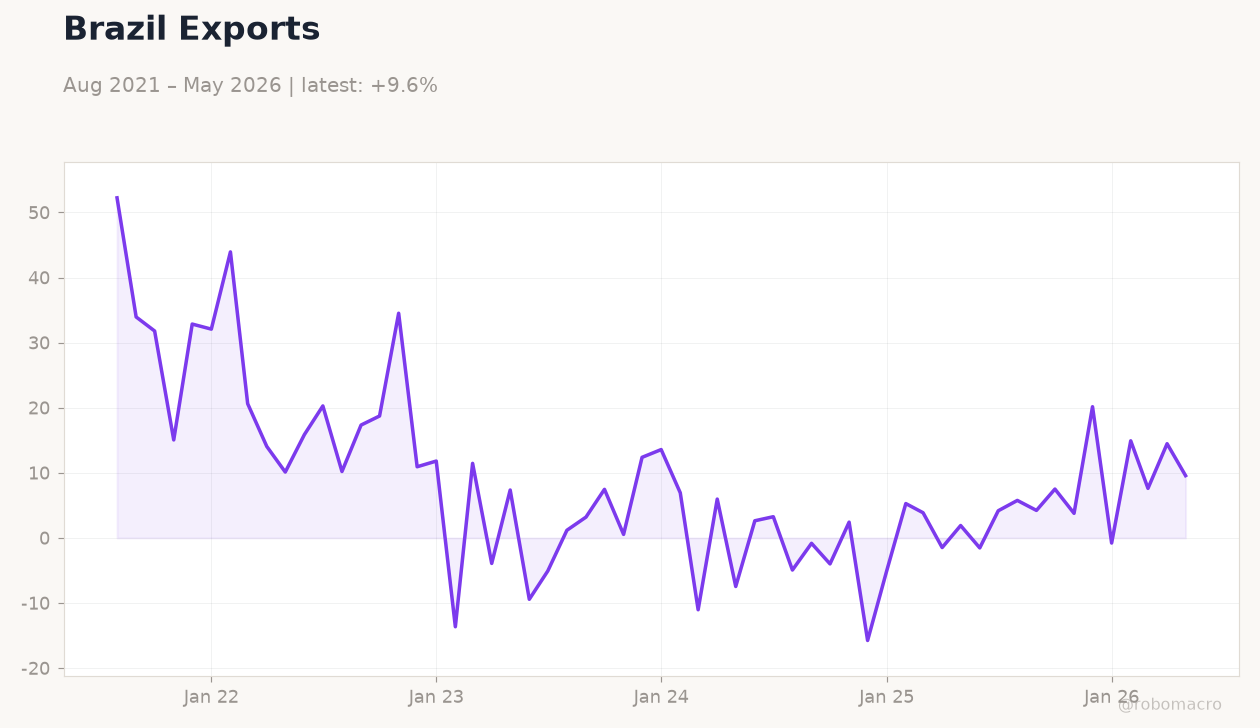
The IMF upgrade to 2.4% 2026 growth reflects stronger commodity export momentum and contained fiscal slippage. Finance Minister Durigan highlighted that high real rates stem primarily from fiscal credibility gaps rather than monetary policy alone. Banks such as Itaú approached R$500 billion in market value as lower inflation expectations lifted sector multiples.
Bradesco BBI noted that long-term yields must fall further before IPO activity can resume in scale. Primary deficit target of 0.5% of GDP for 2026 remains unchanged, limiting additional fiscal stimulus.
Global Macro News
Stronger Chinese industrial output lifted iron-ore futures and supported Brazilian mining names. U.S. inventory draws pushed WTI higher, adding a mild upside risk to Brazil’s imported inflation channel.
<i>↓ p.2</i>