Brazil Macro Daily(Beta Mode)
Bovespa Slides Ahead of Retail Sales Data
Market Snapshot
| Asset | Level | Change |
|---|---|---|
| Bovespa | 175,739.00 | -1.20% |
| USD/BRL | 5.13 | +0.45% |
| EUR/BRL | 5.85 | +0.50% |
| Vale | 14.18 | -1.94% |
| Petrobras | 17.88 | +3.23% |
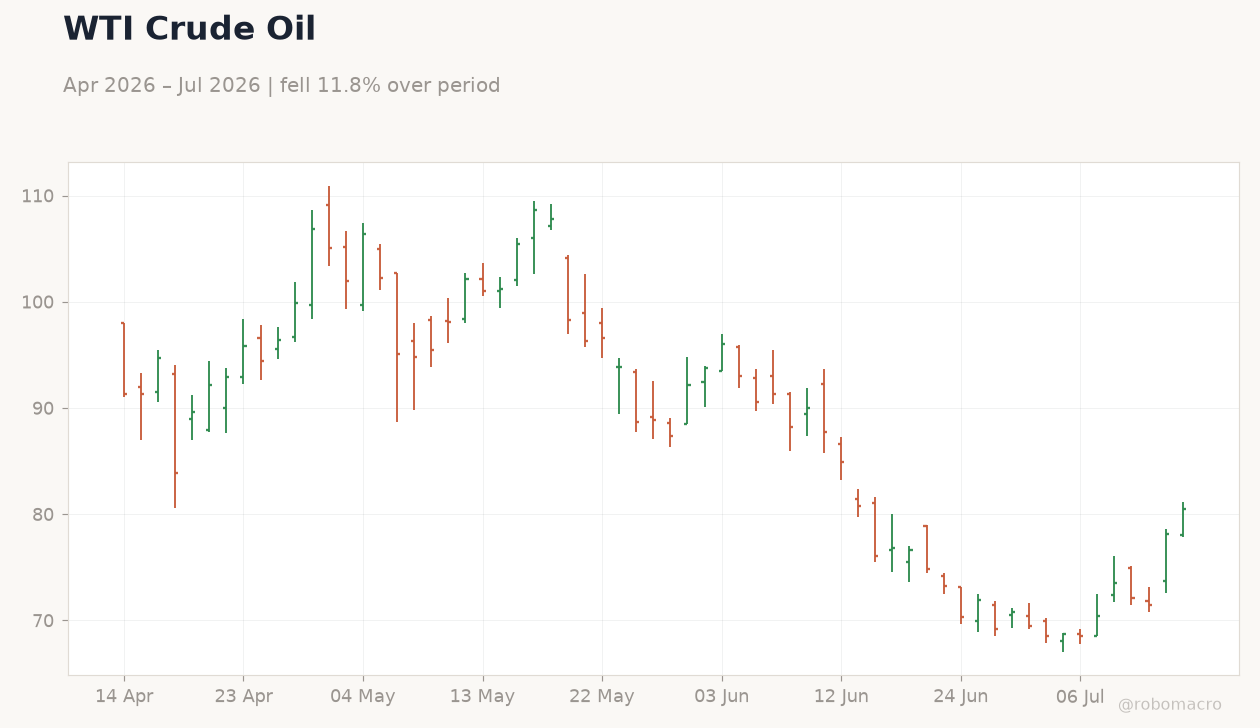
| WTI Crude | 80.51 | +3.03% |
| Gold | 4,025.40 | +0.71% |
| Bitcoin | 62,637.27 | +0.64% |
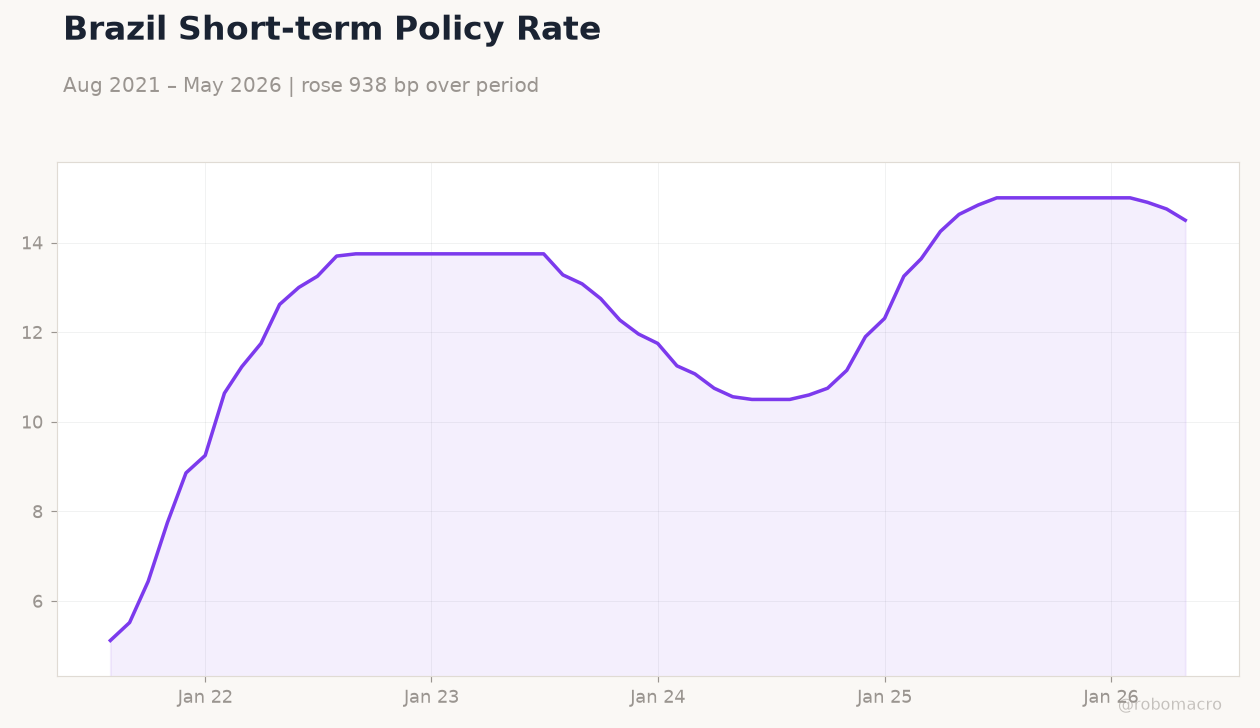
| Brazil Short-term Rate | 14.50% | -1.69% |
| Brazil Long-term Rate | - | - |
Prior Economic Events
| Data | Prior | Cons | Actual |
|---|---|---|---|
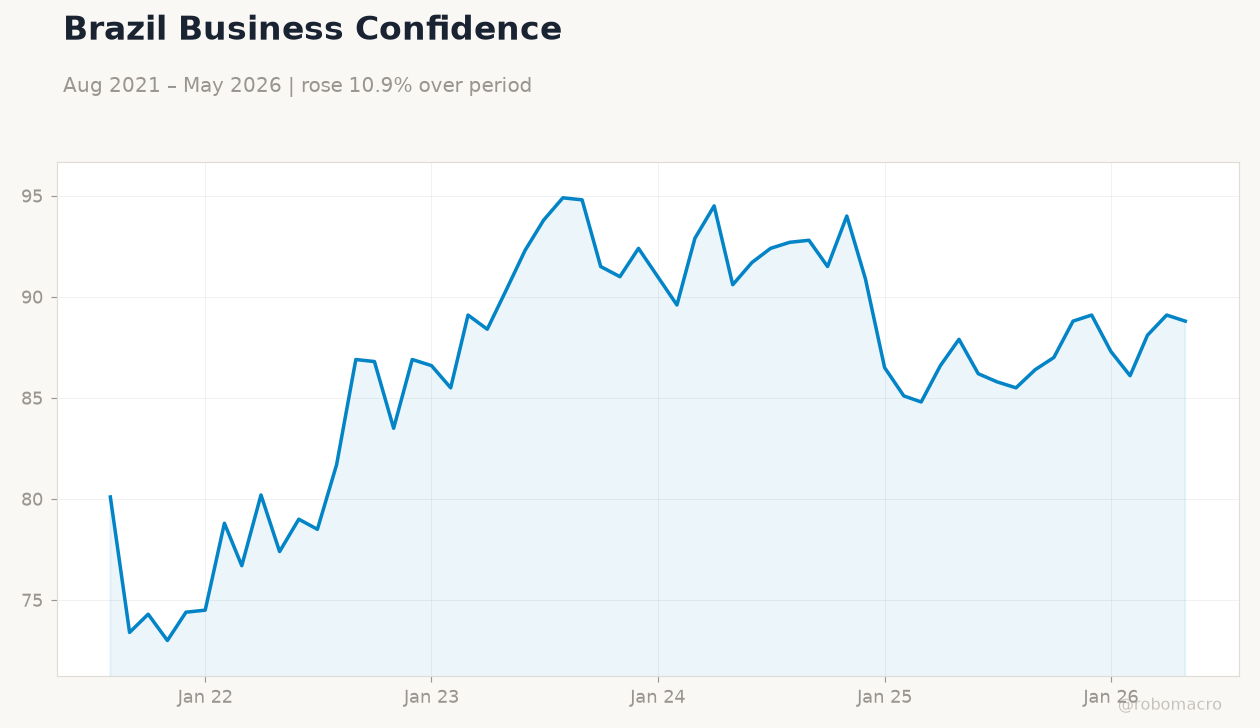
| Business Confidence Index | 46.70 | - | - |
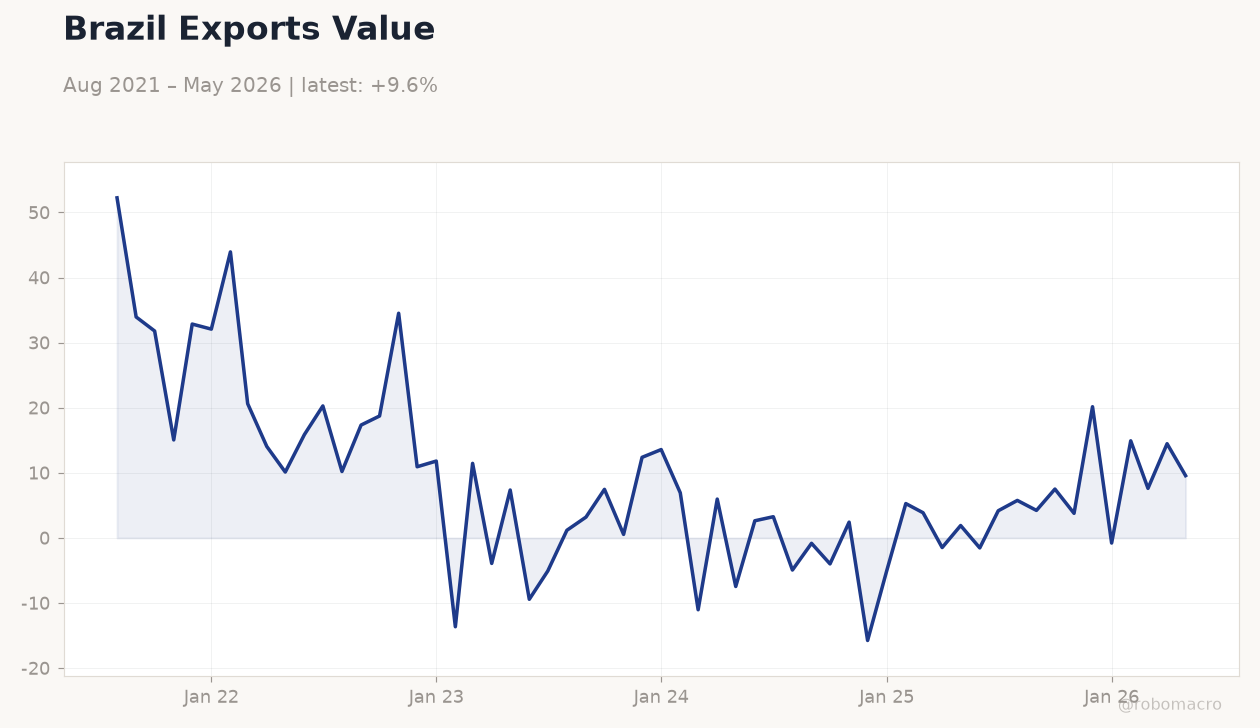 Brazil Exports Value | Type: macro_line | Exports (USD mn): 9.567 (2026-05-01) | Range: -15.76–52.25 | Trend(6pt): 52.25,18.73,12.38,5.277,14.47,9.567
Today's Economic Events
| Data | Prior | Cons | Time |
|---|---|---|---|
| Thursday (2026-07-16) | |||
| Retail Sales Month-over-Month | -1.50 | 0.50 | 04:00 |
- Bovespa falls 1.2% while USD/BRL climbs to 5.13 amid commodity volatility
- Business Confidence Index release yields no clear signal as actual data withheld
- Selic holds at 14.50% with CPI YoY at 4.64% keeping easing on hold
Yesterday's Recap
Markets closed lower after the Business Confidence Index print failed to deliver a usable figure, leaving sentiment directionless. Bovespa dropped 1.20% to 175,739 as Vale fell 1.94% despite firmer iron-ore prices, while Petrobras rose 3.23% on WTI Crude’s 3.03% gain to 80.51. USD/BRL advanced 0.45% to 5.13 and EUR/BRL gained 0.50% to 5.85, reflecting broad dollar strength.
Brazil’s short-term rate remained at 14.50%, down 1.69% on the day, signaling stable policy expectations. Gold rose 0.71% to 4,025.40 and Bitcoin added 0.64%, providing limited offset to equity weakness. No BCB communications accompanied the data void, leaving traders focused on the upcoming retail figures.
The Day Ahead
Attention centers on June retail sales due Thursday at 04:00 ET, with consensus calling for a 0.5% month-over-month rebound from the prior -1.5% contraction. A firm print would reinforce the moderate-growth narrative ahead of the October presidential vote and could trim any residual easing bets. No COPOM minutes or BCB speeches are scheduled, keeping the focus squarely on the consumption data.
Market participants will also monitor global oil flows for spillovers into Petrobras and the trade balance. The absence of fresh inflation prints leaves the 4.64% CPI YoY reading as the latest anchor for rate expectations.
Other Economic Notes
Post-election forecasts point to moderate GDP expansion supported by steady commodity exports rather than domestic demand acceleration. Brazil’s decision to open its market to Nigerian shea butter, hibiscus and sesame exports underscores efforts to diversify agro-trade partnerships beyond traditional partners. Fiscal targets remain anchored around a 0.5% of GDP primary deficit, with no fresh slippage signals emerging from Brasilia.
Iron-ore and soy prices continue to benefit from China’s widening trade surplus, providing a tailwind for Vale and the broader current-account balance. Political noise around the Bolsonaro family has yet to translate into measurable market volatility.