Brazil Macro Daily(Beta Mode)
Brazil Confidence Hits Low as Retail Sales Loom
Market Snapshot
| Asset | Level | Change |
|---|---|---|
| Bovespa | 175,739.00 | -1.20% |
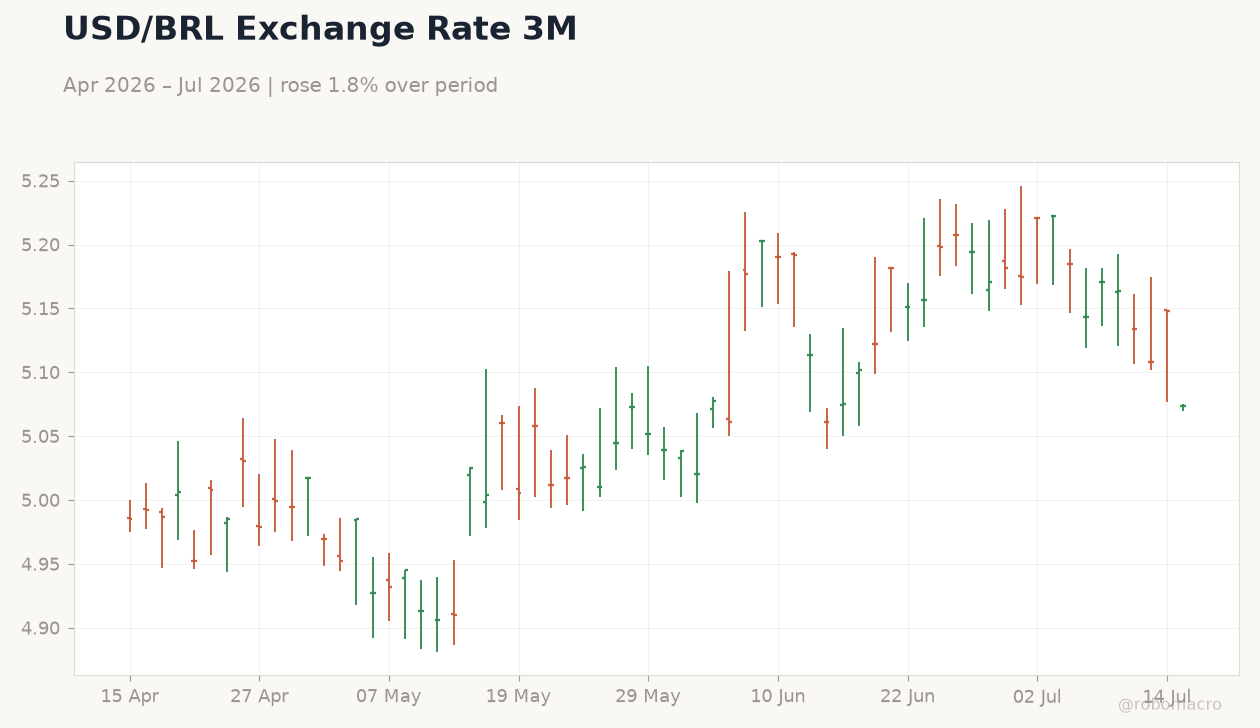
| USD/BRL | 5.07 | -1.44% |
| EUR/BRL | 5.80 | -1.00% |
| Vale | 14.59 | +2.89% |
| Petrobras | 17.92 | +0.22% |
| WTI Crude | 79.52 | +0.23% |
| Gold | 4,036.20 | -0.61% |
| Bitcoin | 64,720.50 | -0.36% |
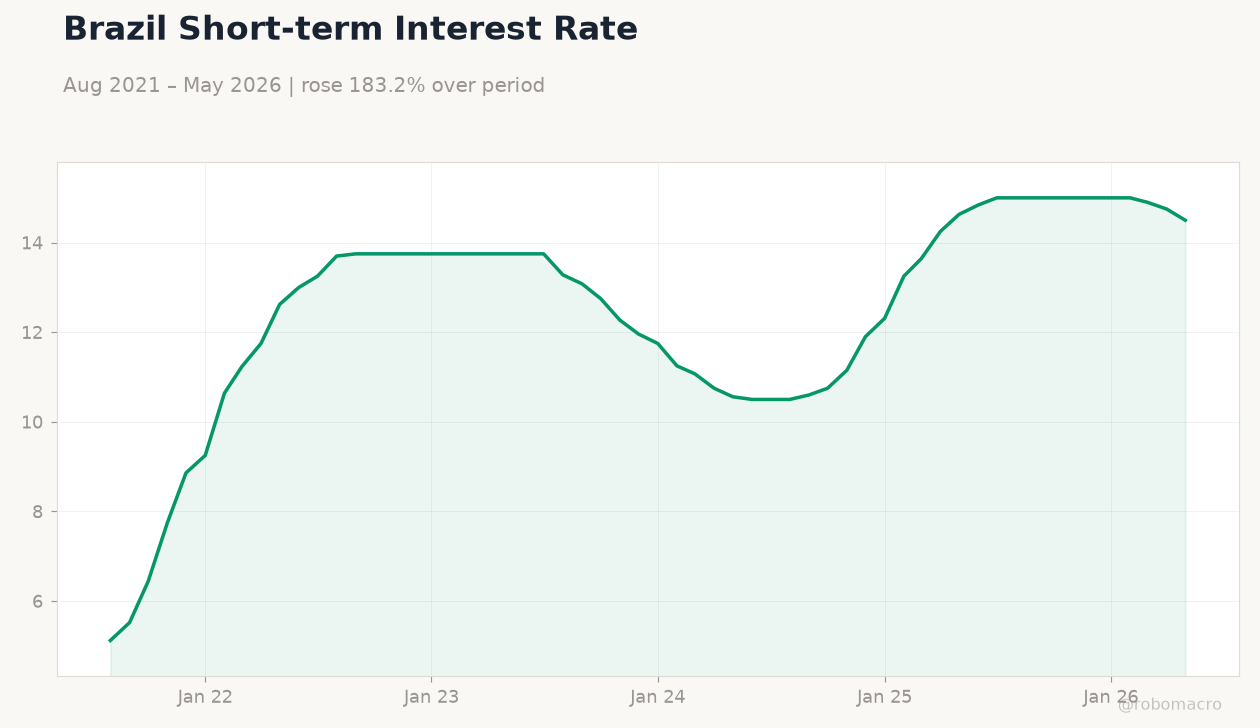
| Brazil Short-term Rate | 14.50% | -1.69% |
| Brazil Long-term Rate | - | - |
Prior Economic Events
| Data | Prior | Cons | Actual |
|---|---|---|---|
| No events available | |||
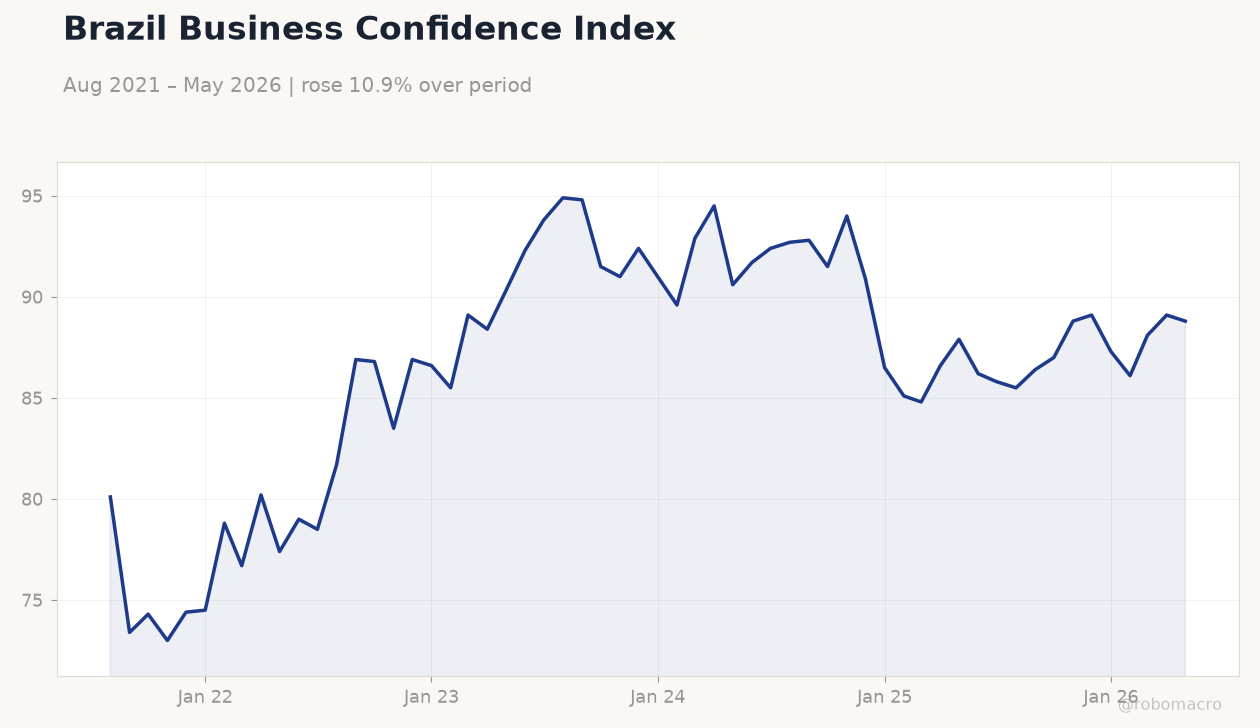 Brazil Business Confidence Index | Type: macro_line | Index: 88.8 (2026-05-01) | Range: 73–94.9 | Trend(6pt): 80.1,86.8,92.4,85.1,89.1,88.8
Today's Economic Events
| Data | Prior | Cons | Time |
|---|---|---|---|
| Thursday (2026-07-16) | |||
| Retail Sales Month-over-Month | -1.50 | 0.50 | 04:00 |
- Brazil manufacturers’ confidence falls to lowest since pandemic
- Agribusiness drives over 25% of GDP with R$3tn output in 2025
- Record electricity consumption signals heated economy
Yesterday's Recap
Bovespa fell 1.20% to 175,739 amid thin trading and no fresh data releases. USD/BRL dropped 1.44% to 5.07 while EUR/BRL eased 1.00% to 5.80. Vale rose 2.89% to 14.59 on firmer iron-ore prices and Petrobras gained 0.22% to 17.92.
The Brazil short-term rate held at 14.50% after a 1.69% daily decline in implied yields. WTI Crude edged 0.23% higher to 79.52, supporting commodity exporters. Gold slipped 0.61% to 4,036.20 and Bitcoin fell 0.36% to 64,720.50.
Market moves reflected global risk sentiment rather than domestic releases.
The Day Ahead
Retail Sales Month-over-Month for June will print at 04:00 ET tomorrow with consensus at +0.5% after May’s -1.5% contraction. The medium-impact print will test whether consumer demand is stabilising after recent weakness. No other Brazil-specific indicators are scheduled for the session.
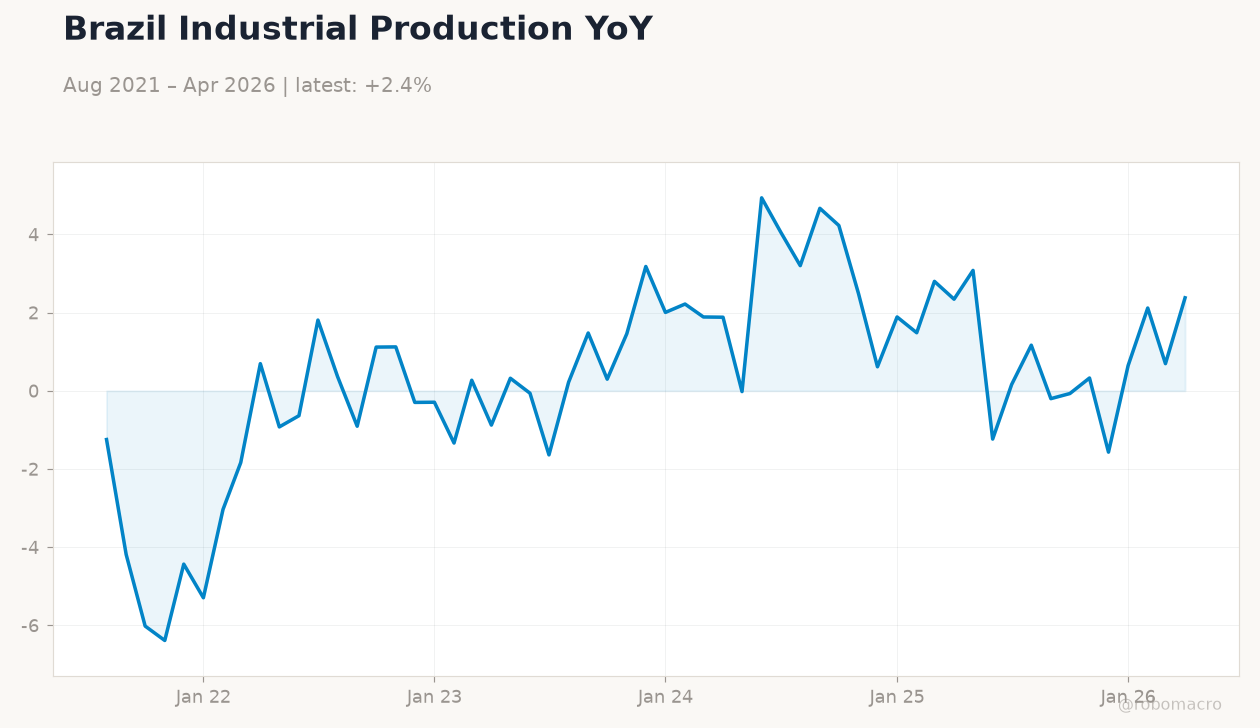
Traders will also monitor any follow-through from yesterday’s manufacturer confidence survey. A strong beat could support BRL and equities while trimming early rate-cut odds. Industrial production data and consumer confidence readings scheduled later in the week will provide further colour on activity momentum.
Other Economic Notes
Agribusiness now accounts for more than a quarter of Brazilian output and generated over R$3 trillion in 2025, cementing its role as the primary growth engine. Electricity consumption reached a fresh record, driven by industrial activity, data-centre expansion and rising household air-conditioning use. The ocean economy contributed R$1.74 trillion in 2022 through ports, offshore energy and related services yet remains under-recognised in official statistics.
Fiscal headlines stayed constructive after the Treasury posted a R$12 bn primary surplus in June, narrowing the 12-month deficit to 0.8% of GDP. Iron-ore export volumes to China continued to expand, lending further support to mining revenues.
Global Macro News
Donald Trump’s tariff threat has recast Brazil’s democratic safeguards as a trade issue, injecting political risk into bilateral flows. Canada extended $125 million in energy financing and signed wildfire and health pacts, deepening ties ahead of broader trade talks. <i>↓ p.2</i>