Brazil Macro Daily(Beta Mode)
US Tariffs Cloud Brazil's Rebound
Market Snapshot
| Asset | Level | Change |
|---|---|---|
| Bovespa | 176,011.00 | -0.36% |
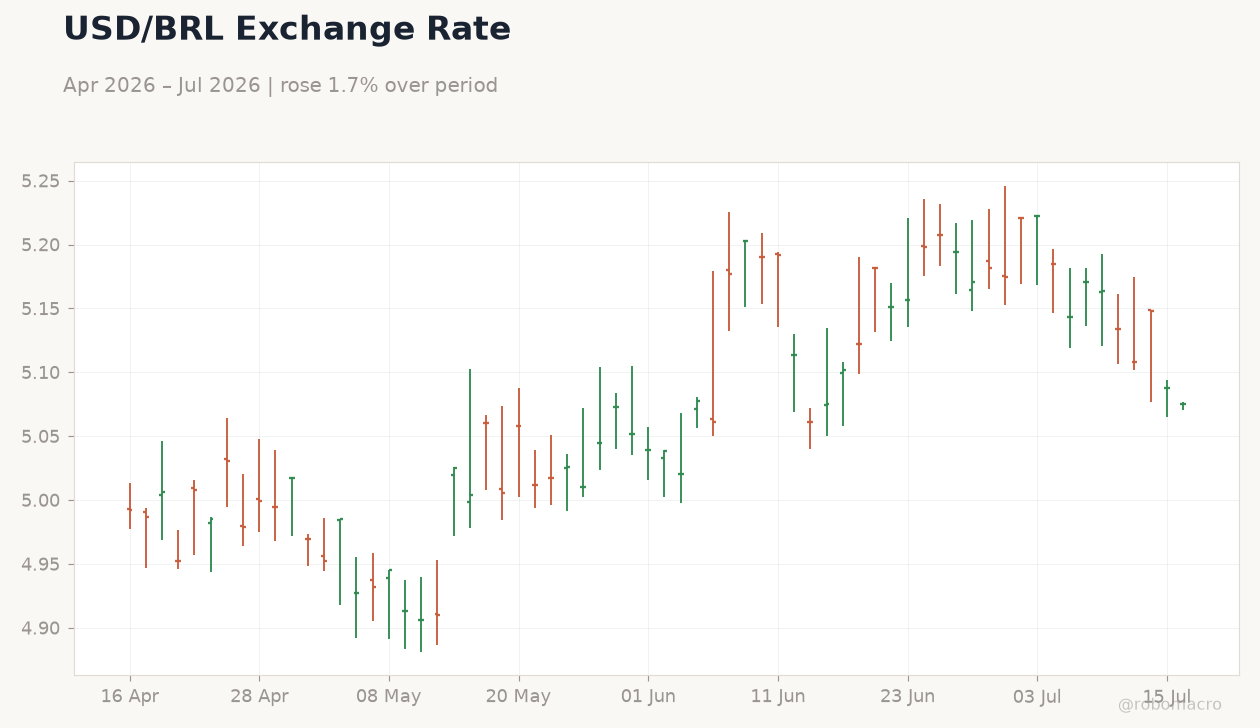
| USD/BRL | 5.08 | -0.25% |
| EUR/BRL | 5.82 | +0.14% |
| Vale | 14.69 | +0.65% |
| Petrobras | 17.95 | +0.14% |
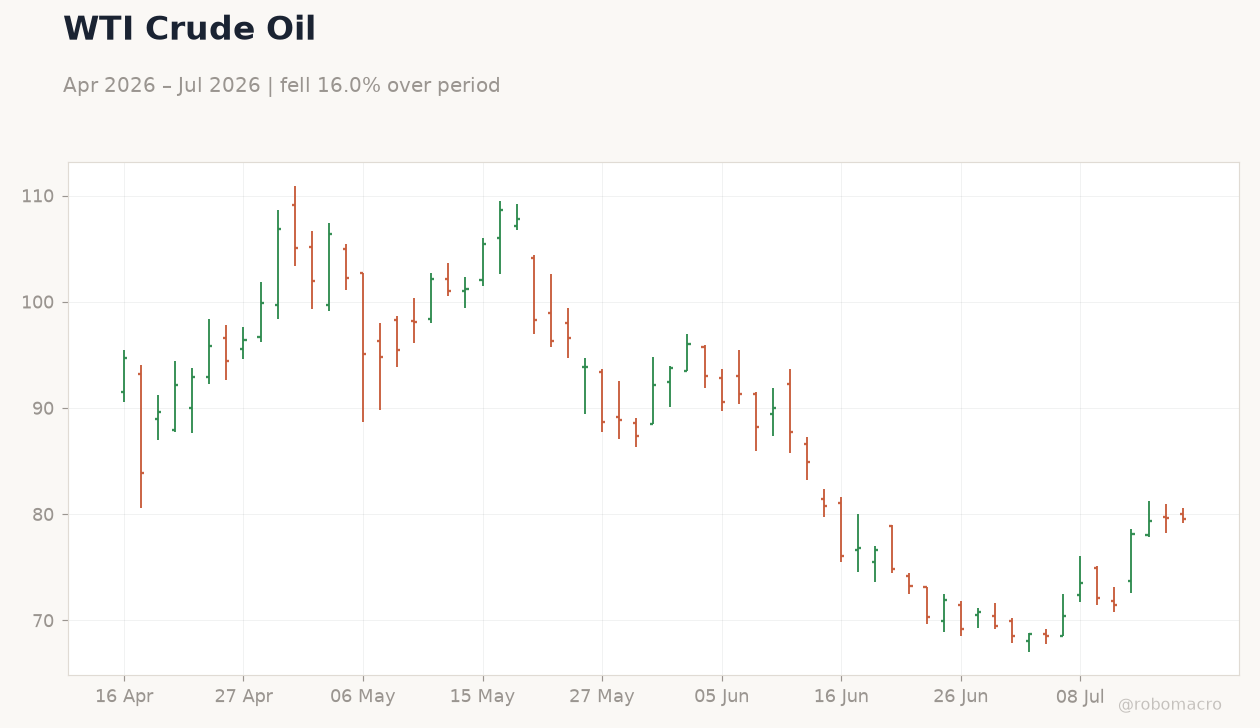
| WTI Crude | 79.45 | -0.19% |
| Gold | 4,039.10 | -0.12% |
| Bitcoin | 64,106.18 | -0.94% |
| Brazil Short-term Rate | 14.50% | -1.69% |
| Brazil Long-term Rate | - | - |
Prior Economic Events
| Data | Prior | Cons | Actual |
|---|---|---|---|
| No events available | |||
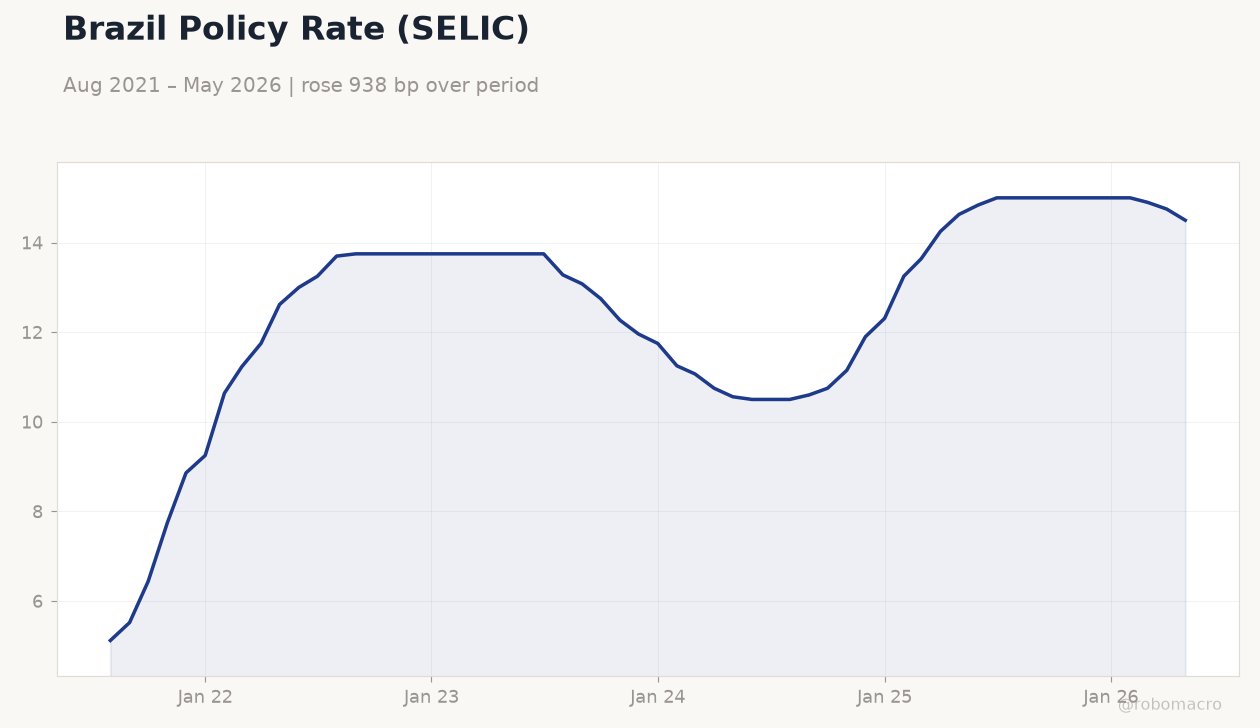 Brazil Policy Rate (SELIC) | Type: macro_line | Short-term Rate (%): 14.5 (2026-05-01) | Range: 5.12–15 | Trend(6pt): 5.12,13.75,11.96,13.25,14.75,14.5
Today's Economic Events
| Data | Prior | Cons | Time |
|---|---|---|---|
| Retail Sales Month-over-Month | -1.50 | 0.50 | 04:00 |
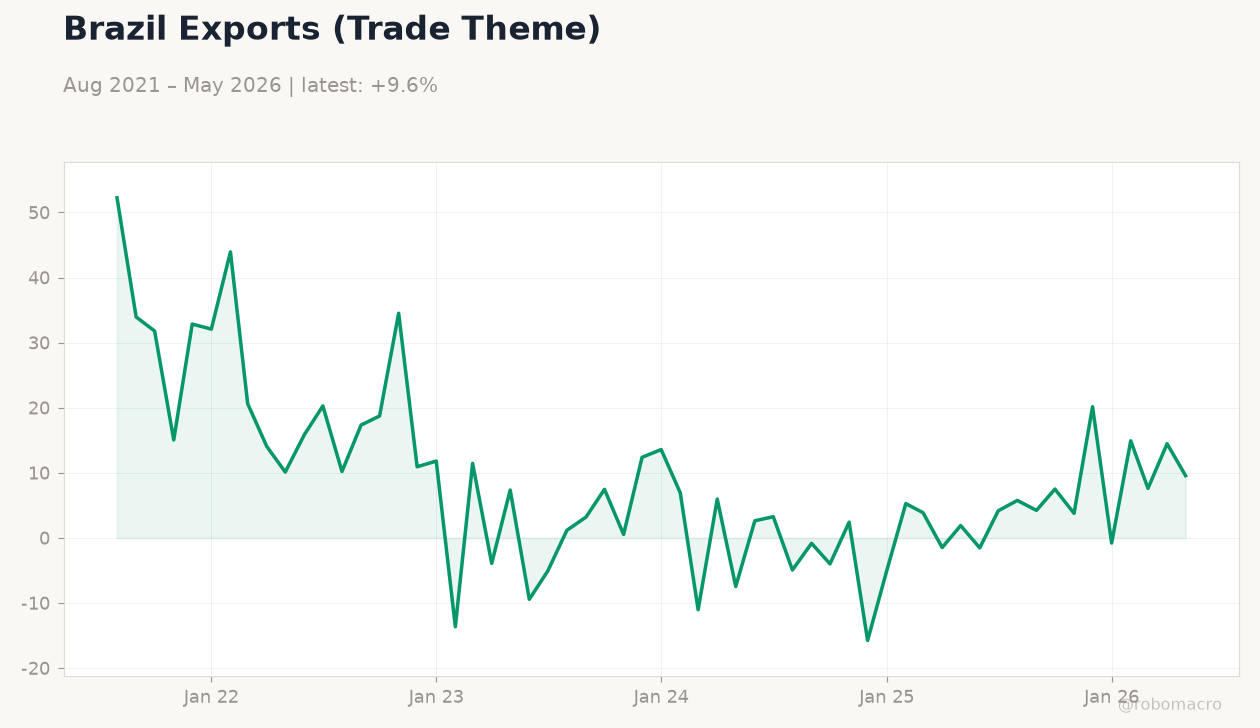
- US to impose 25% tariffs on Brazilian goods next week amid trade probe
- Retail sales forecast to rise 0.5% MoM after prior -1.5% contraction
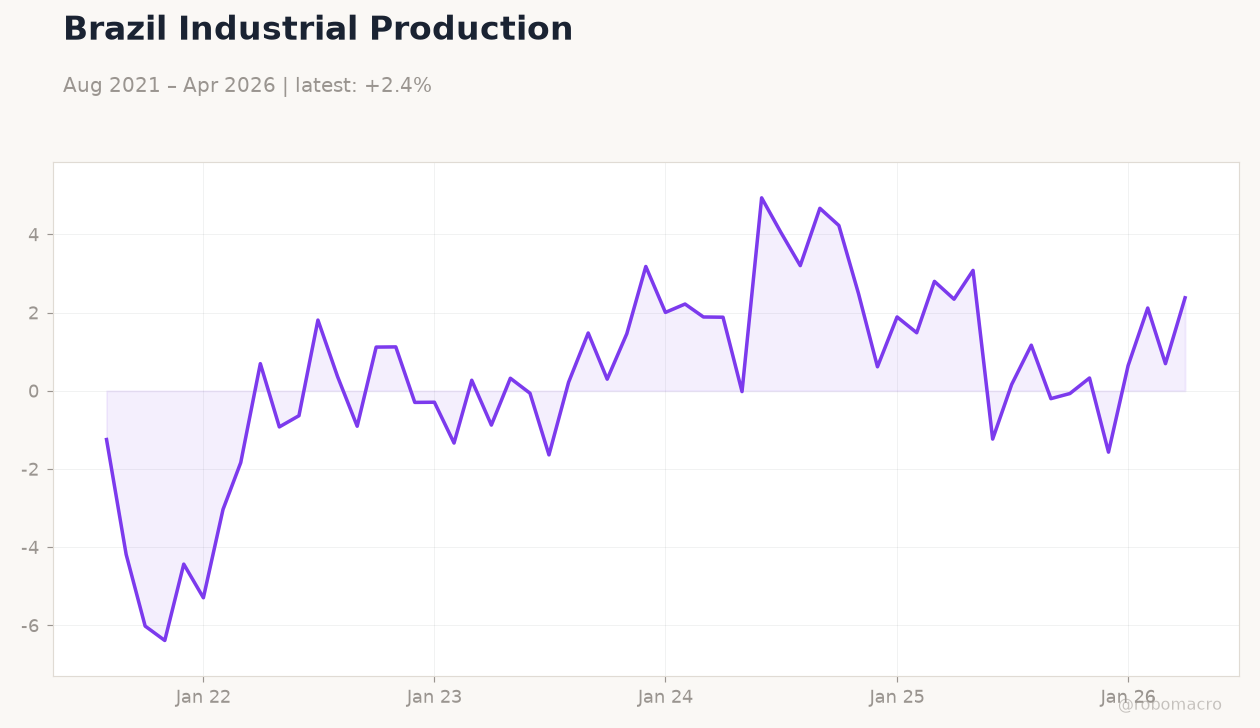
- Early-2026 growth rebound raises hurdles for BCB rate cuts with CPI at 4.64%
Yesterday's Recap
Brazilian markets closed mixed amid tariff headlines and steady commodity prices. The Bovespa index declined 0.36% to 176,011 while USD/BRL eased 0.25% to 5.08, reflecting modest real strength. Short-term rates fell 1.69% to 14.50%.
Brazil’s trade office condemned the planned US tariffs, citing an investigation into trade practices. Exports to Iran continued to surge despite regional tensions. Policymakers maintained the gasoline subsidy as oil prices climbed.
Agribusiness output exceeded 3 trillion reais in 2025 and now accounts for more than a quarter of GDP.
The Day Ahead
Markets will focus on today’s Retail Sales Month-over-Month release, expected to print 0.5% versus the prior -1.5% contraction. A firm reading would reinforce evidence of the early-2026 rebound already flagged in recent activity data. No other scheduled Brazilian releases appear on the calendar through tomorrow.
Traders will also monitor any further statements from Brasília on the US tariff decision scheduled for next week. Commodity flows remain relevant given ongoing strength in iron-ore and soy shipments.
Other Economic Notes
Brazil’s economy rebounded in the first half of 2026, clouding the outlook for near-term monetary easing. Agribusiness has become the dominant growth engine, generating more than 3 trillion reais last year. The mandatory ethanol blend increase to E32 drew mixed industry reactions but supports domestic fuel demand.
Fiscal accounts continue to absorb higher oil-linked subsidy costs. Inflation measured by the June CPI stood at 4.64% year-over-year, keeping price pressures above the target midpoint.
Global Macro News
The Trump administration confirmed a 25% tariff on many Brazilian exports starting next week, escalating bilateral trade tensions. US executives largely opposed the measure at a public hearing, citing supply-chain risks. China’s central bank reported solid financial-sector support for the real economy in the first half, offering indirect support for commodity demand.
<i>↓ p.2</i>