Brazil Macro Daily(Beta Mode)
Retail Miss and Tariffs Weigh on Brazil
Market Snapshot
| Asset | Level | Change |
|---|---|---|
| Bovespa | 173,825.00 | -1.24% |
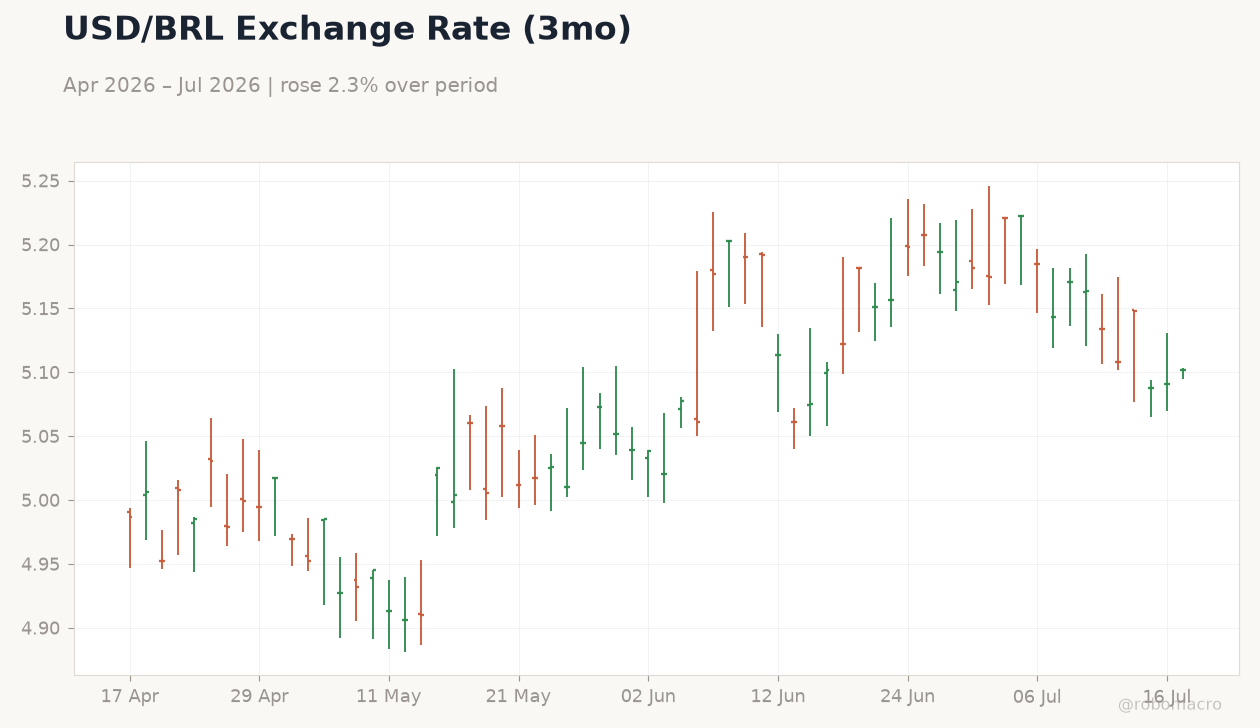
| USD/BRL | 5.10 | +0.22% |
| EUR/BRL | 5.83 | +0.00% |
| Vale | 14.22 | -3.07% |
| Petrobras | 17.47 | -2.18% |
| WTI Crude | 79.07 | +0.15% |
| Gold | 4,002.10 | +0.41% |
| Bitcoin | 62,858.07 | -1.46% |
| Brazil Short-term Rate | 14.39% | -0.76% |
| Brazil Long-term Rate | - | - |
Prior Economic Events
| Data | Prior | Cons | Actual |
|---|---|---|---|
| Retail Sales Month-over-Month | -1.50 | 0.50 | 0.10 |
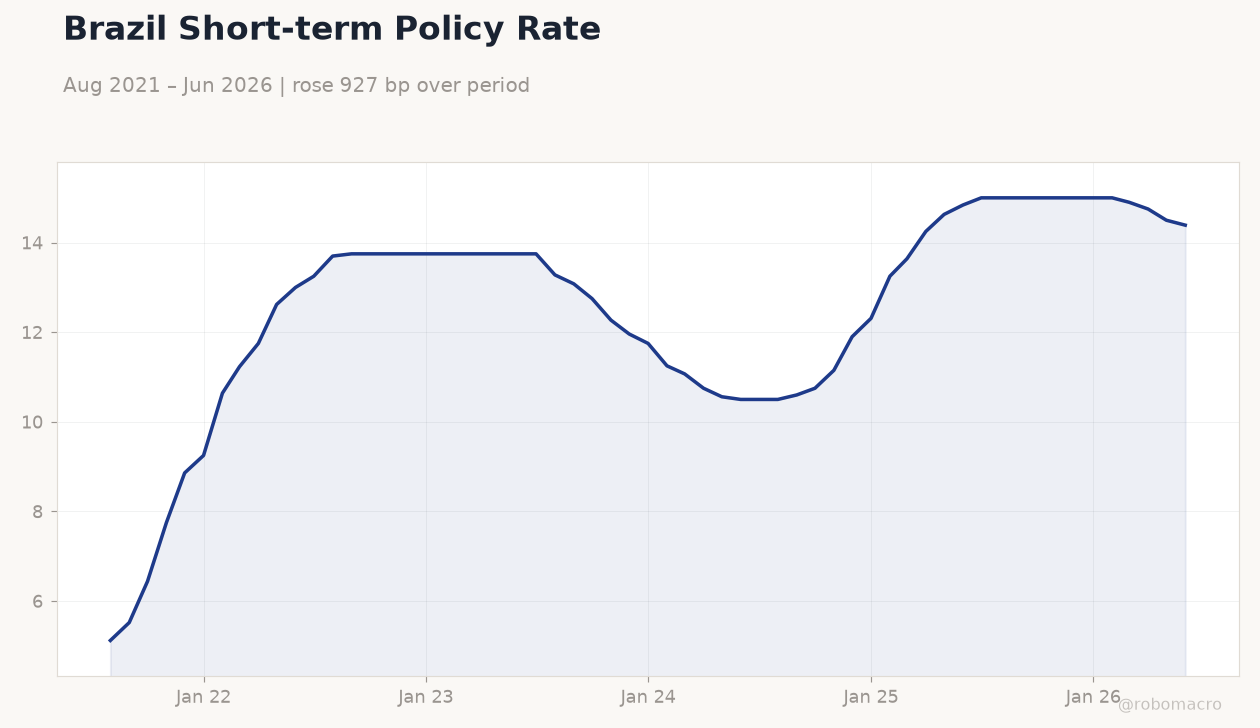 Brazil Short-term Policy Rate | Type: macro_line | Short-term Rate %: 14.39 (2026-06-01) | Range: 5.12–15 | Trend(6pt): 5.12,13.75,11.96,13.25,14.75,14.39
Today's Economic Events
| Data | Prior | Cons | Time |
|---|---|---|---|
| No events available | |||
- Brazil retail sales rose 0.1% MoM in June, missing 0.5% consensus and signaling softer consumption.
- Bovespa fell 1.24% while USD/BRL rose 0.22% to 5.10 amid US tariff threats.
- Selic held at 14.39% with CPI YoY at 4.64%, keeping cut expectations on hold.
Yesterday's Recap
Brazil’s June retail sales printed 0.1% MoM against a 0.5% consensus and -1.5% prior, pointing to subdued household spending after earlier weakness. Equity markets closed lower with Bovespa dropping 1.24% to 173,825, led by Vale falling 3.07% and Petrobras declining 2.18%. The currency weakened modestly as USD/BRL climbed 0.22% to 5.10 while EUR/BRL stayed flat at 5.83.
Short-term rates eased 0.76% to 14.39%, reflecting limited immediate policy pressure. WTI crude edged up 0.15% to 79.07 and gold gained 0.41% to 4,002.10, providing modest commodity support. Bitcoin fell 1.46% to 62,858.07.
Overall price action showed risk-off sentiment tied to external trade concerns rather than domestic data alone.
The Day Ahead
No Brazilian data releases or COPOM events are scheduled for 17 July or 18 July, leaving markets without fresh local indicators. Focus will remain on external developments, particularly any follow-through from US tariff announcements and Brazilian government responses. Traders will monitor iron-ore and oil price moves for export revenue signals.
BCB speakers are absent from the calendar, so forward guidance will stay anchored to the latest COPOM statement. Market participants are expected to adjust positions ahead of next week’s potential retail and confidence prints.
Other Economic Notes
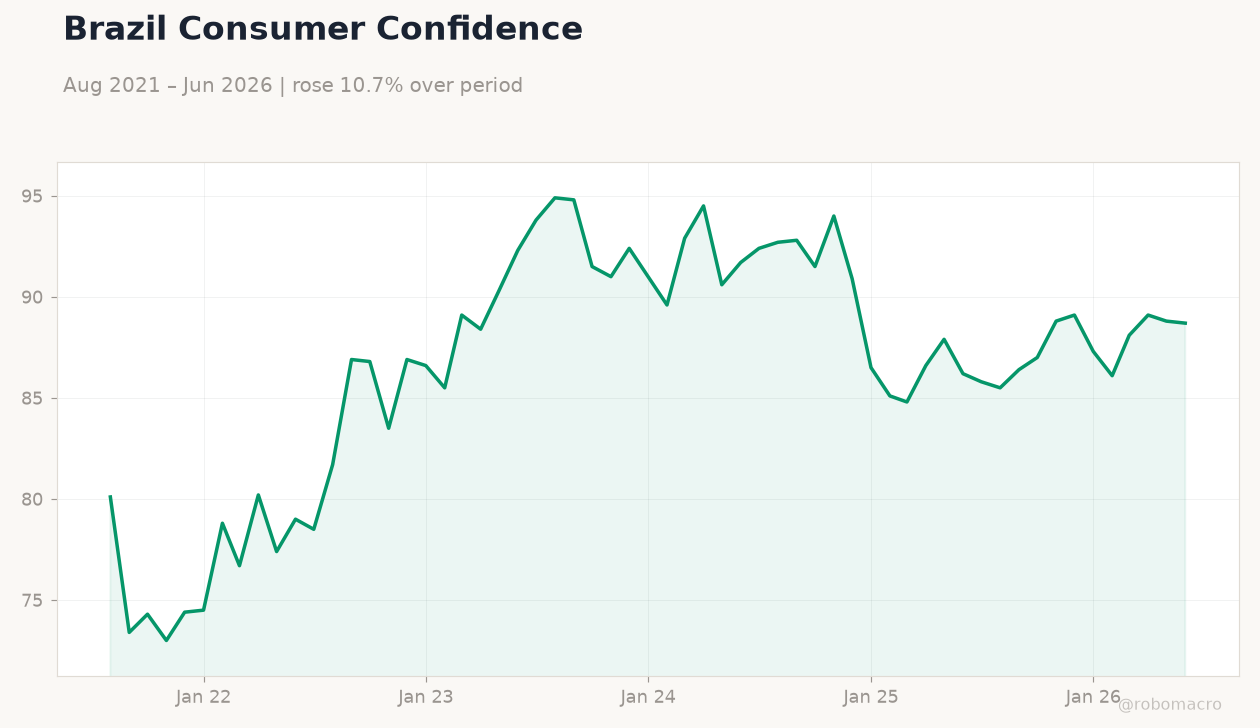
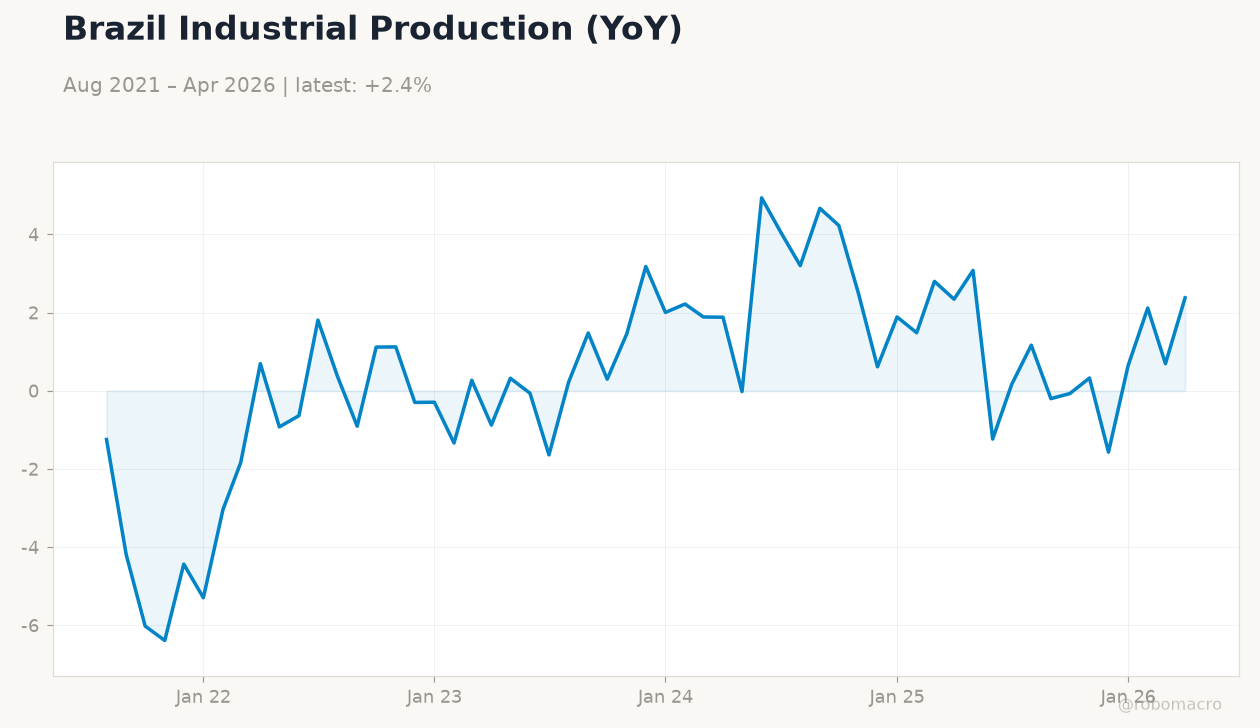
Brazil’s economy showed a rebound in early 2026 that has tempered expectations for near-term monetary easing. Services activity slumped in May, driven mainly by transportation weakness, adding downside risk to second-quarter GDP. The Treasury maintained a R$42 bn primary deficit target for 2026, underscoring fiscal discipline amid higher debt-service costs.
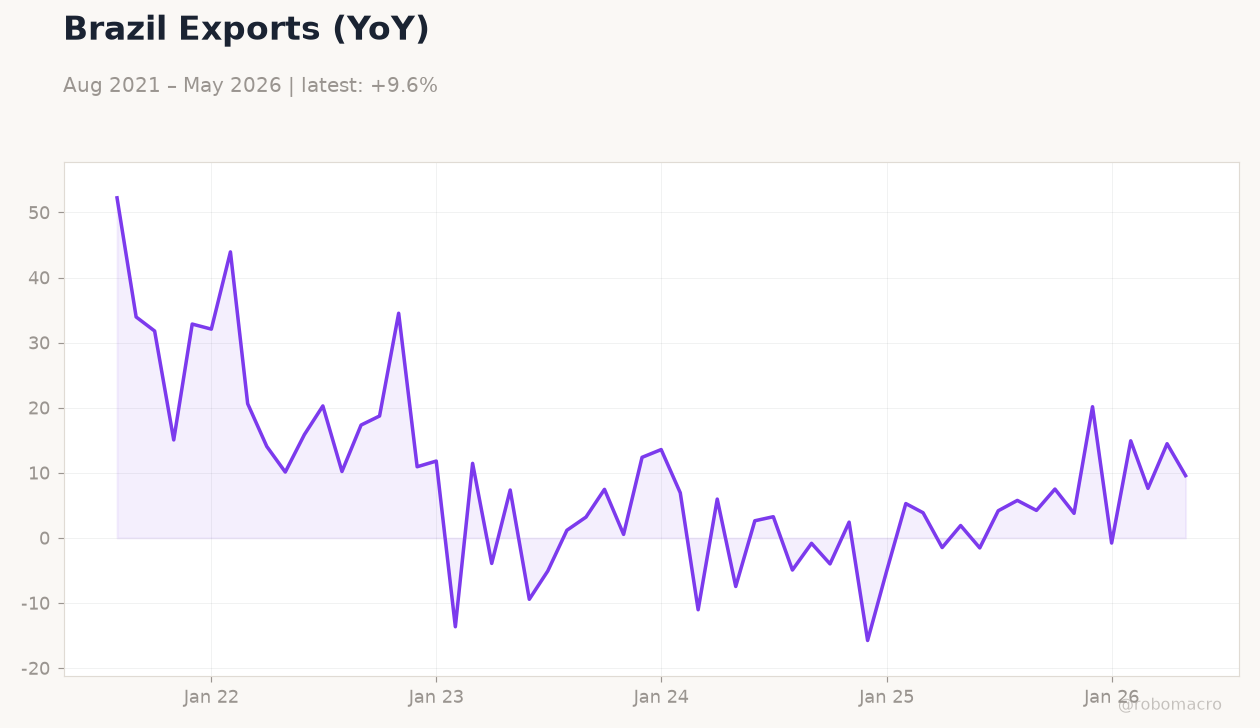
Stronger El Niño conditions prompted an upward revision to the inflation outlook, raising price risks for food and energy. Iron-ore exports to China rose 7% y/y in June, offering partial offset through resilient commodity demand despite domestic property softness.