Brazil Macro Daily(Beta Mode)
BRL Rises on Rural Credit Amid US Tariff Row
Market Snapshot
| Asset | Level | Change |
|---|---|---|
| Bovespa | 173,371.00 | -0.20% |
| USD/BRL | 5.09 | -0.68% |
| EUR/BRL | 5.80 | -0.89% |
| Vale | 14.19 | -0.21% |
| Petrobras | 17.97 | +2.86% |
| WTI Crude | 82.43 | -0.96% |
| Gold | 4,067.70 | +1.43% |
| Bitcoin | 66,150.02 | +1.41% |
| Brazil Short-term Rate | 14.39% | -0.76% |
| Brazil Long-term Rate | - | - |
Prior Economic Events
| Data | Prior | Cons | Actual |
|---|---|---|---|
| No events available | |||
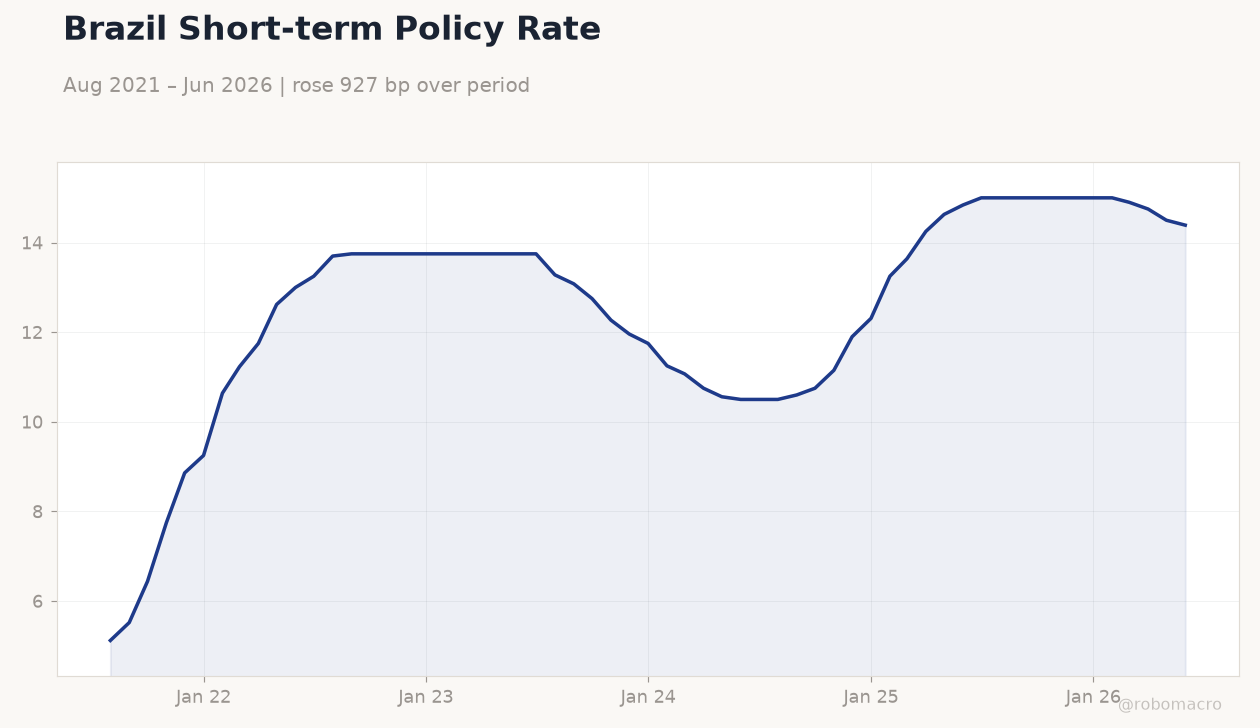 Brazil Short-term Policy Rate | Type: macro_line | %: 14.39 (2026-06-01) | Range: 5.12–15 | Trend(6pt): 5.12,13.75,11.96,13.25,14.75,14.39
Today's Economic Events
| Data | Prior | Cons | Time |
|---|---|---|---|
| No events available | |||
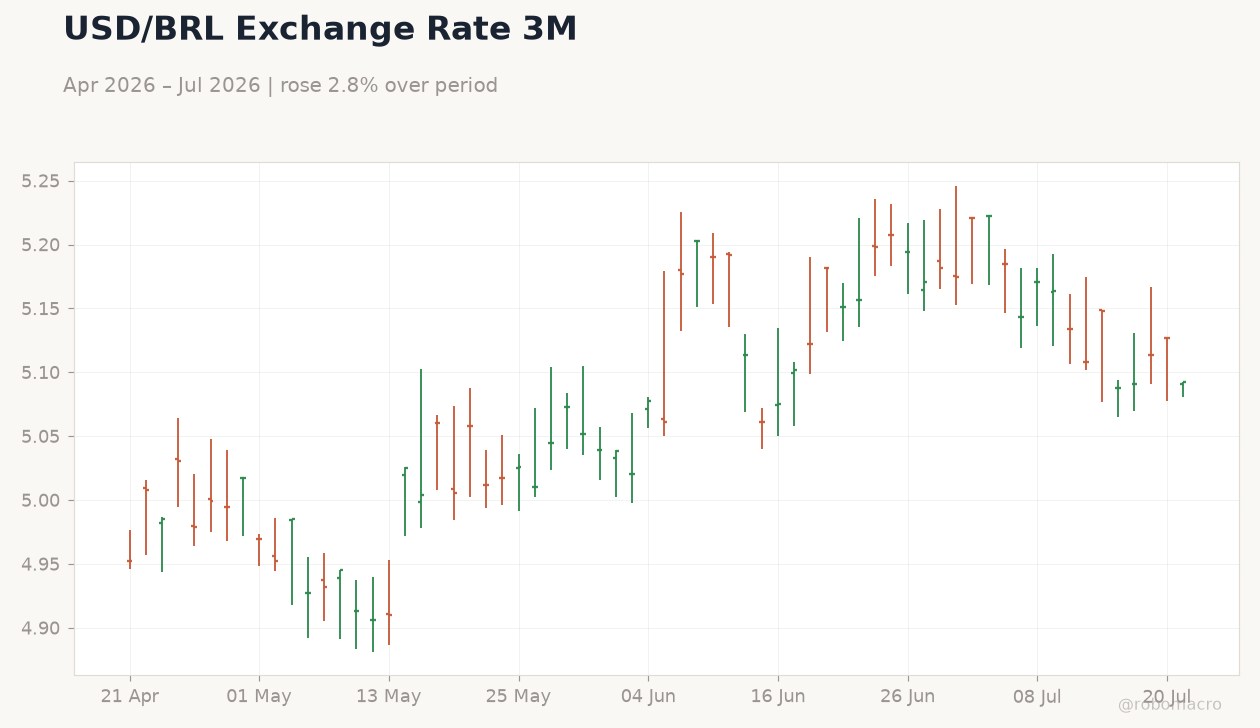
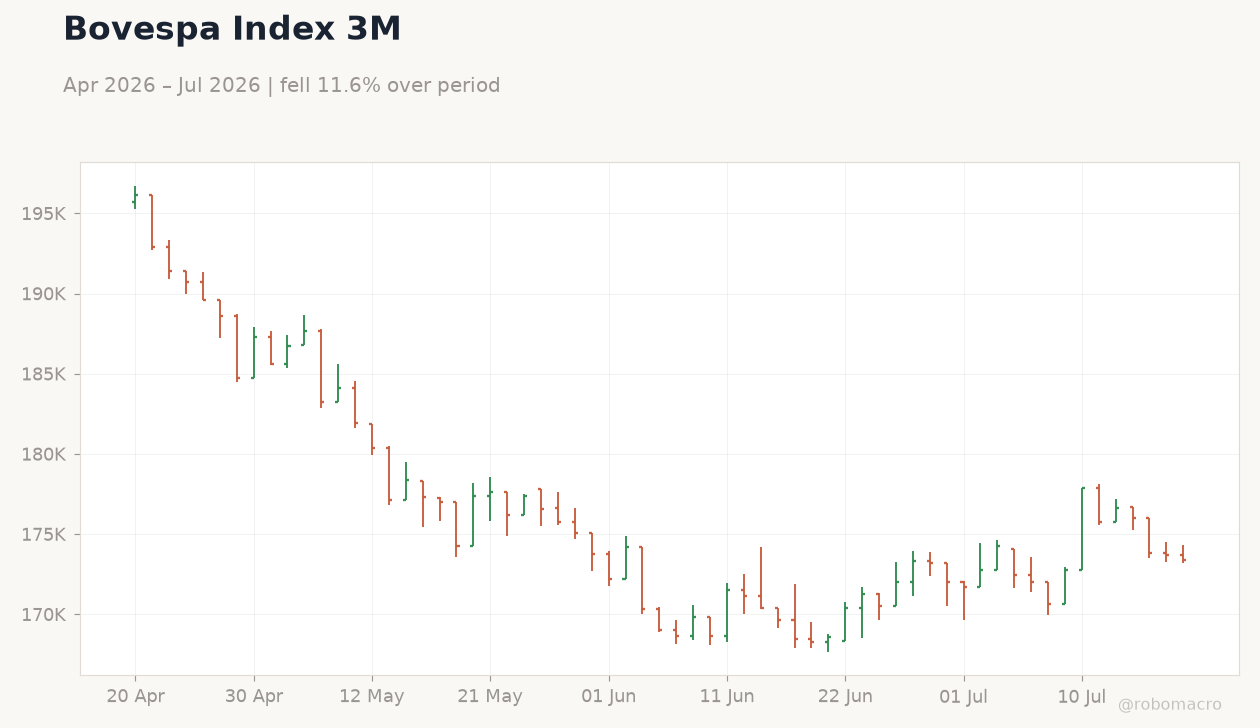
- Bovespa fell 0.20% to 173,371 while USD/BRL dropped 0.68% to 5.09 on Lula rural credit package.
- Petrobras rose 2.86% as oil held near $82 amid Middle East tensions; short-term rate eased to 14.39%.
- Brazil posted record 9.3 million tourists in 2025, injecting $7.865 billion into the economy.
Yesterday's Recap
Brazilian markets closed mixed amid limited data releases and fresh policy announcements. The Bovespa index declined 0.20% to 173,371 while the real strengthened, with USD/BRL falling 0.68% to 5.09 and EUR/BRL down 0.89% to 5.80. Petrobras shares gained 2.86% to 17.97 as WTI crude traded at 82.43 despite a 0.96% daily decline.
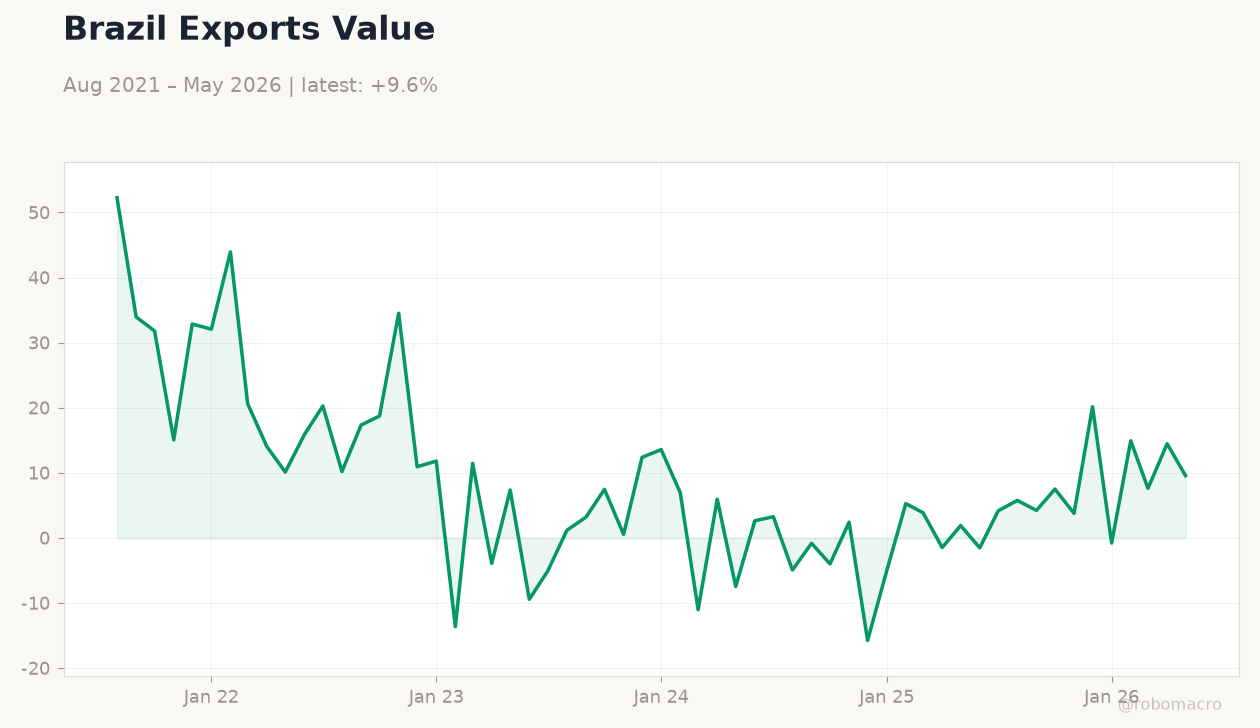
The government authorised BRL13.3 billion in extraordinary rural credit to offset a 25% US tariff, prompting President Lula to pledge a “war of truth” on trade distortions. Record tourism inflows of 9.3 million visitors and $7.865 billion in spending provided additional support for the external accounts. Fitch affirmed Bank of America Brasil at AAA(bra) with a stable outlook, citing resilient capital and strategy.
The Brazil short-term rate eased 0.76% to 14.39% while the long-term rate remained unavailable.
The Day Ahead
No scheduled data releases or COPOM events appear on the calendar for 22 July. Market attention will remain on implementation details of the rural credit package and any further statements from the Lula administration regarding US tariffs. Traders will also monitor iron-ore and soybean futures, given China steel-margin pressure and potential biofuel demand shifts.
Global risk sentiment tied to Middle East developments could influence BRL flows and Petrobras valuation. The absence of fresh inflation prints leaves the 4.64% June CPI YoY reading as the latest benchmark for Selic path expectations.
Other Economic Notes
The rural credit facility underscores fiscal support for agriculture at a time when external tariffs threaten export margins. Record tourism receipts strengthen the services balance and reduce reliance on commodity cycles. Fitch’s affirmation of BofA Brasil highlights continued foreign-bank confidence despite domestic rate volatility.
Iron-ore price weakness linked to Chinese steel losses poses downside risk for Vale and the trade surplus. Overall, the combination of targeted credit and tourism gains supports near-term external resilience while fiscal sustainability remains under scrutiny ahead of 2026 elections.