Brazil Macro Daily(Beta Mode)
Commodity Rally Bolsters BRL as Bovespa Stays Flat
Market Snapshot
| Asset | Level | Change |
|---|---|---|
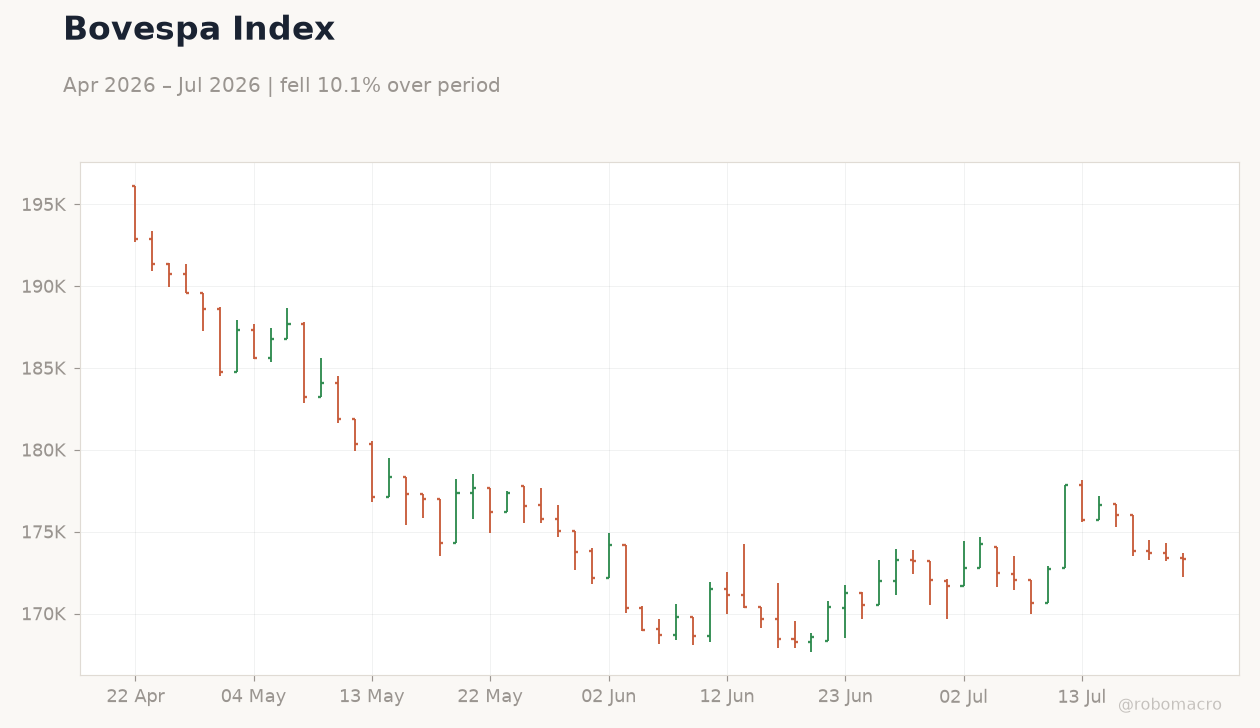
| Bovespa | 173,326.00 | -0.03% |
| USD/BRL | 5.07 | -0.65% |
| EUR/BRL | 5.77 | -0.83% |
| Vale | 14.25 | +1.06% |
| Petrobras | 18.54 | +1.92% |
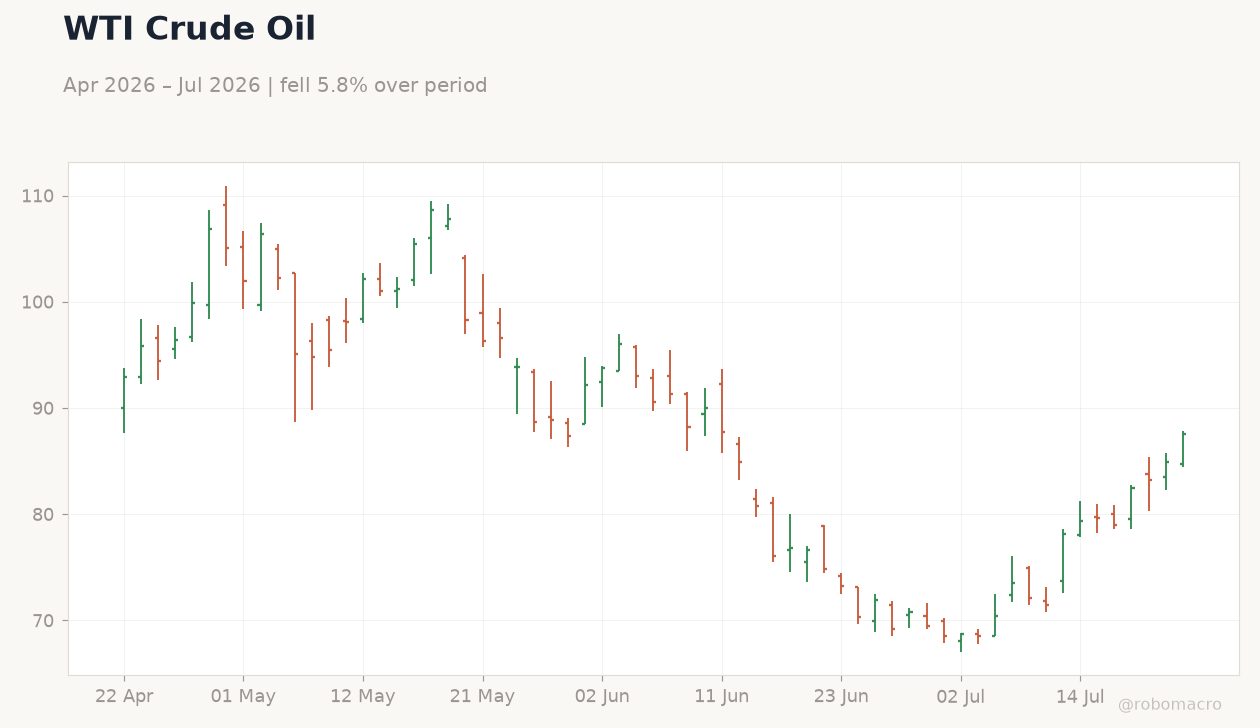
| WTI Crude | 87.66 | +3.24% |
| Gold | 4,119.20 | +1.18% |
| Bitcoin | 65,926.46 | -0.87% |
| Brazil Short-term Rate | 14.39% | -0.76% |
| Brazil Long-term Rate | - | - |
Prior Economic Events
| Data | Prior | Cons | Actual |
|---|---|---|---|
| No events available | |||
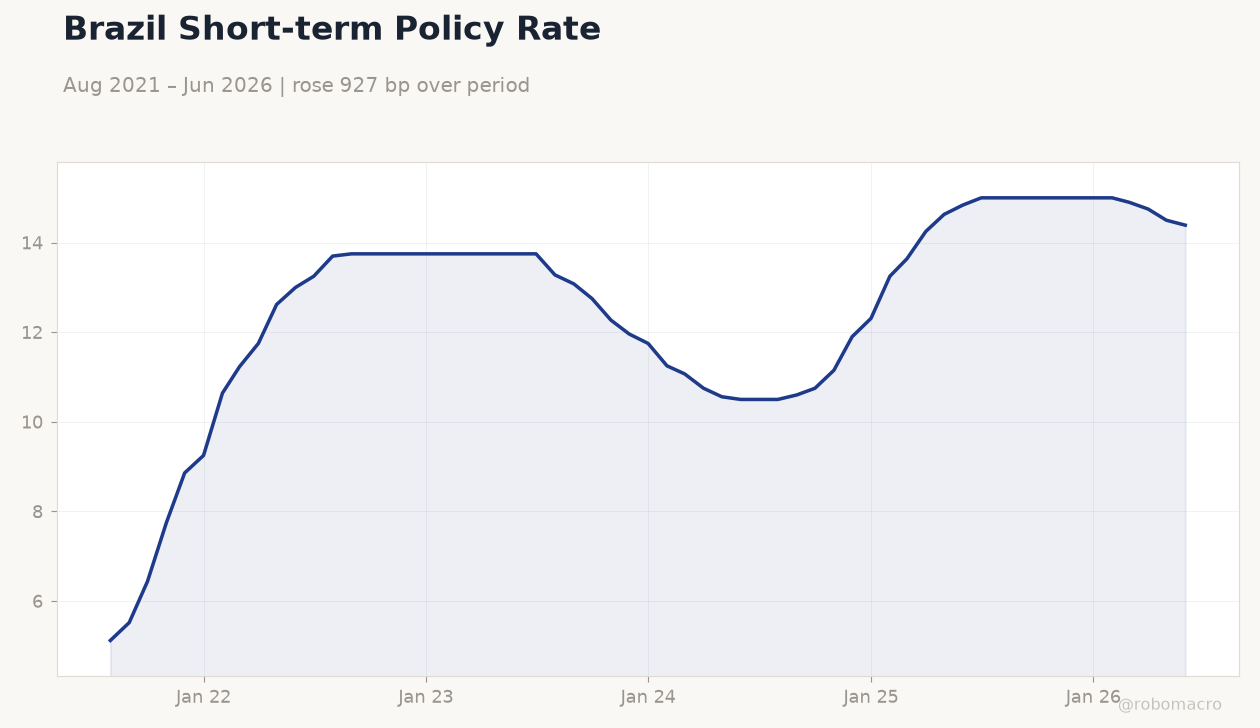 Brazil Short-term Policy Rate | Type: macro_line | %: 14.39 (2026-06-01) | Range: 5.12–15 | Trend(6pt): 5.12,13.75,11.96,13.25,14.75,14.39
Today's Economic Events
| Data | Prior | Cons | Time |
|---|---|---|---|
| No events available | |||
- BRL strengthened 0.65% to 5.07 amid higher oil and iron-ore prices, while Bovespa edged 0.03% lower.
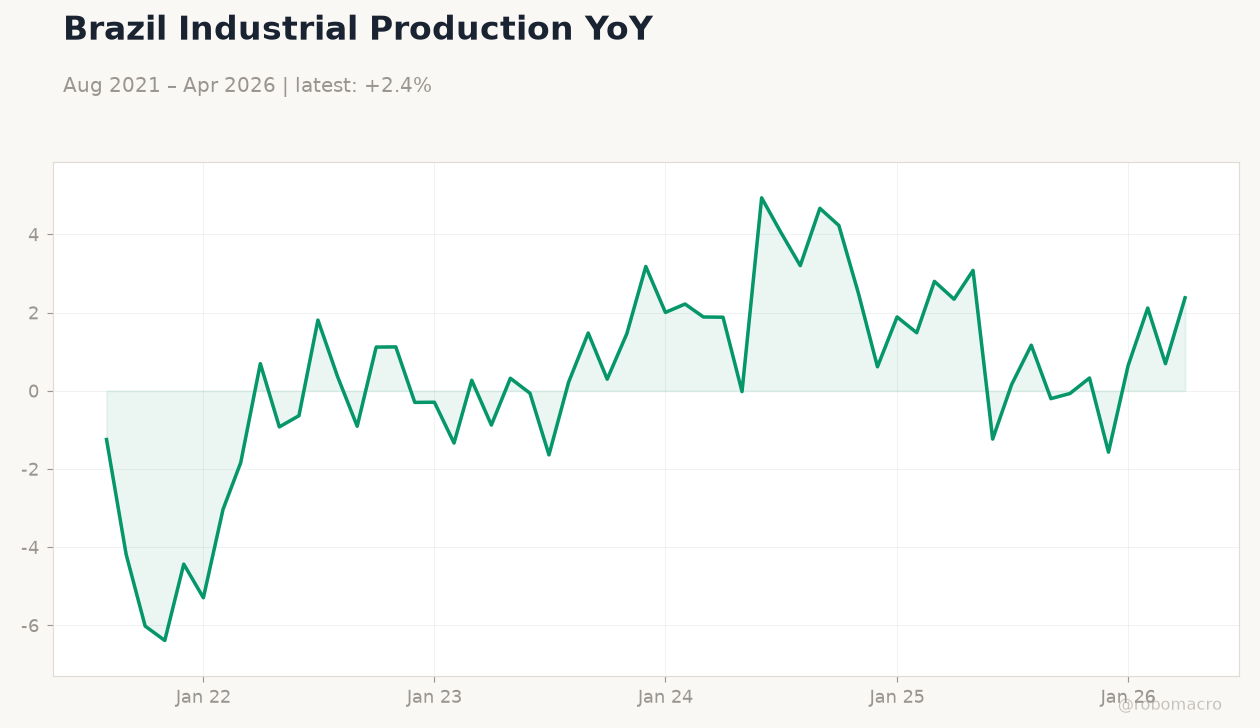
- May GDP monitor showed 0.7% expansion, yet Brazil slipped further in global manufacturing rankings.
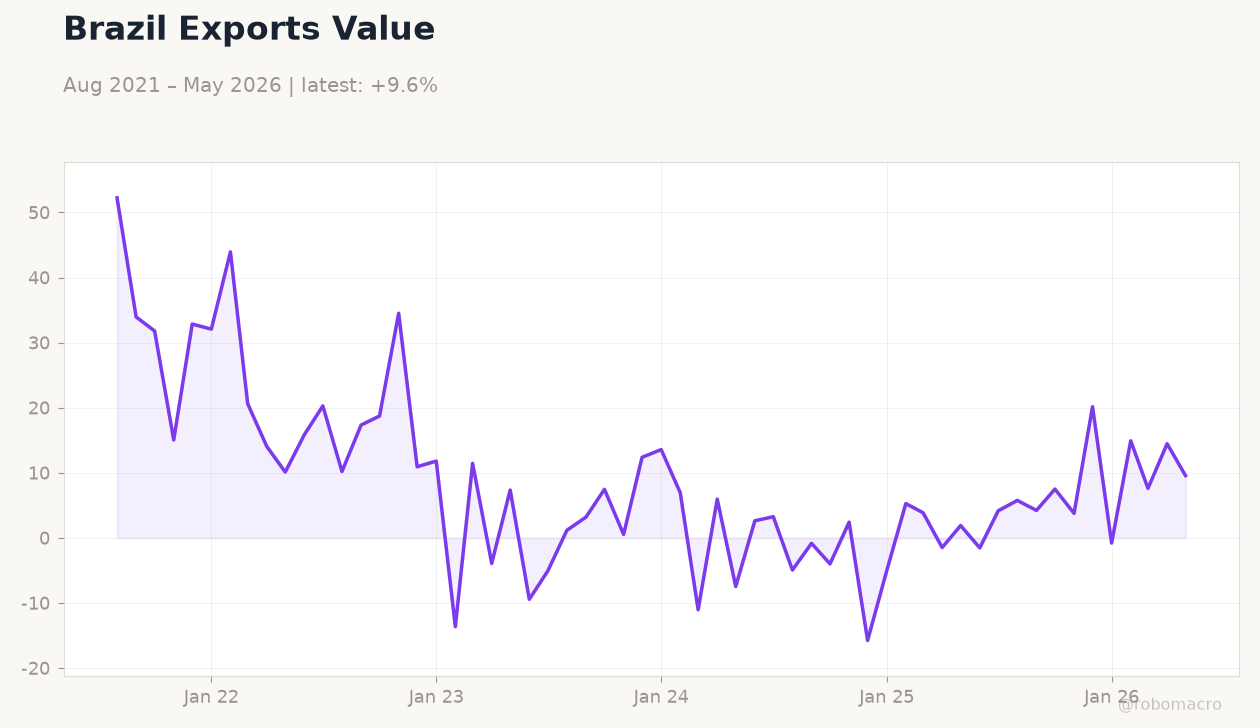
- Government released BRL13.3bn rural credit package after US tariffs hit agricultural exports.
Yesterday's Recap
Equity markets closed nearly flat as the Bovespa finished at 173,326, down just 0.03%. The real posted solid gains, with USD/BRL falling 0.65% to 5.07 and EUR/BRL declining 0.83% to 5.77. Commodity producers outperformed, Vale rising 1.06% and Petrobras advancing 1.92% as WTI crude jumped 3.24% to 87.66.
A Valor GDP monitor indicated the economy expanded 0.7% in May, while oil royalties delivered R$36.5bn to federal and state coffers in the first half. Brazil’s manufacturing ranking continued to erode, and beef shipments to China slowed further. The short-term rate remained at 14.39%, down 0.76% on the day.
Gold prices rose 1.18% to 4,119.20, providing additional support for resource-linked assets. Reduced Amazon burn area in 2025 marked environmental progress that could support green-bond issuance and ESG inflows over time.
The Day Ahead
No economic releases or policy events are scheduled for the next three days, leaving markets to digest recent data and external drivers. Traders will monitor iron-ore and oil price swings for further direction on the real and Bovespa heavyweights. Ongoing US tariff measures and the newly authorised rural credit line will remain in focus for agricultural exporters.
Any fresh comments from Finance Ministry officials on fiscal targets could influence long-term rate expectations. Bitcoin’s 0.87% decline may also keep risk sentiment in check for local equities.
Other Economic Notes
The 0.7% May expansion masks underlying softness visible in the manufacturing ranking decline and weaker Chinese demand for beef. Oil royalty inflows of R$36.5bn offer fiscal breathing room yet highlight continued commodity dependence. The BRL13.3bn rural credit package underscores efforts to cushion the farm sector from external tariffs while preserving employment in interior states.
Dividend distributions by Brazilian firms reached US$6.3bn, illustrating corporate cash-flow resilience despite macro headwinds.