Brazil Macro Daily(Beta Mode)
Bovespa Rises Despite Tariffs and Slowdown
Market Snapshot
| Asset | Level | Change |
|---|---|---|
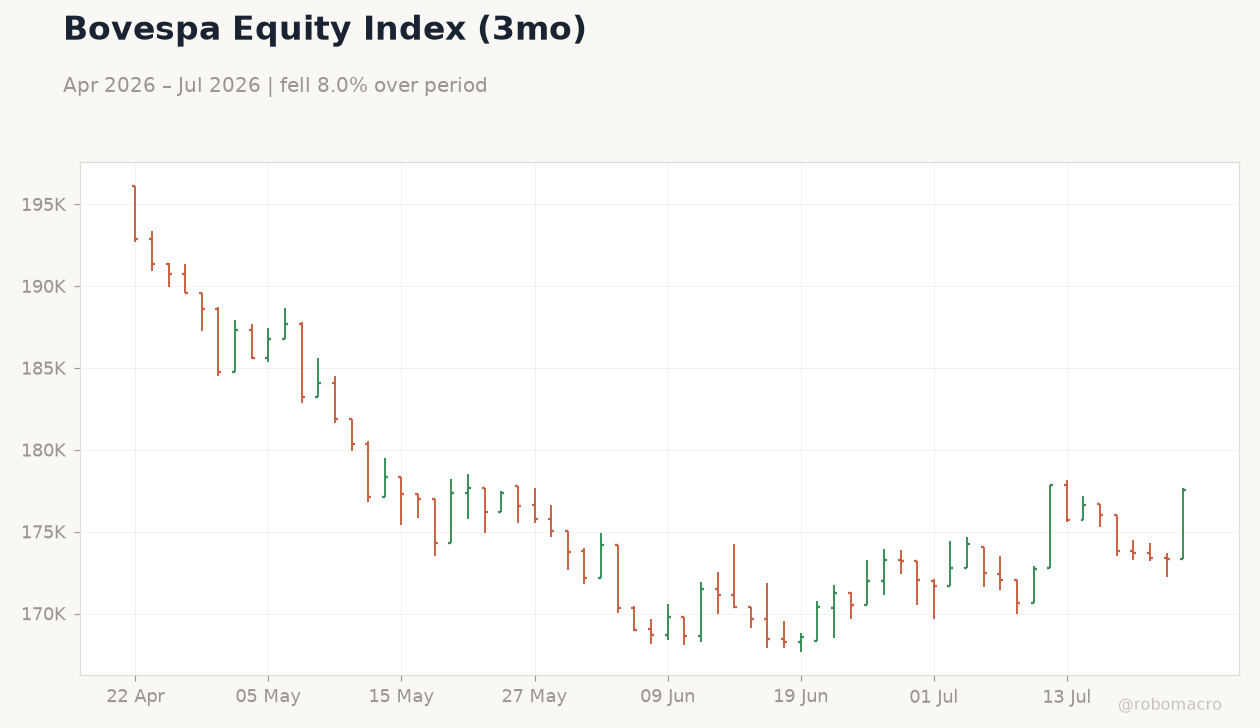
| Bovespa | 177,548.00 | +2.44% |
| USD/BRL | 5.06 | -0.59% |
| EUR/BRL | 5.76 | -0.61% |
| Vale | 14.85 | +4.21% |
| Petrobras | 18.89 | +1.89% |
| WTI Crude | 89.39 | +2.95% |
| Gold | 4,093.10 | -1.30% |
| Bitcoin | 65,600.34 | -0.76% |
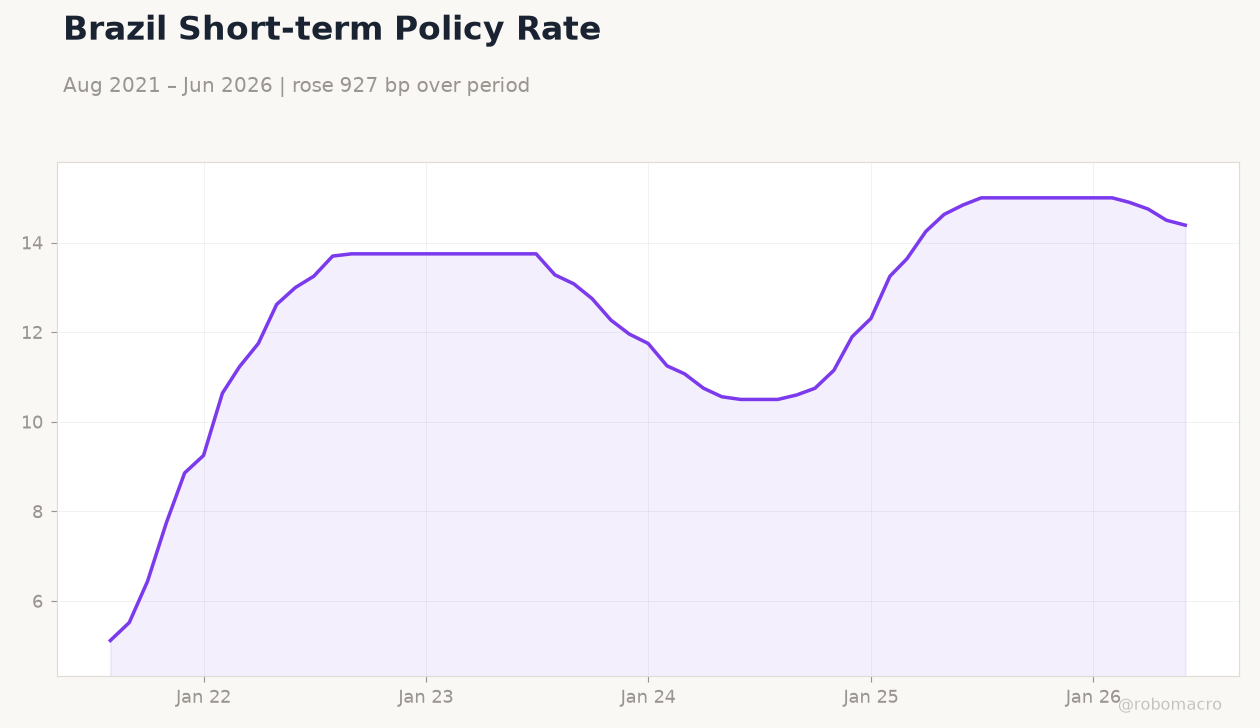
| Brazil Short-term Rate | 14.39% | -0.76% |
| Brazil Long-term Rate | - | - |
Prior Economic Events
| Data | Prior | Cons | Actual |
|---|---|---|---|
| No events available | |||
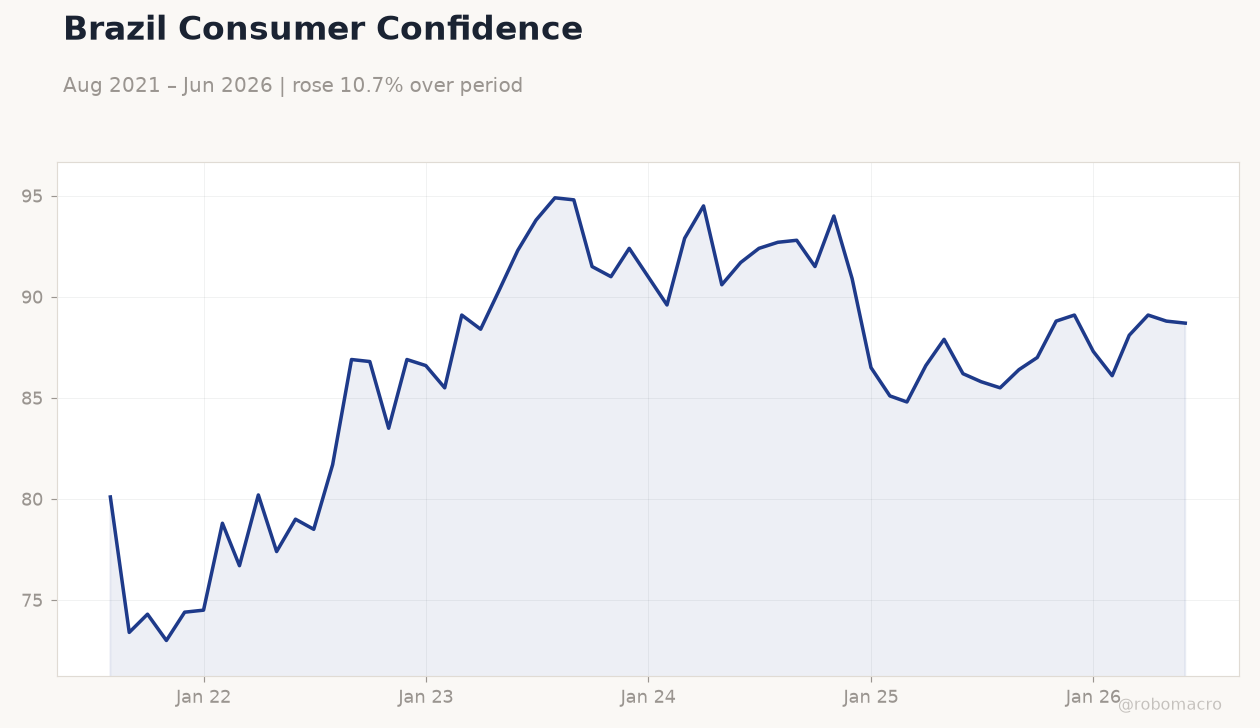 Brazil Consumer Confidence | Type: macro_line | Confidence Index: 88.7 (2026-06-01) | Range: 73–94.9 | Trend(6pt): 80.1,86.8,92.4,85.1,89.1,88.7
Today's Economic Events
| Data | Prior | Cons | Time |
|---|---|---|---|
| No events available | |||
- Bovespa rose 2.44% to 177,548 amid commodity strength while USD/BRL fell 0.59% to 5.06.
- Brazil short-term rate held at 14.39% with CPI YoY at 4.64%; no data releases occurred.
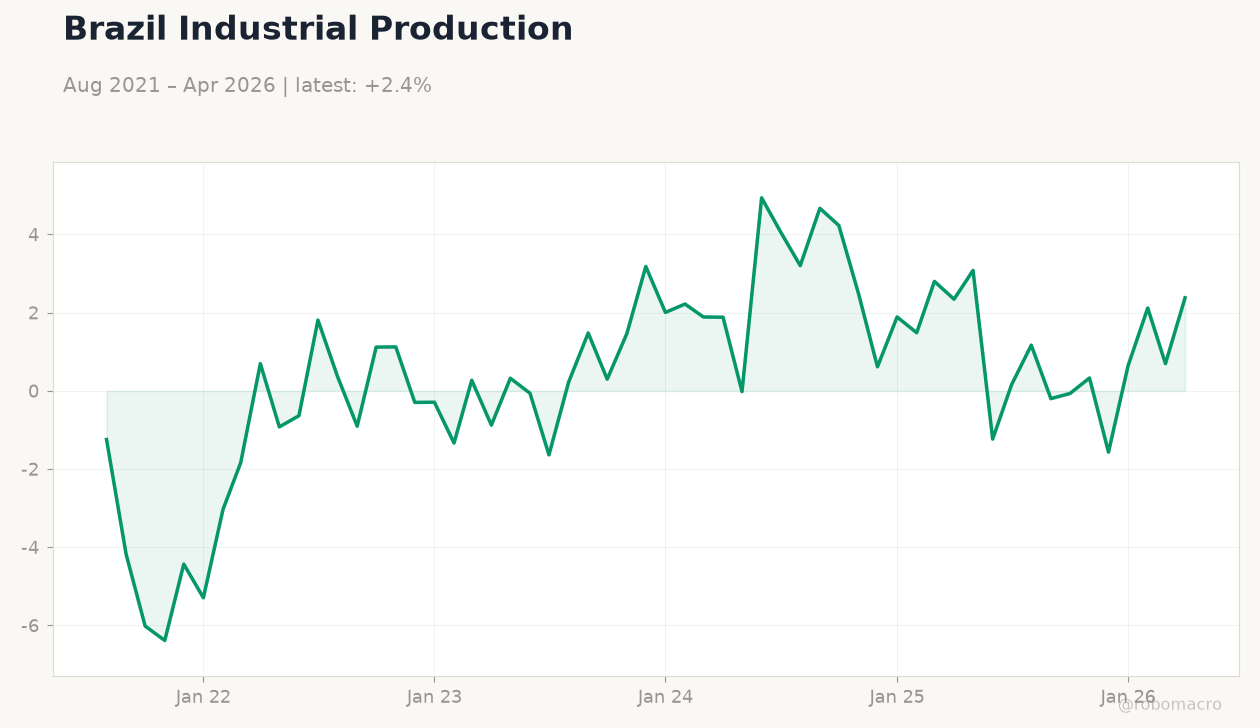
- US tariffs on Brazil took effect as May activity data signaled further loss of momentum.
Yesterday's Recap
Equity markets advanced sharply with Bovespa gaining 2.44% to close at 177,548.00 while Vale jumped 4.21% to 14.85 and Petrobras added 1.89% to 18.89 on firmer WTI crude that rose 2.95% to 89.39. The currency strengthened as USD/BRL declined 0.59% to 5.06 and EUR/BRL slipped 0.61% to 5.76. The short-term rate eased 0.76% to 14.39% while gold fell 1.30% to 4,093.10 and Bitcoin declined 0.76% to 65,600.34.
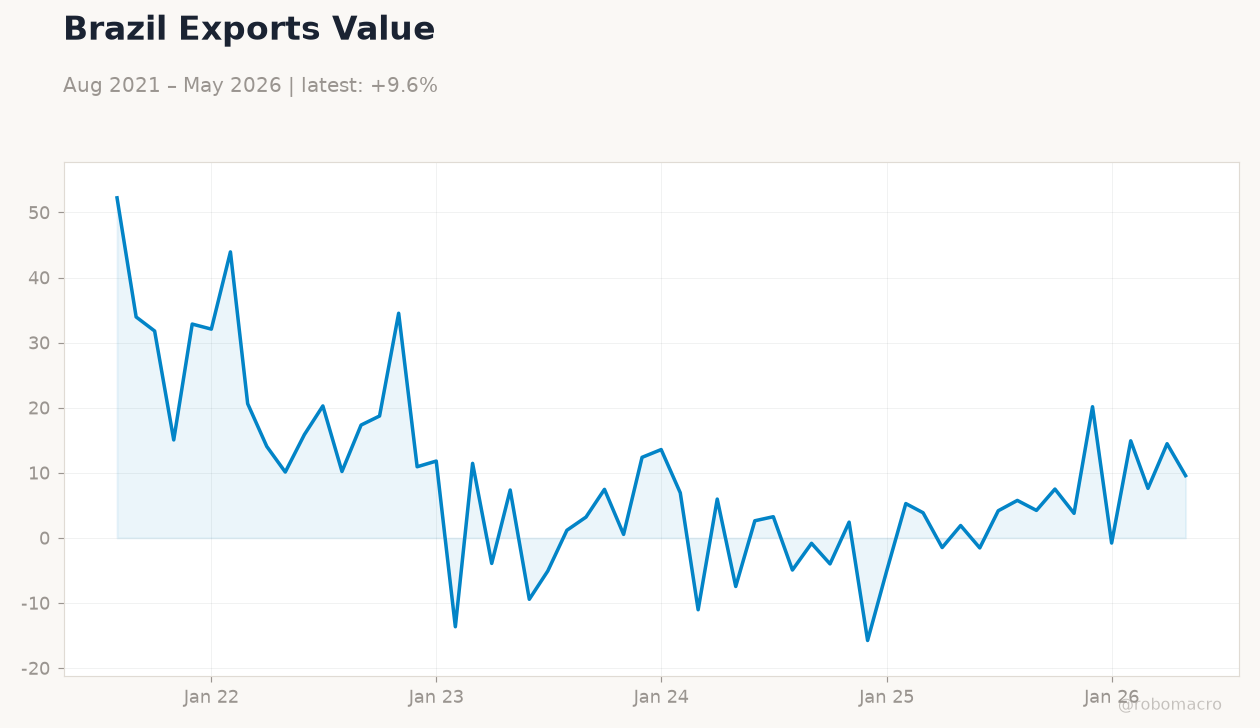
News flow highlighted Brazil’s economy losing momentum after May data disappointed and a fresh US tariff targeting Brazilian exports took effect. No economic releases appeared on the calendar, leaving market moves driven by external commodity prices and tariff headlines. Brazil remains off the UN Hunger Map for 2023-2025, underscoring sustained gains in food security despite recent growth softness.
The Day Ahead
The domestic calendar remains empty with zero scheduled releases for the next three days. Attention therefore shifts to external drivers including any follow-through on US tariff implementation and global commodity price action. Iron-ore and oil markets will dictate export revenue prospects for Vale and Petrobras.
Fixed-income traders will monitor long-term rate movements given the absence of fresh inflation prints. Equity flows may respond to any updates on the São Francisco River project or demographic shifts affecting long-term productivity and social-security costs. May activity data reinforced the loss-of-momentum narrative, suggesting domestic demand is cooling faster than earlier forecasts implied.
Other Economic Notes
Brazil stays off the UN Hunger Map for 2023-2025, underscoring sustained gains in food security despite recent growth softness. Demographic trends point to fewer working-age entrants and a rising elderly share, raising questions about future productivity and fiscal pressure on social-security accounts. May activity data reinforced the loss-of-momentum narrative, suggesting domestic demand is cooling faster than earlier forecasts implied.
Fiscal operations remained quiet with Treasury rollovers completed at lower yields, yet the combination of slower growth and external tariffs could widen the primary-deficit path later this year. China’s iron-ore import beat provided partial offset for Brazilian miners, yet broader steel-margin pressure could limit upside.