Brazil Macro Daily(Beta Mode)
Bovespa Rises as Rates Ease, Commodities Gain
Market Snapshot
| Asset | Level | Change |
|---|---|---|
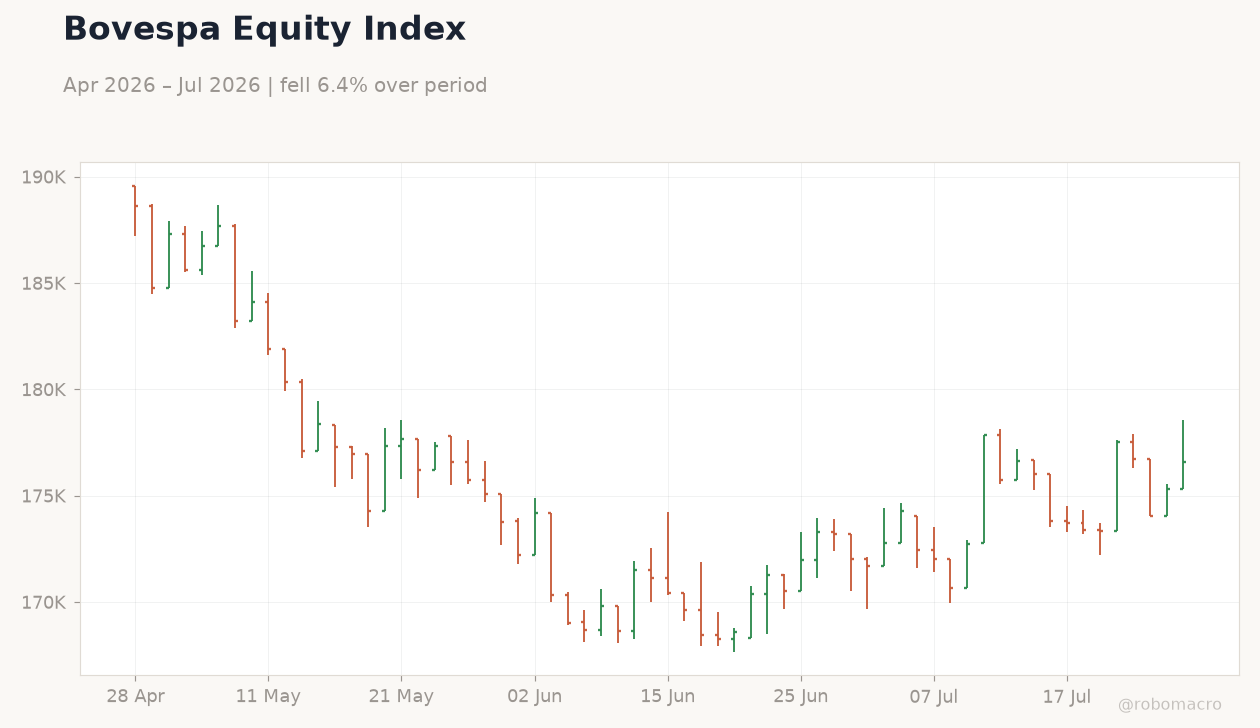
| Bovespa | 176,565.00 | +0.70% |
| USD/BRL | 5.12 | -0.04% |
| EUR/BRL | 5.84 | +0.20% |
| Vale | 14.70 | -0.54% |
| Petrobras | 18.07 | +0.39% |
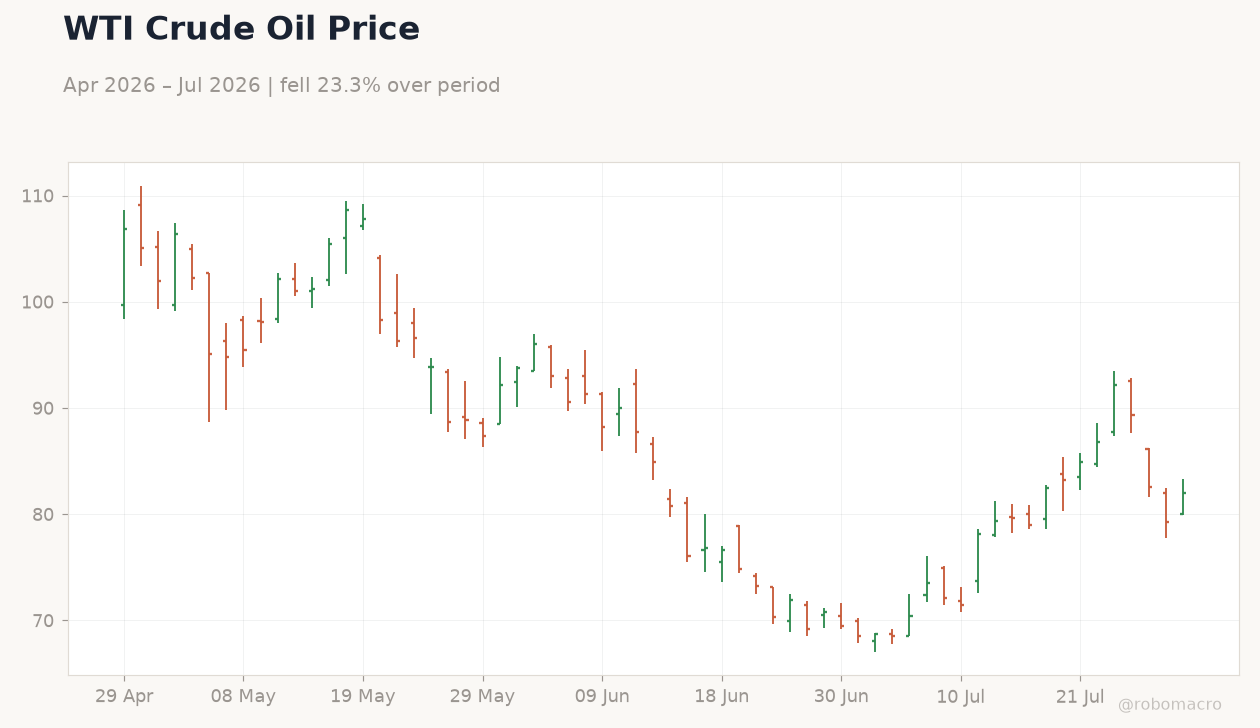
| WTI Crude | 82.03 | +3.49% |
| Gold | 4,095.50 | +1.47% |
| Bitcoin | 64,382.02 | +0.80% |
| Brazil Short-term Rate | 14.39% | -0.76% |
| Brazil Long-term Rate | - | - |
Prior Economic Events
| Data | Prior | Cons | Actual |
|---|---|---|---|
| No events available | |||
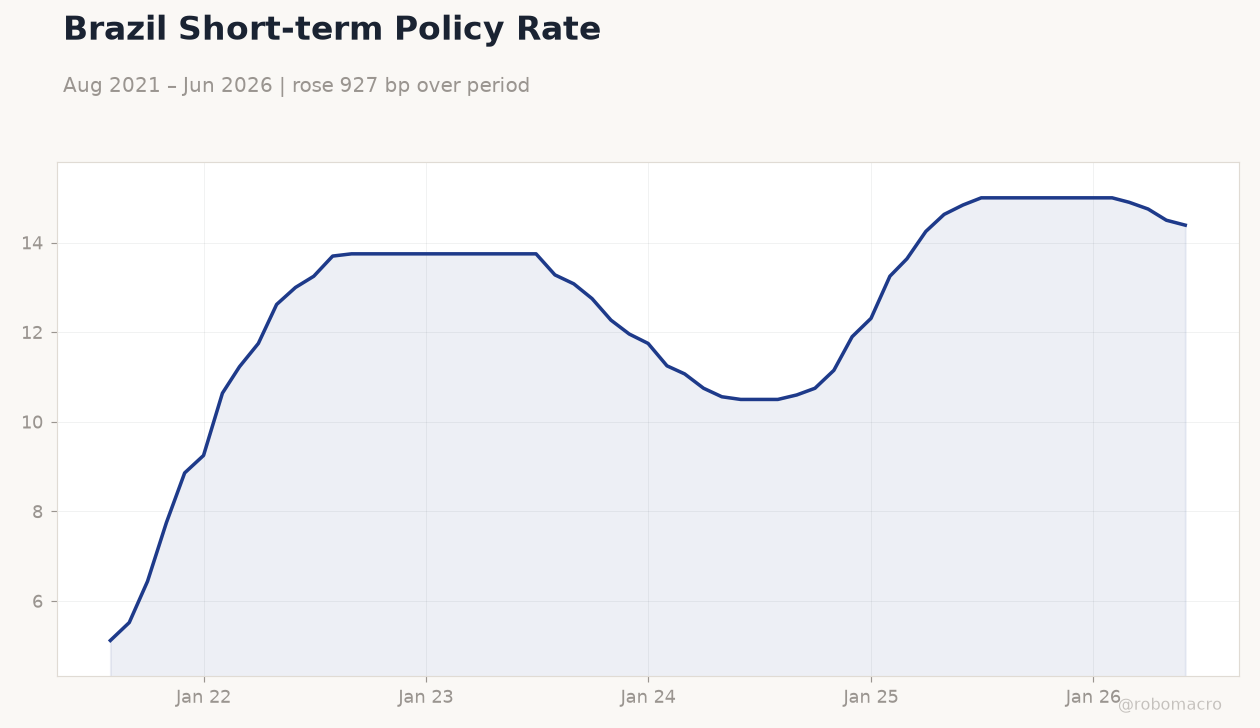 Brazil Short-term Policy Rate | Type: macro_line | Policy Rate (%): 14.39 (2026-06-01) | Range: 5.12–15 | Trend(6pt): 5.12,13.75,11.96,13.25,14.75,14.39
Today's Economic Events
| Data | Prior | Cons | Time |
|---|---|---|---|
| Thursday (2026-07-30) | |||
| Headline Unemployment Rate | 5.60 | 5.50 | 04:00 |
- Bovespa rises 0.70% to 176,565 amid commodity support
- USD/BRL slips 0.04% to 5.12 while short-term rate falls to 14.39%
- Unemployment rate release due tomorrow with consensus at 5.5%
Yesterday's Recap
Brazilian equities advanced as the Bovespa index closed at 176,565, up 0.70% on the session. The currency pair USD/BRL eased to 5.12, registering a 0.04% decline, while EUR/BRL rose 0.20% to 5.84. Petrobras shares gained 0.39% to 18.07 and Vale declined 0.54% to 14.70.
WTI crude jumped 3.49% to 82.03 and gold climbed 1.47% to 4,095.50. The Brazil short-term rate fell 0.76% to 14.39%. Finance Minister Durigan stated Brazil faces no recession risk in 2027, reinforcing market optimism despite limited data releases.
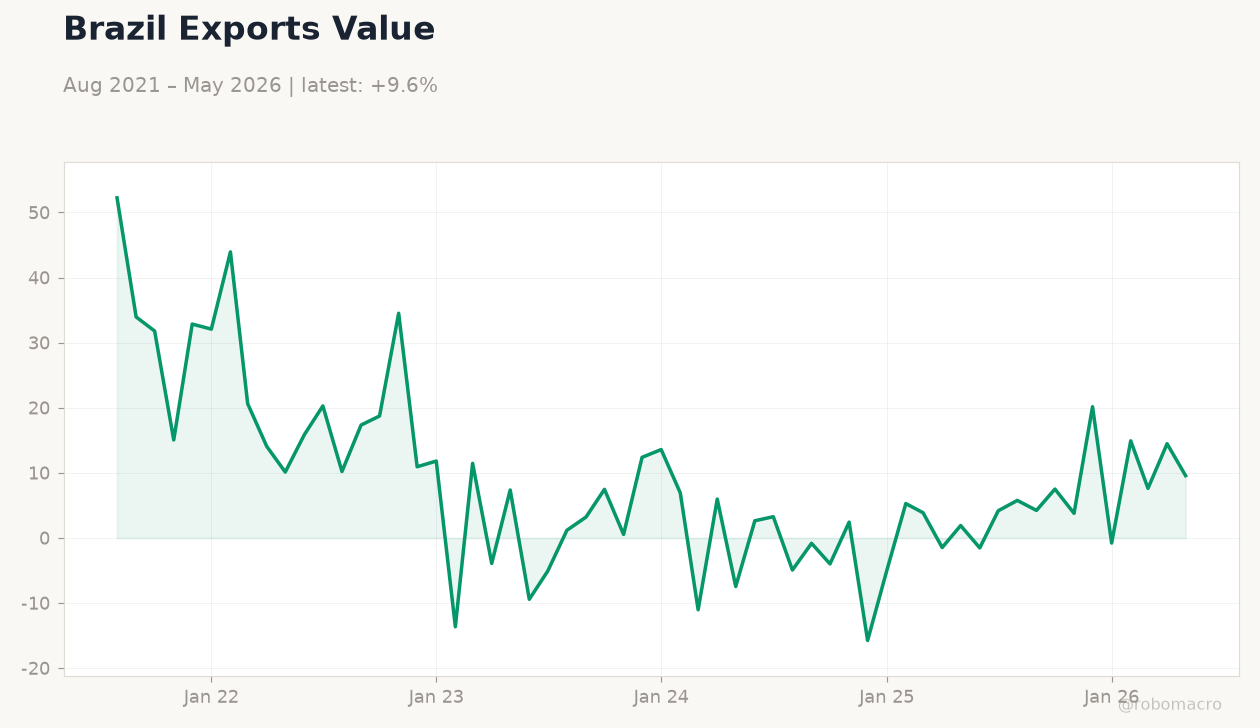
Iron ore and soybean export flows remained key monitors given global commodity price swings.
The Day Ahead
Markets will focus on the headline unemployment rate scheduled for release at 04:00 ET tomorrow. Consensus points to a 5.5% print versus the prior 5.6% reading. Traders will assess whether the modest improvement alters expectations for consumer spending and fiscal revenue.
Iron ore and soybean export flows remain key monitors given global commodity price swings. Any surprise in the labor data could influence BRL positioning ahead of month-end flows. Brazil has become the world’s top importer of Chinese cars, raising questions about domestic manufacturing competitiveness and trade balances.
Other Economic Notes
Finance officials continue to emphasize fiscal sustainability even as stablecoin adoption accelerates, prompting IMF scrutiny over potential financial stability risks. Bilateral trade with Argentina is expected to persist despite political frictions, supporting regional supply chains for agribusiness and energy. These themes underscore Brazil’s exposure to both external demand and policy shifts in major partners.
EU buyers increased purchases of Brazilian chicken ahead of a potential September trade ban, boosting near-term volumes for the world’s largest exporter. South Korea seeks to address Brazilian concerns over resource extraction to unlock broader South American market access.
Global Macro News
Brazil filed a WTO challenge against new US tariffs described as unjustified, escalating trade tensions that could affect export margins. <i>↓ p.2</i>