Brazil Macro Daily(Beta Mode)
Copom Cuts Selic to 14% as PMI Weakens
Market Snapshot
| Asset | Level | Change |
|---|---|---|
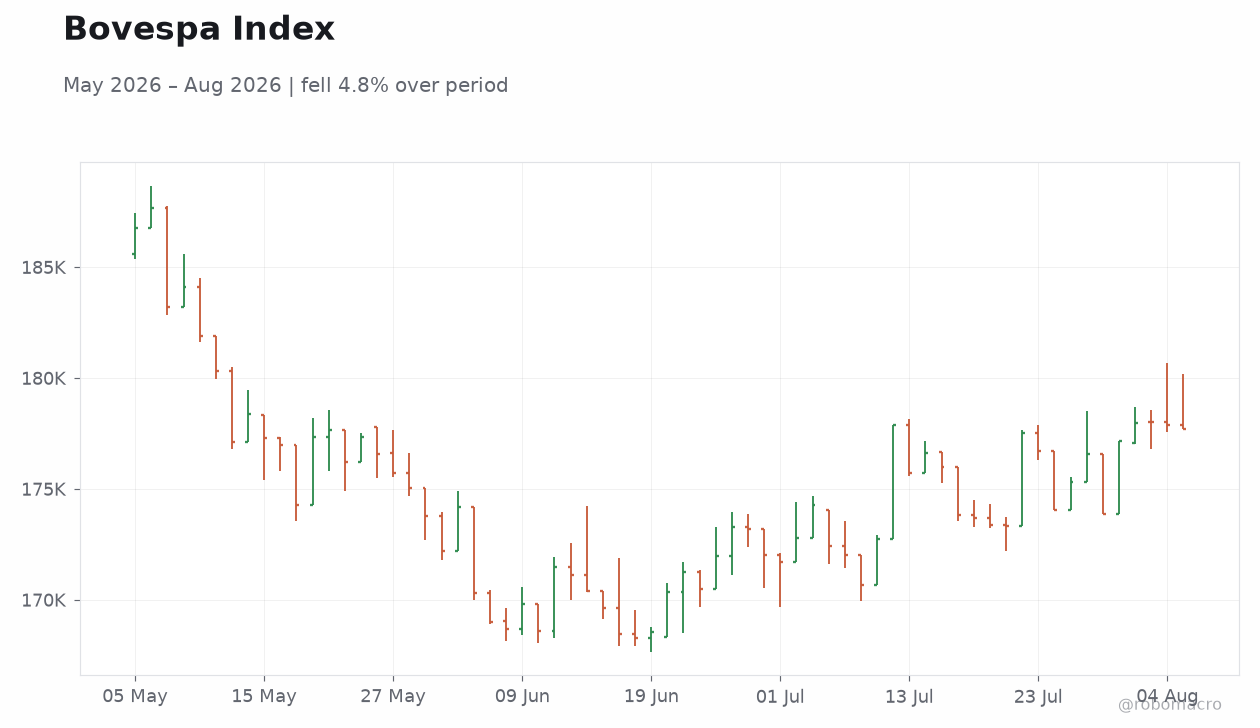
| Bovespa | 177,726.00 | -0.09% |
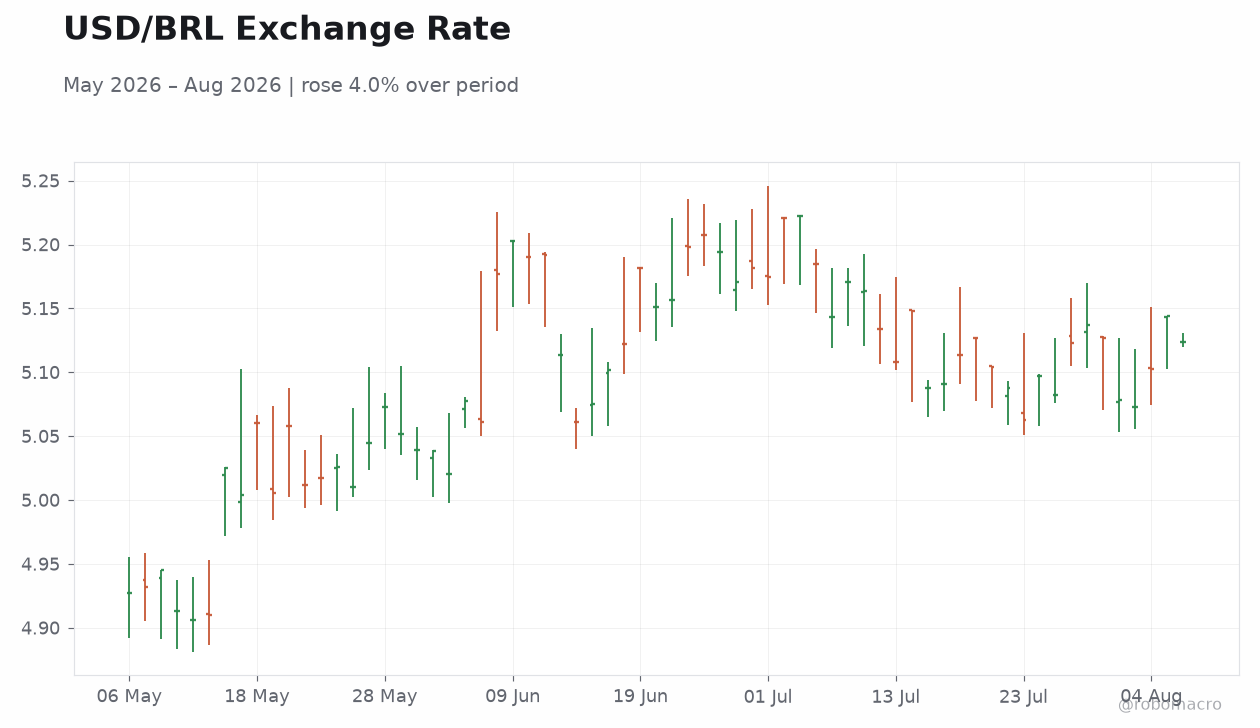
| USD/BRL | 5.12 | -0.39% |
| EUR/BRL | 5.91 | -0.23% |
| Vale | 14.94 | +0.74% |
| Petrobras | 18.36 | -1.92% |
| WTI Crude | 75.04 | -0.24% |
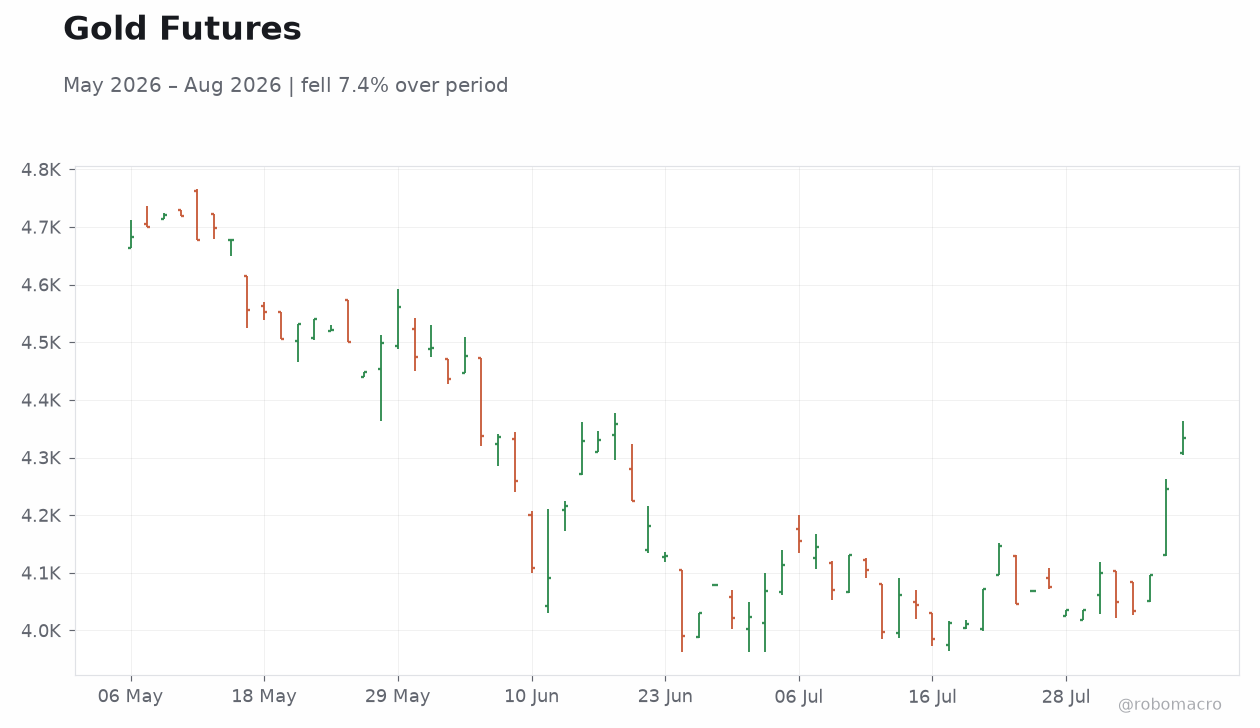
| Gold | 4,333.30 | +2.06% |
| Bitcoin | 64,807.46 | +0.33% |
| Brazil Short-term Rate | 14.39% | -0.76% |
| Brazil Long-term Rate | - | - |
Prior Economic Events
| Data | Prior | Cons | Actual |
|---|---|---|---|
| Industrial Production Month-over-Month | -0.90 | -0.80 | 1.80 |
| S&P Global Services PMI Index | 51.30 | - | 49.70 |
| Central Bank Interest Rate Decision | 14.25 | 14 | 14 |
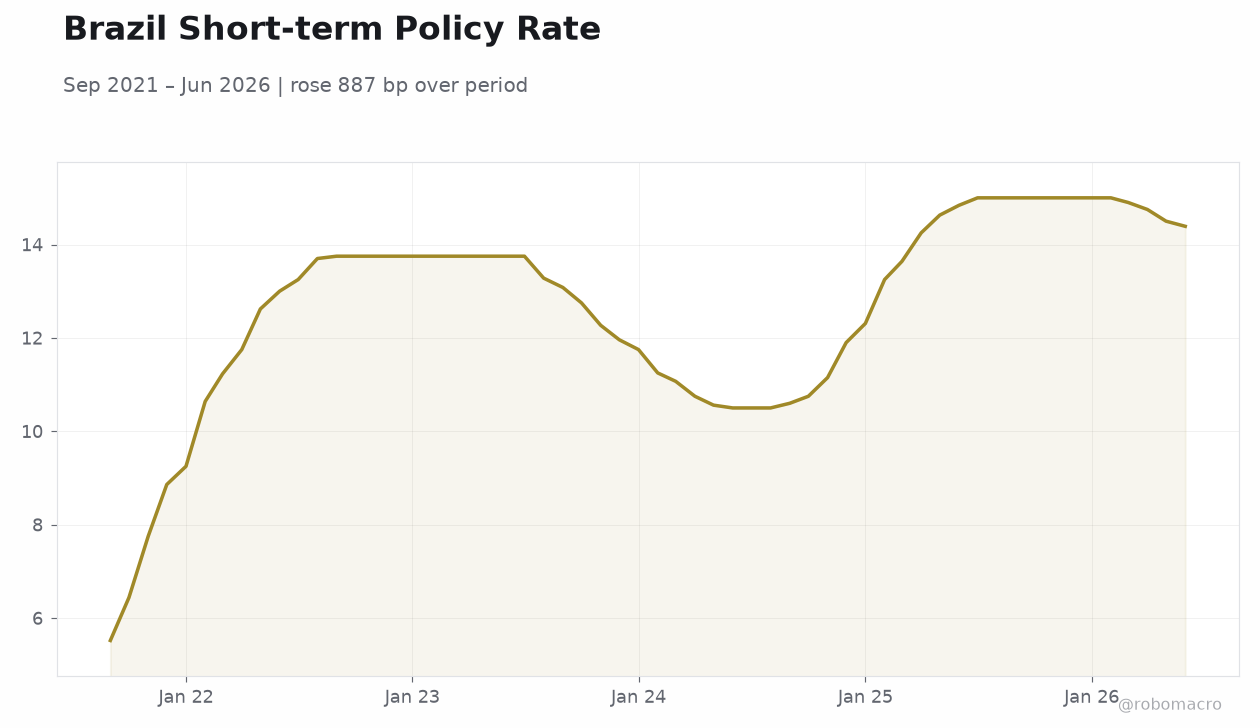 Brazil Short-term Policy Rate | Type: macro_line | Percent: 14.39 (2026-06-01) | Range: 5.52–15 | Trend(6pt): 5.52,13.75,11.75,13.64,14.5,14.39
Today's Economic Events
| Data | Prior | Cons | Time |
|---|---|---|---|
| Trade Balance | 9,760m | 8,400m | 10:00 |
- BCB delivers 25bp Selic cut to 14% on cooling inflation
- Industrial production rebounds sharply while services PMI contracts
- BRL strengthens as Bovespa edges lower on mixed data
Yesterday's Recap
Brazil’s Copom reduced the Selic benchmark rate by 25 basis points to 14% on August 5, aligning with consensus expectations after the prior 14.25% level. Industrial production posted a strong 1.8% month-over-month gain, reversing the -0.9% contraction recorded previously and exceeding the -0.8% consensus. The S&P Global Services PMI fell to 49.7 from 51.3, signaling contraction in the dominant services sector.
Markets reacted with the Bovespa declining 0.09% to 177,726 while the USD/BRL rate dropped 0.39% to 5.12, reflecting BRL appreciation. Vale shares rose 0.74% on firmer iron-ore sentiment, whereas Petrobras declined 1.92%. Short-term Brazilian rates eased 0.76% to 14.39%.
The combination of the rate cut and resilient goods output supported local assets despite the services slowdown.
The Day Ahead
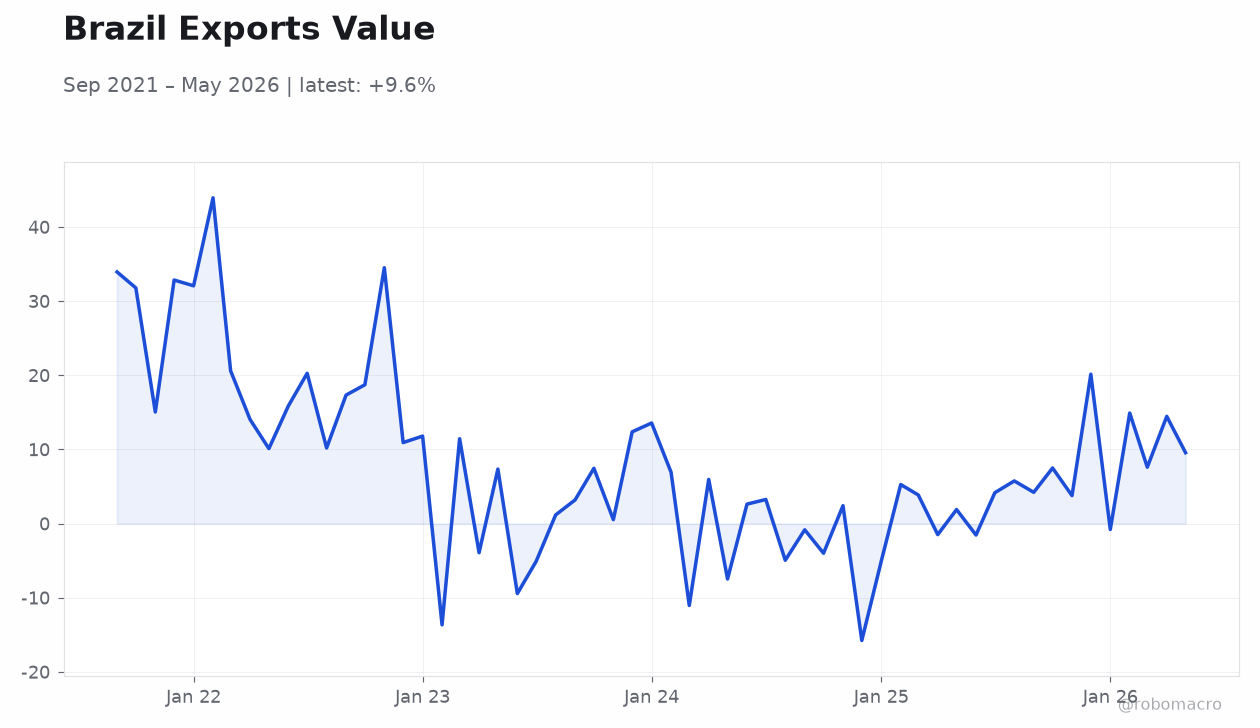
Traders will focus on the August 6 trade balance release, with consensus pointing to an 8.4 billion USD surplus versus the prior 9.76 billion USD print. Export volumes of iron ore and soybeans remain key drivers given global commodity demand. Any shortfall could highlight softening Chinese demand and pressure the BRL.
Market participants will also monitor follow-up commentary from Copom members for signals on the pace of further easing. Fiscal data releases later in the week may influence longer-term rate expectations. Volatility in WTI crude at 75.04 could affect Petrobras-linked flows.
Other Economic Notes
Brazil’s June CPI at 4.64% provides the inflation backdrop that justified the Selic reduction, keeping the rate path consistent with the target range. Commodity export revenues continue to anchor the current-account position, though softer services activity raises questions about domestic demand resilience. Fiscal sustainability remains under scrutiny as debt-service costs stay elevated at the new 14% policy rate.
Iron-ore and oil price movements will dictate near-term BRL direction more than domestic data alone. Equity valuations in the Bovespa appear supported by the lower rate environment provided inflation does not reaccelerate.