Brazil Macro Daily(Beta Mode)
Soft CPI Print Weighs on BRL and Stocks
Market Snapshot
| Asset | Level | Change |
|---|---|---|
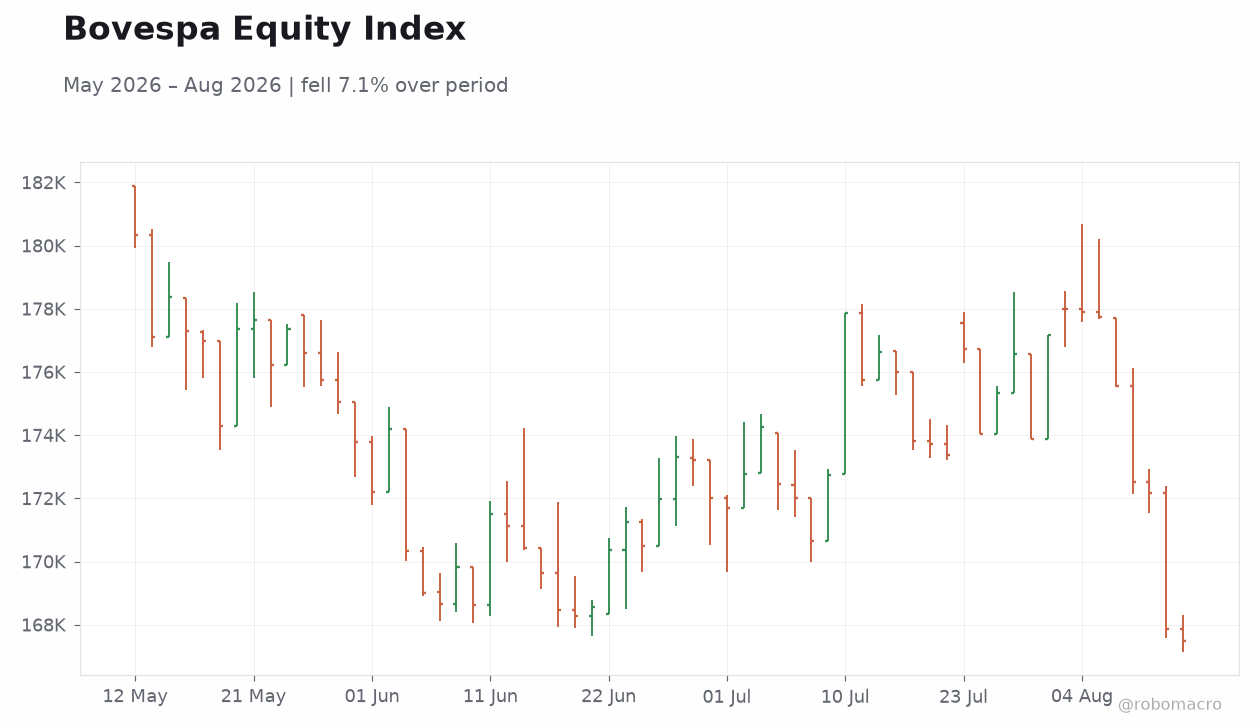
| Bovespa | 167,491.00 | -0.23% |
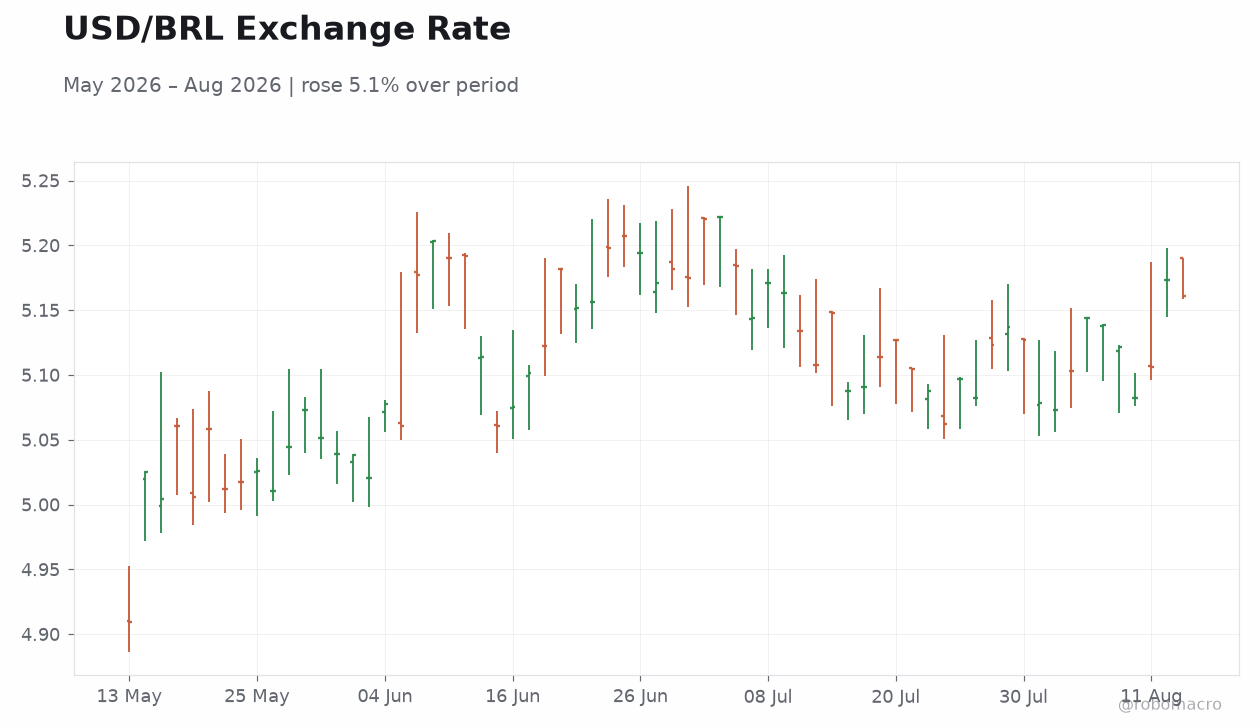
| USD/BRL | 5.16 | -0.24% |
| EUR/BRL | 5.94 | -0.42% |
| Vale | 14.42 | +0.70% |
| Petrobras | 17.76 | -0.95% |
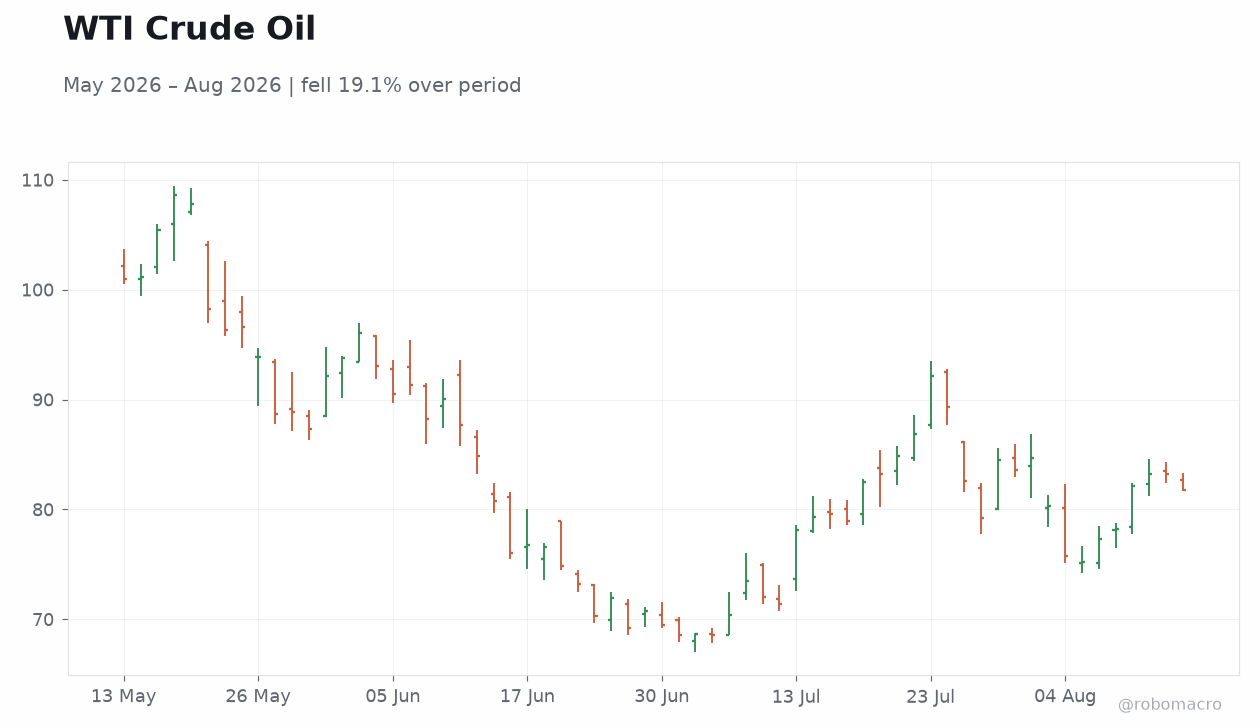
| WTI Crude | 81.79 | -1.78% |
| Gold | 4,431.90 | +0.52% |
| Bitcoin | 63,666.00 | +0.42% |
| Brazil Short-term Rate | 14.39% | -0.76% |
| Brazil Long-term Rate | - | - |
Prior Economic Events
| Data | Prior | Cons | Actual |
|---|---|---|---|
| BCB Copom Meeting Minutes | - | - | - |
| Inflation Rate Month-over-Month | 0.16 | 0.03 | 0.07 |
| Inflation Rate Year-over-Year | 4.64 | 4.40 | 4.44 |
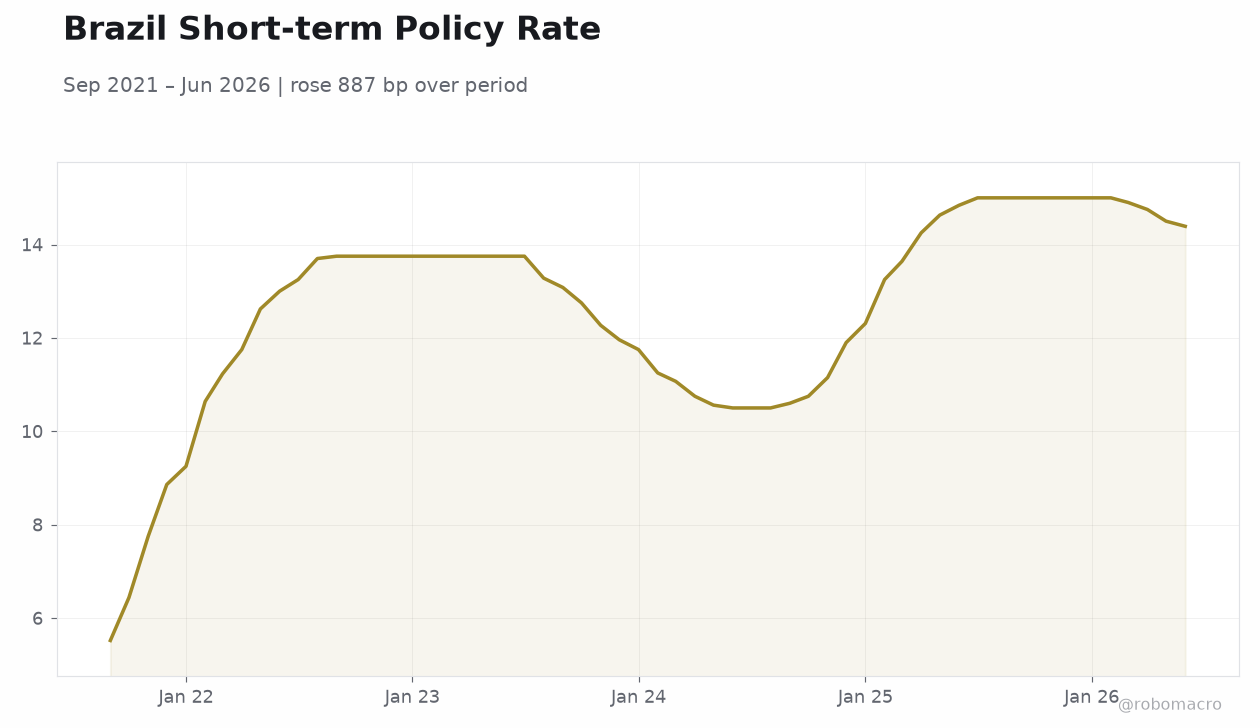 Brazil Short-term Policy Rate | Type: macro_line | %: 14.39 (2026-06-01) | Range: 5.52–15 | Trend(6pt): 5.52,13.75,11.75,13.64,14.5,14.39
Today's Economic Events
| Data | Prior | Cons | Time |
|---|---|---|---|
| Retail Sales Month-over-Month | 0.10 | 0.30 | 04:00 |
| Business Confidence | 44.40 | - | 06:00 |
- July inflation rose 0.07% m/m and 4.44% y/y, slightly above consensus yet below prior readings.
- Bovespa fell 0.23% while USD/BRL eased 0.24% to 5.16 amid mixed commodity moves.
- Retail sales and business confidence data due today will shape near-term Selic cut expectations.
Yesterday's Recap
Brazil released the BCB Copom Meeting Minutes alongside July inflation figures on 11 August. The inflation rate printed 0.07% month-over-month against a 0.03% consensus and 0.16% prior, while the year-over-year rate reached 4.44% versus 4.40% expected and 4.64% previously. Markets absorbed the mixed print with Bovespa declining 0.23% to 167,491.
USD/BRL fell 0.24% to 5.16 and EUR/BRL dropped 0.42% to 5.94. Vale advanced 0.70% to 14.42 while Petrobras declined 0.95% to 17.76 as WTI crude fell 1.78% to 81.79. The Brazil short-term rate eased 0.76% to 14.39% and gold rose 0.52% to 4,431.90.
Bitcoin gained 0.42% to 63,666.00. The minutes offered no new forward guidance beyond the committee’s data-dependent stance. Iron-ore price support helped limit equity losses while softer crude weighed on Petrobras.
The Day Ahead
Retail sales month-over-month are scheduled for release at 04:00 ET with consensus at 0.3% after a 0.1% prior reading. Business confidence follows at 06:00 ET. Both prints carry medium impact and will feed directly into growth and inflation forecasts ahead of the next COPOM decision.
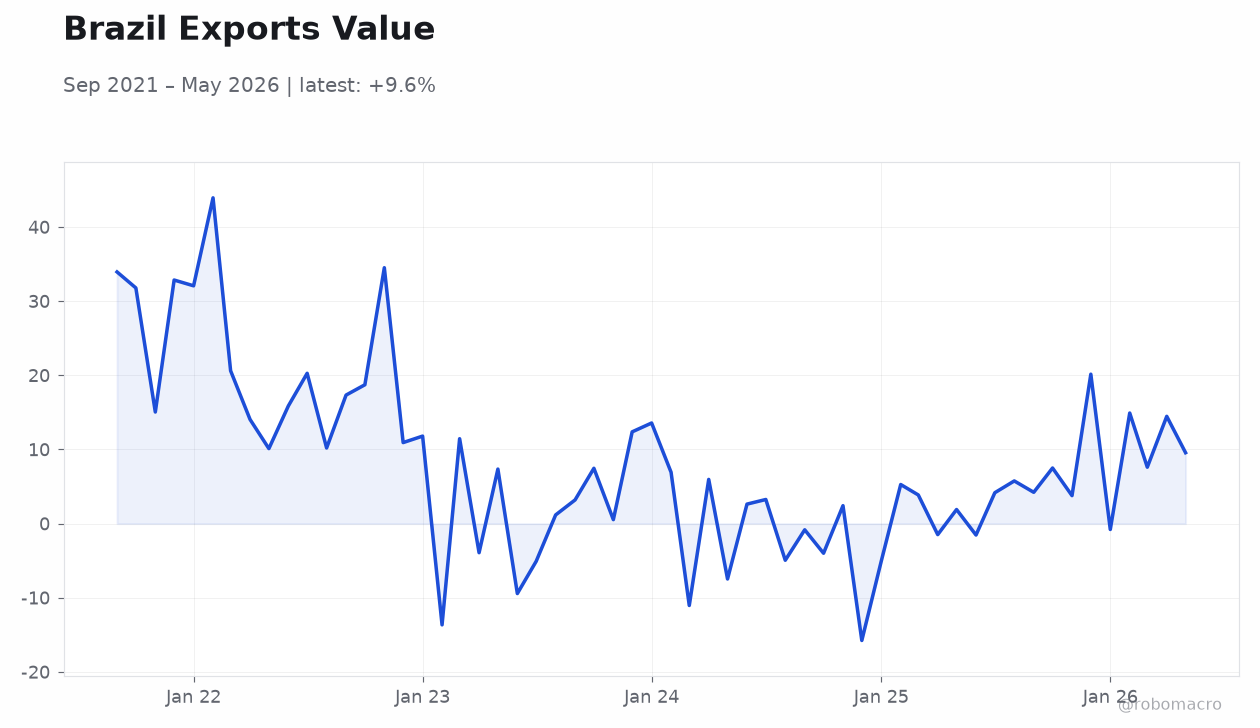
No senior BCB speeches appear on the calendar. Traders will monitor iron-ore and soybean export flows for additional signals on trade balance momentum. A stronger-than-expected retail figure could trim odds of a September Selic cut.
The data will also inform whether domestic demand remains resilient enough to sustain the current inflation trajectory near the verified 4.44% year-over-year level.
Other Economic Notes
Brazil’s fiscal primary balance posted a R$12.1 billion surplus in July, exceeding expectations and supporting debt sustainability narratives. Iron-ore exports to China rose 4% year-over-year, bolstering trade-surplus projections despite softer global demand signals. President Lula reaffirmed commitment to the fiscal framework without announcing fresh spending restraint measures.
<i>↓ p.2</i>