Brazil Macro Daily(Beta Mode)
Soft Q2 Growth Lifts BRL as Trade Outlook Improves
Market Snapshot
| Asset | Level | Change |
|---|---|---|
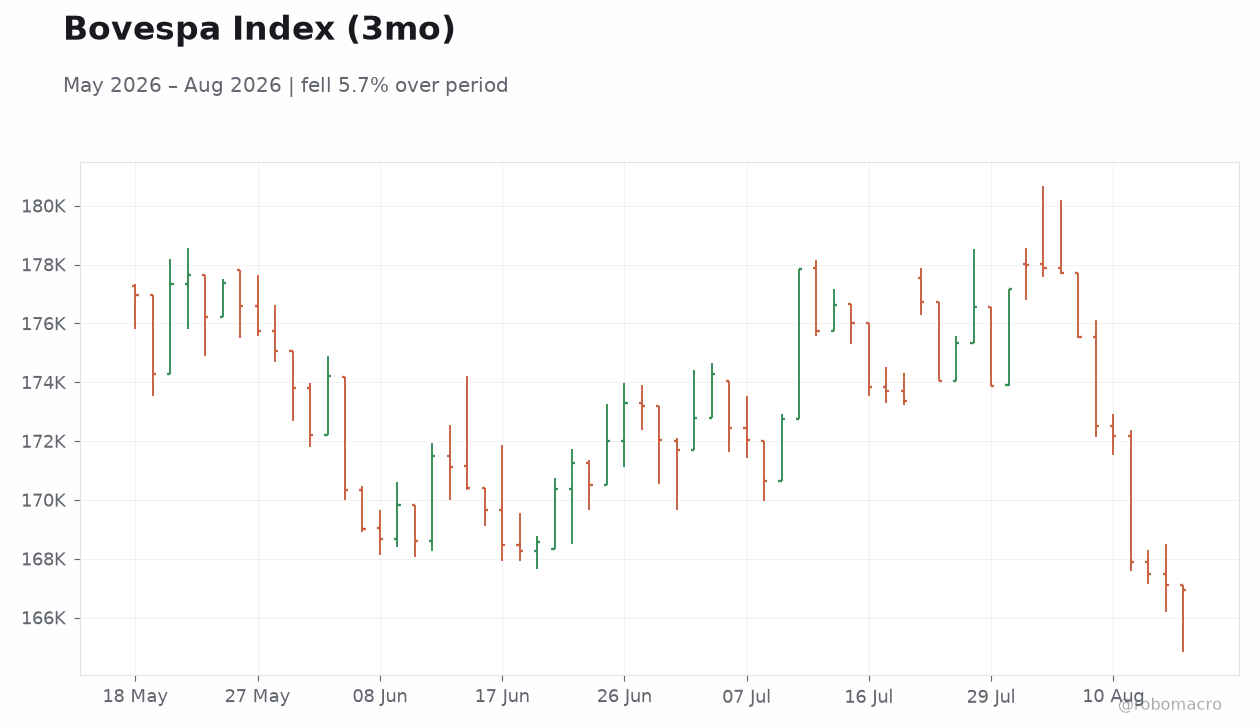
| Bovespa | 166,934.00 | -0.10% |
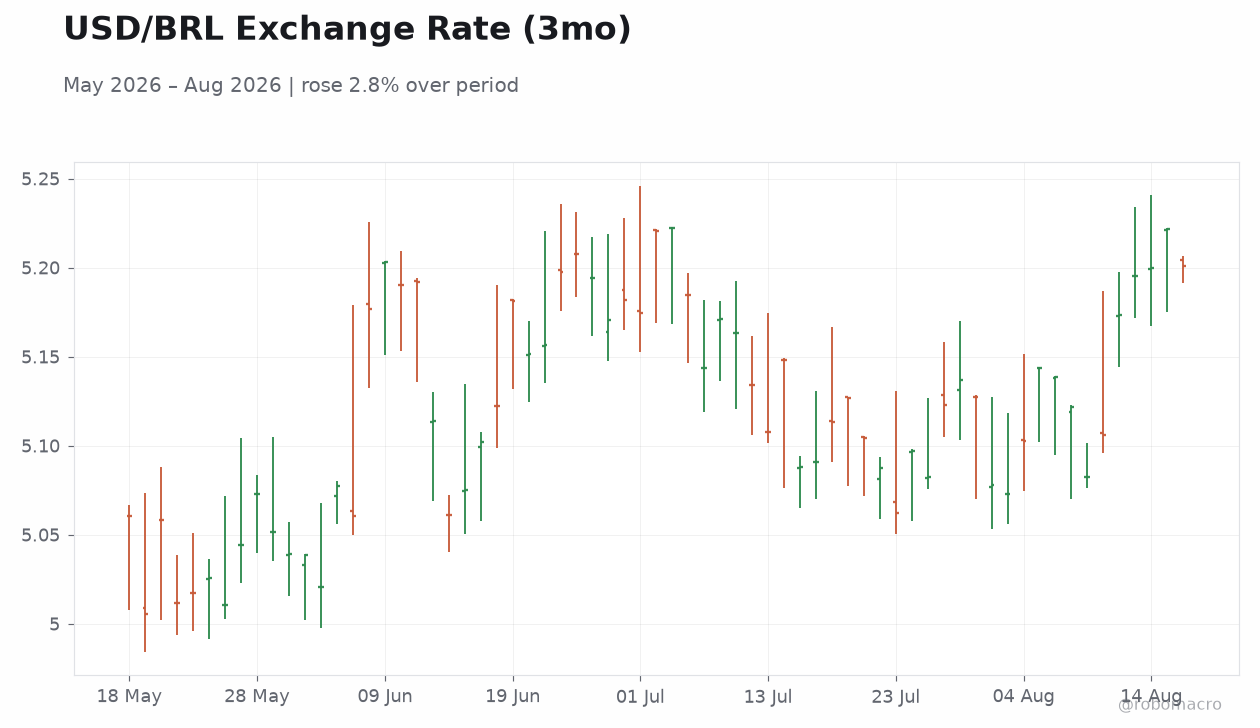
| USD/BRL | 5.20 | -0.40% |
| EUR/BRL | 6.01 | -0.52% |
| Vale | nan | +nan% |
| Petrobras | nan | +nan% |
| WTI Crude | 84.22 | -0.33% |
| Gold | 4,448.30 | +0.69% |
| Bitcoin | 64,206.57 | -0.46% |
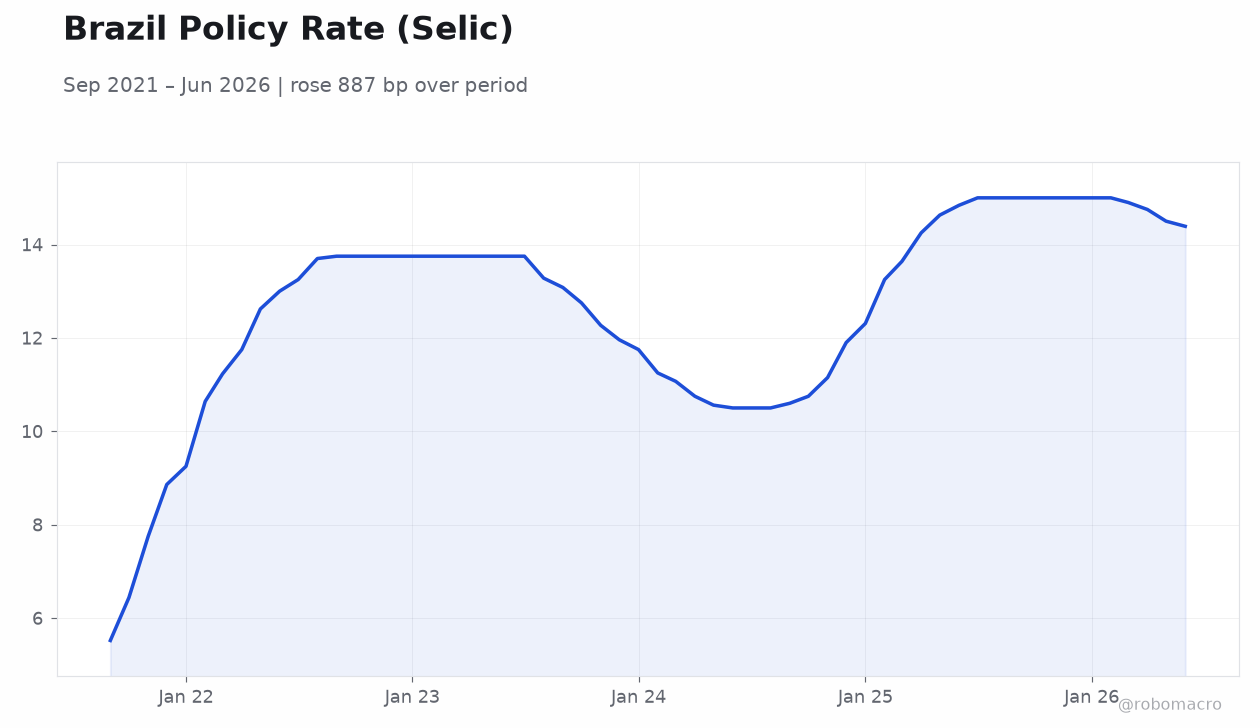
| Brazil Short-term Rate | 14.39% | -0.76% |
| Brazil Long-term Rate | - | - |
Prior Economic Events
| Data | Prior | Cons | Actual |
|---|---|---|---|
| No events available | |||
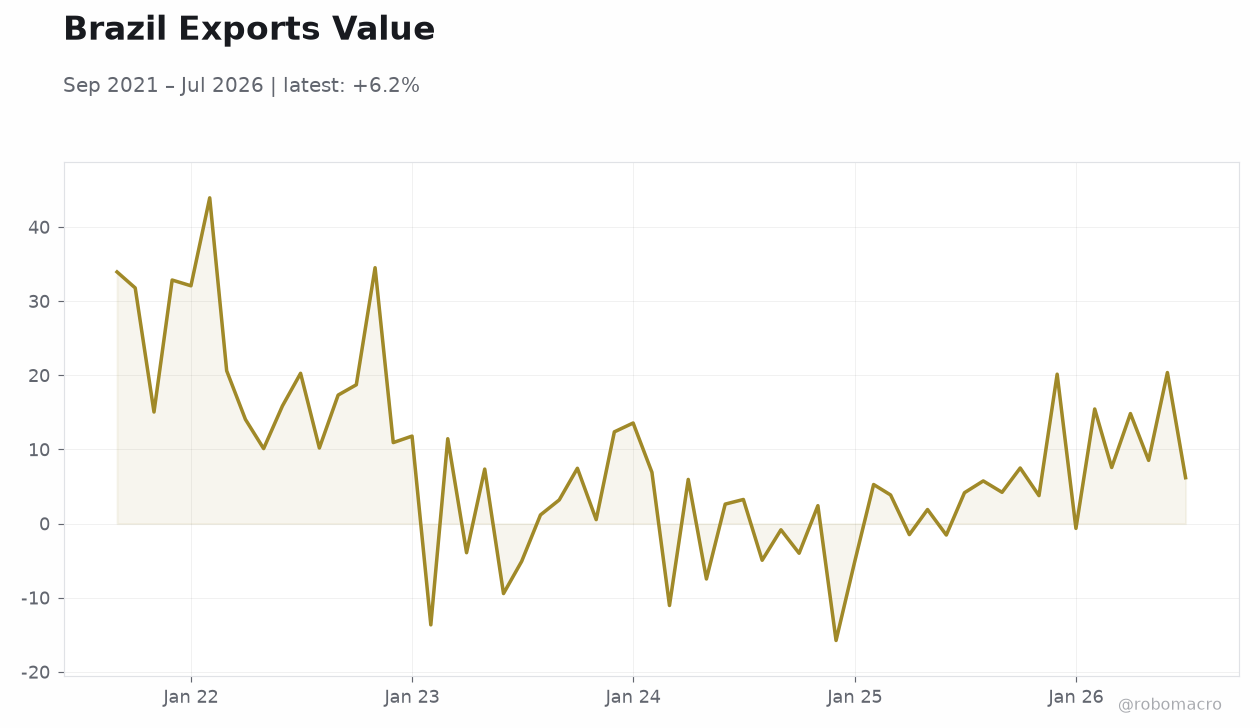 Brazil Exports Value | Type: macro_line | Exports (USD mn): 6.195 (2026-07-01) | Range: -15.76–43.94 | Trend(6pt): 33.95,34.52,13.57,3.87,8.532,6.195
Today's Economic Events
| Data | Prior | Cons | Time |
|---|---|---|---|
| No events available | |||
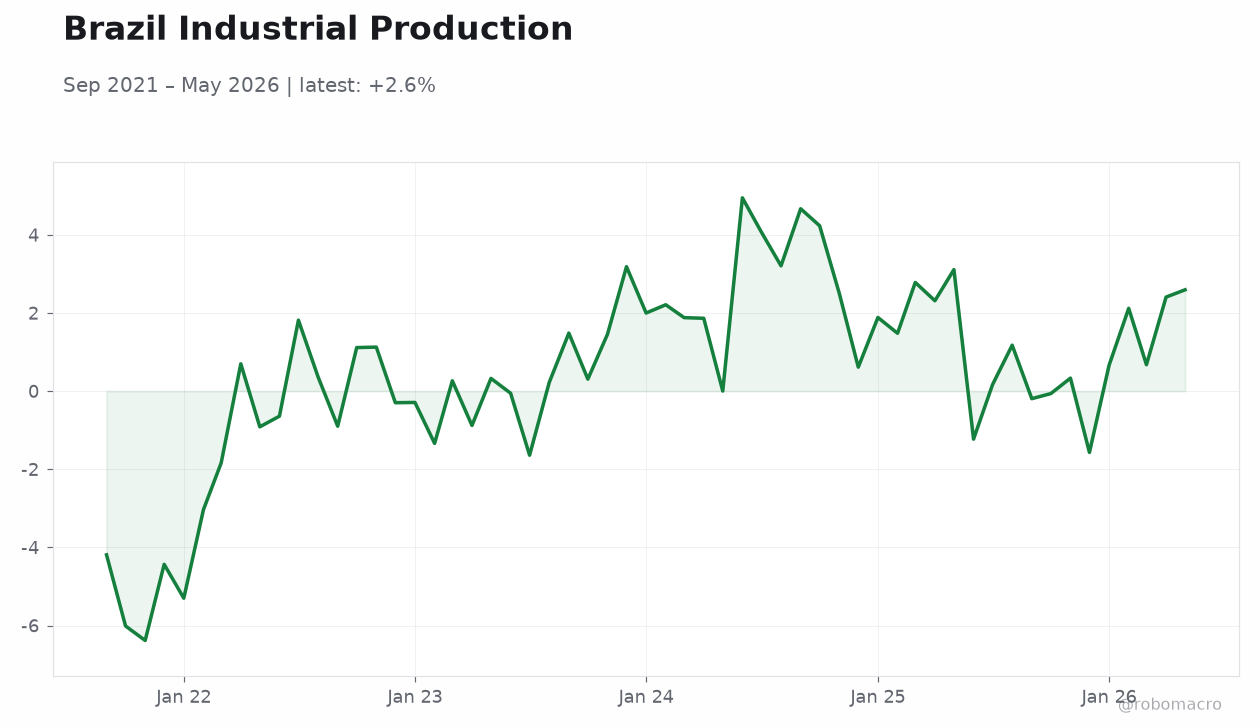
- Modest Q2 growth via central bank index tempers activity outlook.
- Trade surplus forecast upgraded on commodity strength.
- BCB holds Selic at 14.00% amid productivity-driven inflation risks.
Yesterday's Recap
Brazil’s central bank activity index showed modest second-quarter expansion, confirming the economy lost steam after stronger first-quarter readings. Markets responded with Bovespa closing at 166,934.00, down 0.10 percent, while USD/BRL fell 0.40 percent to 5.20 on firmer real flows. The short-term rate eased 0.76 percent to 14.39 percent as investors adjusted positions ahead of further policy signals.
News that the trade surplus forecast had risen on higher commodity exports supported the currency. Lula’s reelection announcement highlighted shifting gig-economy voter bases but left fiscal questions open. Treasury yields on the long end receded after the weak data print and stronger real.
No major corporate earnings moved the equity index materially. The real outperformed regional peers as fiscal-risk premia narrowed on contained debt concerns relative to other emerging markets.
The Day Ahead
With the calendar empty of scheduled releases, attention turns to follow-up commentary on the soft Q2 print and its implications for the Selic path. Commodity price moves in iron ore and oil will drive export-related equities and the real. Fiscal statements from the finance ministry remain in focus after recent debt concerns.
Global equity and Treasury moves may spill into local rates and USD/BRL. Market participants will also monitor any BCB deputy remarks on credit market risks and inflation persistence. Iron-ore import gains from China continue to lift export expectations for Q3, while US long-term yields at multi-year highs widen rate differentials and support carry trades into the real.
Other Economic Notes
Fiscal sustainability concerns persist as public debt trajectory draws investor scrutiny ahead of the 2026 election cycle. Growth without productivity gains continues to fuel inflation pressures, keeping the policy rate elevated. The stronger real has eased import costs but may weigh on manufacturing competitiveness if it extends.
Lula’s reelection launch introduces political uncertainty that markets are pricing through wider fiscal-risk premia on the long end of the curve. Rising credit defaults flagged by BCB officials add caution to the transmission mechanism, while services prices remain a key watchpoint for underlying inflation.