Brazil Macro Daily(Beta Mode)
Real Weakens as Bovespa Slips
Market Snapshot
| Asset | Level | Change |
|---|---|---|
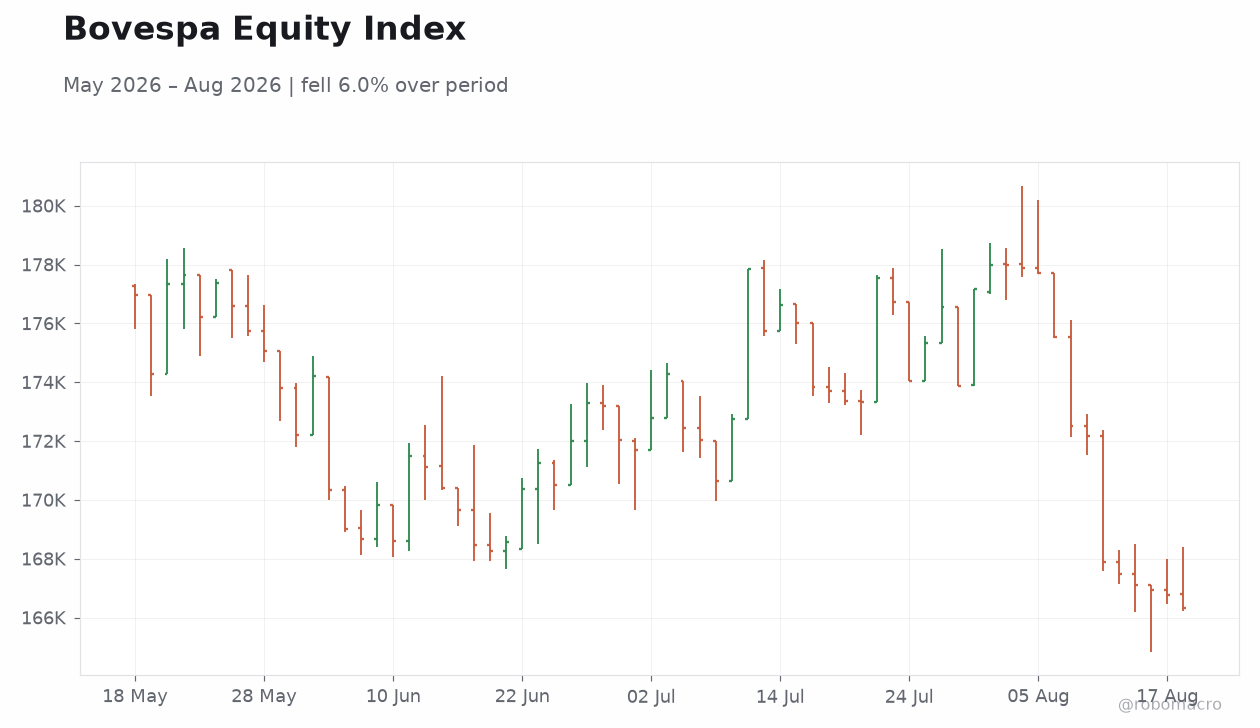
| Bovespa | 166,335.00 | -0.27% |
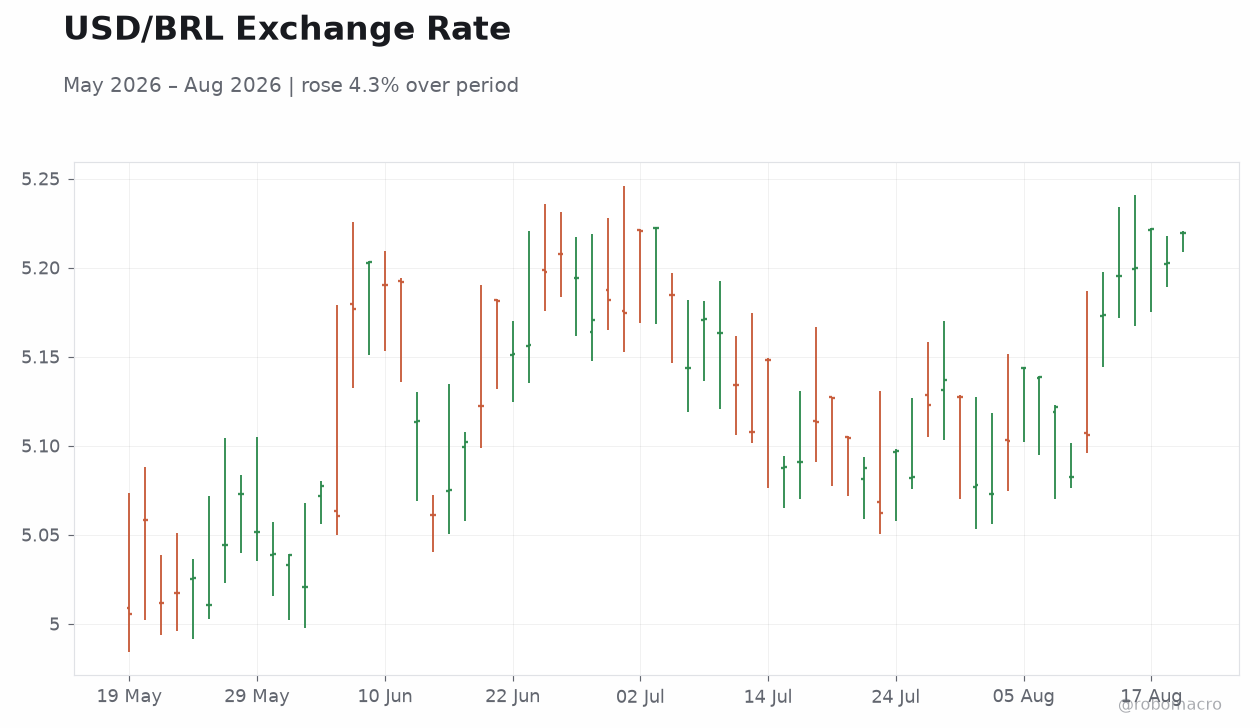
| USD/BRL | 5.22 | +0.33% |
| EUR/BRL | 6.04 | +0.32% |
| Vale | 13.68 | -0.51% |
| Petrobras | 18.18 | -0.38% |
| WTI Crude | 84.58 | -0.42% |
| Gold | 4,413.70 | +1.09% |
| Bitcoin | 64,389.41 | -0.45% |
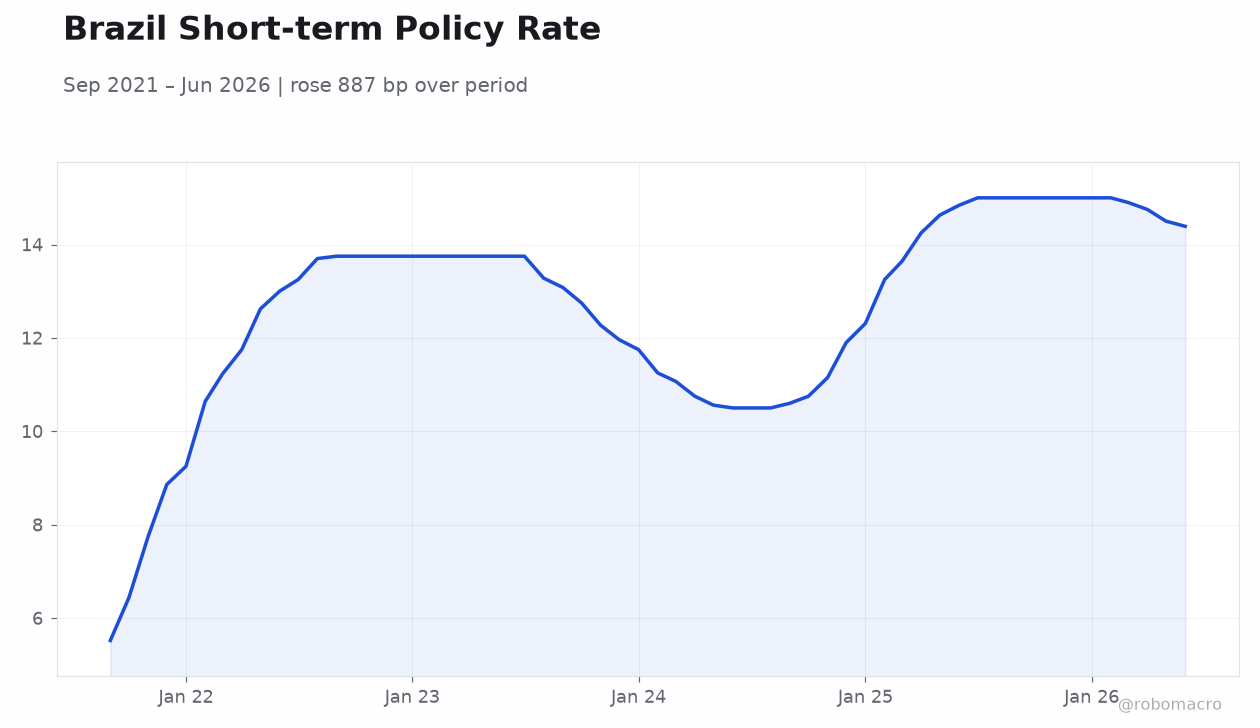
| Brazil Short-term Rate | 14.39% | -0.76% |
| Brazil Long-term Rate | - | - |
Prior Economic Events
| Data | Prior | Cons | Actual |
|---|---|---|---|
| No events available | |||
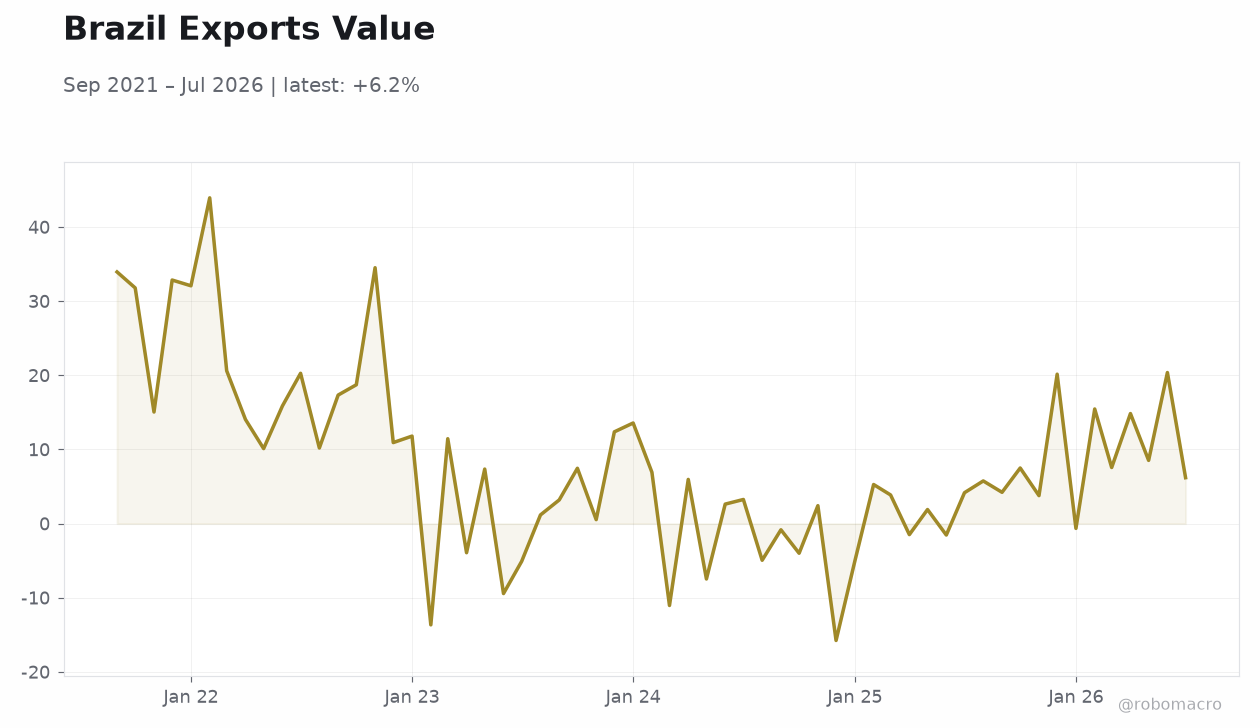 Brazil Exports Value | Type: macro_line | USD mn: 6.195 (2026-07-01) | Range: -15.76–43.94 | Trend(6pt): 33.95,34.52,13.57,3.87,8.532,6.195
Today's Economic Events
| Data | Prior | Cons | Time |
|---|---|---|---|
| No events available | |||
- Bovespa fell 0.27% to 166,335 amid modest commodity pullback.
- USD/BRL rose 0.33% to 5.22 as short-term rates eased 0.76%.
- Iran-Brazil trade talks and Amazon oil find dominate headlines.
Yesterday's Recap
Markets closed mixed with limited local data releases. Bovespa declined 0.27% to 166,335 while Vale dropped 0.51% to 13.68 and Petrobras fell 0.38% to 18.18. USD/BRL climbed 0.33% to 5.22 and EUR/BRL gained 0.32% to 6.04, reflecting mild real depreciation.
Brazil short-term rates eased 0.76% to 14.39% as WTI crude slipped 0.42% to 84.58. Gold rose 1.09% to 4,413.70, offering some support to sentiment. Bitcoin declined 0.45% to 64,389.41.
No major economic prints occurred, leaving price action driven by external flows and thin volumes. The absence of fresh indicators kept trading ranges narrow, with participants focusing on commodity price signals and cross-border flows rather than domestic catalysts.
The Day Ahead
The calendar remains empty of scheduled releases through tomorrow. Focus will stay on global commodity prices and any follow-up comments from Finance Ministry officials. Iran-Brazil economic cooperation talks may generate headlines but carry limited immediate market impact.
Vale’s CEO remarks on mega-projects could influence mining equities if details emerge. Traders will monitor USD/BRL for signs of further real pressure ahead of month-end flows. Quiet data slate keeps attention on external drivers such as Chinese demand signals and US yields.
With no Focus survey or BCB minutes due, positioning is expected to remain light until clearer external cues appear.
Other Economic Notes
President Lula highlighted a new oil discovery near the Amazon mouth despite environmental criticism. Iran and Brazil advanced plans for deeper trade and investment ties, potentially supporting long-term export diversification. Vale’s CEO stressed the need for renewed mega-projects to unlock growth, noting the firm holds sufficient capital.
Fiscal sustainability remains in focus after neutral Treasury updates on primary spending targets. Broader commodity export performance, especially iron ore and soybeans, continues to anchor Brazil’s external accounts. These developments underscore efforts to balance resource-led growth with external partnerships while maintaining fiscal discipline.