Brazil Macro Daily(Beta Mode)
Bovespa Holds Steady Amid Fiscal Strain
Market Snapshot
| Asset | Level | Change |
|---|---|---|
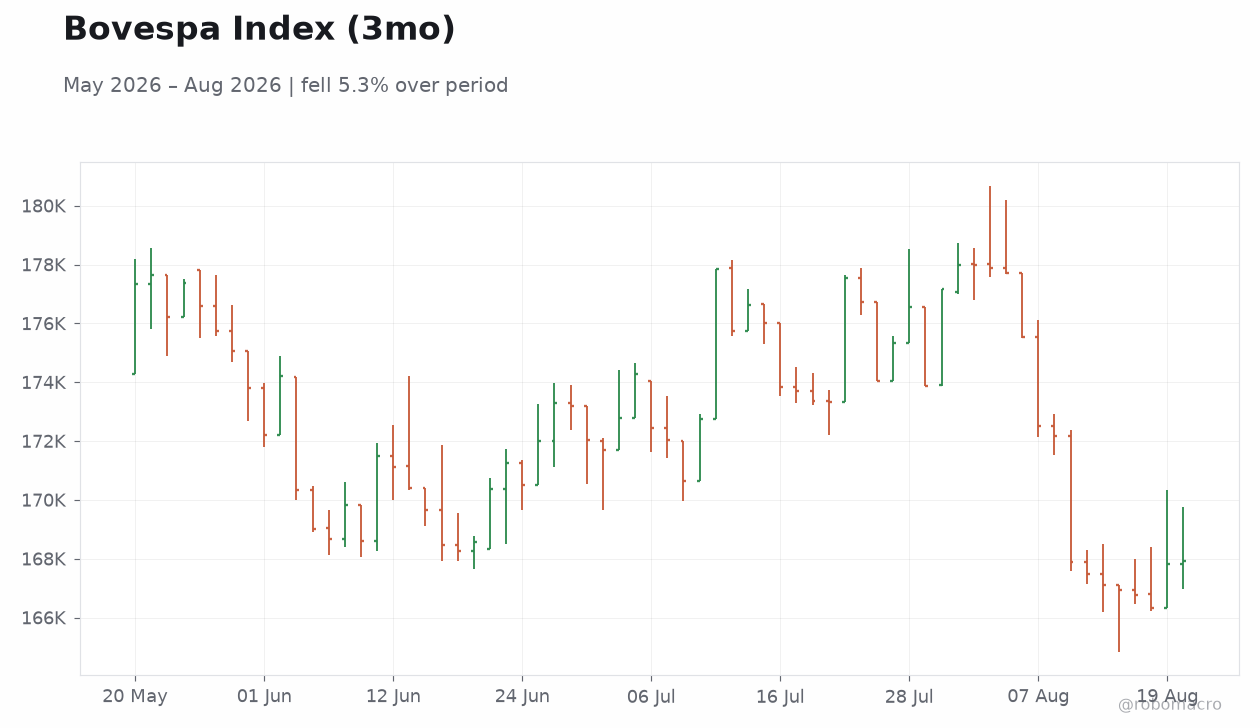
| Bovespa | 167,927.00 | +0.06% |
| USD/BRL | 5.19 | +0.32% |
| EUR/BRL | 6.08 | +0.66% |
| Vale | 14.23 | +2.37% |
| Petrobras | 19.01 | +2.54% |
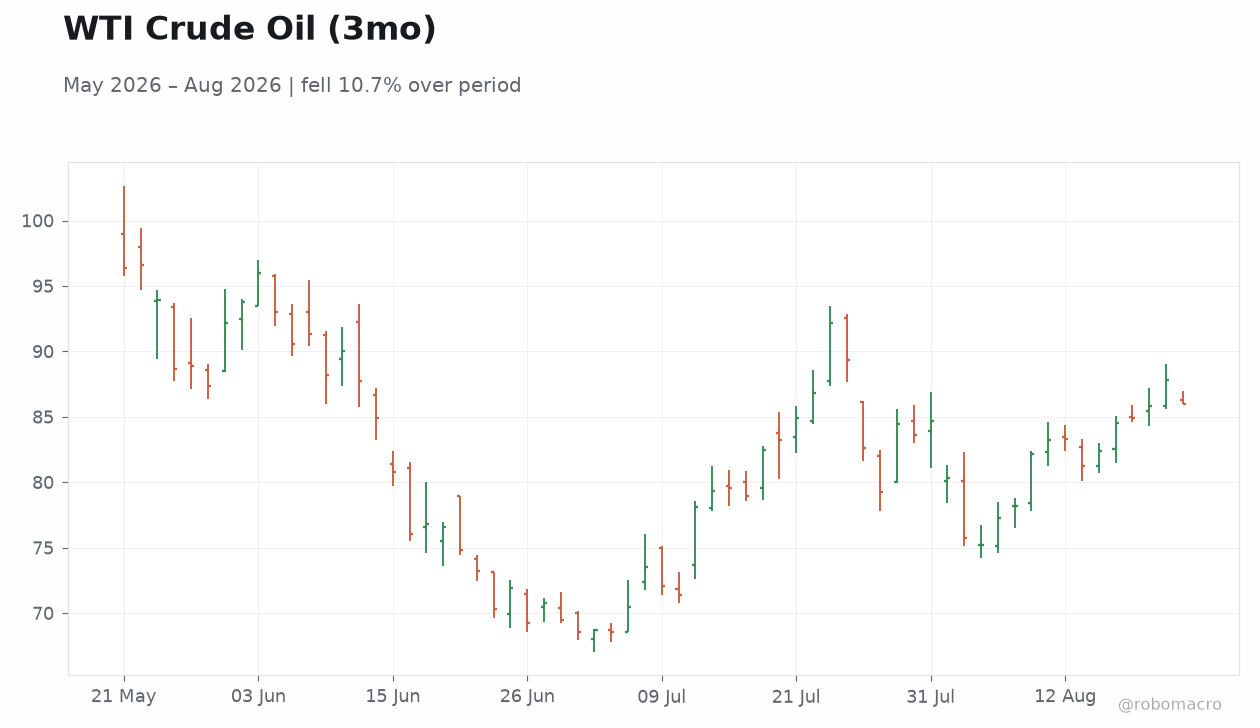
| WTI Crude | 86.09 | -1.98% |
| Gold | 4,637.80 | +2.69% |
| Bitcoin | 77,735.29 | +6.44% |
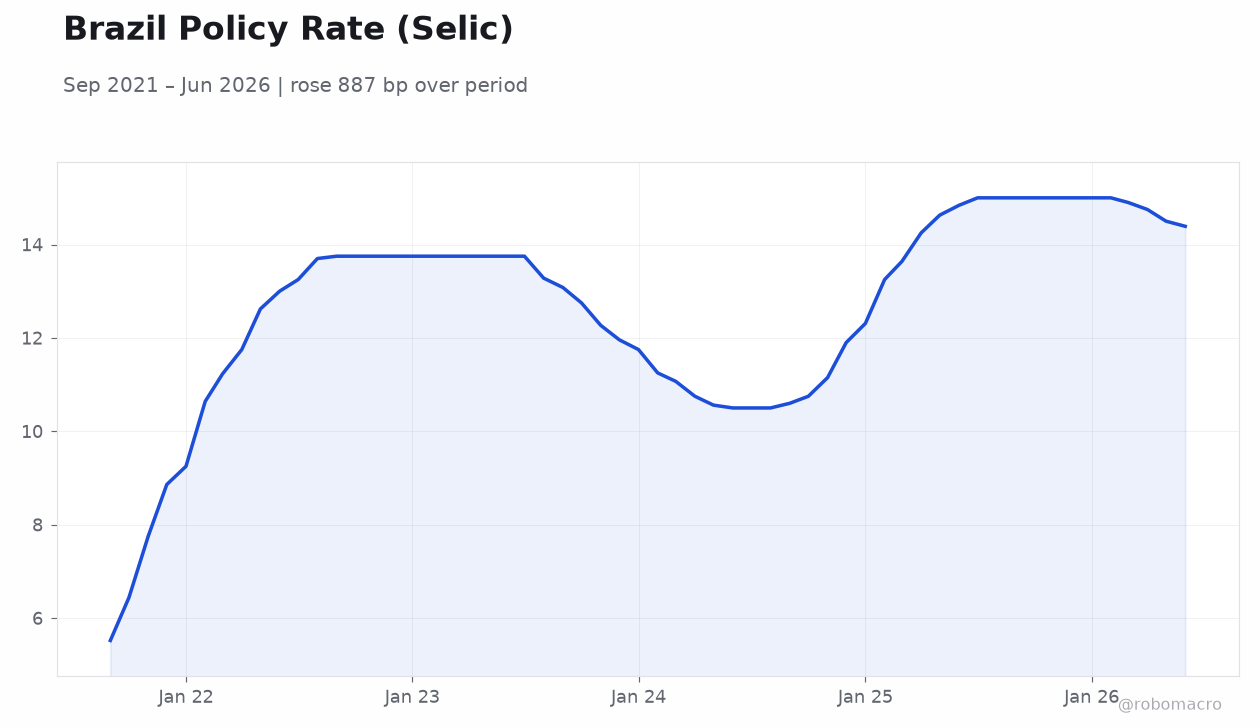
| Brazil Short-term Rate | 14.39% | -0.76% |
| Brazil Long-term Rate | - | - |
Prior Economic Events
| Data | Prior | Cons | Actual |
|---|---|---|---|
| No events available | |||
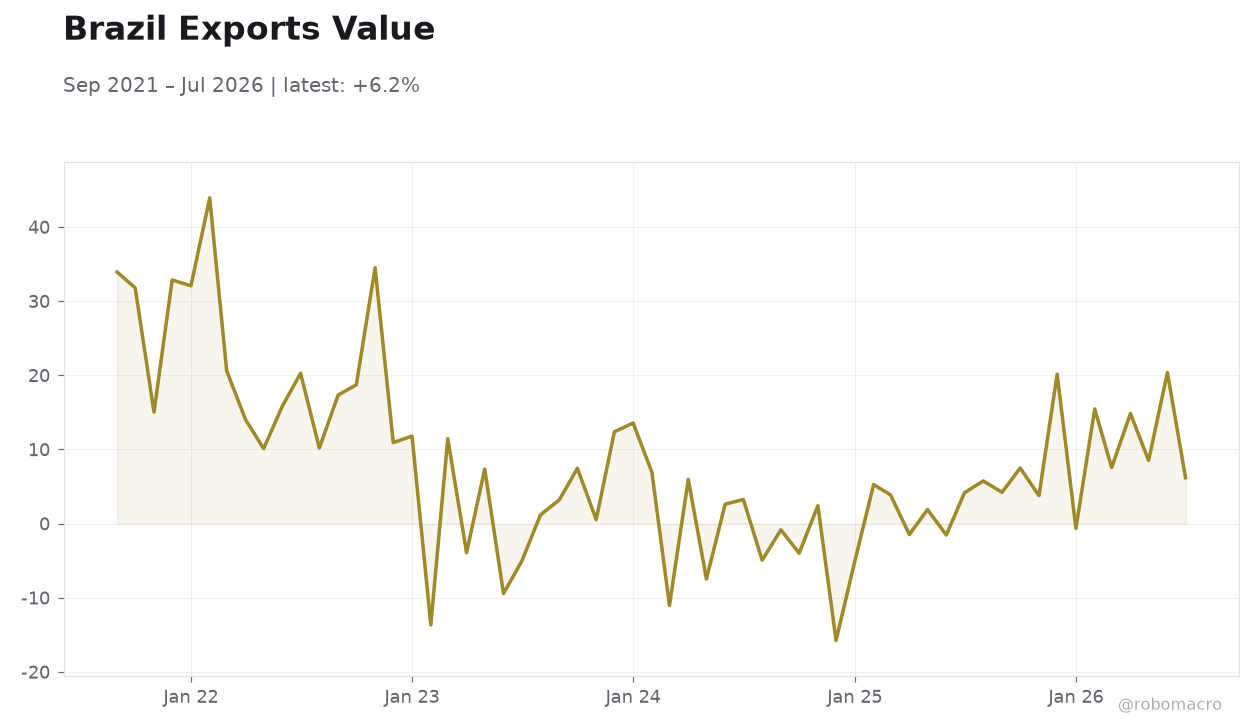 Brazil Exports Value | Type: macro_line | Exports (USD mn): 6.195 (2026-07-01) | Range: -15.76–43.94 | Trend(6pt): 33.95,34.52,13.57,3.87,8.532,6.195
Today's Economic Events
| Data | Prior | Cons | Time |
|---|---|---|---|
| No events available | |||
- Bovespa rose 0.06% to 167,927 while USD/BRL climbed 0.32% to 5.19 amid thin trading.
- Social security spending projected to increase 8% in 2027, adding to fiscal concerns.
- Banks continue to post record profits from the 14.00% Selic rate environment.
Yesterday's Recap
Markets showed modest gains with Bovespa closing at 167,927, up 0.06%, supported by Vale rising 2.37% and Petrobras advancing 2.54%. USD/BRL weakened to 5.19, gaining 0.32%, while the short-term rate eased 0.76% to 14.39%. No major data releases occurred, leaving focus on news that social security outlays will rise 8% next year.
Brazil’s largest lenders reported strong earnings tied to elevated real rates near the 14.00% Selic level. Gold climbed 2.69% and Bitcoin surged 6.44%, reflecting broader risk-on flows that left the real under pressure. The absence of fresh inflation prints kept the 4.44% CPI YoY figure in focus without immediate market reaction.
WTI crude fell 1.98% while EUR/BRL rose 0.66% to 6.08.
The Day Ahead
No scheduled releases appear on the calendar for Brazil, pointing to a quiet session dominated by external flows. Traders will monitor commodity prices, especially iron ore and oil, given their direct impact on export revenues and Bovespa constituents. Attention may turn to any updates on the 2027 budget debate after the social security spending projection.
The real’s recent softening could prompt verbal intervention from officials if volatility increases. Equity and currency moves will likely hinge on global risk sentiment rather than domestic data. Brazil’s AI supercomputer initiative and balancing of US-China tech ties add longer-term context for productivity.
Other Economic Notes
The projected 8% rise in social security spending for 2027 highlights ongoing fiscal rigidities that could constrain future policy space. Banks continue to generate outsized returns from the current high-rate regime, even as digital competitors expand market share. Brazil’s push to expand AI infrastructure while managing ties with both the US and China adds a new layer to long-term productivity prospects.
Agricultural export strength remains a key buffer for the external accounts amid BRICS trade shifts. These themes reinforce the view that domestic demand stays resilient despite elevated borrowing costs. The Treasury’s recent primary deficit reading keeps fiscal vigilance high ahead of budget talks.