Brazil Macro Daily(Beta Mode)
Bovespa Climbs as Real Strengthens
Market Snapshot
| Asset | Level | Change |
|---|---|---|
| Bovespa | 170,448.88 | +1.50% |
| USD/BRL | 5.14 | -1.07% |
| EUR/BRL | 5.99 | -1.19% |
| Vale | 14.59 | +2.53% |
| Petrobras | 19.15 | +0.74% |
| WTI Crude | 84.91 | -2.47% |
| Gold | 4,696.30 | +1.56% |
| Bitcoin | 77,098.94 | -0.84% |
| Brazil Short-term Rate | 14.39% | -0.76% |
| Brazil Long-term Rate | - | - |
Prior Economic Events
| Data | Prior | Cons | Actual |
|---|---|---|---|
| No events available | |||
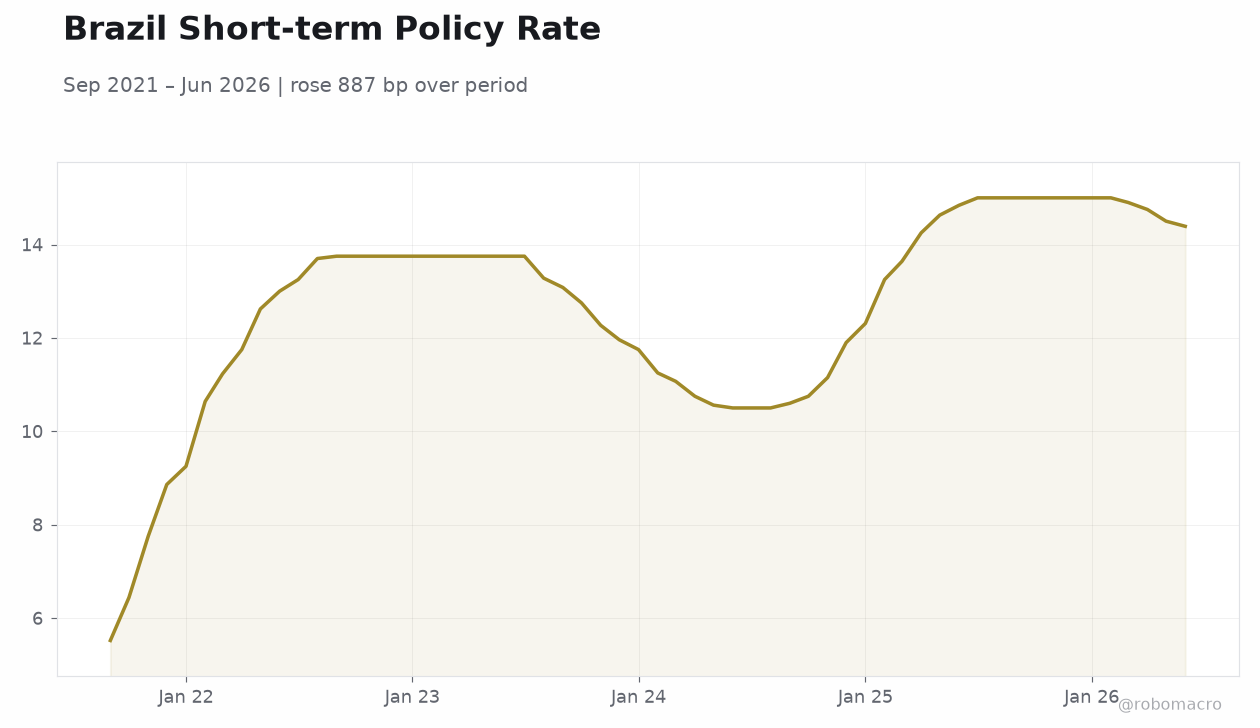 Brazil Short-term Policy Rate | Type: macro_line | Percent: 14.39 (2026-06-01) | Range: 5.52–15 | Trend(6pt): 5.52,13.75,11.75,13.64,14.5,14.39
Today's Economic Events
| Data | Prior | Cons | Time |
|---|---|---|---|
| No events available | |||
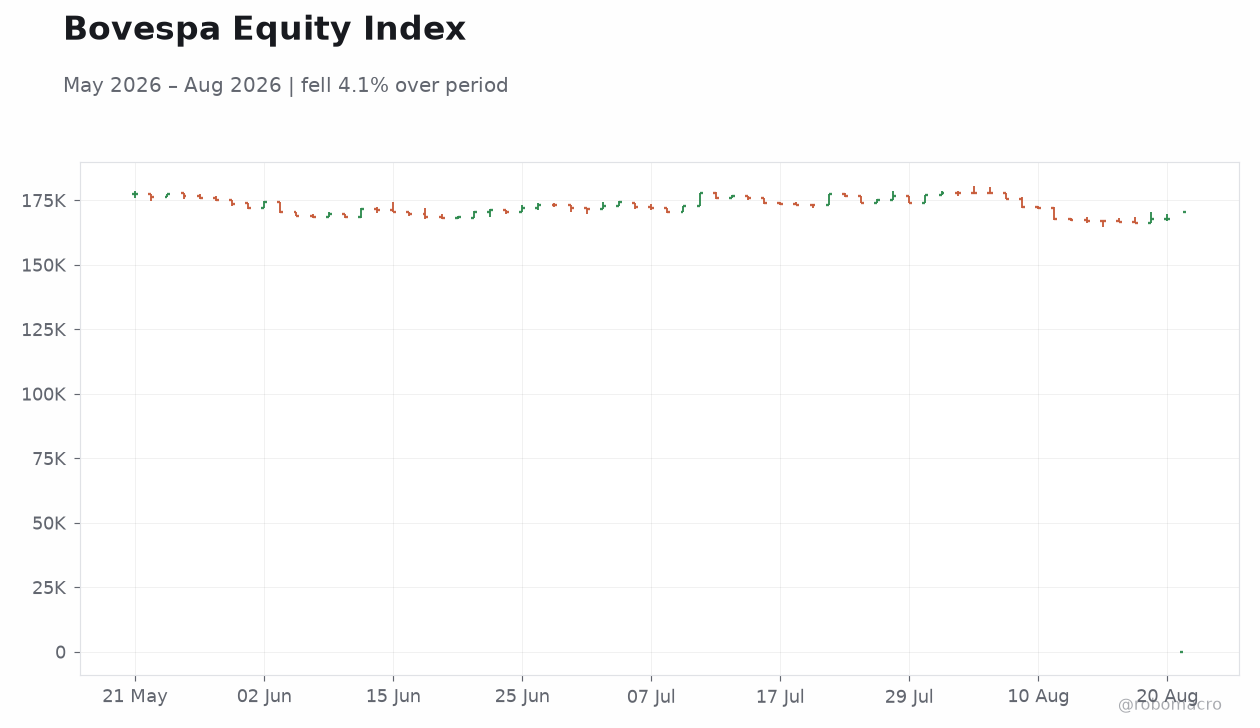
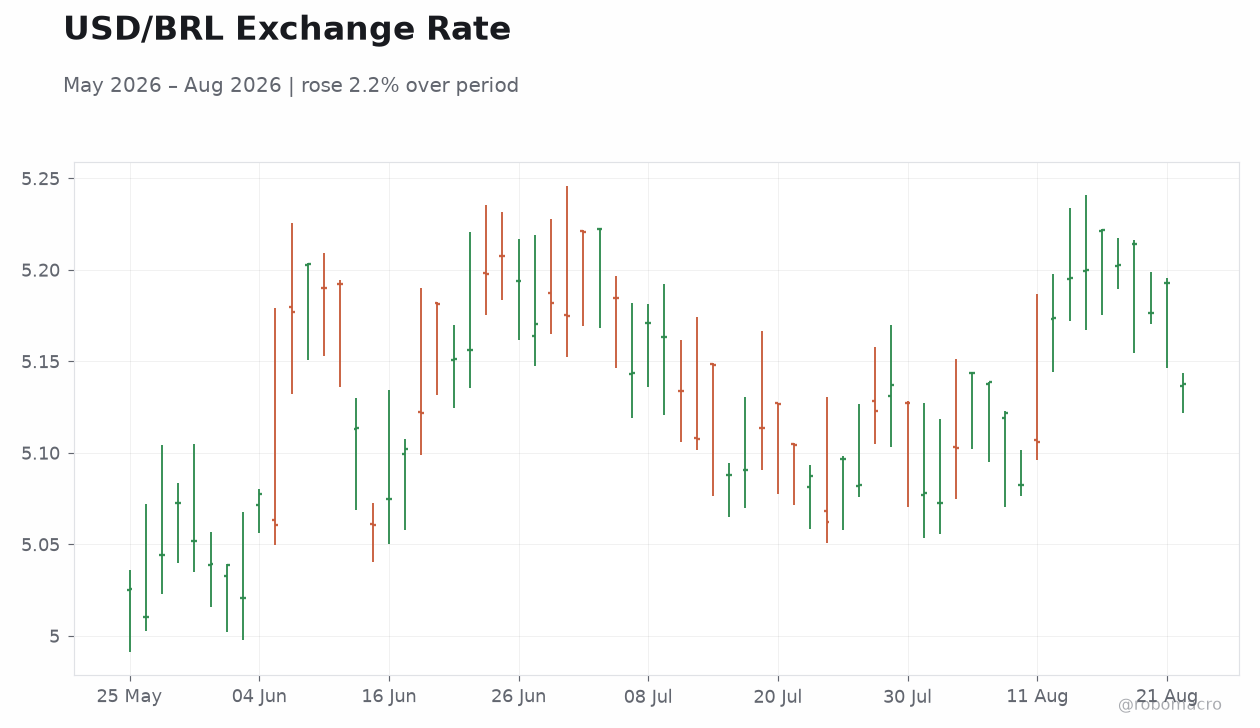
- Bovespa rises 1.50% to 170,448.88 while USD/BRL falls 1.07% to 5.14.
- Vale gains 2.53% on iron ore strength; WTI crude drops 2.47% to 84.91.
- Brazil short-term rate eases 0.76% to 14.39% amid stable Selic at 14.00%.
Yesterday's Recap
Equity and currency markets posted solid gains on August 23 with no major data releases scheduled. Bovespa advanced 1.50% to 170,448.88 while the real strengthened, pushing USD/BRL down 1.07% to 5.14 and EUR/BRL lower by 1.19%. Vale shares rose 2.53% to 14.59 on sustained iron ore demand, and Petrobras added 0.74%.
Gold climbed 1.56% to 4,696.30, providing external support, while WTI crude fell 2.47% to 84.91. The short-term rate declined 0.76% to 14.39%. News flow highlighted expanded vehicle financing for app drivers and a new blue-economy innovation cluster, though these measures had limited immediate market impact.
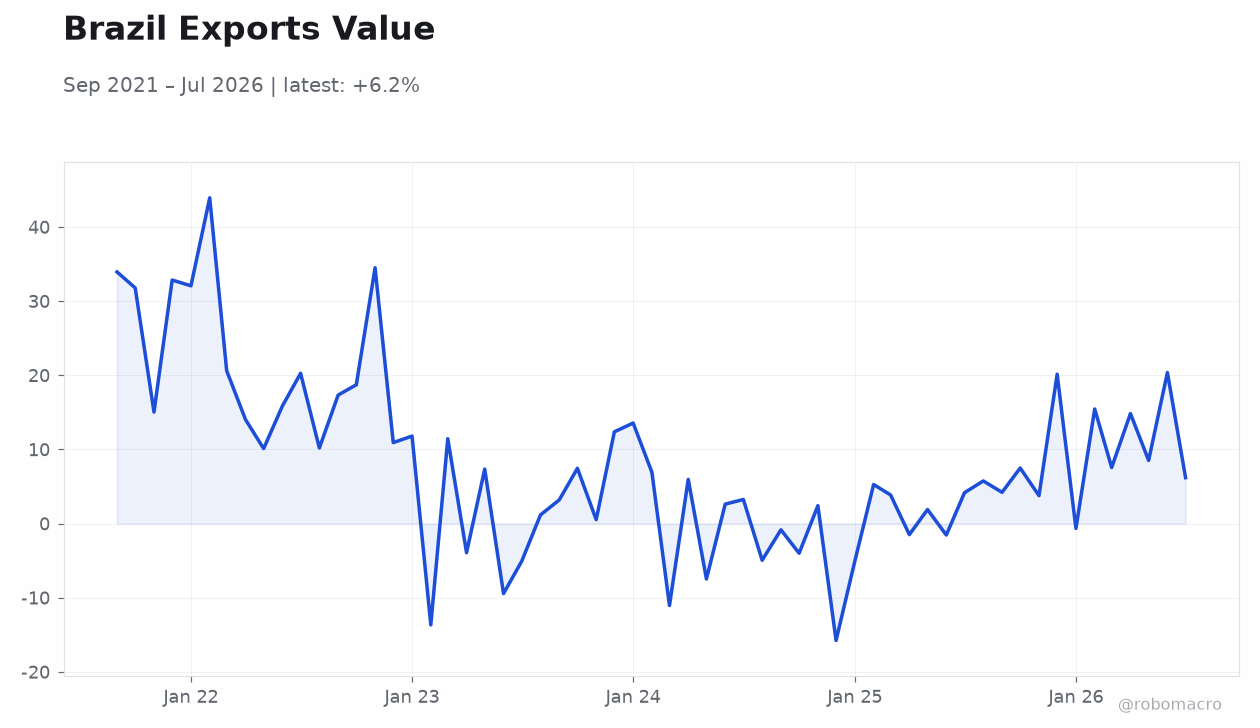
The Carajás iron mine continued to underpin export strength even as environmental concerns in the Amazon drew attention.
The Day Ahead
Markets enter a quiet data window on August 24 with no scheduled releases or COPOM events. Attention will center on government plans to outline off-budget fund usage and continued AI supercomputer development balancing US and Chinese technology. Traders will also monitor any follow-up statements from the Trump-Lula tariff discussion.
Fiscal sustainability signals and commodity price moves remain the dominant drivers for BRL and Bovespa direction. Iron ore and oil export revenues continue to shape external accounts, with the blue-economy cluster offering a potential avenue for longer-term diversification away from traditional mining.
Other Economic Notes
Brazil’s fiscal framework faces renewed scrutiny as authorities prepare to detail extra-budgetary spending. Commodity dependence remains elevated, with the Carajás iron mine underscoring both export strength and environmental tensions in the Amazon. The vehicle financing expansion targets transport sector liquidity but adds to household debt metrics already under watch.
Broader diversification efforts via the blue economy cluster aim to reduce reliance on traditional mining and oil revenues. These initiatives coincide with steady CPI at 4.44% year-over-year, keeping inflation expectations anchored near the target midpoint while the short-term rate at 14.39% reflects market pricing around the 14.00% Selic level.