Brazil Macro Daily(Beta Mode)
Bovespa Rises as Real Weakens Amid Commodity Moves
Market Snapshot
| Asset | Level | Change |
|---|---|---|
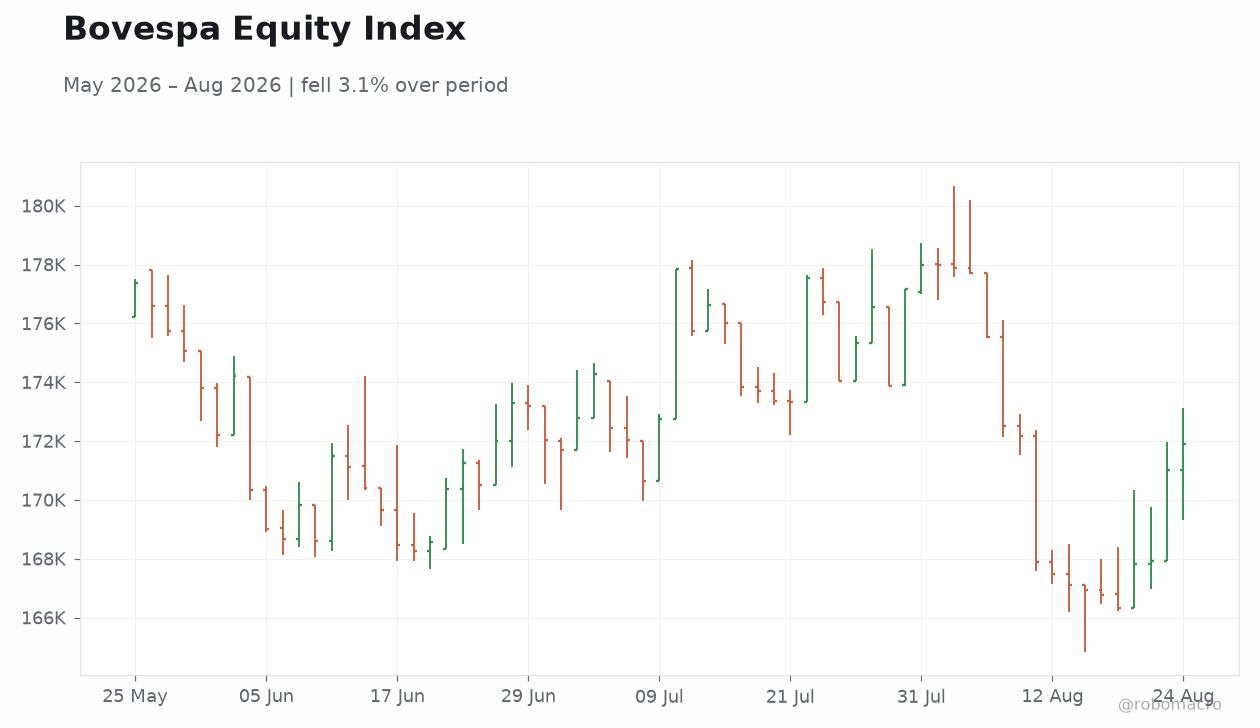
| Bovespa | 171,907.00 | +0.51% |
| USD/BRL | 5.15 | +0.33% |
| EUR/BRL | 6.01 | +0.32% |
| Vale | 15.04 | +3.08% |
| Petrobras | 18.60 | -2.87% |
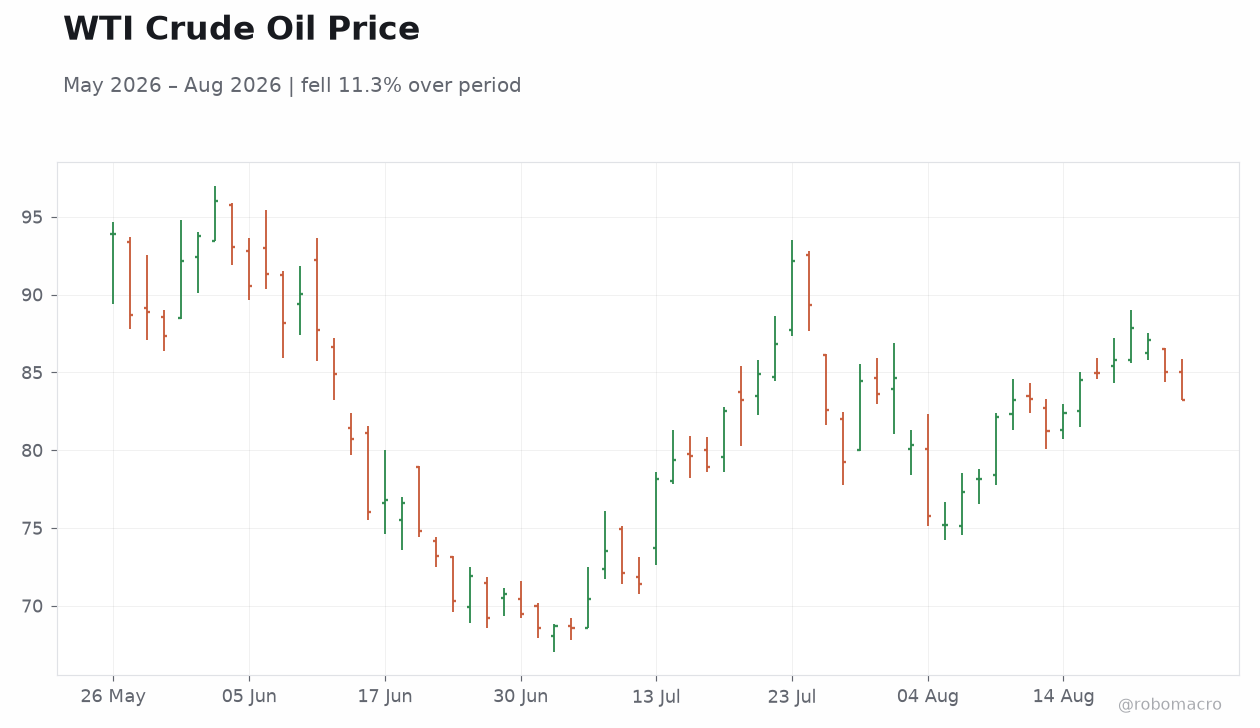
| WTI Crude | 83.30 | -2.01% |
| Gold | 4,683.60 | +0.92% |
| Bitcoin | 79,818.90 | +1.08% |
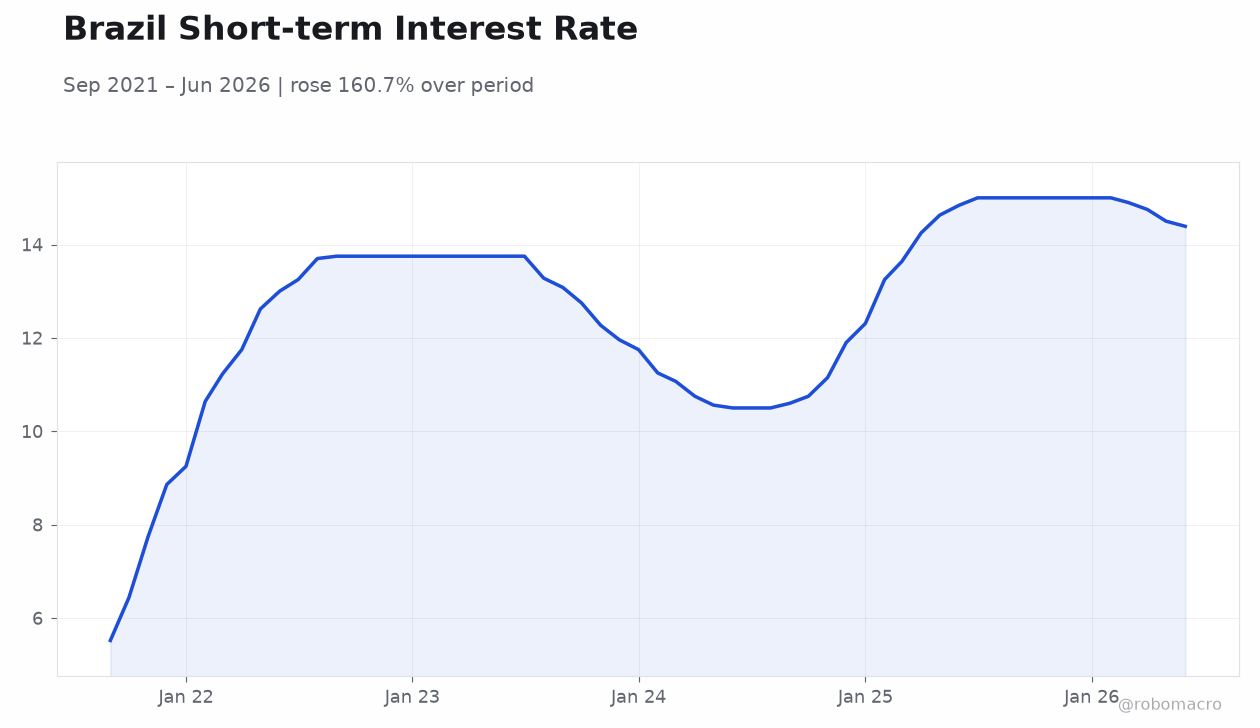
| Brazil Short-term Rate | 14.39% | -0.76% |
| Brazil Long-term Rate | - | - |
Prior Economic Events
| Data | Prior | Cons | Actual |
|---|---|---|---|
| No events available | |||
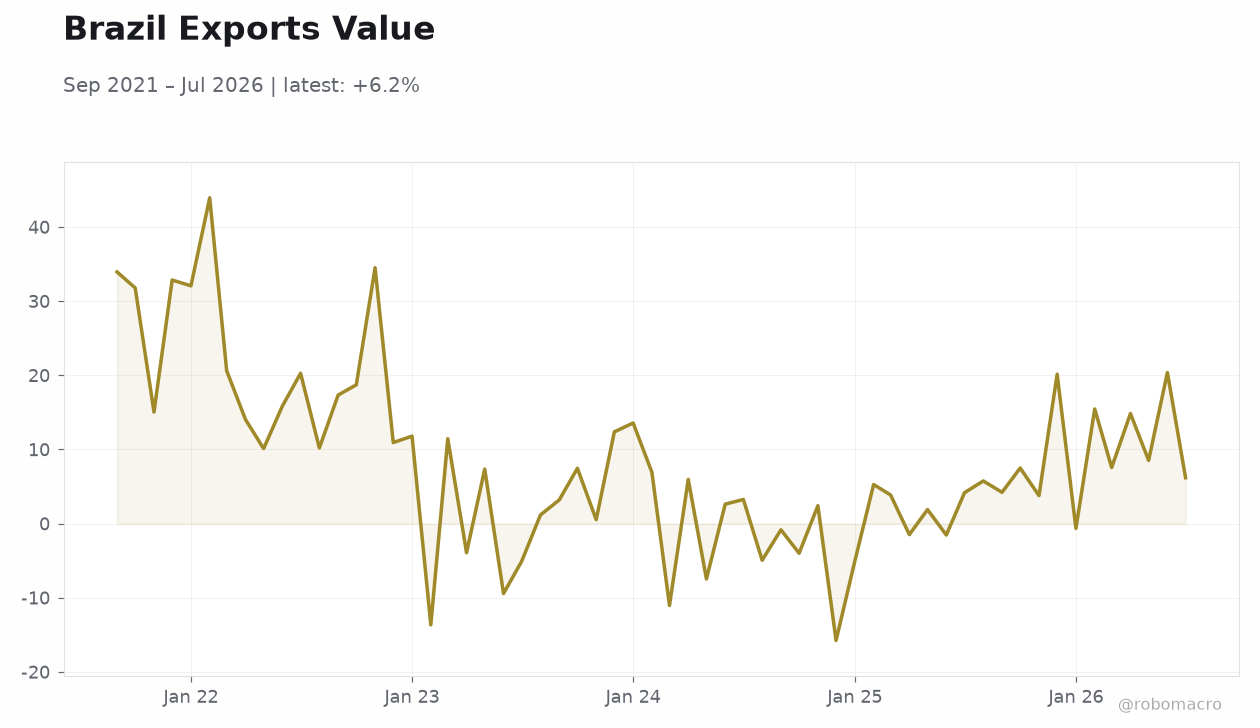 Brazil Exports Value | Type: macro_line | Exports (YoY %): 6.195 (2026-07-01) | Range: -15.76–43.94 | Trend(6pt): 33.95,34.52,13.57,3.87,8.532,6.195
Today's Economic Events
| Data | Prior | Cons | Time |
|---|---|---|---|
| Thursday (2026-08-27) | |||
| Unemployment Rate | 5.40 | - | 08:00 |
| Tuesday (2026-09-01) | |||
| GDP Growth Quarter-over-Quarter | 1.10 | - | 08:00 |
| GDP Growth Year-over-Year | 1.80 | - | 08:00 |
- Bovespa rises 0.51% to 171,907 while USD/BRL climbs 0.33% to 5.15
- Vale advances 3.08% on iron ore strength; Petrobras drops 2.87%
- Brazil short-term rate eases 0.76% to 14.39% amid stable Selic at 14.00%
Yesterday's Recap
Brazilian markets posted modest gains with no scheduled data releases on August 24. The Bovespa index advanced 0.51% to close at 171,907, supported by gains in mining stocks. USD/BRL rose 0.33% to 5.15, reflecting mild pressure on the real amid mixed commodity signals.
Vale shares climbed 3.08% to 15.04 on firmer iron ore prices, while Petrobras declined 2.87% to 18.60 as WTI crude fell 2.01% to 83.30. Gold rose 0.92% to 4,683.60, offering some external support for Brazilian assets. Bitcoin gained 1.08% to 79,818.90.
The short-term rate eased to 14.39%, consistent with the Selic target of 14.00% set on August 18. No fresh inflation prints emerged, leaving the July CPI YoY reading of 4.44% as the latest benchmark.
The Day Ahead
Attention turns to the August 27 unemployment rate release, expected to show labor market resilience after the prior 5.4% print. Markets will also monitor September 1 GDP figures, with quarter-over-quarter growth last reported at 1.1% and year-over-year at 1.8%. These releases will inform the growth trajectory ahead of the next COPOM meeting.
Commodity price movements, particularly iron ore and oil, will continue to influence export revenues and the real. Fiscal updates from Brasilia may add volatility if spending signals deviate from targets.
Other Economic Notes
Brazil's external accounts remain supported by commodity exports despite softer oil prices. Iron ore shipments continue to underpin the trade surplus, offsetting weaker energy revenues. Fiscal sustainability concerns persist as debt dynamics face scrutiny ahead of 2027 budget discussions.
Inflation at 4.44% YoY stays above the target midpoint, limiting room for near-term policy easing. Real wage growth and employment trends will determine domestic demand strength through year-end.
Global Macro News
Mexico posted 1.4% quarter-over-quarter GDP growth, highlighting mixed Latin American momentum that may affect regional capital flows. Turkish household inflation expectations rose, underscoring global inflation stickiness that keeps emerging-market central banks cautious. <i>↓ p.2</i>