Brazil Macro Daily(Beta Mode)
Labor Data Looms as BRL Weakens
Market Snapshot
| Asset | Level | Change |
|---|---|---|
| Bovespa | 174,586.00 | +0.01% |
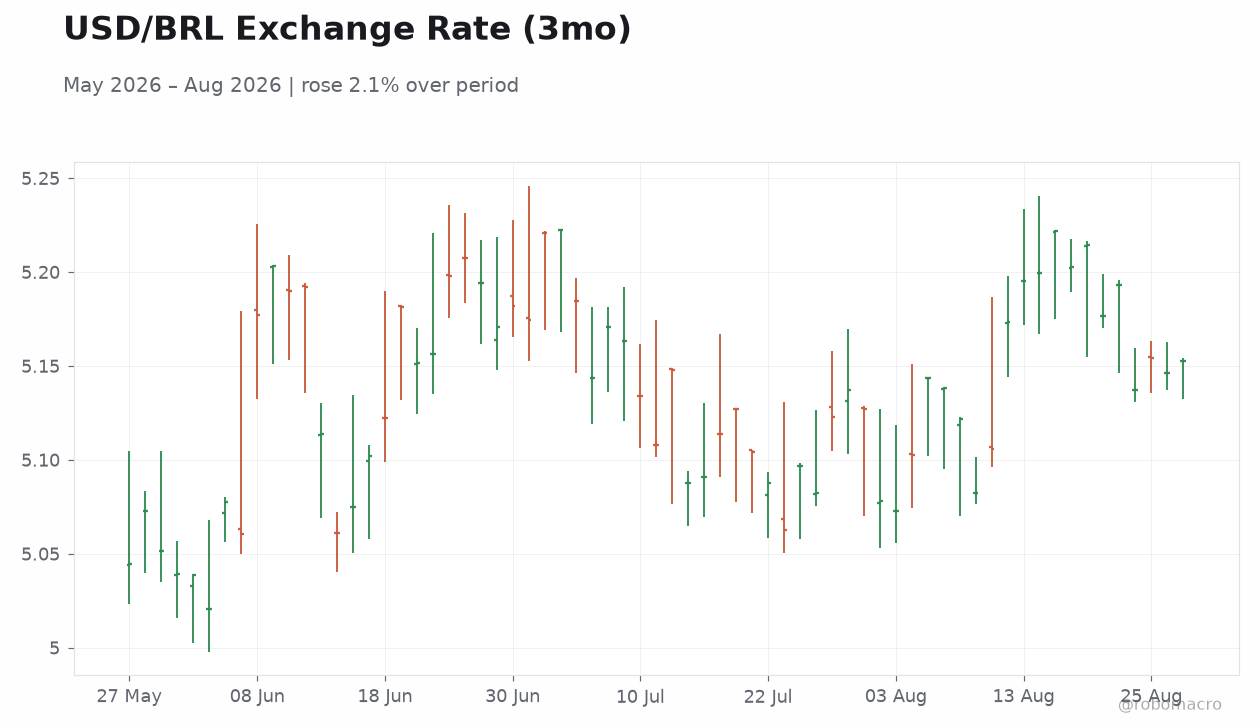
| USD/BRL | 5.15 | +0.13% |
| EUR/BRL | 6.00 | -0.01% |
| Vale | 15.16 | -1.11% |
| Petrobras | 17.76 | -0.50% |
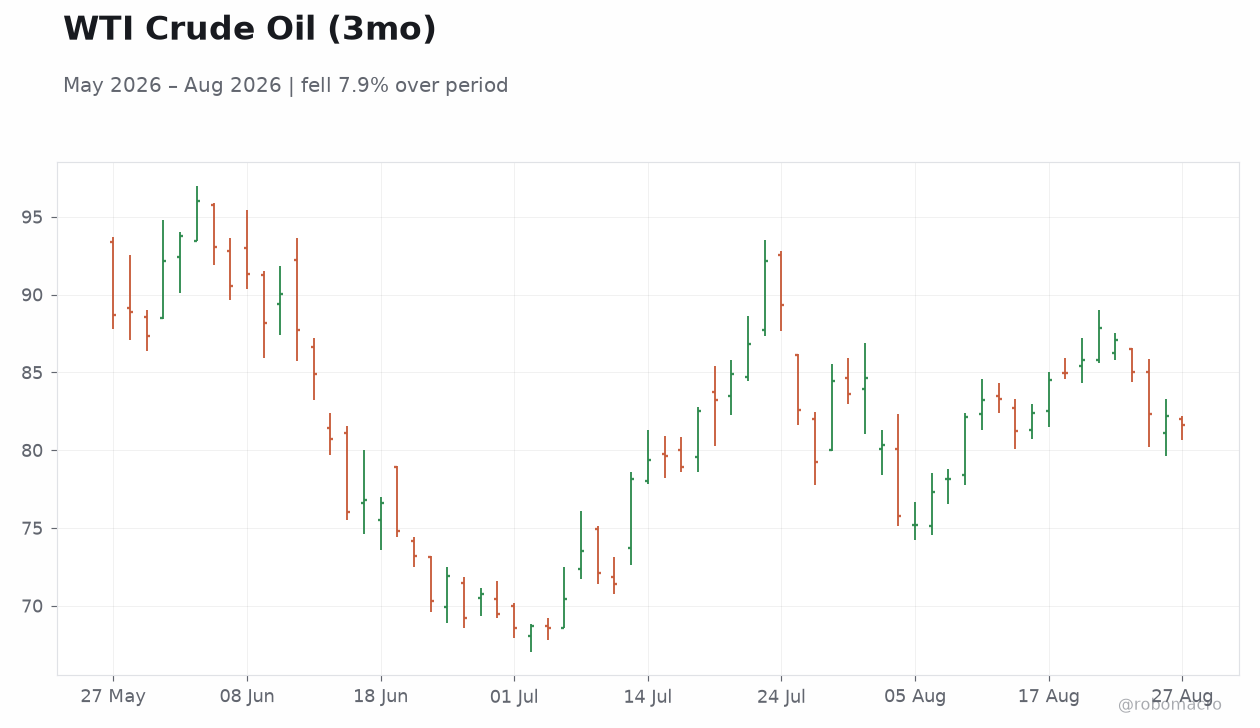
| WTI Crude | 81.53 | -0.85% |
| Gold | 4,652.70 | +1.19% |
| Bitcoin | 79,688.35 | +0.84% |
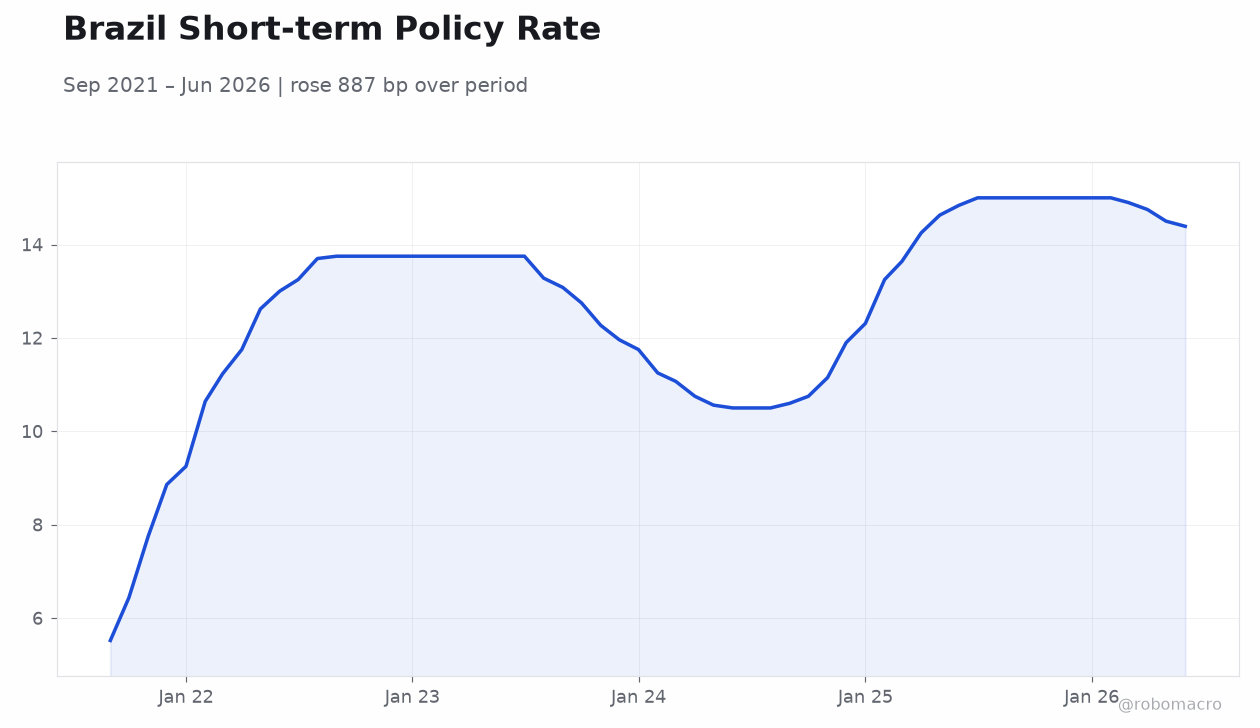
| Brazil Short-term Rate | 14.39% | -0.76% |
| Brazil Long-term Rate | - | - |
Prior Economic Events
| Data | Prior | Cons | Actual |
|---|---|---|---|
| No events available | |||
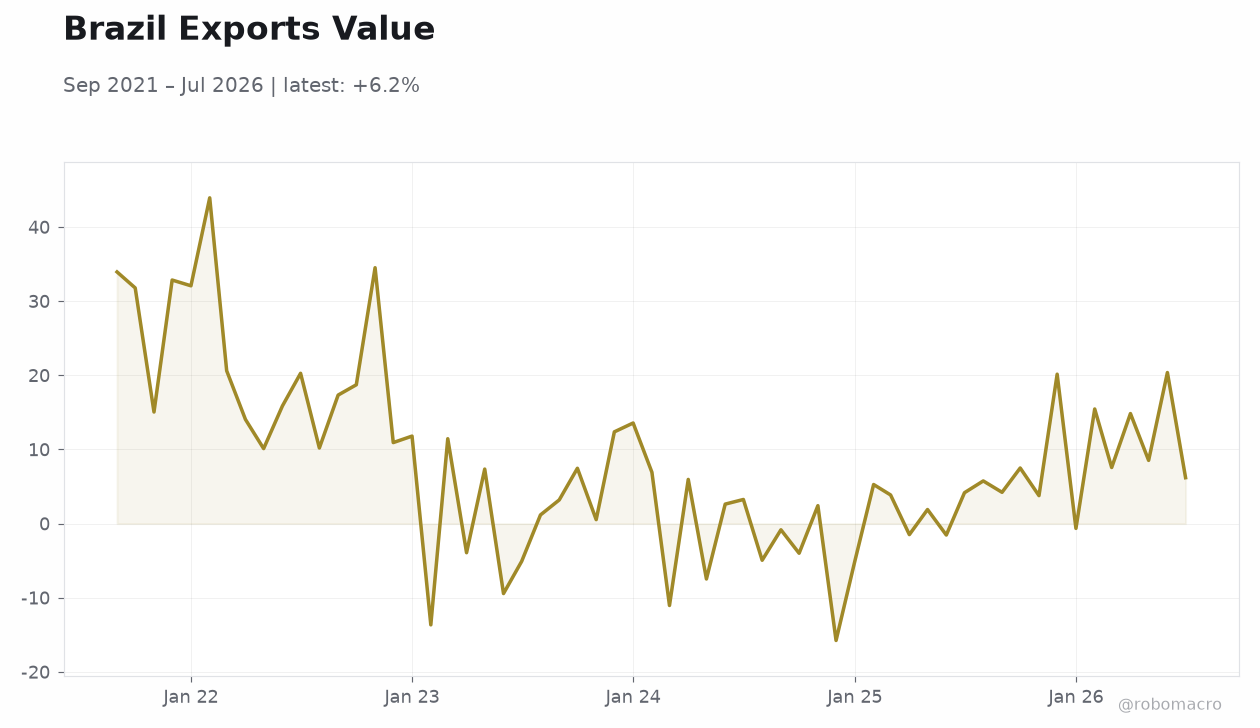 Brazil Exports Value | Type: macro_line | Exports (USD mn): 6.195 (2026-07-01) | Range: -15.76–43.94 | Trend(6pt): 33.95,34.52,13.57,3.87,8.532,6.195
Today's Economic Events
| Data | Prior | Cons | Time |
|---|---|---|---|
| Unemployment Rate | 5.40 | 5.30 | 04:00 |
- Brazil unemployment data due today with consensus at 5.3% versus prior 5.4%.
- Bovespa edged up 0.01% while USD/BRL rose 0.13% to 5.15 on thin volumes.
- Selic remains at 14.00% with CPI YoY at 4.44% as fiscal concerns persist.
Yesterday's Recap
Markets closed with minimal movement as Bovespa gained just 0.01% to 174,586 amid low participation. USD/BRL climbed 0.13% to 5.15 while EUR/BRL slipped 0.01% to 6.00. Vale fell 1.11% and Petrobras declined 0.50% as iron ore and oil prices eased.
WTI Crude dropped 0.85% to 81.53 and gold advanced 1.19% to 4,652.70. Brazil’s short-term rate eased 0.76% to 14.39% with no domestic data releases to shift sentiment. Bitcoin rose 0.84% but offered little spillover to local assets.
Overall activity stayed subdued ahead of the unemployment print. Commodity export revenues face headwinds from softer sugar prices and weaker Indian import demand, adding to external pressure on Brazilian assets.
The Day Ahead
The unemployment rate for July prints at 04:00 ET with consensus expecting a 0.1pp decline to 5.3%. Markets will parse the labor data for signs of cooling demand that could influence BCB timing. No other Brazilian releases are scheduled through tomorrow.
Traders will also monitor global commodity flows given Brazil’s heavy reliance on iron ore and soybean exports. Any surprise in the jobless rate could prompt intraday moves in USD/BRL and local rates. Focus remains on whether the print reinforces the current Selic path.
Egypt’s call for deeper logistics ties with Brazil highlights potential supply-chain gains in grains and minerals that could support export volumes over time.
Other Economic Notes
Fiscal sustainability stays in focus after Flavio Bolsonaro reiterated plans for a debt ceiling if elected. Commodity export revenues face headwinds from softer sugar prices and weaker Indian import demand. Egypt’s call for deeper logistics ties with Brazil highlights potential supply-chain gains in grains and minerals.
Inflation at 4.44% YoY keeps real rates elevated and supports BRL carry appeal. Policymakers continue to balance growth risks against the 14.00% Selic anchor. These factors keep external pressure on BRL through commodity and carry channels while domestic data remain limited.