Brazil Macro Daily(Beta Mode)
Bovespa Gains as Jobless Rate Meets Forecast
Market Snapshot
| Asset | Level | Change |
|---|---|---|
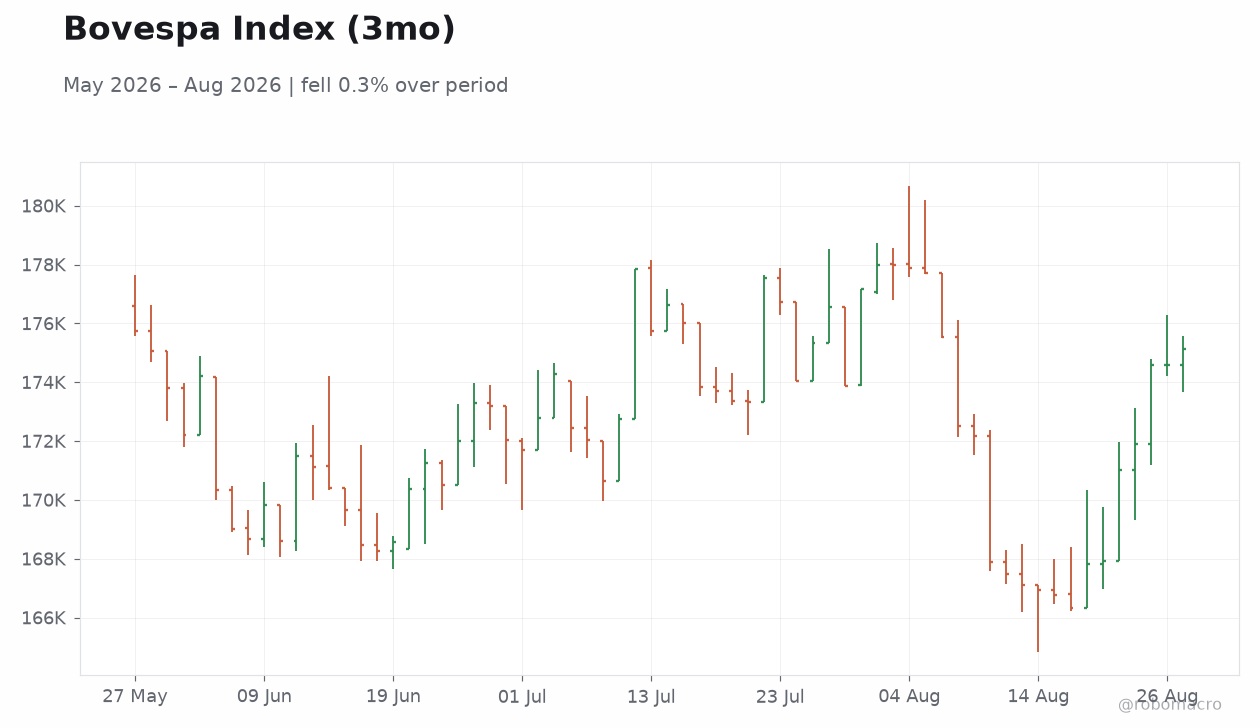
| Bovespa | 175,135.00 | +0.31% |
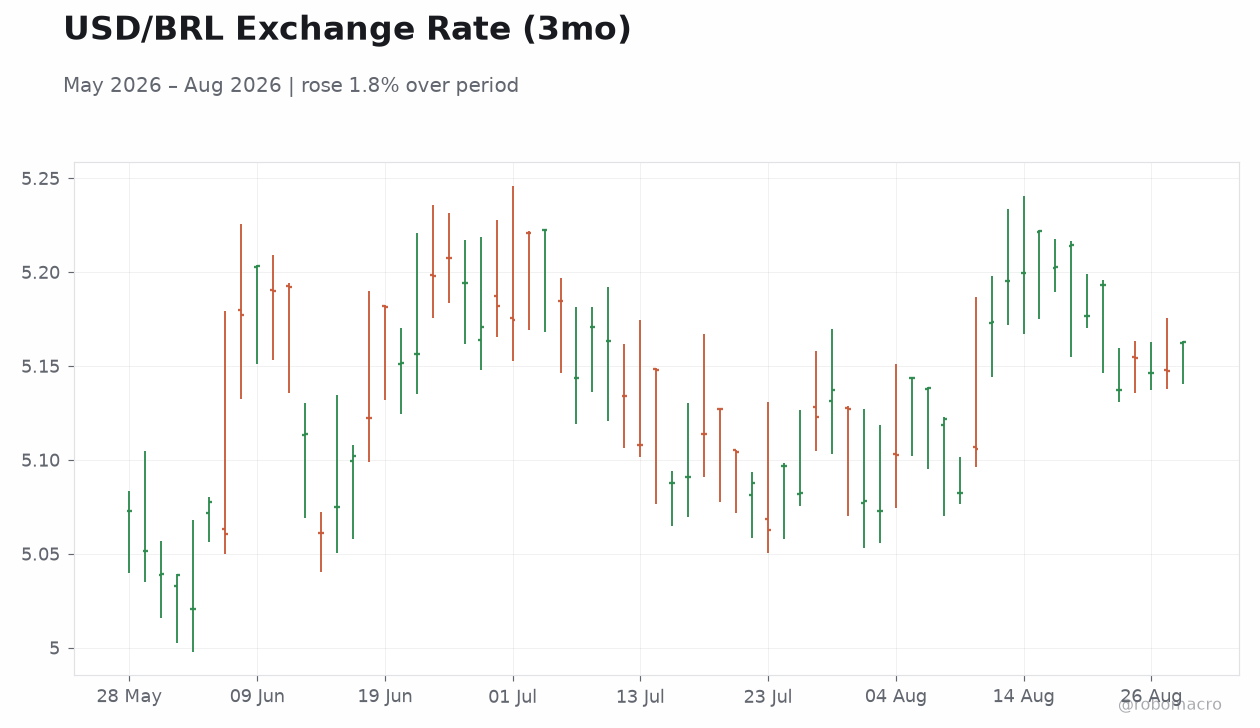
| USD/BRL | 5.16 | +0.30% |
| EUR/BRL | 6.01 | +0.26% |
| Vale | 15.31 | +0.99% |
| Petrobras | 18.25 | +2.76% |
| WTI Crude | 83.15 | -0.45% |
| Gold | 4,657.80 | +1.04% |
| Bitcoin | 79,384.97 | -1.09% |
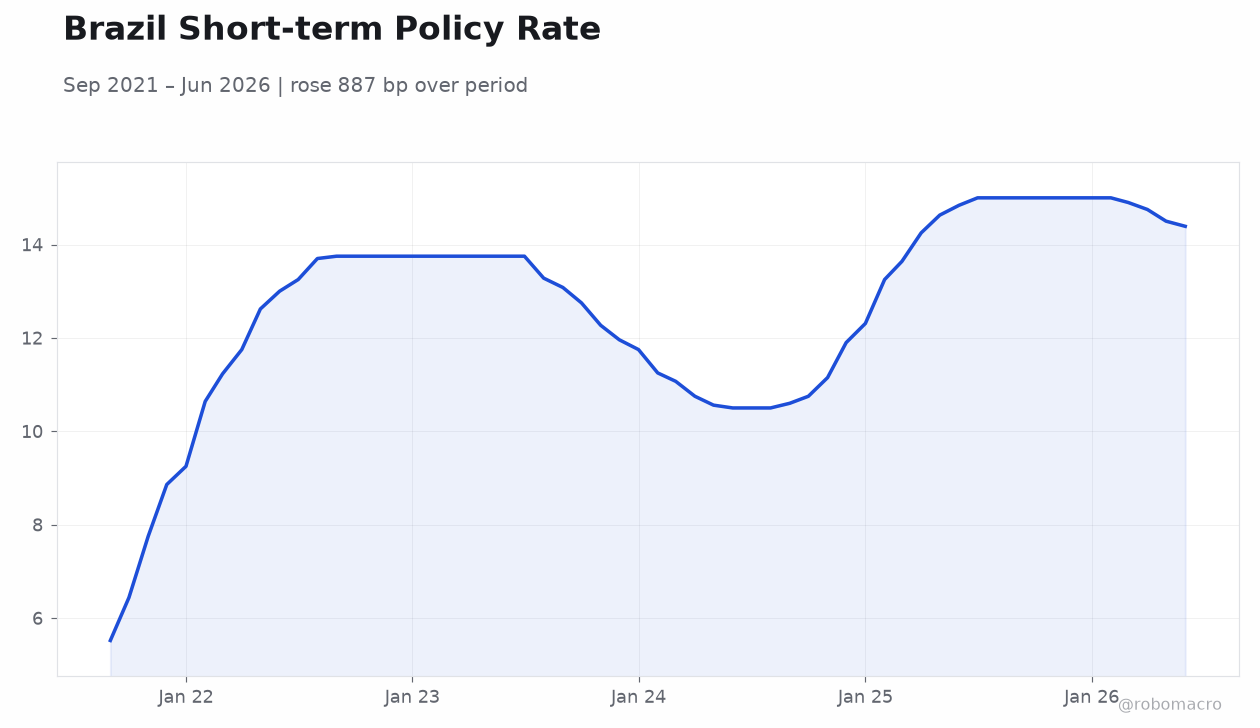
| Brazil Short-term Rate | 14.39% | -0.76% |
| Brazil Long-term Rate | - | - |
Prior Economic Events
| Data | Prior | Cons | Actual |
|---|---|---|---|
| Unemployment Rate | 5.40 | 5.30 | 5.30 |
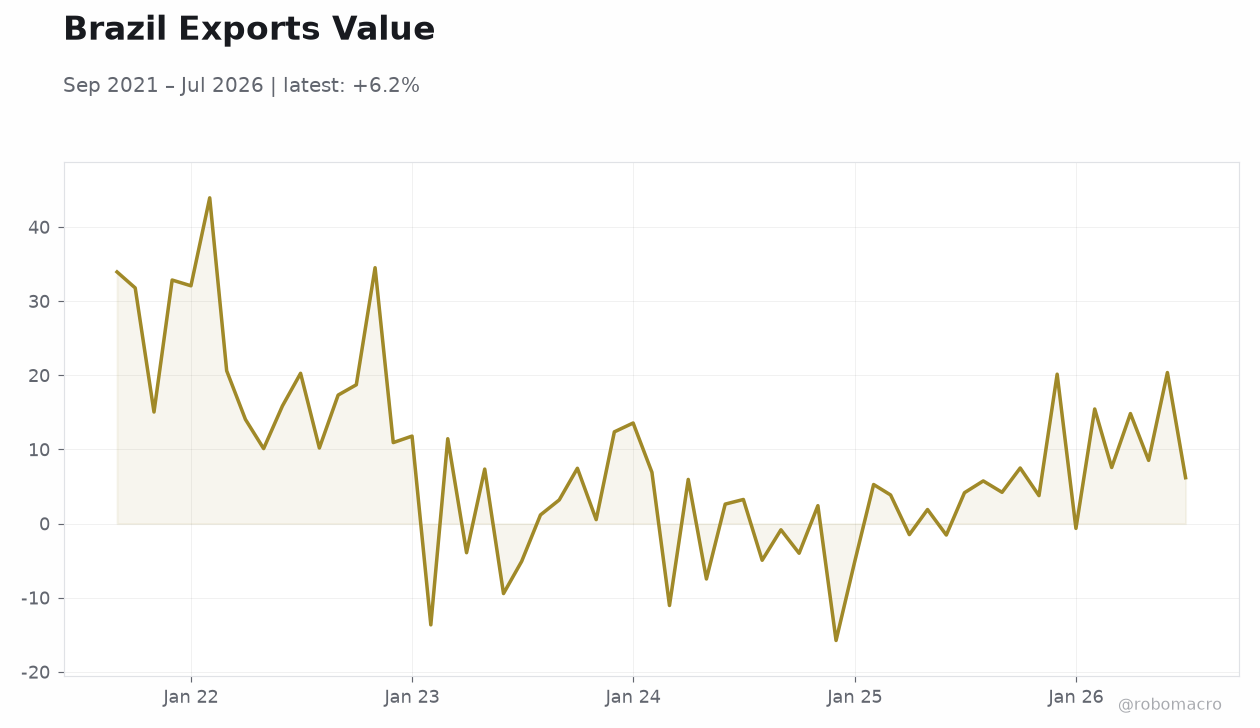 Brazil Exports Value | Type: macro_line | Exports (USD mn): 6.195 (2026-07-01) | Range: -15.76–43.94 | Trend(6pt): 33.95,34.52,13.57,3.87,8.532,6.195
Today's Economic Events
| Data | Prior | Cons | Time |
|---|---|---|---|
| No events available | |||
- Unemployment rate prints at 5.3%, in line with consensus and down from 5.4% prior.
- Bovespa rises 0.31% to 175,135 while Petrobras gains 2.76% on commodity support.
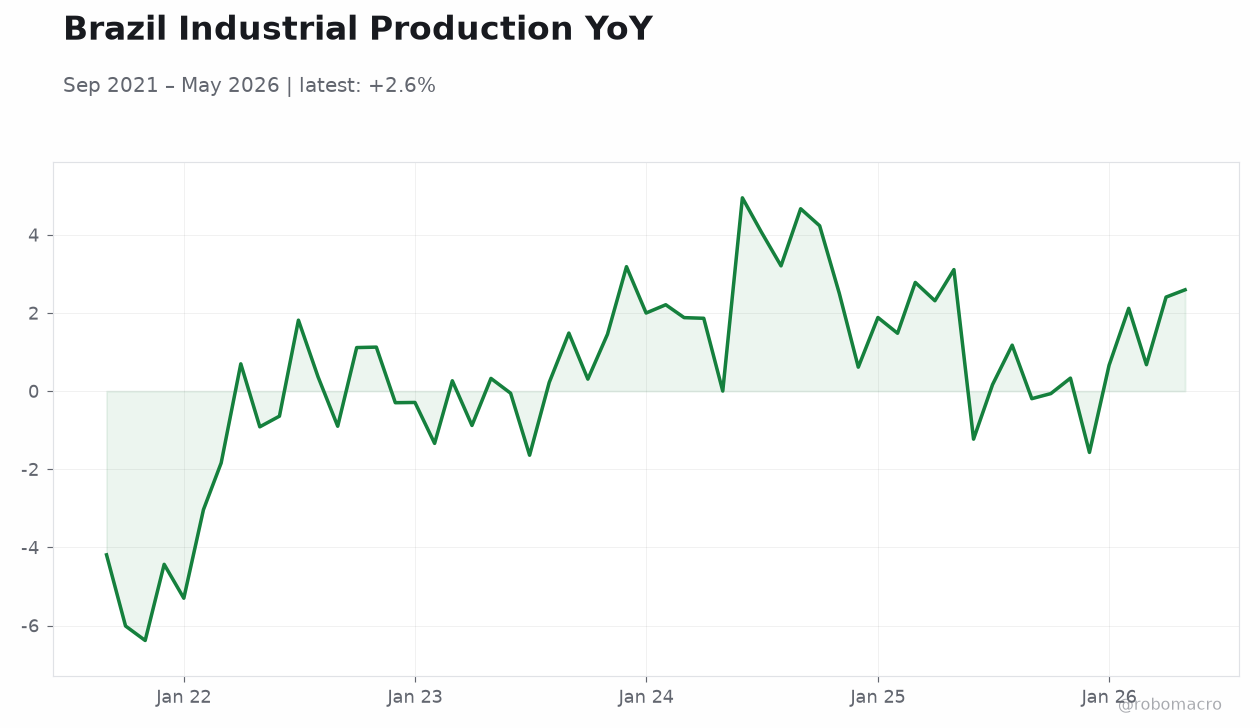
- XP revises Selic path lower after recent inflation and activity data.
Yesterday's Recap
Brazil’s unemployment rate came in at 5.3%, exactly matching the consensus forecast and improving from the 5.4% reading in the previous month. Equity markets responded positively, with the Bovespa index closing 0.31% higher at 175,135. Petrobras shares advanced 2.76% while Vale rose 0.99%, supported by firmer iron ore and oil prices.
The USD/BRL pair edged 0.30% higher to 5.16, reflecting modest dollar demand. Brazil’s short-term rate declined 0.76% to 14.39%. Traders also increased bullish options positions on Brazilian equities ahead of the presidential race.
Banking sector plans to raise AI-related spending by 8% to nearly BRL3bn in 2026 added a constructive tone to financials. Ant International’s entry into embedded credit markets for SMBs and gig workers highlighted growing foreign interest in local infrastructure.
The Day Ahead
Markets face a data-light session with no scheduled Brazilian releases today or tomorrow. Attention will turn to corporate updates and any fresh fiscal signals from Brasília. Commodity price movements, particularly iron ore and crude, will continue to drive export-sensitive names.
Investors will monitor global risk sentiment for spillover effects on the BRL. Positioning in Bovespa options is expected to remain active as the election campaign intensifies. Any comments from Finance Ministry officials on spending targets could influence long-end rates.
Rare-earth development remains constrained, with domestic magnet production unlikely before 2032.
Other Economic Notes
Brazil’s banking sector is accelerating technology investment, allocating nearly BRL3bn to AI and analytics in 2026. This spending supports efficiency gains but adds to operating costs amid still-elevated funding rates. Fiscal sustainability stays in focus as debt-service costs remain high at the current Selic level.
Export revenues from iron ore and oil continue to underpin the current-account balance despite softer global demand signals. XP has shifted its forecast to anticipate a faster easing cycle after the latest activity and inflation prints surprised to the downside.