Brazil Macro Daily(Beta Mode)
GDP Slowdown Looms as BCB Eyes Faster Cuts
Market Snapshot
| Asset | Level | Change |
|---|---|---|
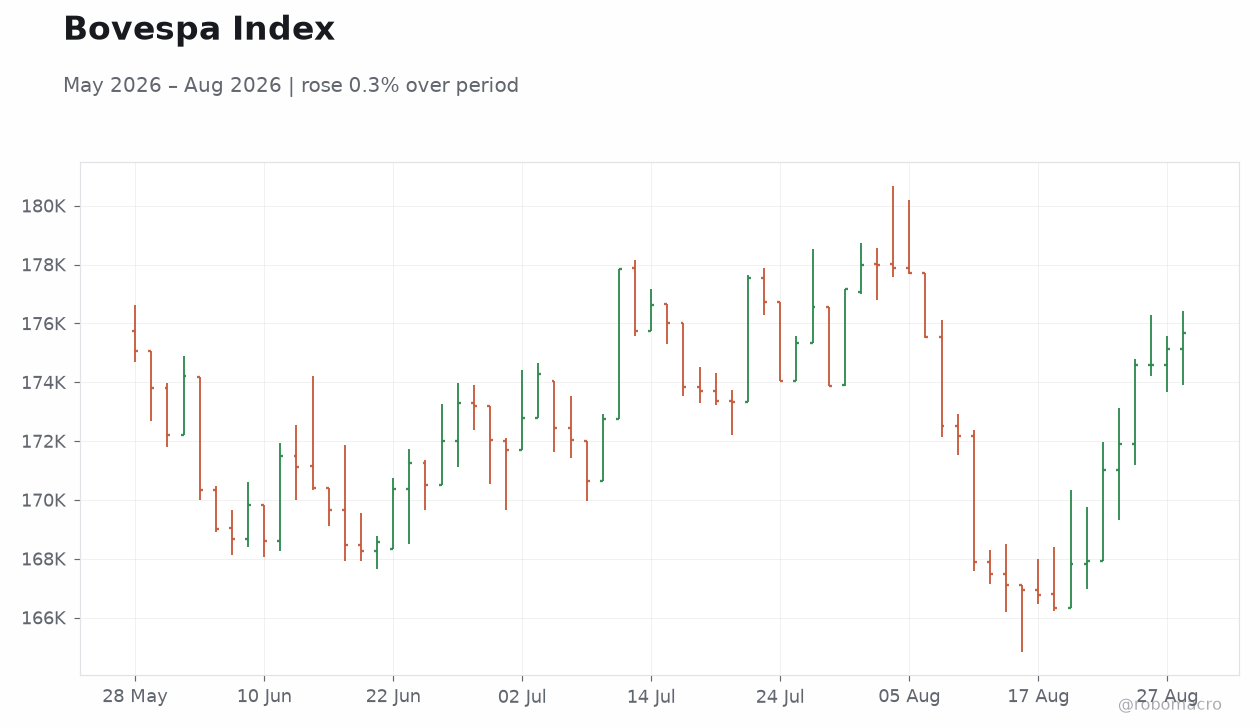
| Bovespa | 175,665.00 | +0.30% |
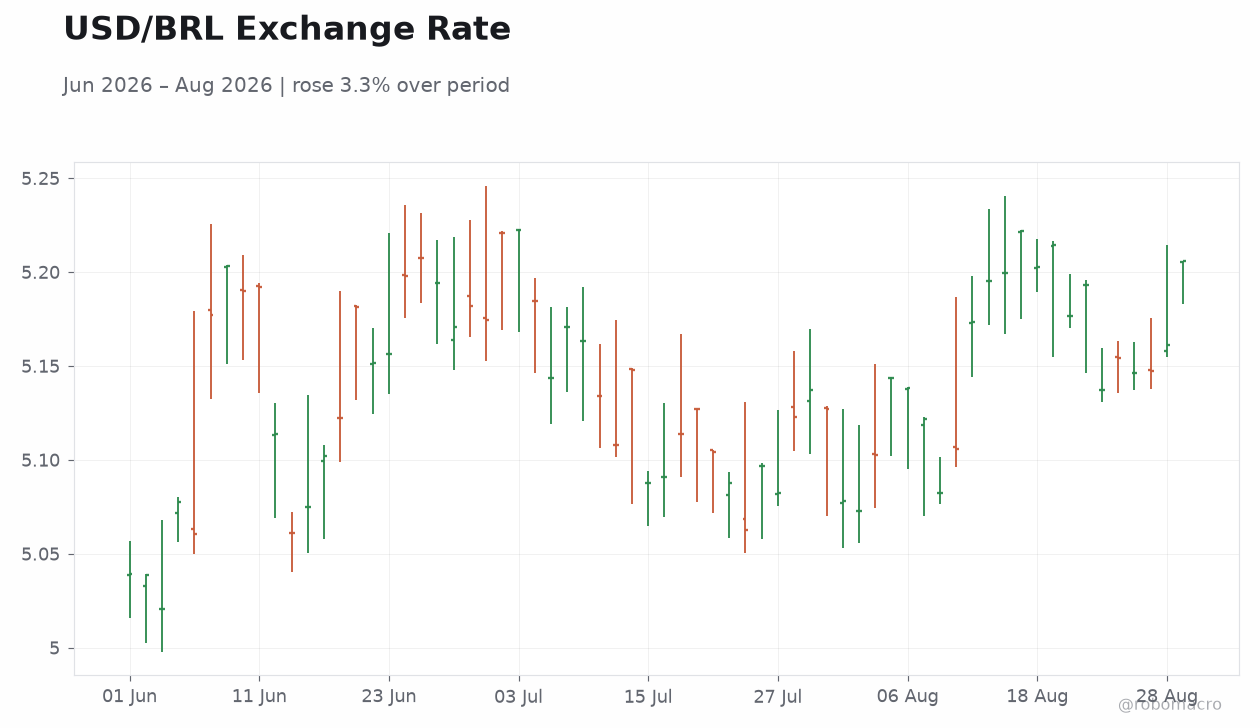
| USD/BRL | 5.21 | +0.87% |
| EUR/BRL | 6.01 | -0.07% |
| Vale | 15.03 | -1.83% |
| Petrobras | 18.53 | +1.53% |
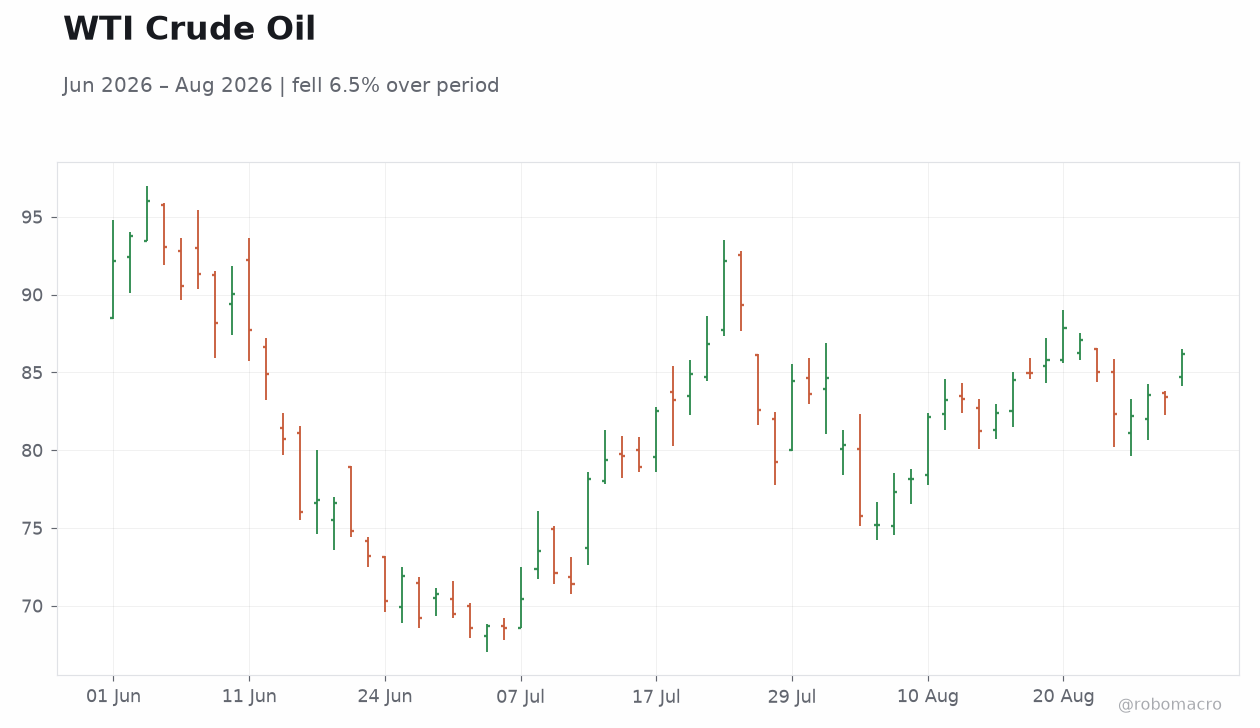
| WTI Crude | 86.14 | +3.29% |
| Gold | 4,483.90 | +0.13% |
| Bitcoin | 78,408.00 | +0.74% |
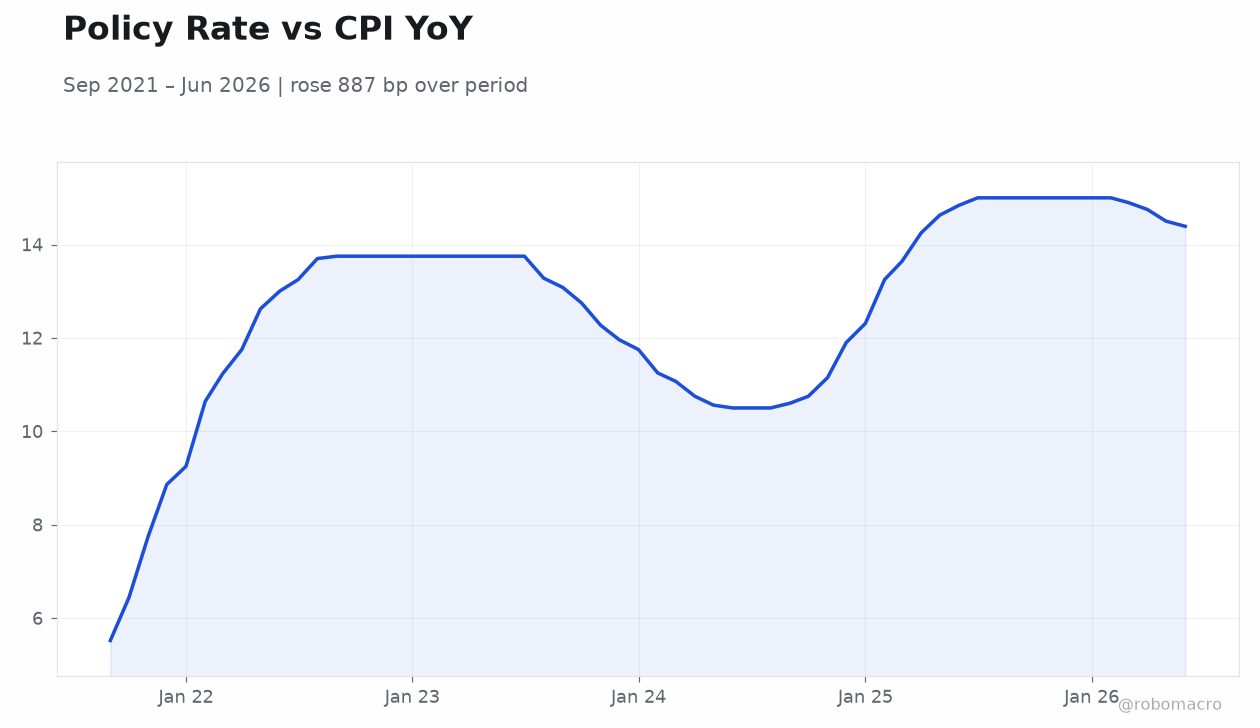
| Brazil Short-term Rate | 14.42% | +1 bp |
| Brazil Long-term Rate | - | - |
Prior Economic Events
| Data | Prior | Cons | Actual |
|---|---|---|---|
| No events available | |||
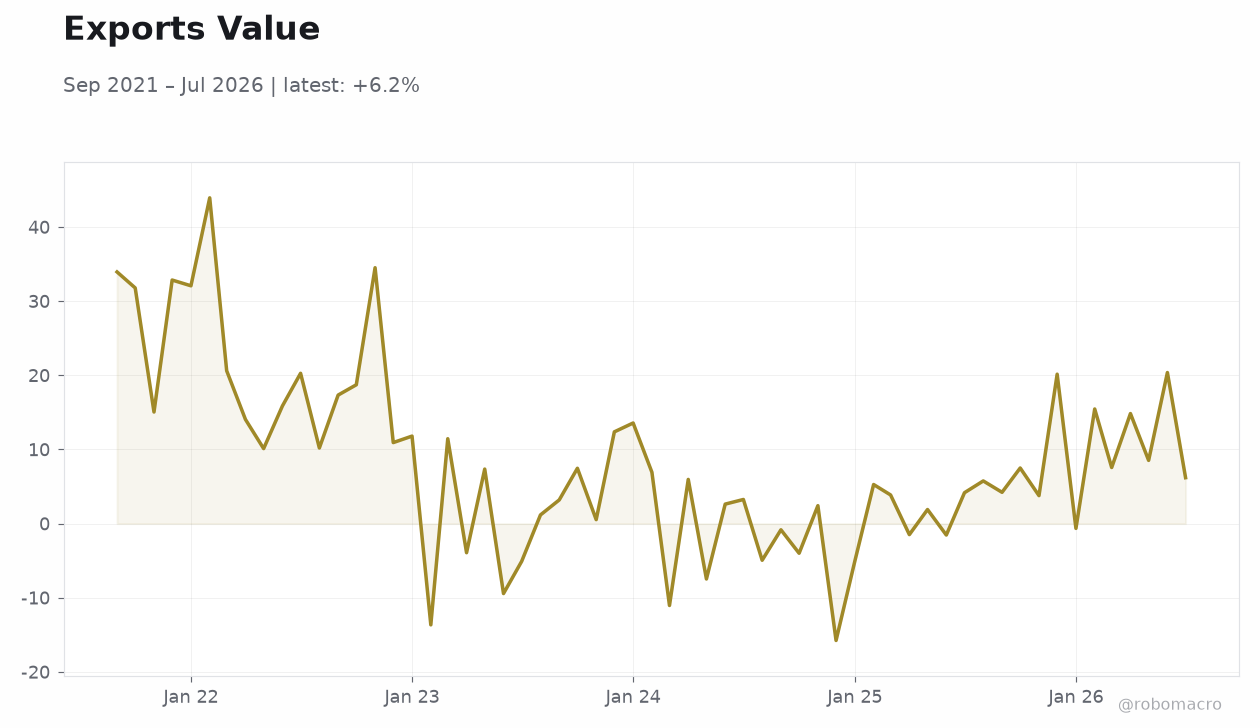 Exports Value | Type: macro_line | Exports (USD mn): 6.195 (2026-07-01) | Range: -15.76–43.94 | Trend(6pt): 33.95,34.52,13.57,3.87,8.532,6.195
Today's Economic Events
| Data | Prior | Cons | Time |
|---|---|---|---|
| Tuesday (2026-09-01) | |||
| GDP Growth Quarter-over-Quarter | 1.10 | 0.40 | 04:00 |
| GDP Growth Year-over-Year | 1.80 | 1.80 | 04:00 |
| Wednesday (2026-09-02) | |||
| Industrial Production Month-over-Month | -1.80 | - | 04:00 |
| Thursday (2026-09-03) | |||
| S&P Global Services PMI Index | 49.70 | - | 05:00 |
| Friday (2026-09-04) | |||
| Trade Balance | 7,070m | 7,140m | 10:00 |
- Brazil GDP expected to slow sharply in Q2, with quarter-over-quarter growth forecast at 0.4% versus 1.1% prior.
- Central government posted R$10.8bn primary surplus in July, easing near-term fiscal pressure.
- BCB signals potential acceleration in easing cycle amid cooling economy and Selic at 14.00%.
Yesterday's Recap
Markets closed the month with Bovespa rising 0.30% to 175,665 while USD/BRL climbed 0.87% to 5.21, reflecting mixed risk sentiment. Vale fell 1.83% as iron-ore prices faced pressure, offset by Petrobras gaining 1.53% on higher WTI crude at 86.14. The central government’s R$10.8bn primary surplus in July provided a modest fiscal positive, though analysts noted it masks ongoing spending rigidity.
Short-term rates eased to 14.39%, hinting at market pricing for policy relief. No major data releases occurred on August 30, leaving focus on forward indicators. Commodity export dynamics remained central, with oil strength supporting Petrobras while broader equity flows stayed cautious ahead of GDP.
Overall, the session underscored Brazil’s sensitivity to both domestic fiscal signals and global energy prices.
The Day Ahead
Tomorrow’s GDP print will dominate, with quarter-over-quarter growth expected at 0.4% after 1.1% previously and year-over-year holding at 1.8%. A sharp downside surprise could reinforce views that the economy is decelerating faster than anticipated. On Wednesday, industrial production month-over-month data will follow, offering early clues on manufacturing momentum after last month’s -1.8% contraction.
Thursday brings the S&P Global Services PMI, last at 49.7, to gauge service-sector resilience. Friday’s trade balance release, consensus at $7.14bn, will highlight export performance amid elevated commodity prices. Markets will parse these releases for confirmation of the slowdown narrative already priced into BCB communications.
Other Economic Notes
Debt sustainability concerns are mounting for 2027, with El Niño risks and persistently high rates threatening growth prospects according to recent analysis. Fiscal credibility remains the key swing factor for medium-term rates, as scenarios range from Selic at 9.75% to 15.5% depending on policy discipline. Primary surplus delivery in July offers temporary relief but does little to address structural spending pressures.
Franchise expansion interest highlights Brazil’s large domestic market as a structural positive, yet macro volatility continues to weigh on investment timing. Commodity export dependence leaves the economy exposed to global price swings and weather shocks.