Brazil Macro Daily(Beta Mode)
Weak GDP Looms as BCB Eyes Faster Cuts
Market Snapshot
| Asset | Level | Change |
|---|---|---|
| Bovespa | 177,419.00 | +1.30% |
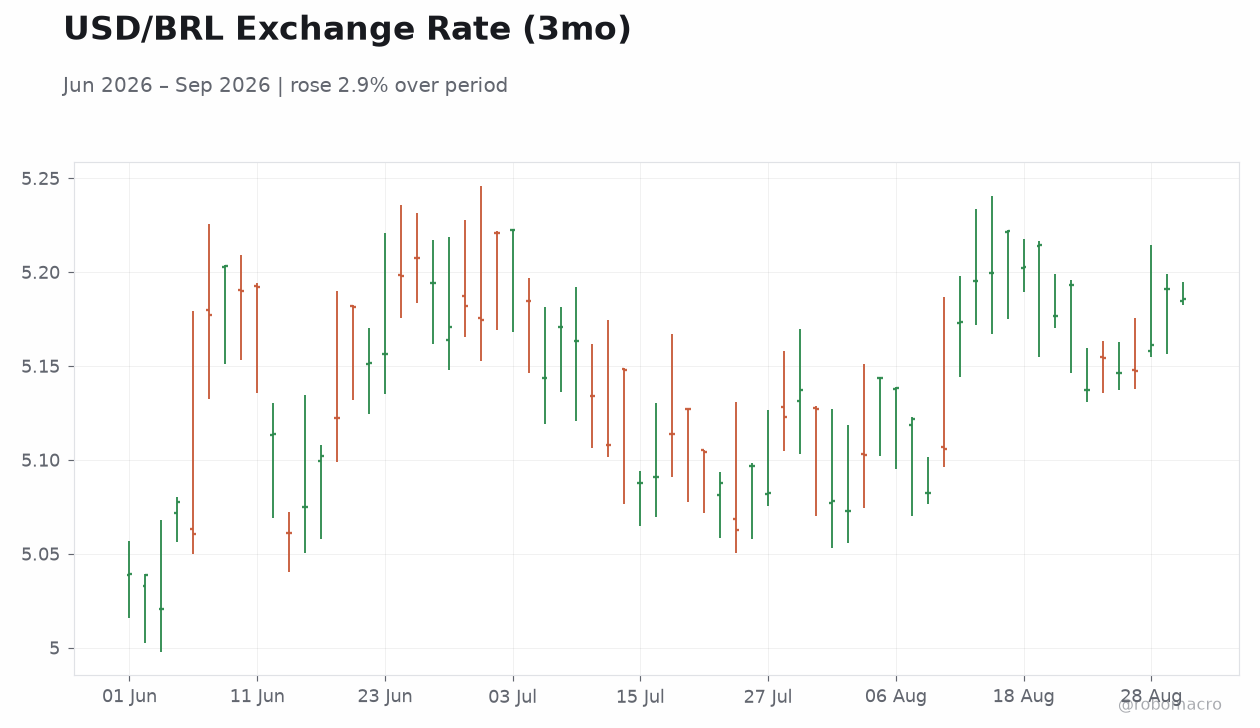
| USD/BRL | 5.19 | -0.11% |
| EUR/BRL | 6.01 | +0.02% |
| Vale | 15.09 | +0.40% |
| Petrobras | 19.35 | +6.03% |
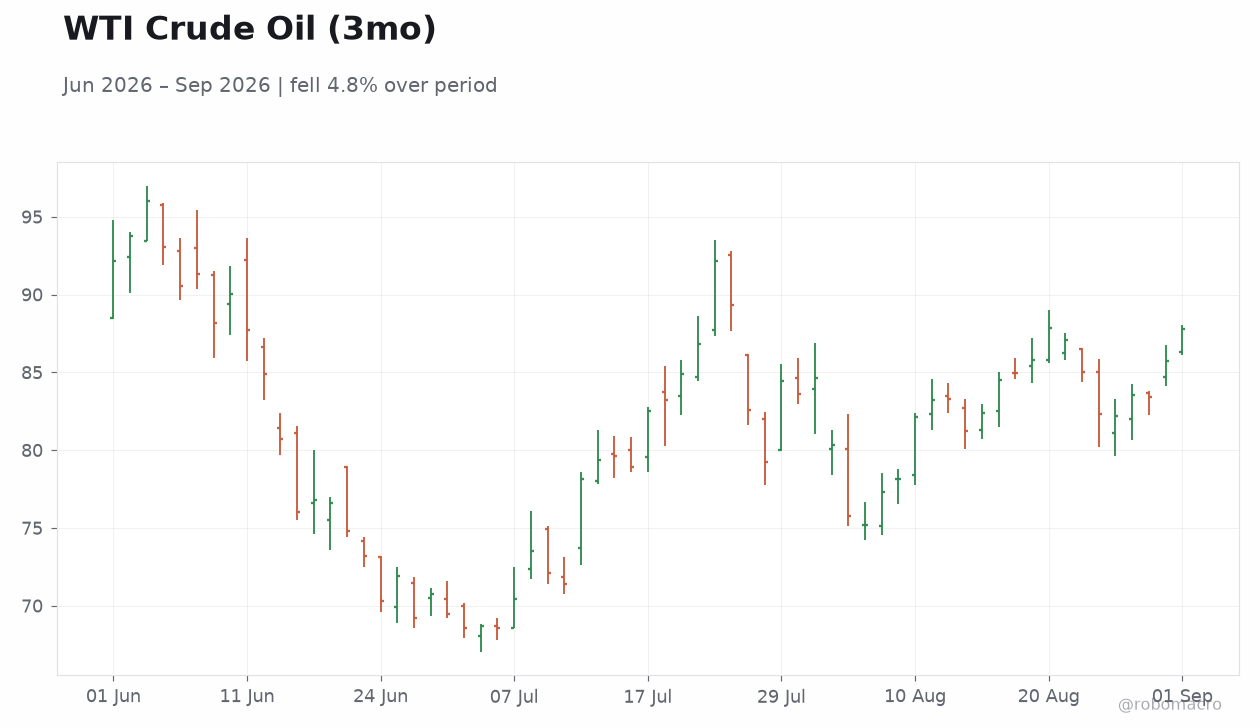
| WTI Crude | 87.83 | +2.41% |
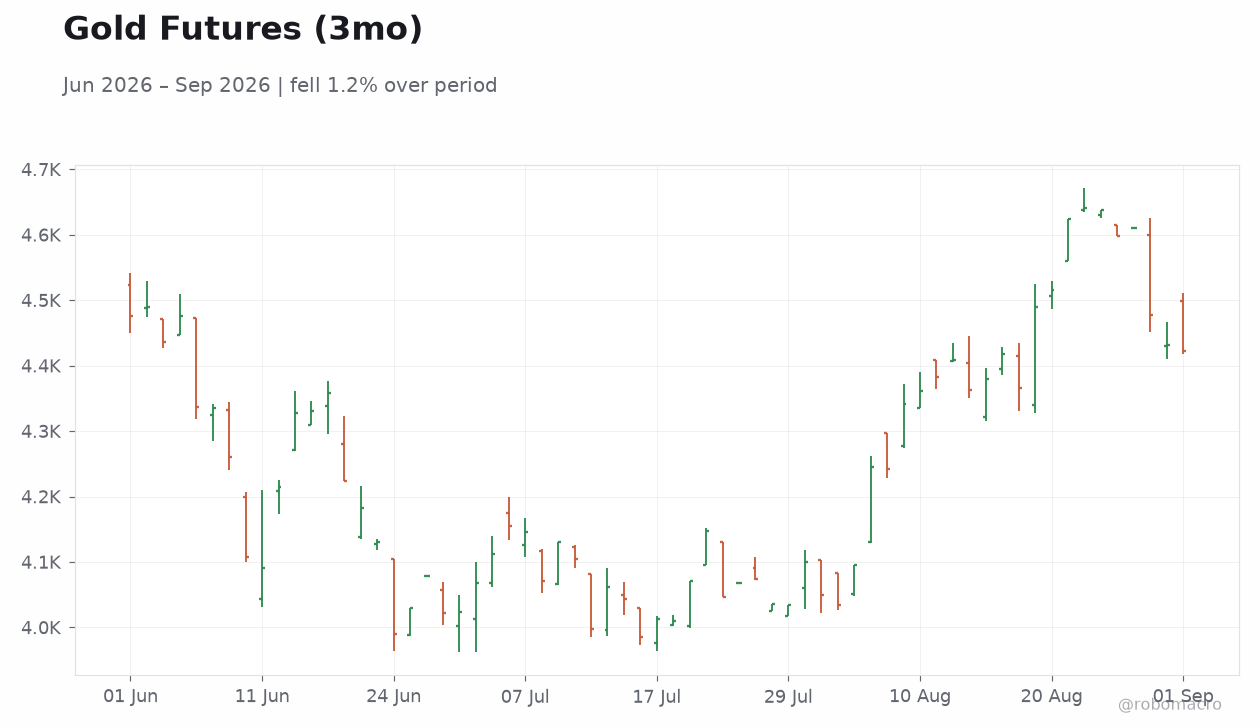
| Gold | 4,422.80 | -0.19% |
| Bitcoin | 77,826.16 | -0.92% |
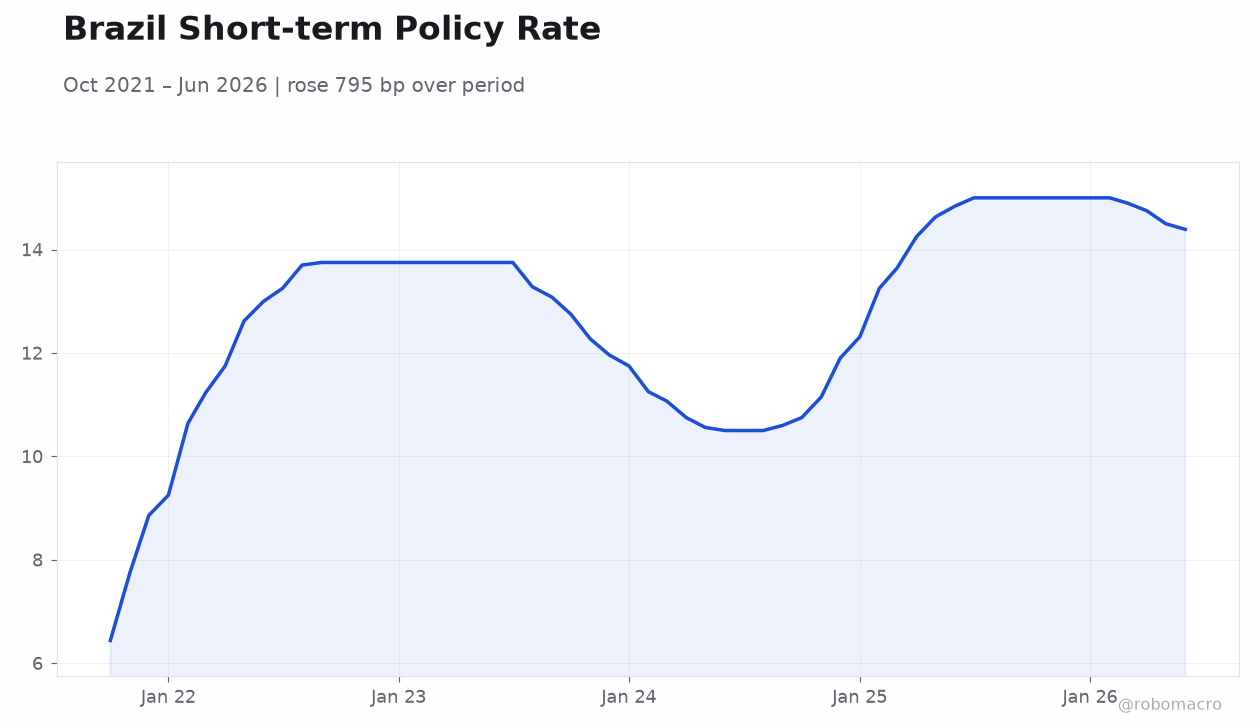
| Brazil Short-term Rate | 14.47% | +5 bp |
| Brazil Long-term Rate | - | - |
Prior Economic Events
| Data | Prior | Cons | Actual |
|---|---|---|---|
| No events available | |||
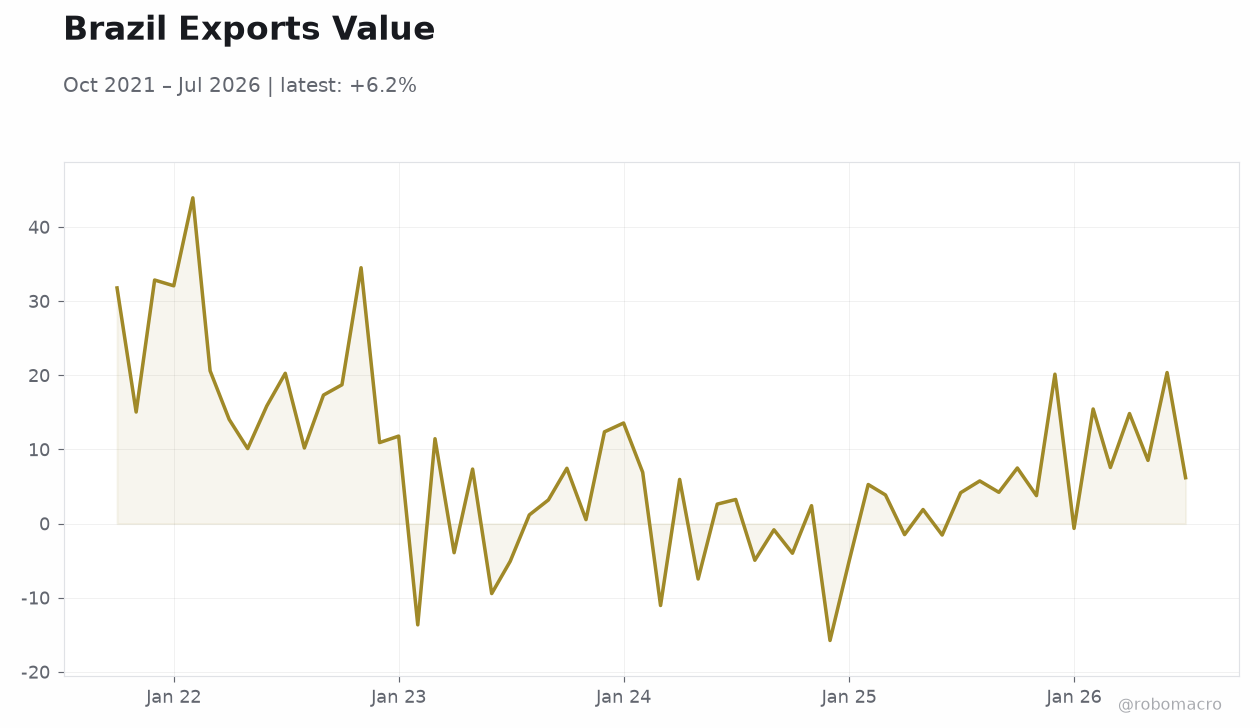 Brazil Exports Value | Type: macro_line | Exports (USD mn): 6.195 (2026-07-01) | Range: -15.76–43.94 | Trend(6pt): 31.79,10.93,6.929,-1.479,20.38,6.195
Today's Economic Events
| Data | Prior | Cons | Time |
|---|---|---|---|
| GDP Growth Quarter-over-Quarter | 1.10 | 0.40 | 04:00 |
| GDP Growth Year-over-Year | 1.80 | 1.80 | 04:00 |
| Wednesday (2026-09-02) | |||
| Industrial Production Month-over-Month | -1.80 | - | 04:00 |
| Thursday (2026-09-03) | |||
| S&P Global Services PMI Index | 49.70 | - | 05:00 |
| Friday (2026-09-04) | |||
| Trade Balance | 7,070m | 7,140m | 10:00 |
- Brazil GDP growth expected to slow sharply to 0.4% QoQ, confirming high-rate drag.
- Bovespa rises 1.30% and Petrobras jumps 6.03% on accelerated easing bets.
- Officials signal BCB will quicken Selic cuts as debt and rates weigh on activity.
Yesterday's Recap
Markets closed the month with Bovespa advancing 1.30% to 177,419 while USD/BRL eased 0.11% to 5.19. Petrobras shares surged 6.03% on firmer oil prices and lower funding-cost expectations. Vale gained 0.40% as iron-ore futures held steady.
The short-term rate proxy slipped 0.76% to 14.39%, reflecting lower term-premium pricing. No major data prints occurred on 31 August, leaving focus on the incoming GDP figures and recent official comments. Brazil’s equity and currency moves aligned with global commodity strength, notably WTI crude rising 2.41%.
Traders positioned ahead of today’s GDP release, pricing a higher probability of quicker monetary easing. EUR/BRL edged 0.02% higher to 6.01 while gold slipped 0.19% to 4,422.80 and Bitcoin fell 0.92% to 77,826.16, underscoring selective risk appetite.
The Day Ahead
Brazil will release second-quarter GDP at 04:00 ET, with consensus pointing to a 0.4% QoQ slowdown from 1.1% and 1.8% YoY growth unchanged. Industrial production for July follows tomorrow, after a 1.8% MoM drop in June. Services PMI on 3 September and the August trade balance on 4 September complete the near-term calendar.
Markets will scrutinise the GDP breakdown for signs of consumption weakness and investment contraction. Any downside surprise would reinforce recent official remarks that the BCB can accelerate easing. FX and rates desks expect the data to set the tone for Selic path repricing through year-end.
The trade balance consensus of 7.14 billion USD offers a modest external buffer against domestic softness.
Other Economic Notes
High real rates and rising public debt continue to constrain domestic demand, with officials openly warning of slower growth ahead. Fiscal sustainability concerns have kept long-term yields elevated despite the recent short-rate decline. Commodity exports remain the main buffer, yet iron-ore and soybean prices face downside risks from global demand shifts.
Policymakers now link faster Selic cuts to the need to support activity without jeopardising the inflation target. <i>↓ p.2</i>