Brazil Macro Daily(Beta Mode)
COPOM Poised for 25bp Cut as Sentiment Dips
Market Snapshot
| Asset | Level | Change |
|---|---|---|
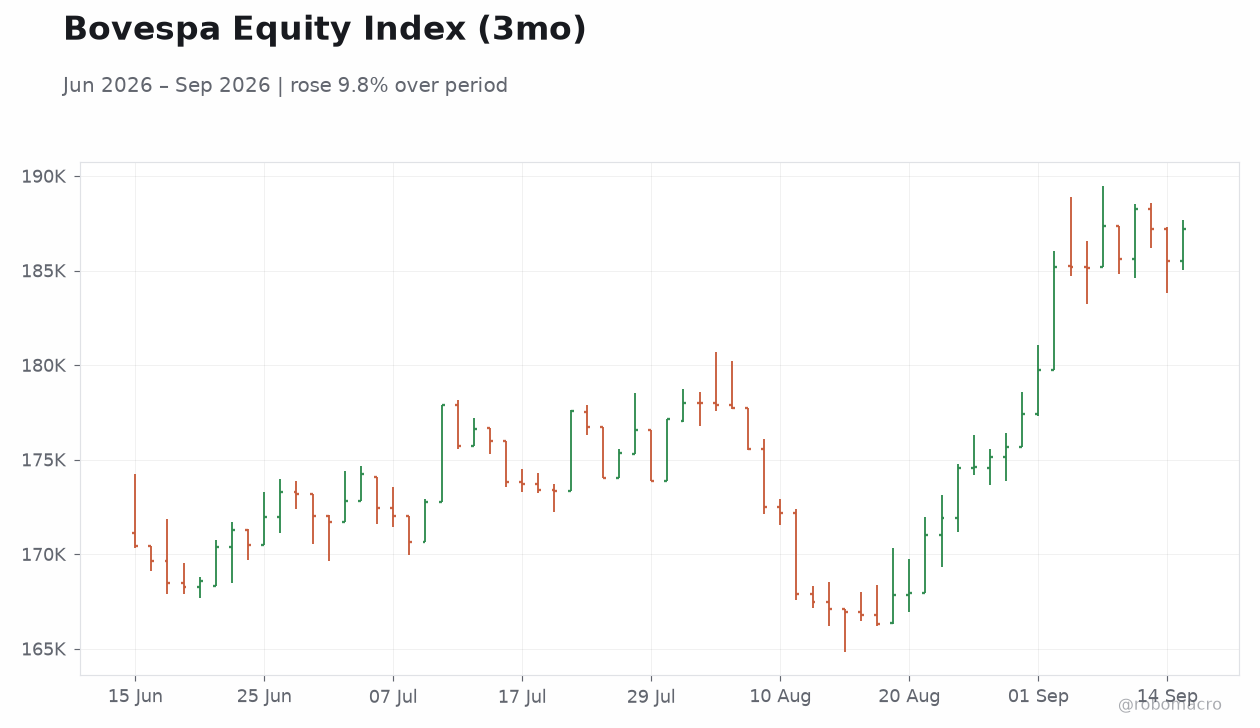
| Bovespa | 187,191.73 | +0.91% |
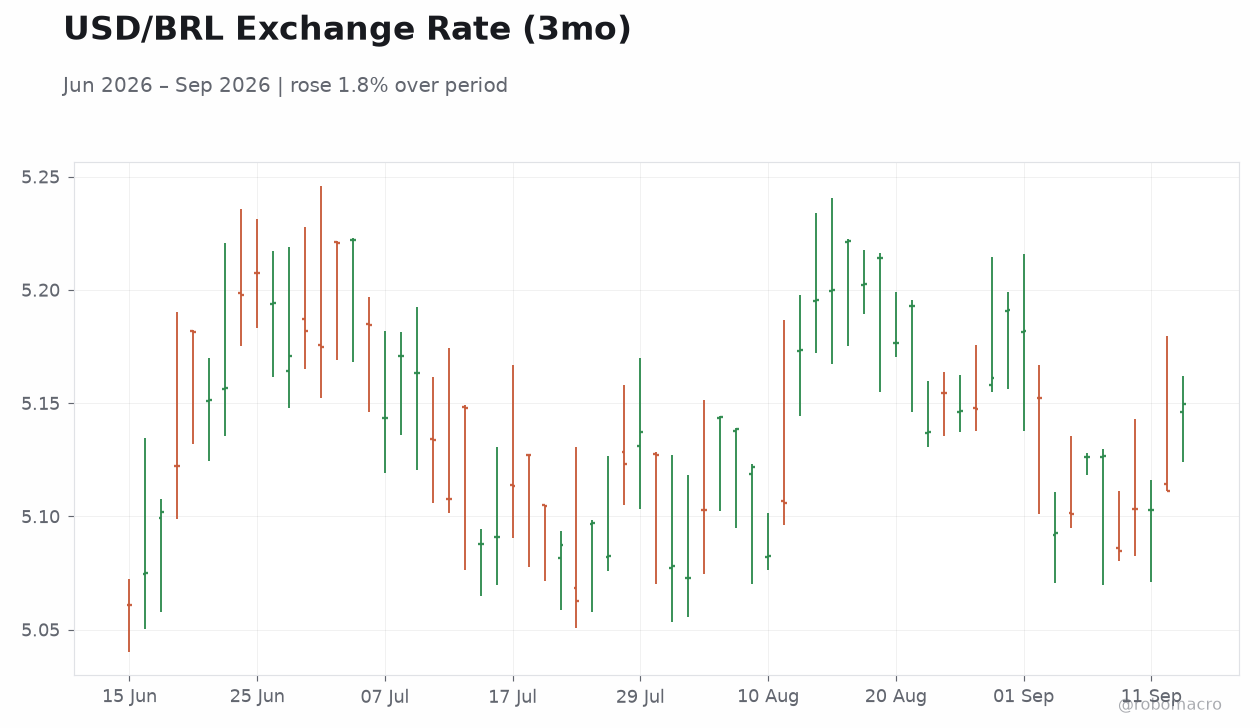
| USD/BRL | 5.15 | +0.82% |
| EUR/BRL | 5.95 | +0.39% |
| Vale | 14.65 | +0.27% |
| Petrobras | 21.38 | +1.09% |
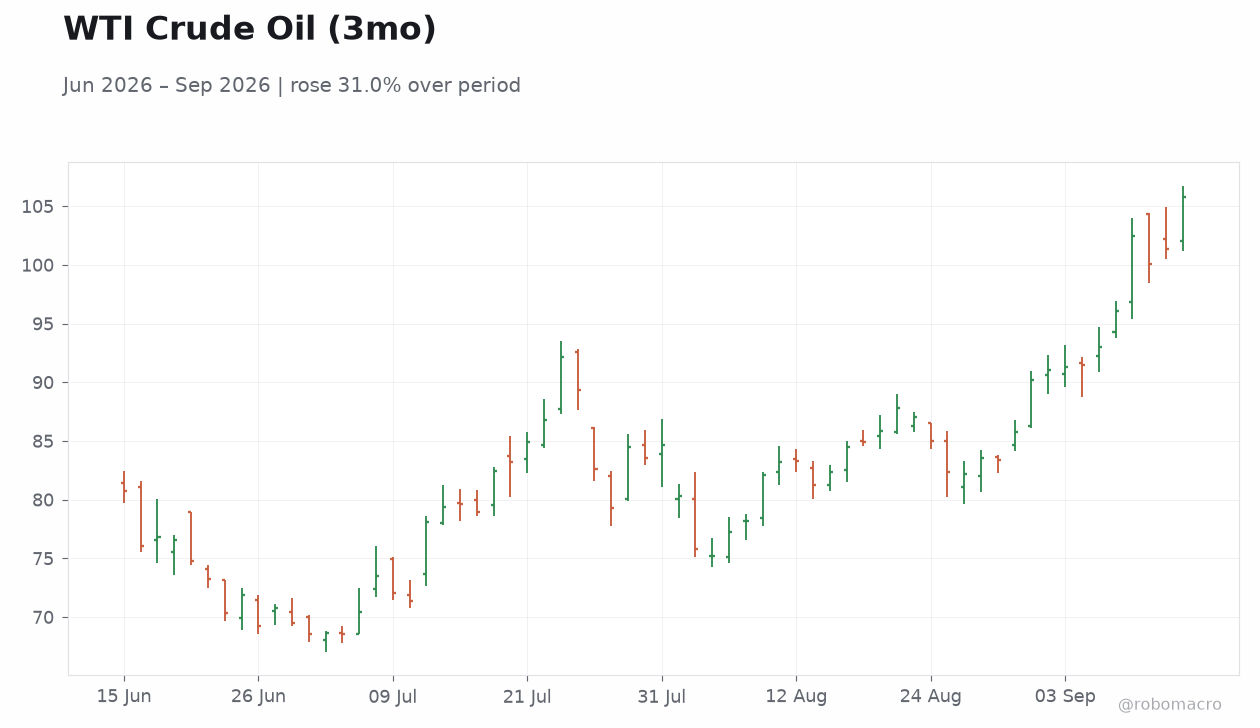
| WTI Crude | 105.83 | +4.38% |
| Gold | 4,344.10 | -0.18% |
| Bitcoin | 76,900.91 | -1.62% |
| Brazil 5Y Govt Yield | 14.22% | +17 bp |
| Brazil 10Y Govt Yield | 14.33% | +18 bp |
Prior Economic Events
| Data | Prior | Cons | Actual |
|---|---|---|---|
| Business Confidence | 46.30 | - | 44.90 |
| Retail Sales Month-over-Month | 0.50 | -0.20 | - |
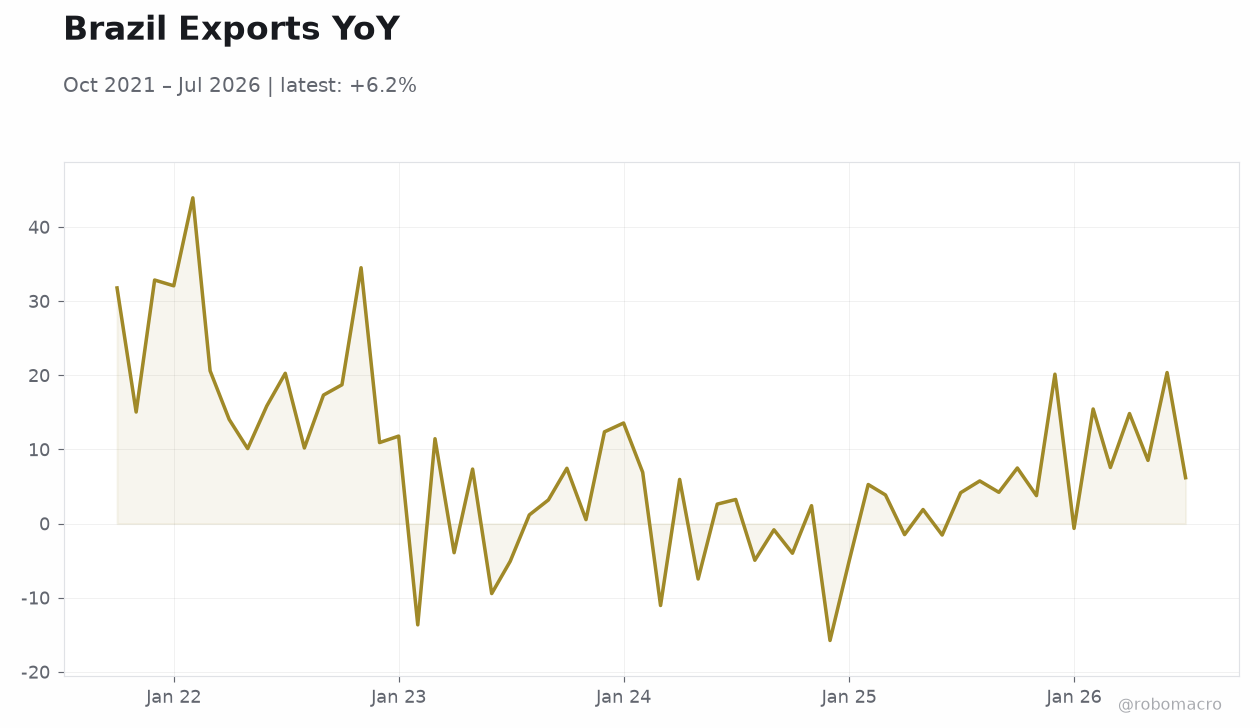 Brazil Exports YoY | Type: macro_line | YoY % Change: 6.195 (2026-07-01) | Range: -15.76–43.94 | Trend(6pt): 31.79,10.93,6.929,-1.479,20.38,6.195
Today's Economic Events
| Data | Prior | Cons | Time |
|---|---|---|---|
| Wednesday (2026-09-16) | |||
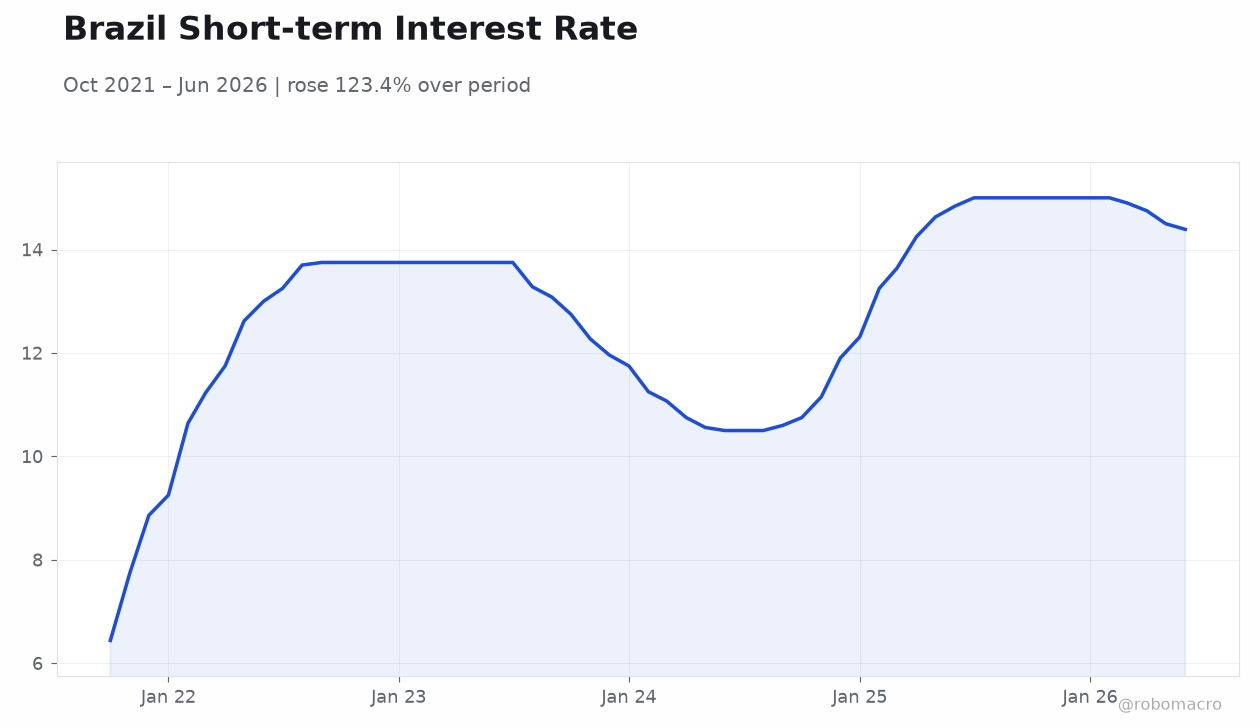
| Central Bank Interest Rate Decision | 14 | 13.75 | 13:30 |
- Business confidence fell to 44.9 from 46.3, signaling further softening in activity.
- Bovespa gained 0.91% to 187,191.73 while USD/BRL rose 0.82% to 5.15 and 10-year yields climbed 18 bp to 14.33%.
- Markets price a 25 bp Selic cut to 13.75% at tomorrow’s COPOM meeting.
Yesterday's Recap
Brazilian business confidence dropped to 44.9 in September, extending the decline from 46.3 and pointing to weaker corporate sentiment ahead of the monetary decision. Equity markets posted gains, with the Bovespa advancing 0.91% to close at 187,191.73 as Petrobras rose 1.09% and Vale added 0.27%. The real weakened, sending USD/BRL up 0.82% to 5.15 and EUR/BRL higher by 0.39% to 5.95.
Government bonds sold off, lifting the 5-year yield 17 bp to 14.22% and the 10-year yield 18 bp to 14.33%. Oil prices surged 4.38% to 105.83, providing support to energy-linked names, while gold slipped 0.18% and Bitcoin fell 1.62%. Retail sales data for the month were not released, leaving the confidence print as the main domestic release.
No BCB officials spoke publicly during the session.
The Day Ahead
The COPOM interest-rate decision at 13:30 ET tomorrow remains the dominant event for Brazilian markets. Consensus forecasts a 25 bp reduction in the Selic rate to 13.75% from the current 14.00% level. Traders will scrutinize the statement and any updated projections for clues on the pace of further easing.
The outcome is expected to set the tone for USD/BRL, local yields, and Bovespa performance through the end of the week. Attention will also turn to any references to fiscal risks or external conditions in the accompanying minutes. No other high-impact Brazilian data are scheduled for release.
Other Economic Notes
Recent reports highlight a slowdown in Brazilian economic momentum that could influence voter sentiment ahead of the October election. Coffee export volumes rose sharply in early September, offering a positive note for agricultural trade balances. Opposition candidate Flávio Bolsonaro has signaled interest in adopting elements of Argentina’s Milei reform agenda, adding policy uncertainty.
Polls continue to show a tight race between President Lula and the far-right challenger, keeping fiscal and reform expectations in focus. These political dynamics intersect with softer confidence readings to raise questions about the durability of the current growth path.