Brazil Macro Daily(Beta Mode)
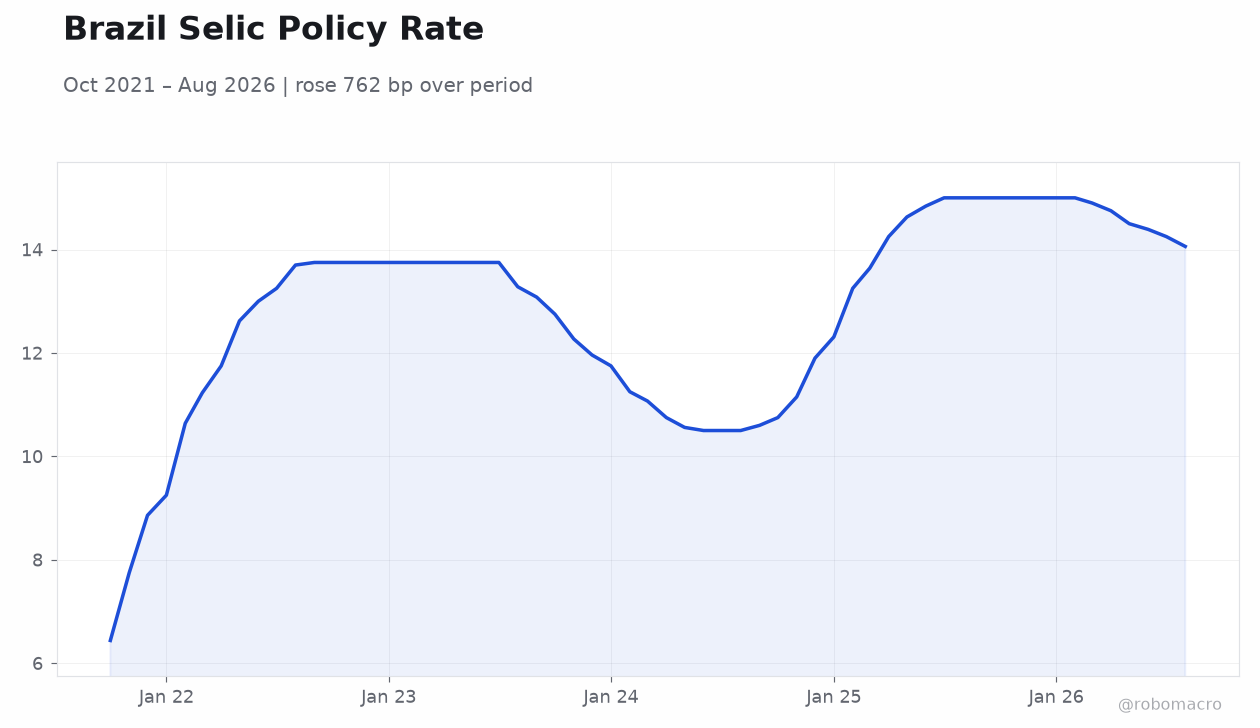
Selic Cut to 13.75% on Weak July Data
Market Snapshot
| Asset | Level | Change |
|---|---|---|
| Bovespa | 185,548.00 | -0.51% |
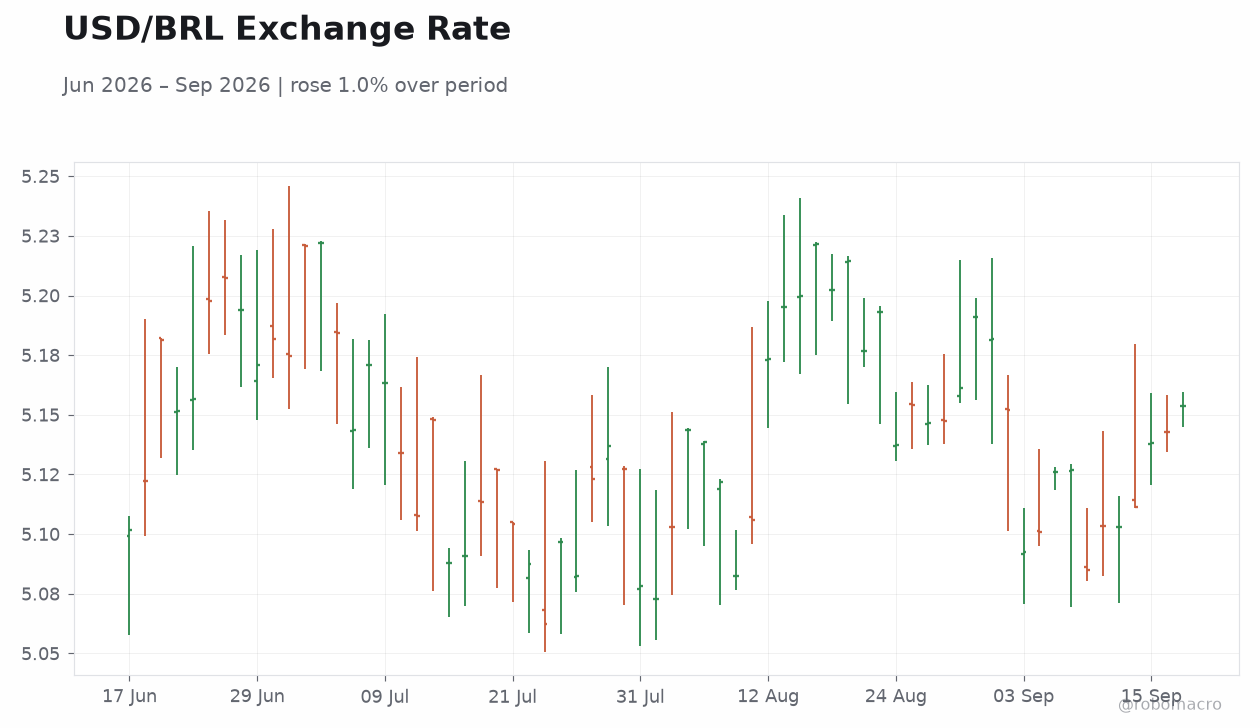
| USD/BRL | 5.15 | +0.21% |
| EUR/BRL | 5.90 | -0.40% |
| Vale | 14.13 | -2.35% |
| Petrobras | 20.91 | -3.95% |
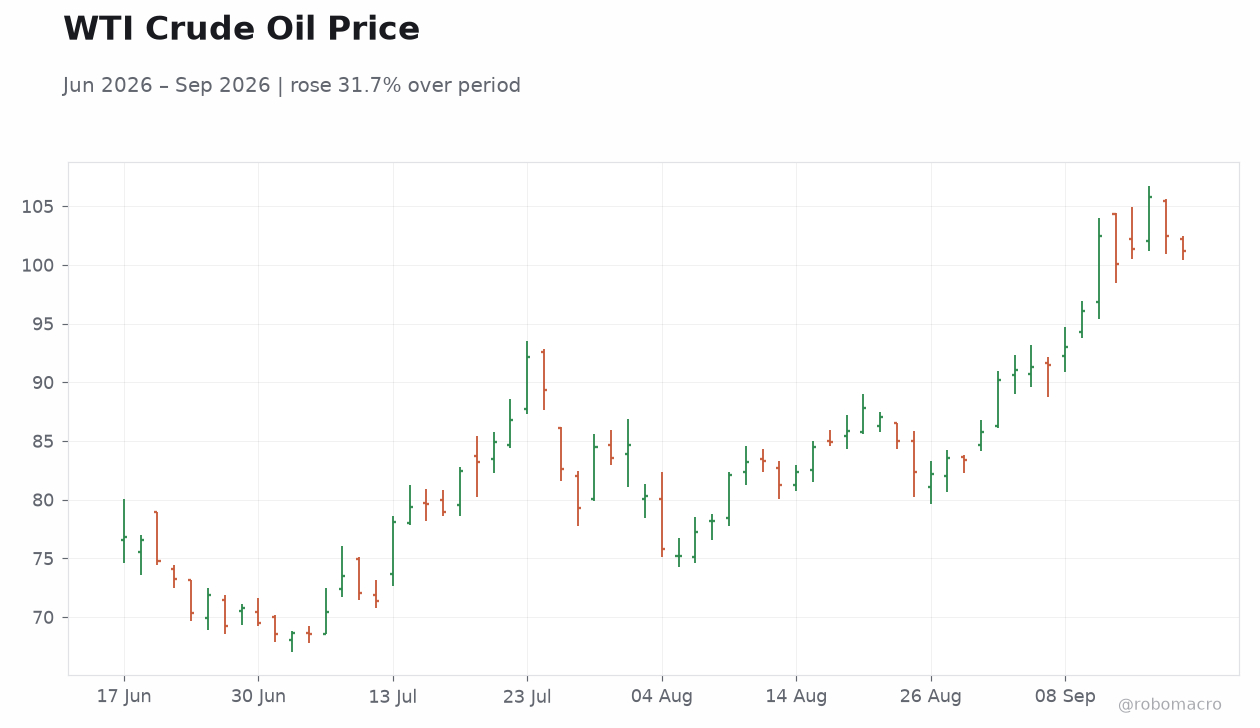
| WTI Crude | 101.11 | -1.29% |
| Gold | 4,350.60 | -0.84% |
| Bitcoin | 76,594.94 | +0.58% |
| Brazil 5Y Govt Yield | 14.14% | -11 bp |
| Brazil 10Y Govt Yield | 14.31% | -7 bp |
Prior Economic Events
| Data | Prior | Cons | Actual |
|---|---|---|---|
| Business Confidence | 46.30 | - | 44.90 |
| Retail Sales Month-over-Month | 0.50 | -0.20 | -0.80 |
| Central Bank Interest Rate Decision | 14 | 13.75 | 13.75 |
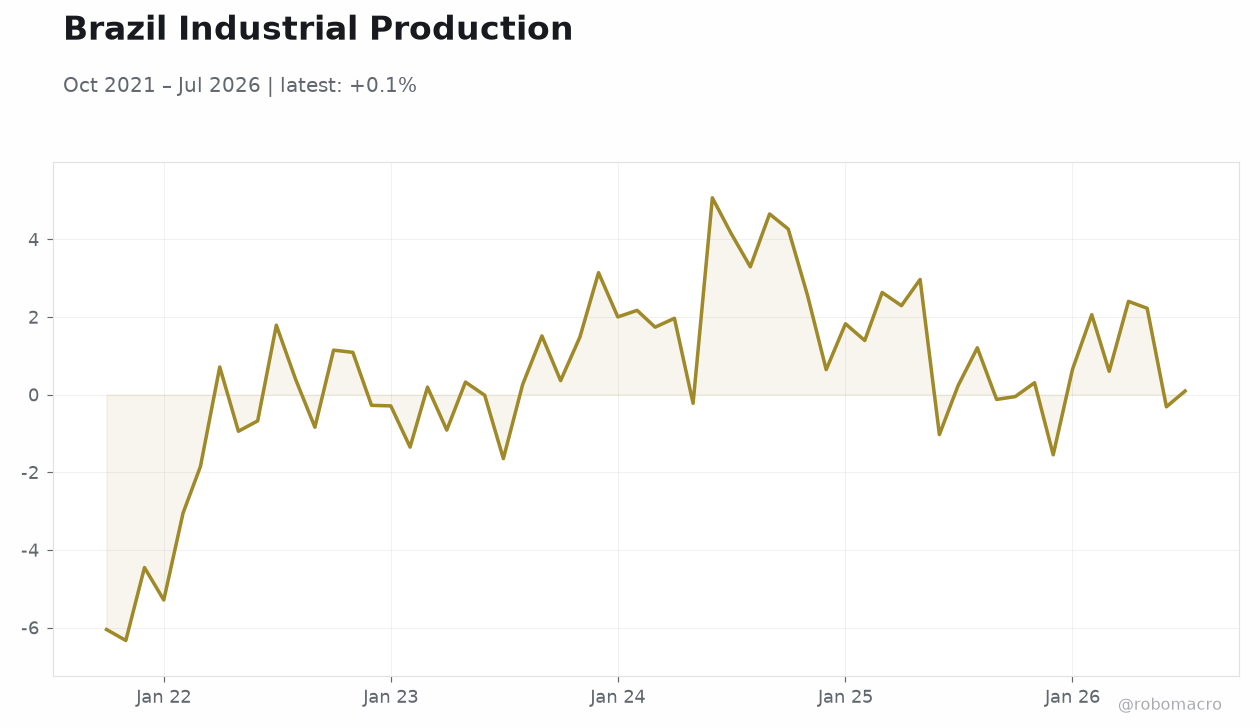 Brazil Industrial Production | Type: macro_line | Index (YoY %): 0.09432 (2026-07-01) | Range: -6.332–5.071 | Trend(6pt): -6.05,-0.2749,2.172,2.293,-0.3129,0.09432
Today's Economic Events
| Data | Prior | Cons | Time |
|---|---|---|---|
| No events available | |||
- BCB delivers fifth straight 25 bp cut to 13.75% as July activity contracts 0.2%
- Retail sales fall 0.8% MoM, business confidence drops to 44.9
- Bovespa slips 0.51%, 5Y yields ease 11 bp while USD/BRL rises 0.21%
Yesterday's Recap
The BCB cut the Selic rate by 25 basis points to 13.75% on September 16, matching consensus and marking the fifth consecutive reduction from the prior 14.00% level. Business confidence printed 44.9, down from 46.3. Retail sales contracted 0.8% month-over-month, worse than the -0.2% consensus and prior +0.5% reading.
Brazil's economic activity fell 0.2% in July, exceeding expectations for a slowdown. Bovespa declined 0.51% to 185,548 while USD/BRL gained 0.21% to 5.15. The 5-year government yield fell 11 bp to 14.14% and the 10-year yield declined 7 bp to 14.31%.
Vale dropped 2.35% and Petrobras fell 3.95% as WTI crude eased 1.29%.
The Day Ahead
No economic releases are scheduled for September 17. Market participants will watch for any BCB speeches or minutes that clarify the pace of further easing. Commodity price movements, especially iron ore and oil, will influence export-oriented equities.
Investors may also monitor fiscal updates and external demand signals from China. Local fixed-income markets are expected to remain sensitive to any shifts in inflation expectations.
Other Economic Notes
The sequence of weaker activity and retail data underscores softening domestic demand and supports the ongoing easing cycle. Lower Selic levels reduce returns on post-fixed instruments such as CDBs and Tesouro Selic while highlighting dividend stocks that still exceed CDI. Fiscal sustainability gains attention as debt-service costs decline gradually.
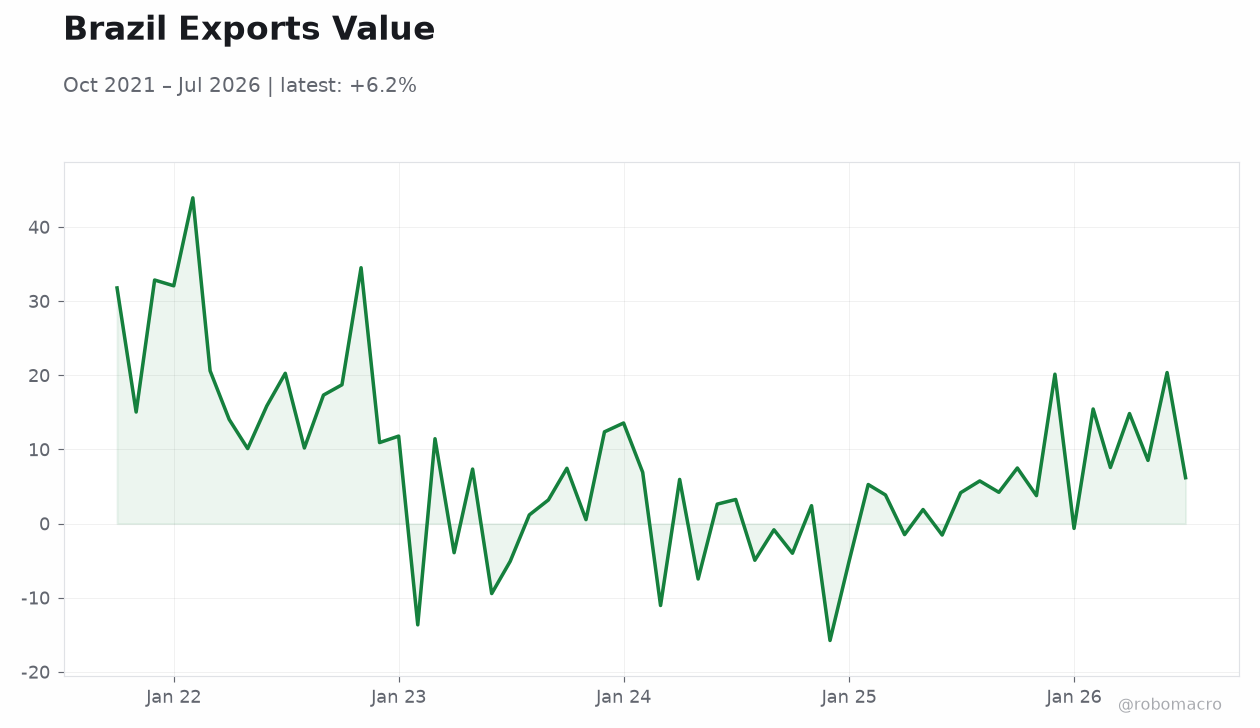
Export sectors face ongoing pressure from subdued global commodity demand, particularly iron ore.
Global Macro News
Weak Chinese demand continues to weigh on iron ore prices, limiting upside for Brazilian mining exports. WTI crude's 1.29% decline to 101.11 pressures Petrobras earnings and related equities. Gold's 0.84% drop to 4,350.60 reflects reduced safe-haven flows despite broader uncertainty.
Emerging-market currencies showed mixed performance, with the real underperforming the dollar modestly. ↓ p.2