Brazil Macro Daily(Beta Mode)
Copom Minutes in Focus After Lula Welfare Hike
Market Snapshot
| Asset | Level | Change |
|---|---|---|
| Bovespa | 185,229.00 | -0.41% |
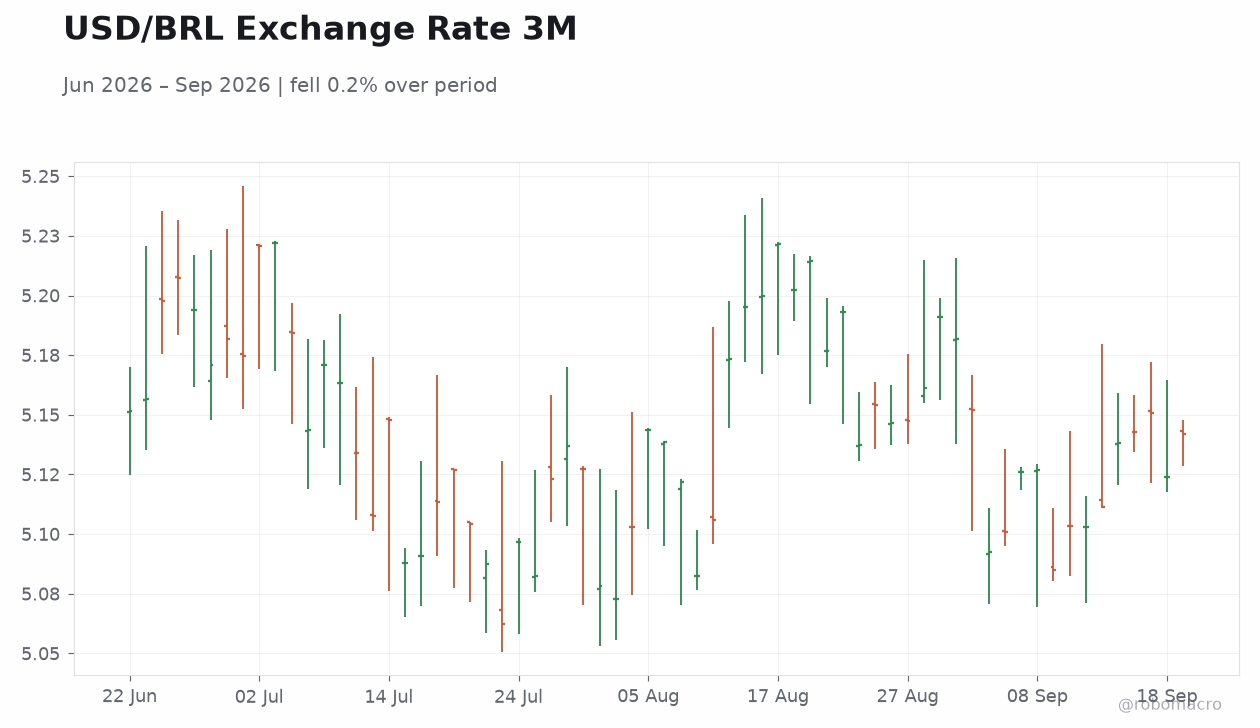
| USD/BRL | 5.14 | +0.35% |
| EUR/BRL | 5.91 | +0.57% |
| Vale | 14.21 | -1.80% |
| Petrobras | 20.80 | -0.67% |
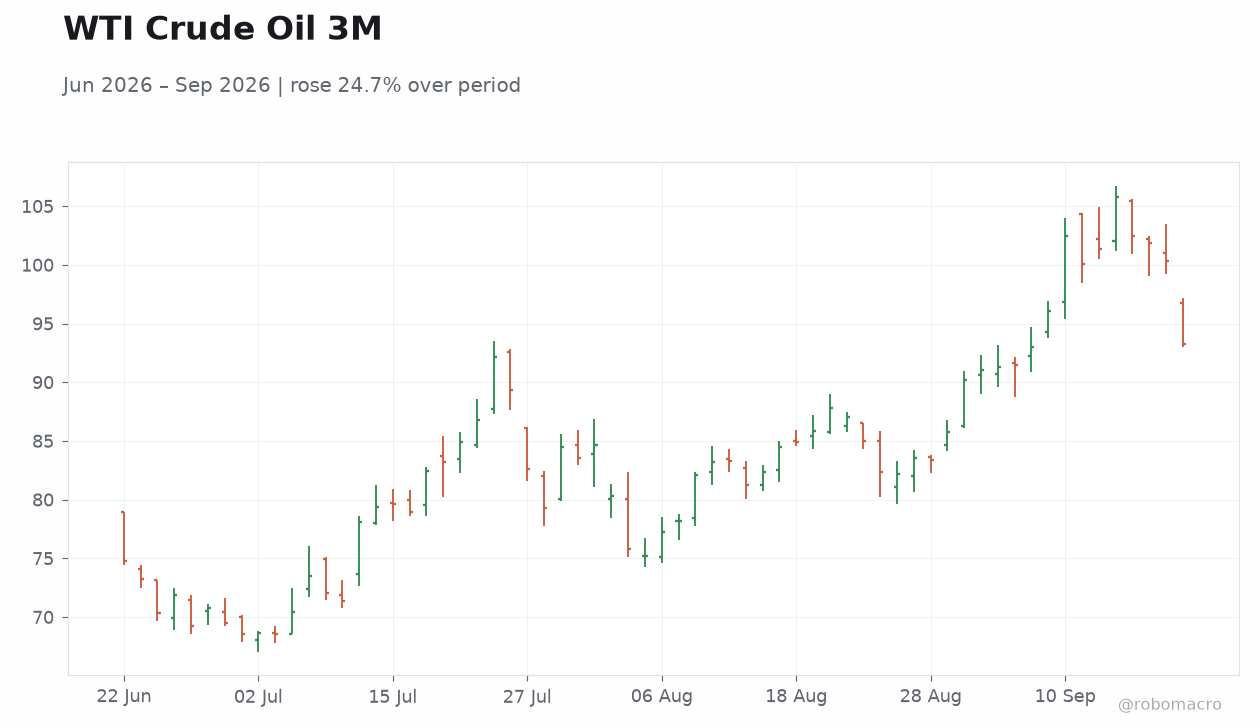
| WTI Crude | 93.25 | -7.03% |
| Gold | 4,389.20 | -0.81% |
| Bitcoin | 84,350.00 | +3.95% |
| Brazil 5Y Govt Yield | 14.11% | +3 bp |
| Brazil 10Y Govt Yield | 14.25% | +6 bp |
Prior Economic Events
| Data | Prior | Cons | Actual |
|---|---|---|---|
| No events available | |||
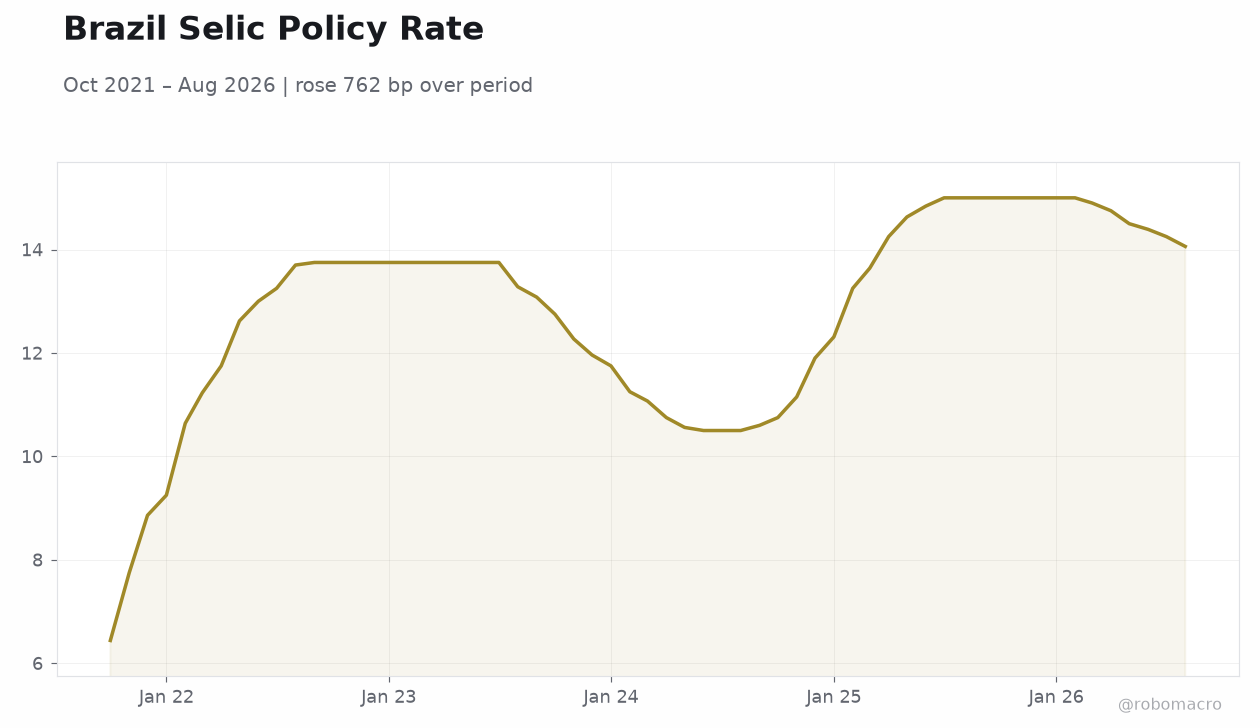 Brazil Selic Policy Rate | Type: macro_line | Percent: 14.06 (2026-08-01) | Range: 6.44–15 | Trend(6pt): 6.44,13.75,11.25,14.25,14.39,14.06
Today's Economic Events
| Data | Prior | Cons | Time |
|---|---|---|---|
| Tuesday (2026-09-22) | |||
| BCB Copom Meeting Minutes | - | - | 03:00 |
- BCB Copom minutes due tomorrow at 03:00 ET with no fresh data prints overnight
- Bovespa fell 0.41% to 185,229 while USD/BRL rose 0.35% to 5.14 and 10-year yields added 6 bp
- Lula announces 15% Bolsa Família increase and free weight-loss jabs two weeks before elections
Yesterday's Recap
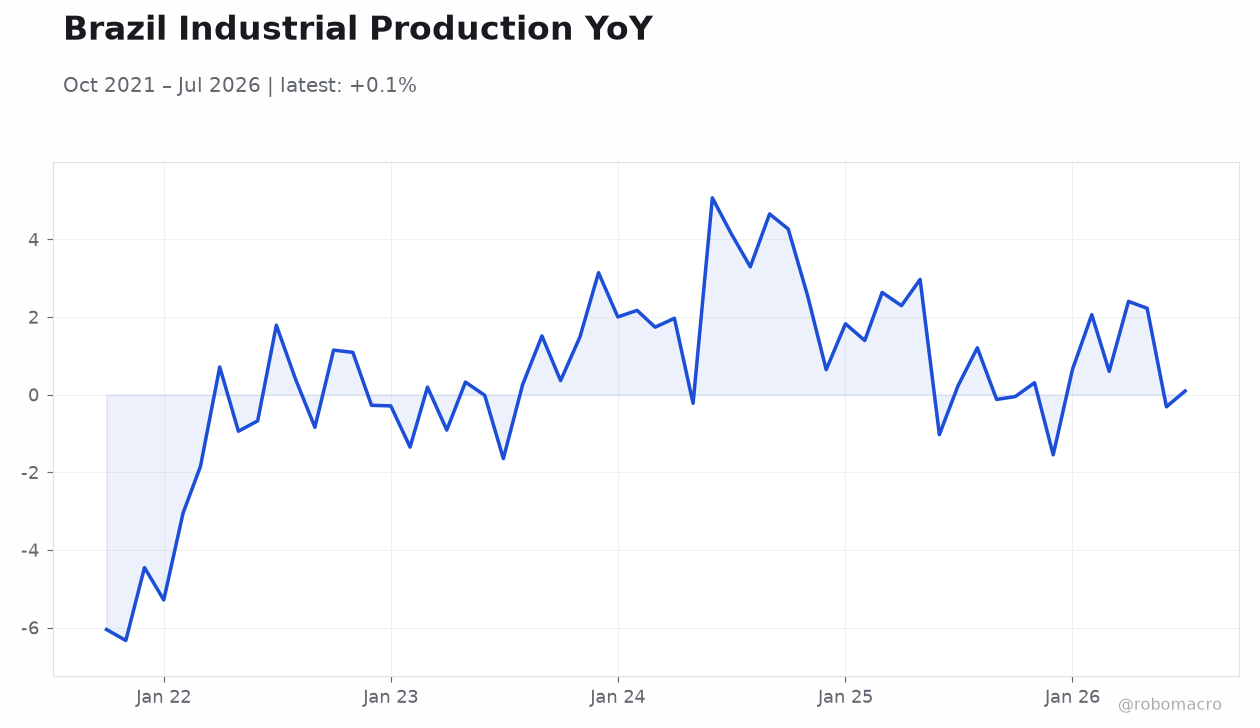
No economic releases appeared on the calendar for 20 September, leaving market participants without fresh inflation or activity prints to reassess the Selic path. Bovespa closed 0.41% lower at 185,229.00 as Vale dropped 1.80% to 14.21 and Petrobras eased 0.67% to 20.80. USD/BRL rose 0.35% to 5.14 while EUR/BRL gained 0.57% to 5.91.
The Brazil 5-year yield climbed 3 bp to 14.11% and the 10-year yield rose 6 bp to 14.25%. WTI crude plunged 7.03% to 93.25 amid softer global demand signals, while gold slipped 0.81% to 4,389.20. Bitcoin advanced 3.95% to 84,350.00, providing limited offset to equity weakness.
Severe drought conditions reported in the Tocantins-Araguaia basin added to concerns over agricultural output and hydropower reliability.
The Day Ahead
The sole high-impact release is the BCB Copom Meeting Minutes at 03:00 ET on 22 September. Markets will parse the document for any shifts in language around the 14.00% Selic rate and the inflation-targeting framework. With CPI YoY at 4.22% as of end-August, participants expect the minutes to reaffirm the committee’s cautious stance.
No other Brazilian data prints are scheduled, keeping attention squarely on forward guidance. Any hawkish tone could support the real and compress short-end yields, while dovish signals may pressure USD/BRL higher. Drought monitoring and potential El Niño effects into 2027 remain secondary themes.
Other Economic Notes
President Lula’s announcement of a 15% increase in Bolsa Família transfers plus free weight-loss medication drew immediate criticism as election-timed spending ahead of the 4 October vote. The measures add to fiscal pressures at a time when 10-year yields already sit at 14.25%. Severe drought conditions in the Tocantins-Araguaia basin threaten agricultural output and hydropower reliability, with authorities monitoring potential El Niño effects into 2027.
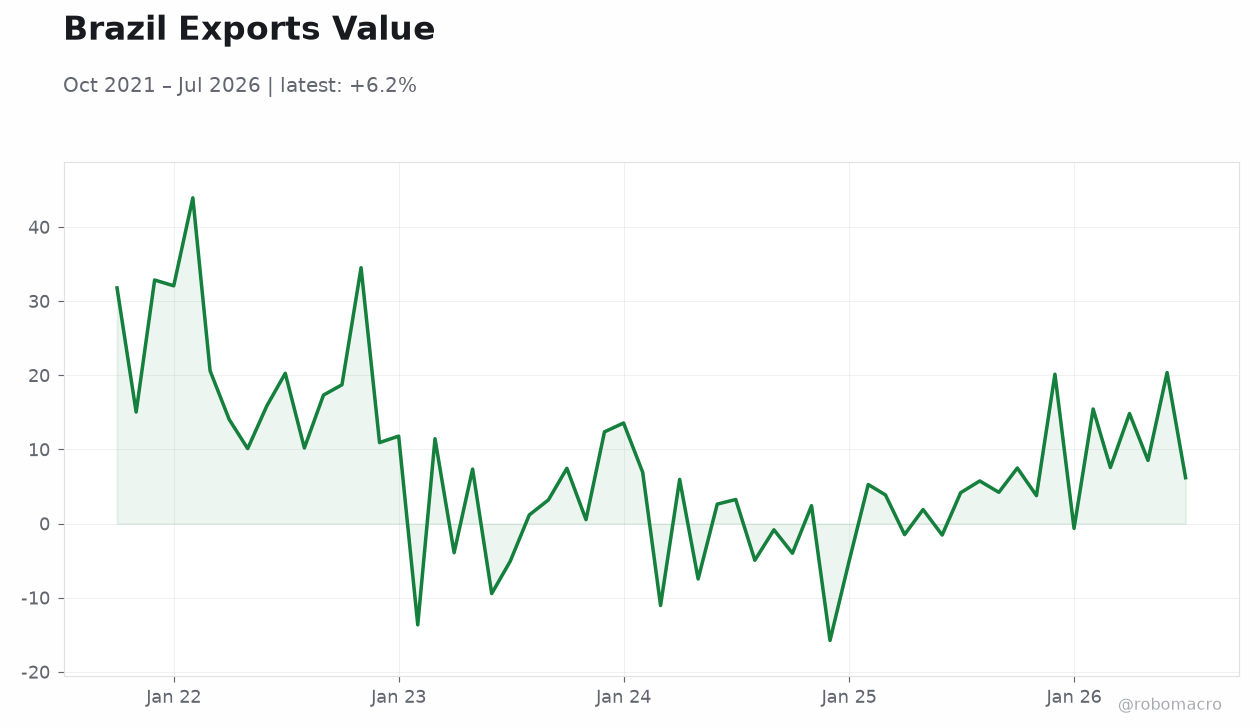
Iron-ore and beef export chains remain exposed to both weather risks and global demand fluctuations. Fiscal sustainability concerns continue to anchor long-term real yields near multi-year highs.