Brazil Macro Daily(Beta Mode)
Bovespa Rises as Real Firms, Yields Climb Higher
Market Snapshot
| Asset | Level | Change |
|---|---|---|
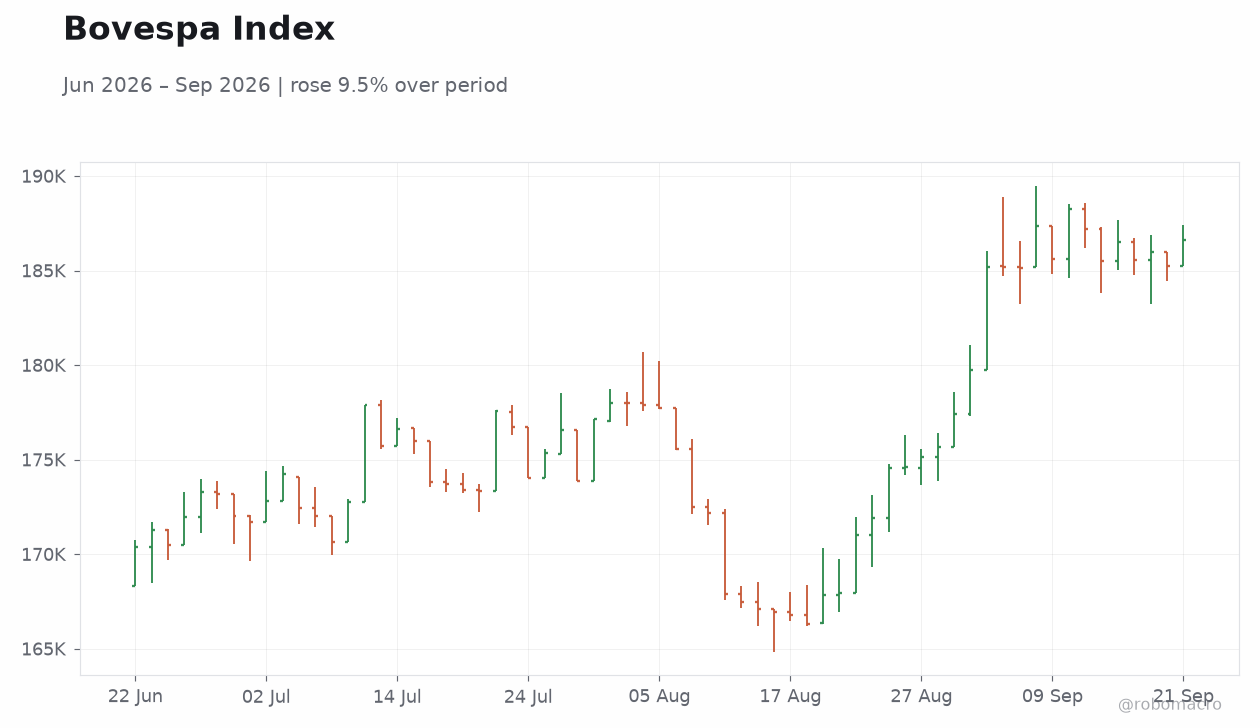
| Bovespa | 186,596.00 | +0.74% |
| USD/BRL | 5.11 | -0.07% |
| EUR/BRL | 5.83 | -0.39% |
| Vale | 14.01 | -0.99% |
| Petrobras | 20.26 | -1.77% |
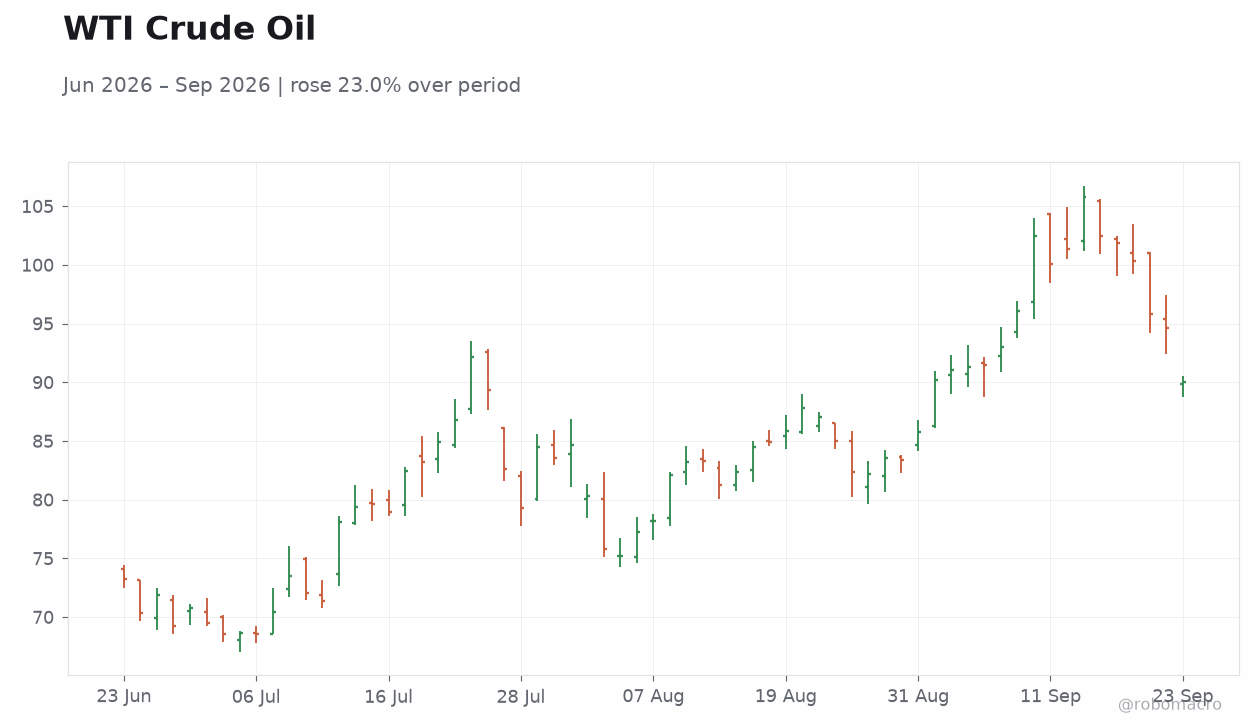
| WTI Crude | 90.04 | -4.81% |
| Gold | 4,353.50 | -0.52% |
| Bitcoin | 85,944.10 | -0.76% |
| Brazil 5Y Govt Yield | 14.11% | +3 bp |
| Brazil 10Y Govt Yield | 14.25% | +6 bp |
Prior Economic Events
| Data | Prior | Cons | Actual |
|---|---|---|---|
| No events available | |||
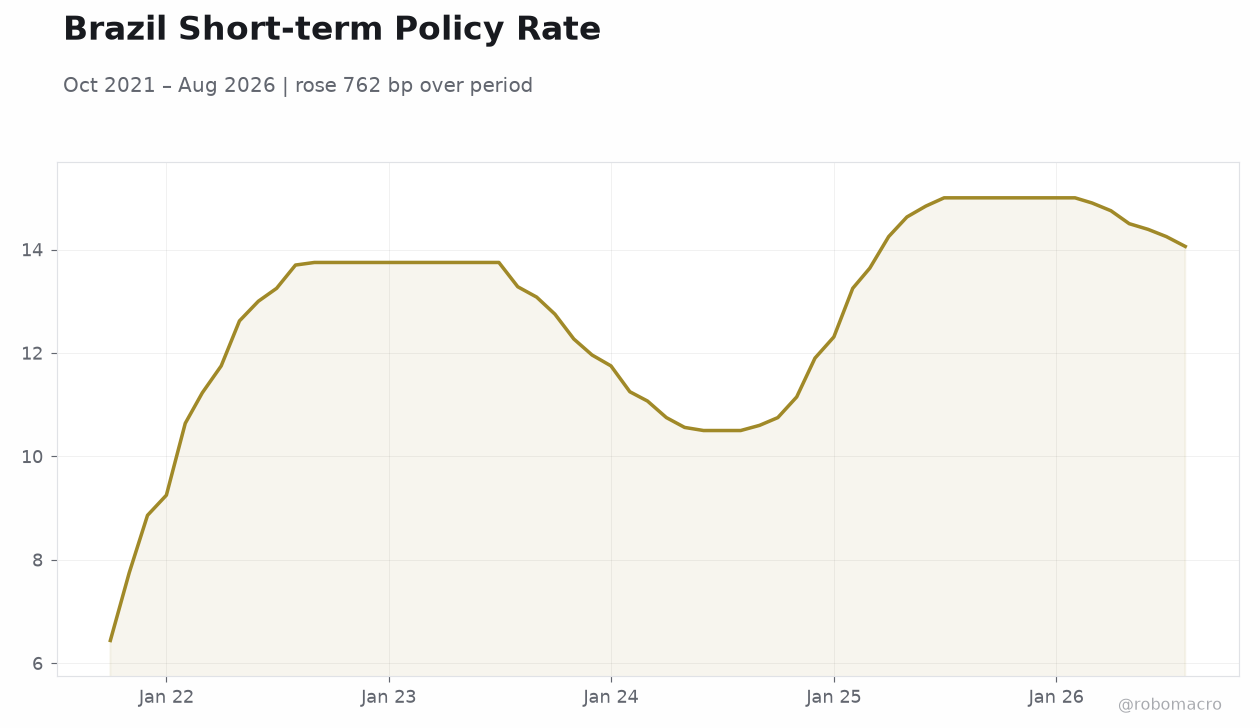 Brazil Short-term Policy Rate | Type: macro_line | %: 14.06 (2026-08-01) | Range: 6.44–15 | Trend(6pt): 6.44,13.75,11.25,14.25,14.39,14.06
Today's Economic Events
| Data | Prior | Cons | Time |
|---|---|---|---|
| No events available | |||
- Bovespa rose 0.74% to 186,596 while USD/BRL eased 0.07% to 5.11 on light volumes.
- Brazil 5Y and 10Y yields climbed 3 bp and 6 bp to 14.11% and 14.25% respectively amid stable Selic expectations.
- No economic data releases occurred yesterday; cruise sector injected BRL 4.76 billion and supported 72,000 jobs.
Yesterday's Recap
Brazilian markets posted modest gains on September 22 with Bovespa advancing 0.74% to close at 186,596.00. The real strengthened modestly as USD/BRL finished at 5.11, down 0.07%, while EUR/BRL declined 0.39% to 5.83. Equity leaders Vale and Petrobras fell 0.99% and 1.77% respectively, weighed by a 4.81% drop in WTI crude to 90.04.
Government yields rose across the curve, with the 5-year yield adding 3 bp to 14.11% and the 10-year yield increasing 6 bp to 14.25%. No macroeconomic releases or BCB speeches took place, leaving the Selic rate steady at 14.00% and August CPI at 4.22% YoY as the latest anchors. Cruise tourism contributed BRL 4.76 billion to the economy and created 72,000 jobs according to industry data.
President Lula addressed the UN General Assembly alongside other leaders, with separate runoff polls showing him and Flavio Bolsonaro each holding narrow one-point leads.
The Day Ahead
Markets face another quiet session on September 23 with zero scheduled economic releases or BCB events. Attention will likely remain on external drivers including oil price volatility and global risk sentiment. Equity and currency traders may monitor any follow-through from Lula’s UN remarks or updates on fiscal accounts.
The absence of domestic data keeps focus on technical levels in Bovespa and USD/BRL. Yield movements could stay contained unless external bond markets shift materially. Participants will also watch commodity export flows, particularly iron ore and soybeans, for any signs of demand changes from China.
Other Economic Notes
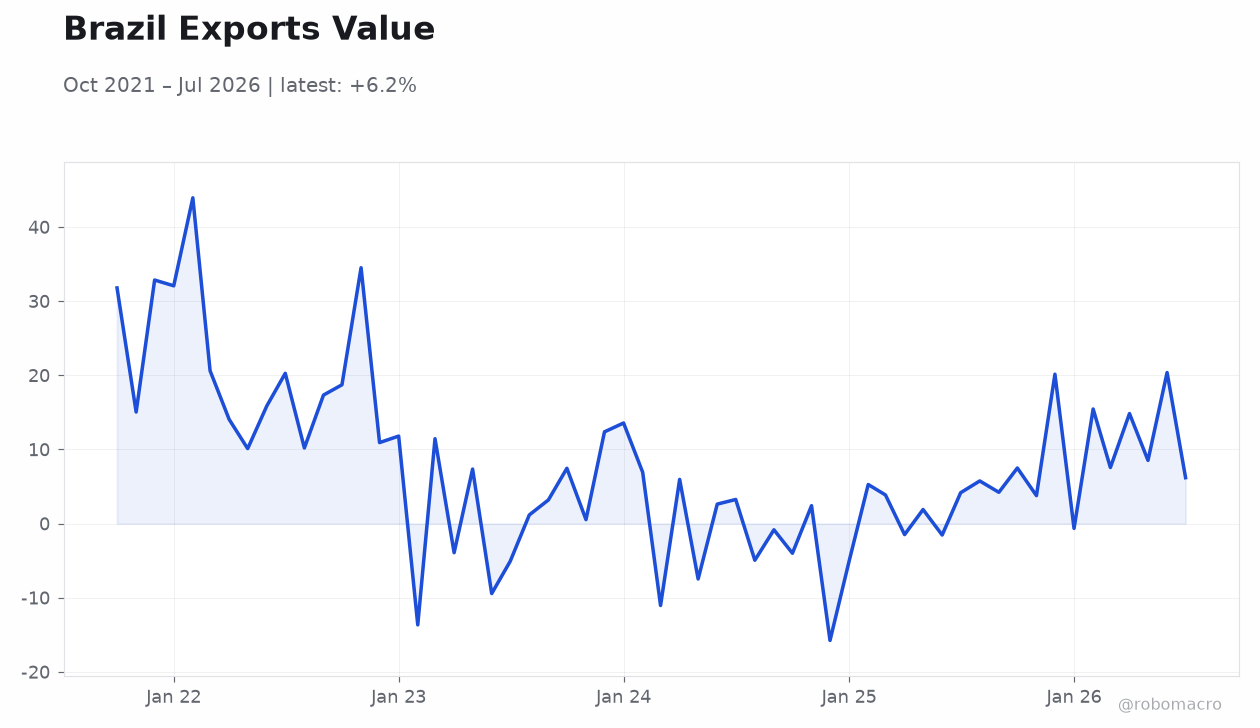
Brazil’s external accounts continue to benefit from commodity exports despite softer oil prices. Fiscal sustainability remains a key market focus given elevated nominal yields near 14.25% on the 10-year benchmark. The cruise sector’s BRL 4.76 billion contribution highlights tourism’s growing role in job creation and service exports.
Inflation at 4.22% YoY stays within the BCB’s tolerance band, supporting the current policy stance. Broader credit conditions appear stable with no immediate pressure on bank reserves or liquidity metrics.