Brazil Macro Daily(Beta Mode)
GDP Cut Weighs on BRL as Yields Rise
Market Snapshot
| Asset | Level | Change |
|---|---|---|
| Bovespa | 185,814.00 | -0.42% |
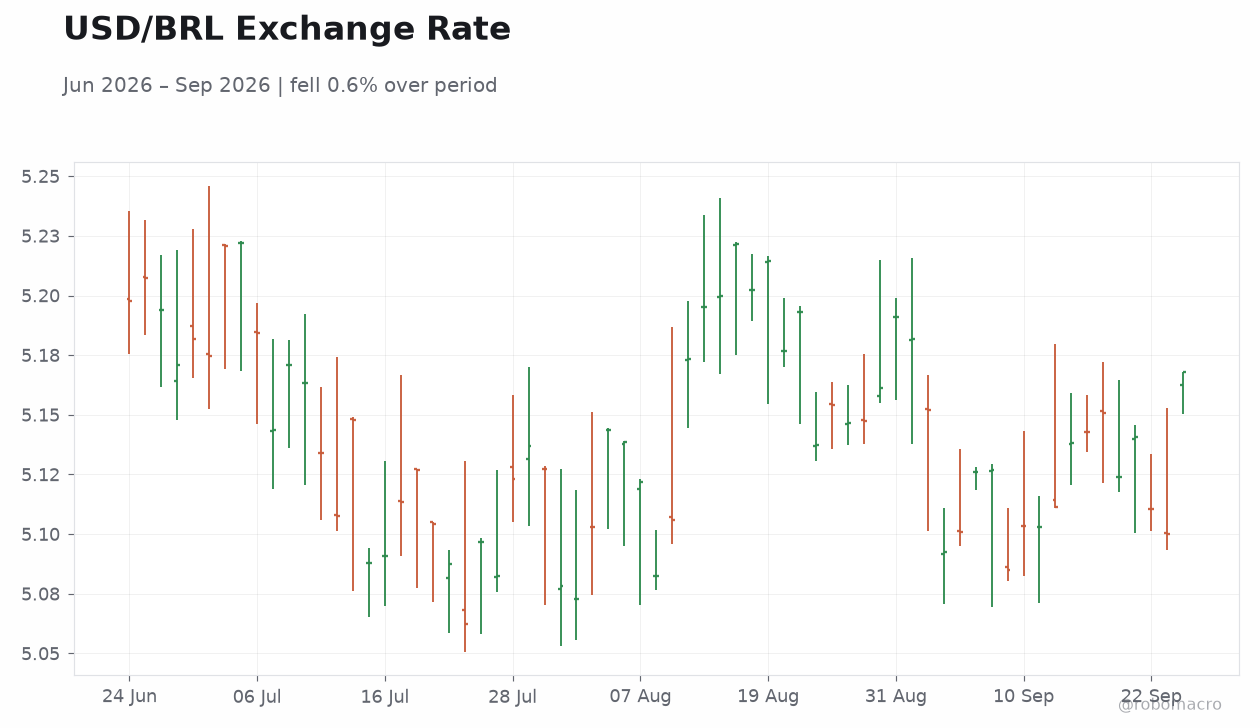
| USD/BRL | 5.17 | +1.33% |
| EUR/BRL | 5.88 | +0.78% |
| Vale | 13.82 | -1.36% |
| Petrobras | 21.14 | +4.32% |
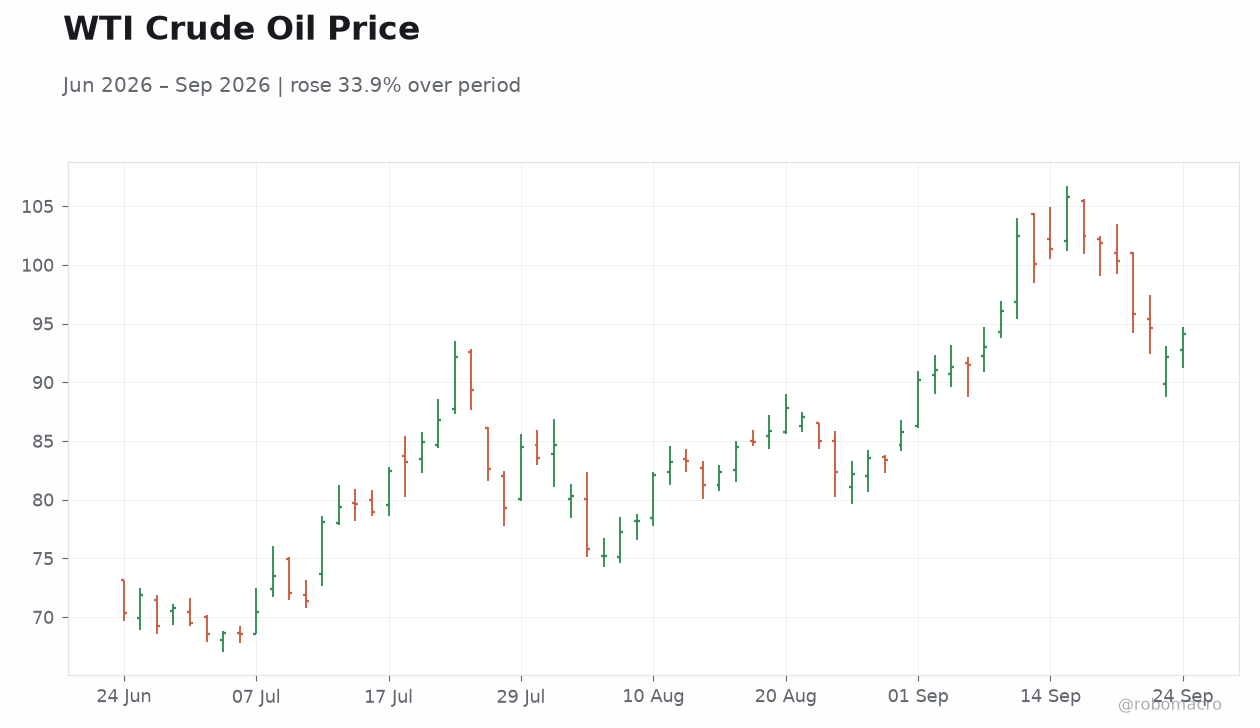
| WTI Crude | 94.32 | +2.34% |
| Gold | 4,295.50 | -0.53% |
| Bitcoin | 83,575.59 | -0.96% |
| Brazil 5Y Govt Yield | 14.11% | +3 bp |
| Brazil 10Y Govt Yield | 14.25% | +6 bp |
Prior Economic Events
| Data | Prior | Cons | Actual |
|---|---|---|---|
| No events available | |||
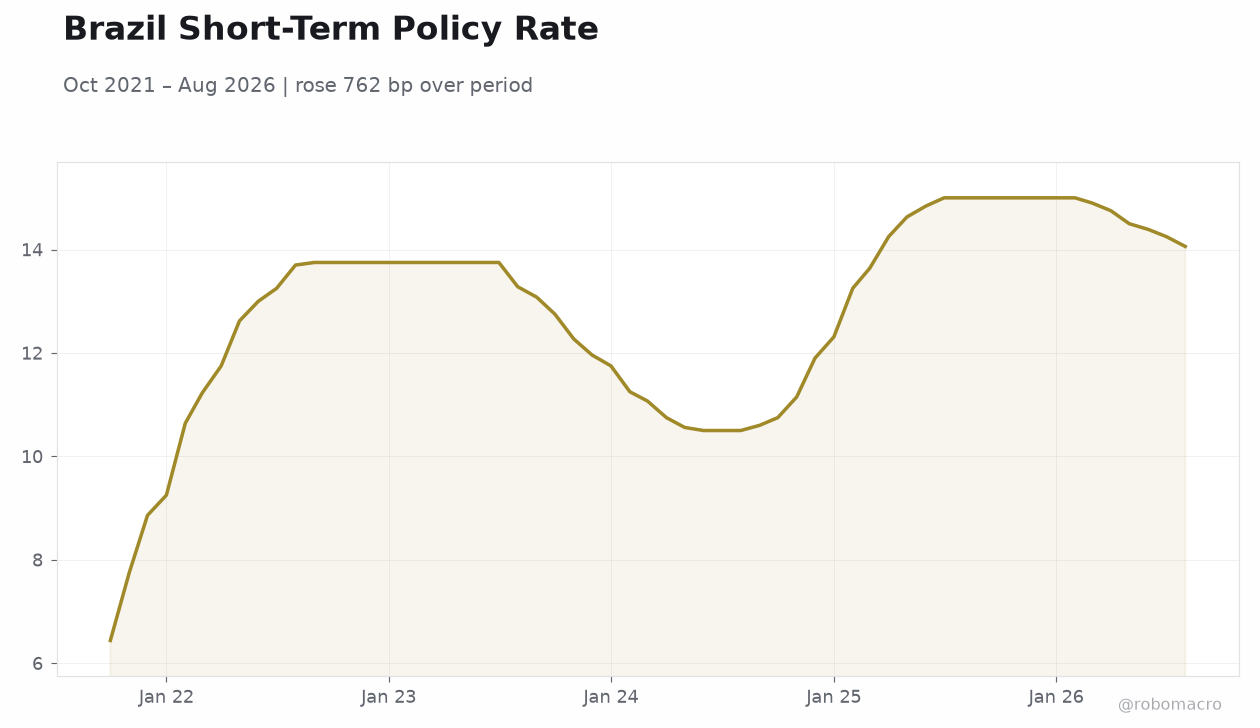 Brazil Short-Term Policy Rate | Type: macro_line | Rate %: 14.06 (2026-08-01) | Range: 6.44–15 | Trend(6pt): 6.44,13.75,11.25,14.25,14.39,14.06
Today's Economic Events
| Data | Prior | Cons | Time |
|---|---|---|---|
| No events available | |||
- Brazil lowers 2026 GDP forecast to 2% amid persistent high rates.
- Labor productivity rises 1% in Q2 while BRL weakens 1.33%.
- Selic holds at 13.75% with CPI at 4.22% keeping policy restrictive.
Yesterday's Recap
Bovespa fell 0.42% to 185,814 while USD/BRL climbed 1.33% to 5.17 and EUR/BRL gained 0.78% to 5.88. The 5-year government yield rose 3 bp to 14.11% and the 10-year yield increased 6 bp to 14.25%. No economic releases occurred on the empty calendar.
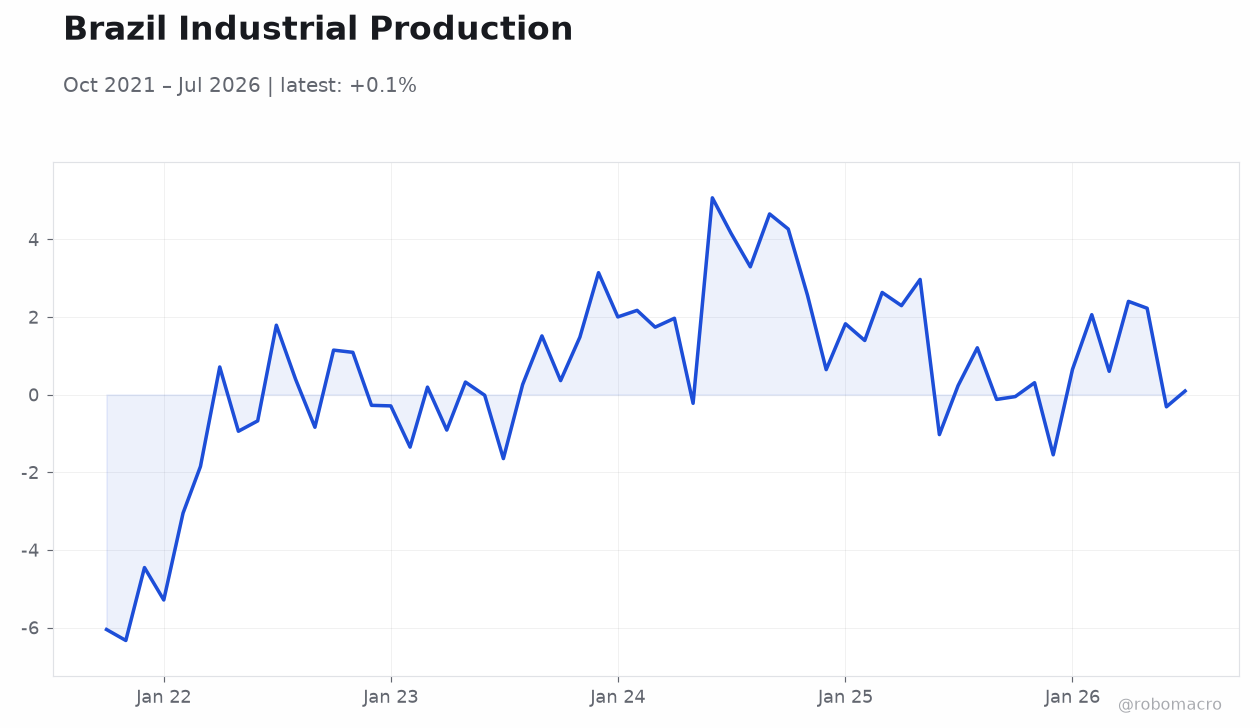
Labor productivity advanced 1% in the second quarter, yet the government trimmed its 2026 GDP growth projection to 2%. High interest rates continued to divide the economy, pressuring rate-sensitive sectors while commodity-linked names such as Petrobras gained 4.32%. WTI crude rose 2.34% to 94.32, supporting the energy exporter.
The real’s depreciation reflected steady expectations for elevated policy rates.
The Day Ahead
No data releases or COPOM events are scheduled for 24 September. Markets will monitor oil price movements and external risk sentiment given the commodity exposure of Brazilian equities and the current account. The absence of prints leaves focus on fiscal developments and any follow-up comments from BCB officials.
USD/BRL volatility may persist near 5.17 as investors assess the GDP forecast revision. Limited domestic catalysts imply trading will track global commodity benchmarks and U.S. Treasury moves.
Other Economic Notes
The 1% productivity gain in Q2 offers modest relief yet fails to offset the broader growth downgrade to 2% for 2026. High Selic rates at 13.75% are splitting activity, with construction and consumer sectors lagging while export-oriented industries benefit from firm commodity prices. Brazil’s top ranking in the Chainalysis crypto adoption index highlights alternative capital flows amid tighter traditional credit conditions.
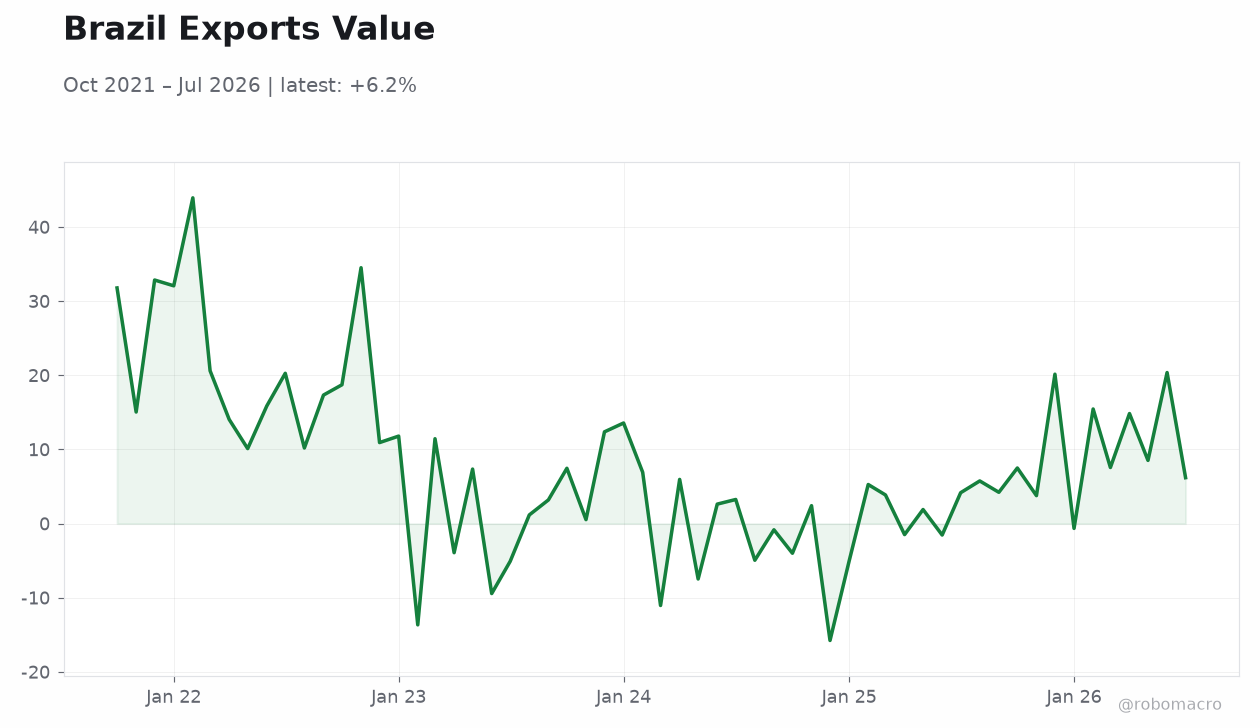
Fiscal sustainability concerns remain elevated as lower growth projections widen the primary deficit outlook. Iron ore and oil export revenues continue to anchor the external accounts despite the softer domestic demand picture.
Global Macro News
Rising WTI crude to 94.32 supports Brazil’s oil export revenues and Petrobras earnings outlook. Gold’s 0.53% decline to 4,295.50 signals reduced safe-haven demand that could ease pressure on emerging-market currencies. ↓ p.2