Brazil Macro Daily(Beta Mode)
Debt Pace Quickens as Jobs Hold Steady
Market Snapshot
| Asset | Level | Change |
|---|---|---|
| Bovespa | 187,198.00 | +0.46% |
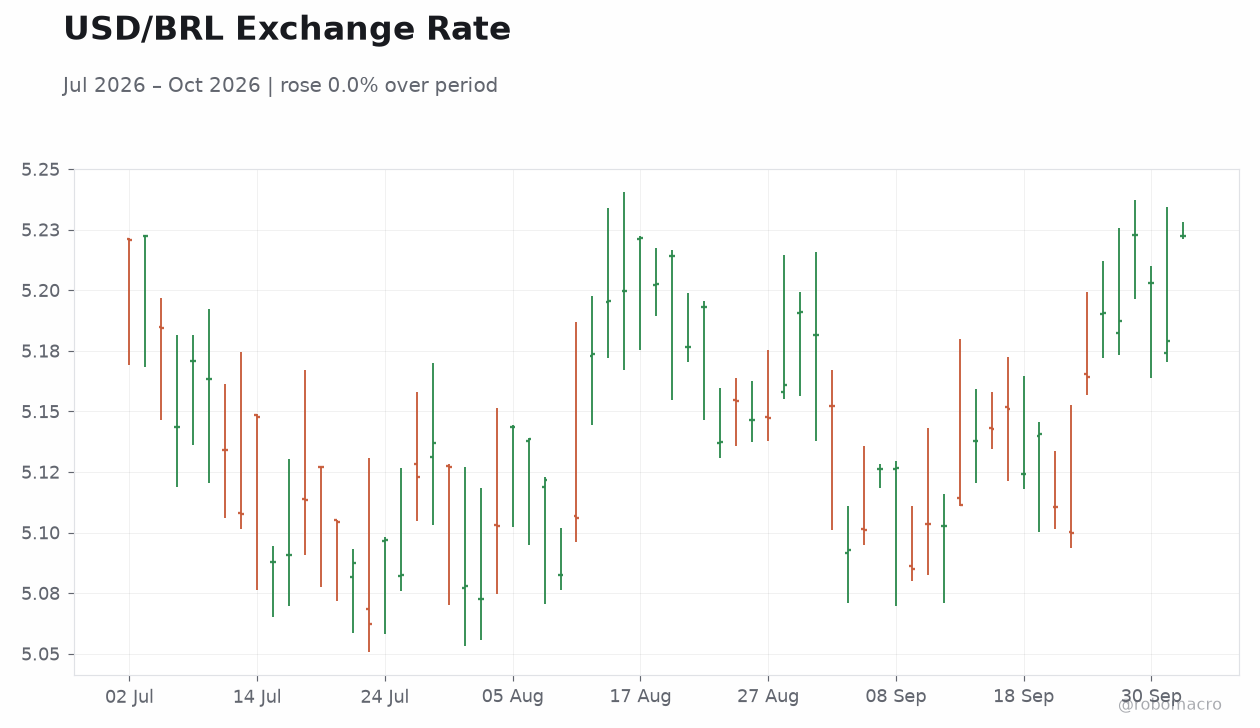
| USD/BRL | 5.22 | +0.84% |
| EUR/BRL | 5.88 | +0.21% |
| Vale | 13.45 | +0.30% |
| Petrobras | 20.98 | +0.53% |
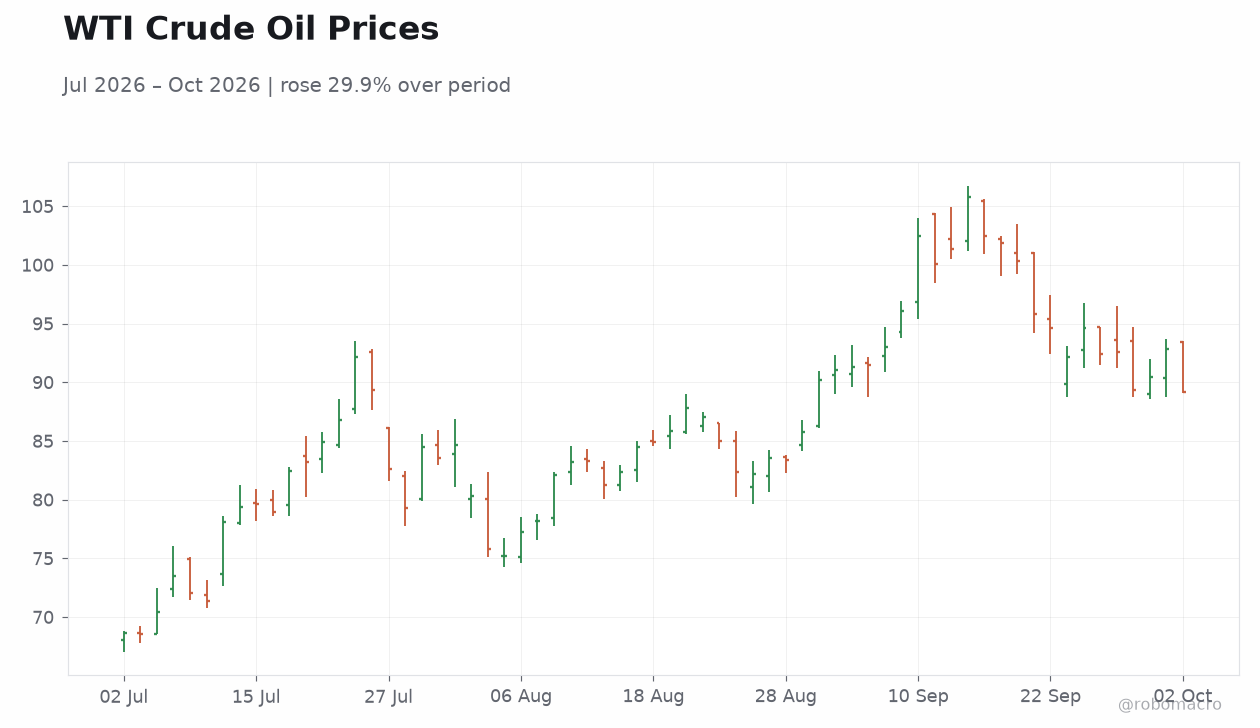
| WTI Crude | 89.17 | -3.98% |
| Gold | 4,212.90 | +0.25% |
| Bitcoin | 86,250.46 | +1.65% |
| Brazil 5Y Govt Yield | 14.06% | -5 bp |
| Brazil 10Y Govt Yield | 14.02% | -10 bp |
Prior Economic Events
| Data | Prior | Cons | Actual |
|---|---|---|---|
| Headline Unemployment Rate | 5.30 | 5.30 | 5.30 |
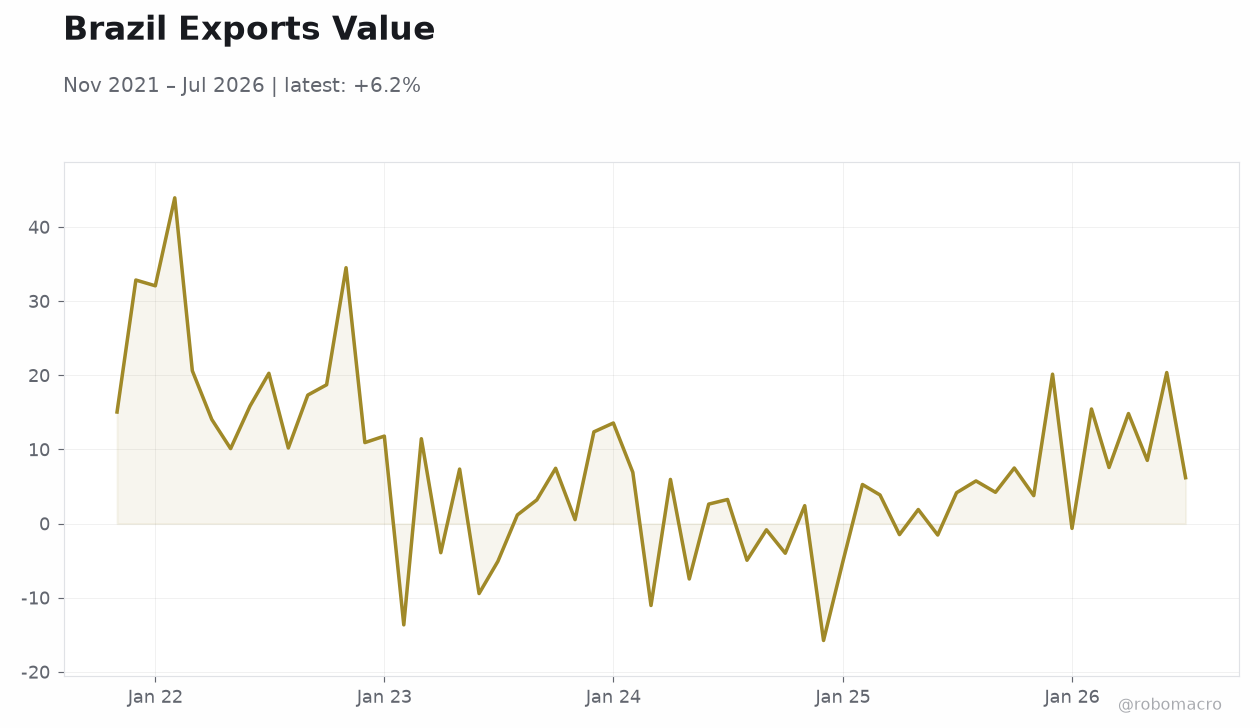 Brazil Exports Value | Type: macro_line | Exports (USD mn): 6.195 (2026-07-01) | Range: -15.76–43.94 | Trend(5pt): 15.05,11.81,-11.04,1.904,6.195
Today's Economic Events
| Data | Prior | Cons | Time |
|---|---|---|---|
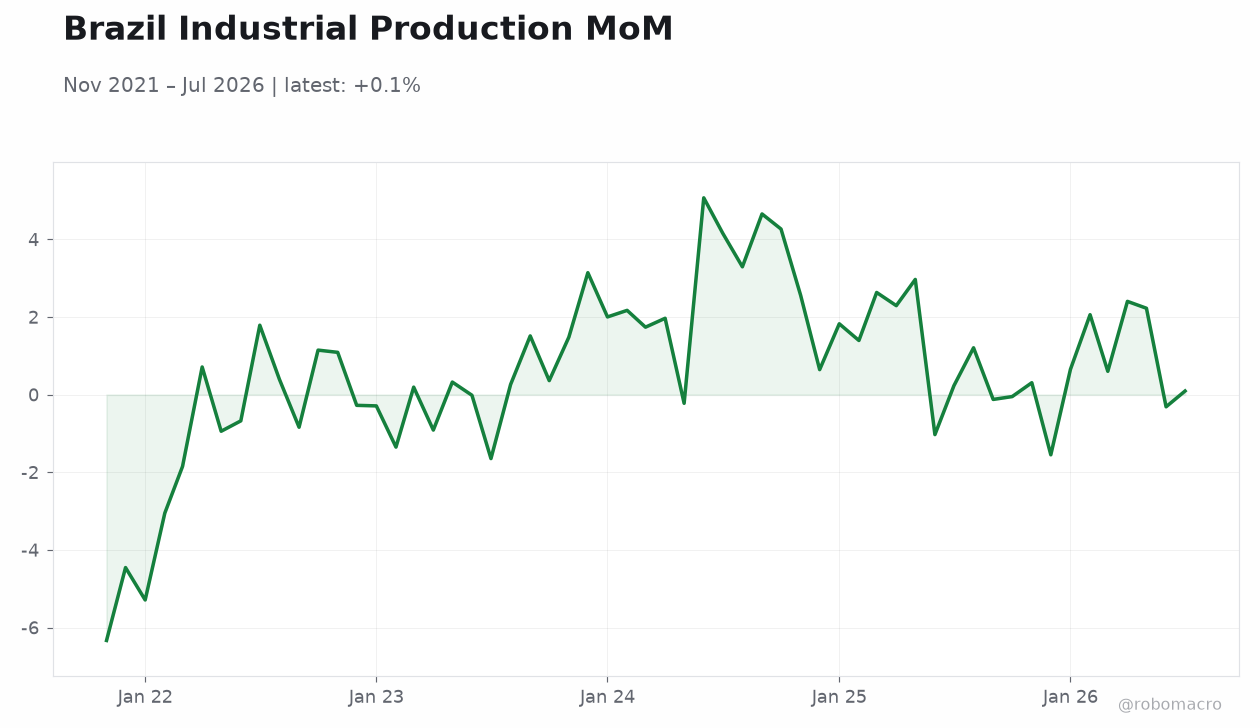
| Industrial Production Month-over-Month | 0.20 | 0.10 | 04:00 |
- Unemployment rate steady at 5.3% matching consensus
- Bovespa gains 0.46% while 10-year yield falls 10 bp to 14.02%
- Public debt rises at fastest pace since pandemic
Yesterday's Recap
Brazilian unemployment printed exactly in line at 5.3% on September 29, delivering no fresh signal on labor-market slack or wage pressures. Equity markets responded positively with the Bovespa advancing 0.46% to close at 187,198.00, led by gains in Vale and Petrobras. Currency markets saw the real weaken, with USD/BRL rising 0.84% to 5.22 and EUR/BRL up 0.21% to 5.88.
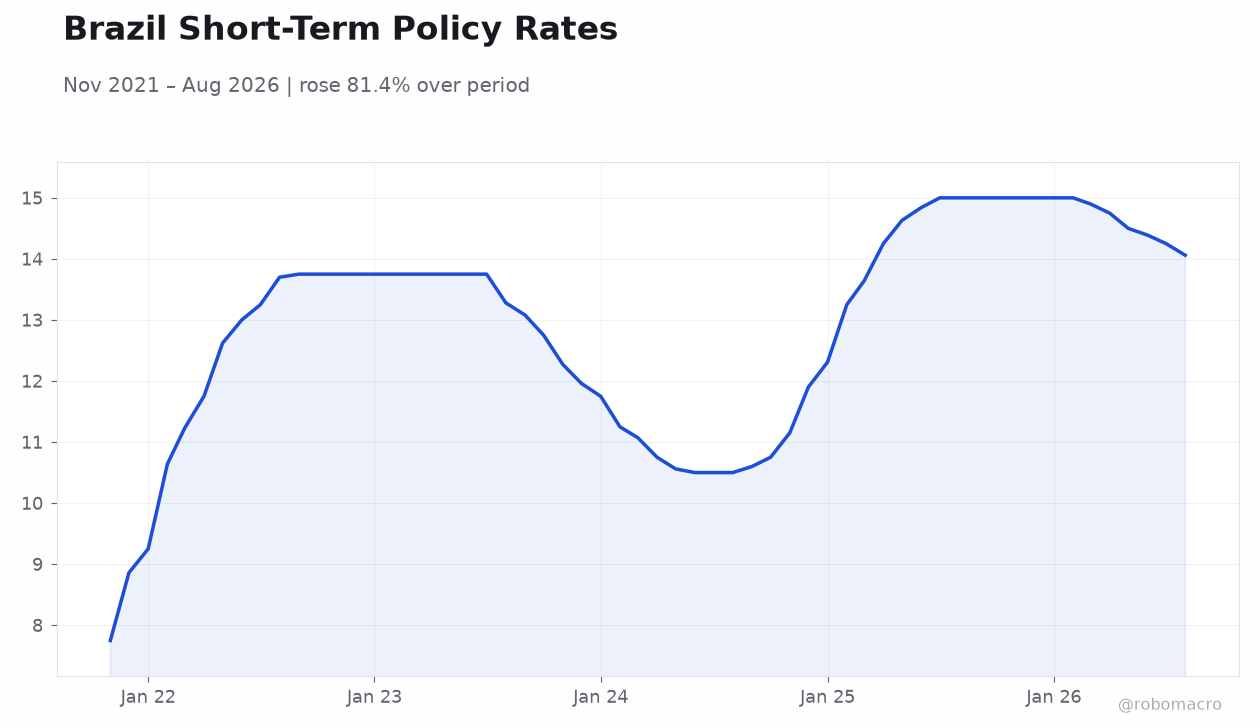
Government bonds rallied modestly as the 5-year yield eased 5 bp to 14.06% and the 10-year yield dropped 10 bp to 14.02%. WTI crude’s 3.98% decline to 89.17 weighed on energy-related names while gold and Bitcoin posted small gains. The in-line jobs print left market pricing for the Selic path unchanged ahead of the next COPOM meeting.
The Day Ahead
Attention turns to Brazilian Industrial Production Month-over-Month, expected to rise 0.1% after a 0.2% prior reading. The medium-impact release will provide the first gauge of manufacturing momentum entering the fourth quarter. No BCB speeches or minutes are scheduled, keeping focus squarely on the data.
Traders will assess whether softer output growth reinforces expectations for steady policy or hints at downside risks to the growth outlook. Commodity-export sectors remain sensitive to any revision that could influence iron-ore and oil shipment forecasts.
Other Economic Notes
Brazil’s public debt expanded at its quickest pace since the pandemic, raising questions about fiscal sustainability and future primary-balance targets. Foreign tourism receipts continued to climb despite logistical and infrastructure constraints, offering a modest offset to weaker domestic demand. These trends underscore the tension between rising debt-service costs at current Selic levels and the contribution of service exports to the current account.
Markets will monitor whether faster debt accumulation prompts any adjustment to the Treasury’s funding strategy or affects long-term yield curves.
Global Macro News
Sharply lower WTI prices weighed on Brazil’s oil-export outlook and Petrobras shares despite the equity index advance. Elevated gold prices at 4,212.90 offered limited support to the real via improved terms of trade for precious-metal producers. Broader EM risk sentiment remained constructive, helping the Bovespa outperform regional peers even as the real weakened against the dollar.
↓ p.2