Brazil Macro Daily(Beta Mode)
Real Rallies, Yields Sink on Bolsonaro Surge
Market Snapshot
| Asset | Level | Change |
|---|---|---|
| Bovespa | 205,835.00 | -0.52% |
| USD/BRL | 4.97 | -0.53% |
| EUR/BRL | 5.57 | -0.65% |
| Vale | 14.08 | -0.49% |
| Petrobras | 23.80 | -1.41% |
| WTI Crude | 89.53 | +0.10% |
| Gold | 4,151.30 | -0.86% |
| Bitcoin | 83,949.59 | -1.88% |
| Brazil 5Y Govt Yield | 12.91% | -120 bp |
| Brazil 10Y Govt Yield | 13.00% | -117 bp |
Prior Economic Events
| Data | Prior | Cons | Actual |
|---|---|---|---|
| S&P Global Services PMI | 50.50 | - | 49.20 |
| Trade Balance | 7,390m | 7,190m | 7,740m |
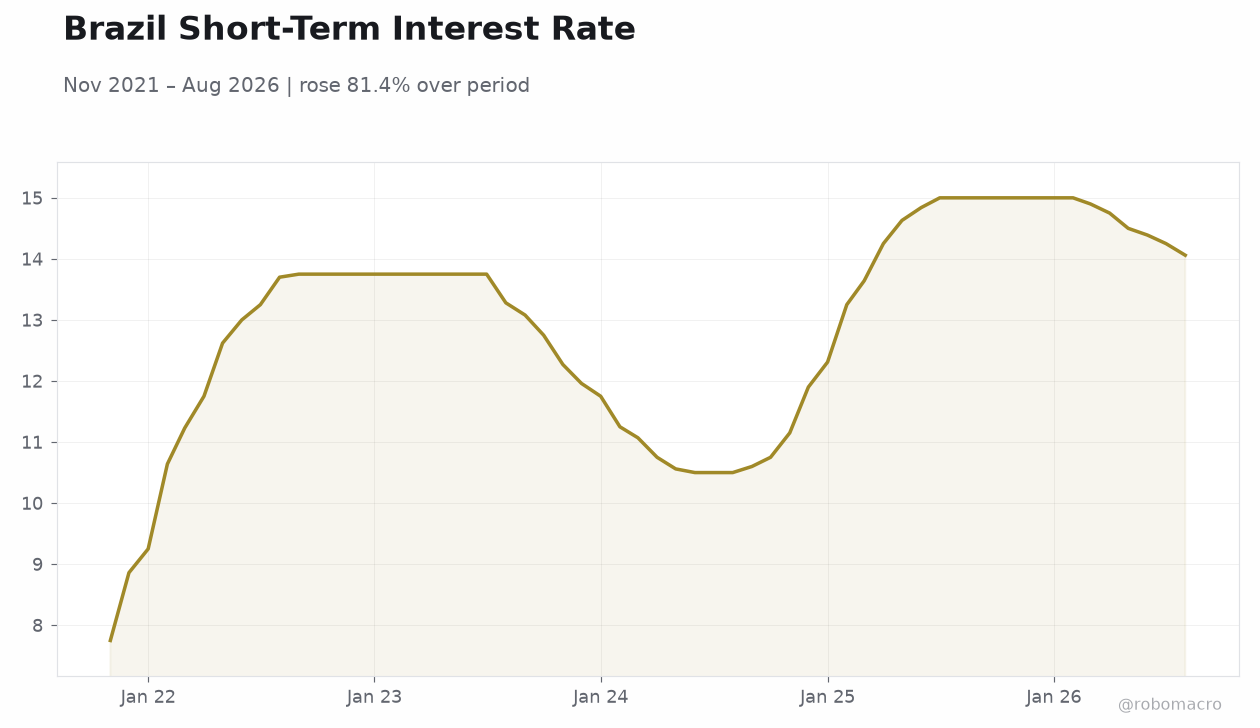 Brazil Short-Term Interest Rate | Type: macro_line | Policy Rate %: 14.06 (2026-08-01) | Range: 7.75–15 | Trend(6pt): 7.75,13.75,11.07,14.63,14.25,14.06
Today's Economic Events
| Data | Prior | Cons | Time |
|---|---|---|---|
| Friday (2026-10-09) | |||
| Inflation Rate Month-over-Month | -0.32 | 0.73 | 08:00 |
| Inflation Rate Year-over-Year | 4.22 | 4.50 | 08:00 |
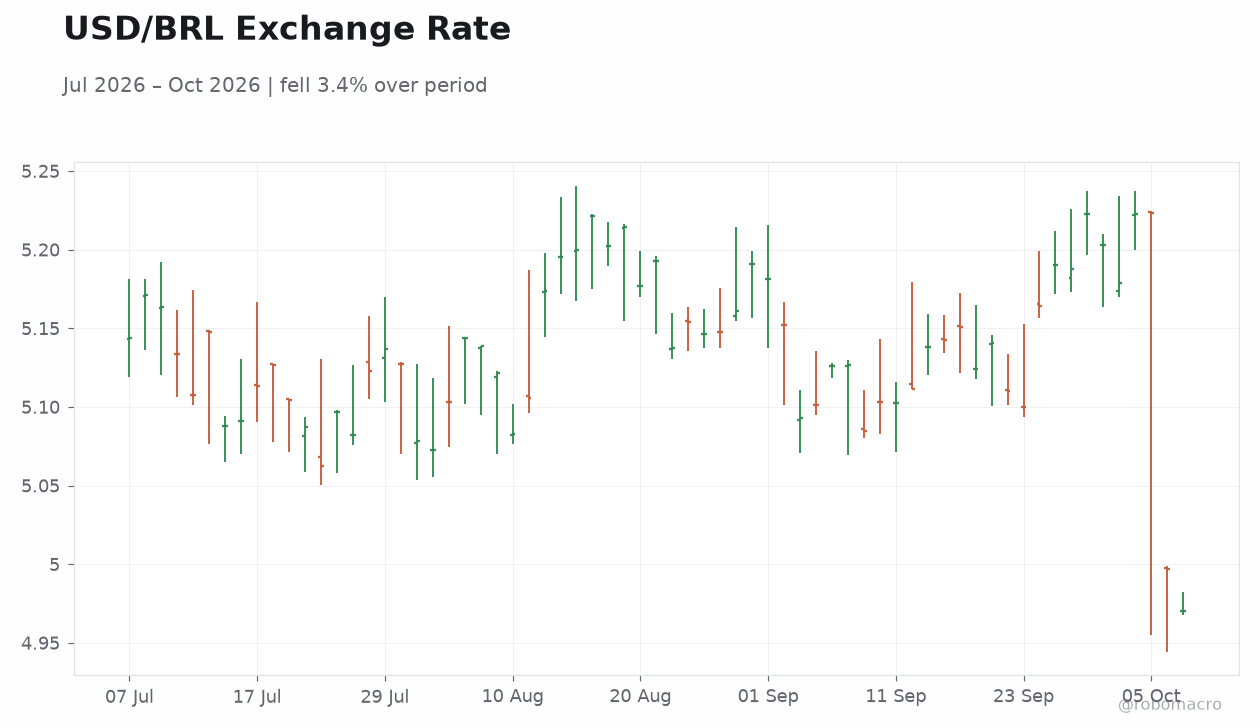
- Flávio Bolsonaro's shock first-round win over Lula ignited a broad Brazil rally: the real firmed 0.53% to 4.97 against the dollar while the 10-year government yield plunged 117 bp to 13.00%.
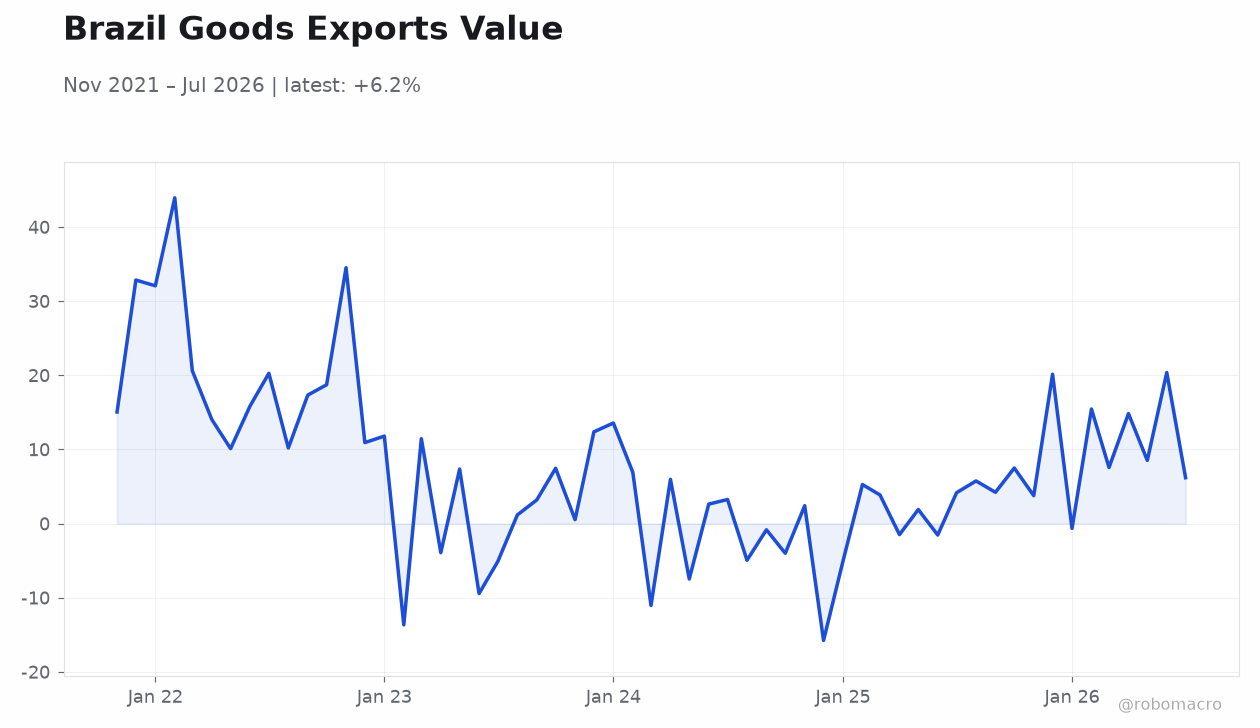
- September services PMI slipped to 49.2 from 50.5, dipping into contraction, but a $7.74bn trade surplus underscored export strength.
- August IPCA inflation held at 4.22% year-over-year; September prints due Friday are expected to show a 0.73% monthly rise as disinflationary base effects fade.
Yesterday's Recap
Brazilian markets extended a powerful post-election rally as investors repriced the October 25 runoff between Flávio Bolsonaro and President Lula. The real strengthened 0.53% to 4.97 per dollar, and the euro crossed at 5.57, down 0.65%. The fixed-income rally was dramatic: the 5-year government yield collapsed 120 bp to 12.91% and the 10-year fell 117 bp to 13.00%, signaling a sharp drop in term premia as markets priced a more market-friendly policy mix.
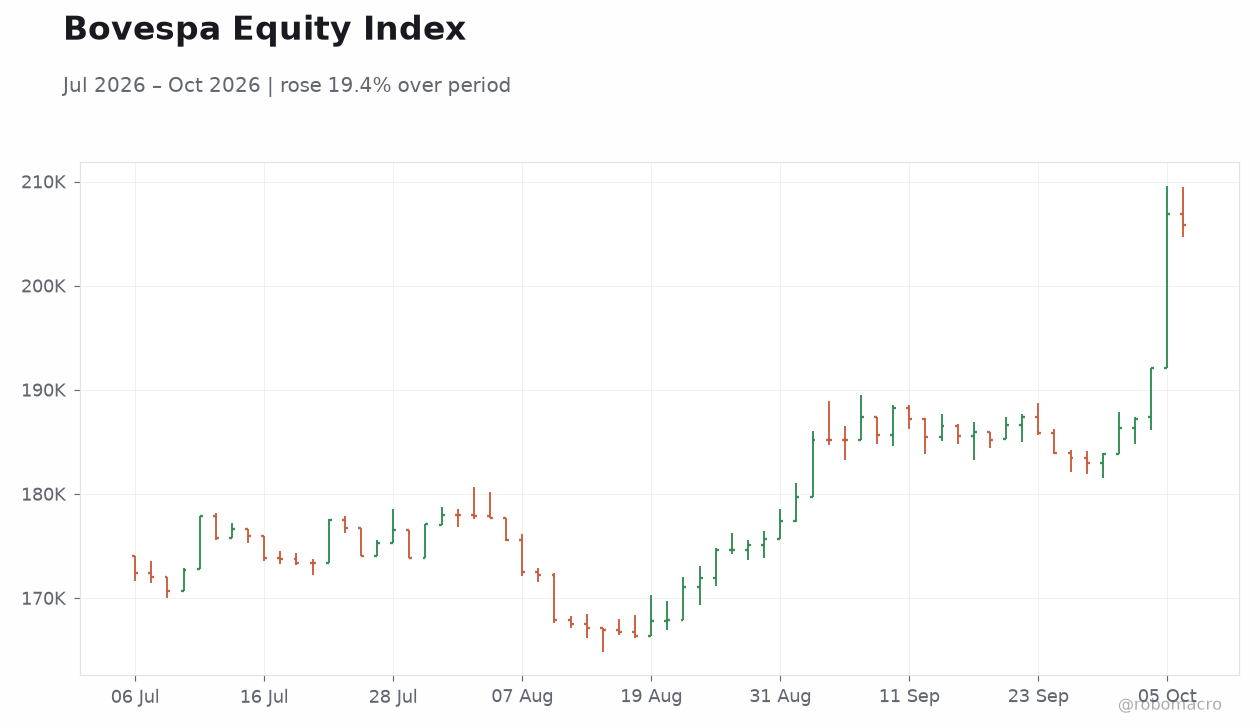
Equities lagged the FX and rates move, with the Ibovespa easing 0.52% to 205,835 as Petrobras shed 1.41% to 23.80 and Vale slipped 0.49% to 14.08. On the data front, the S&P Global services PMI fell to 49.2 from 50.5, dipping below the 50 expansion threshold for the first time in months. The trade balance, by contrast, delivered a $7.74bn surplus, beating the $7.19bn consensus and exceeding August's $7.39bn result.
Corporate news added texture: Cosan is rethinking asset sales after halving its debt load, while Norges Bank lifted its stake in C&A Modas above 5%.
The Day Ahead
The calendar is quiet until Friday, when IBGE releases September consumer inflation at 8:00 local time. Consensus looks for a 0.73% monthly rise, a sharp swing from August's -0.32% deflation print, and a 4.5% year-over-year rate, up from 4.22%. The reacceleration largely reflects base effects rolling off and seasonal food and fuel dynamics rather than a genuine demand-led pickup, but the details — services inflation in particular — will matter for the BCB's path.
A hotter-than-expected services component could complicate the narrative of rapid disinflation that underpins the market's dovish repricing. With the runoff now three weeks away, political headlines will continue to drive the real and rate curves in the interim. Watch for fiscal policy signals from both campaigns, as the market's enthusiasm rests partly on expectations of spending discipline.
Other Economic Notes
The election shock has transformed the fiscal conversation. ↓ p.2