Brazil Macro Daily(Beta Mode)
Yields Jump as Election Jitters Build
Market Snapshot
| Asset | Level | Change |
|---|---|---|
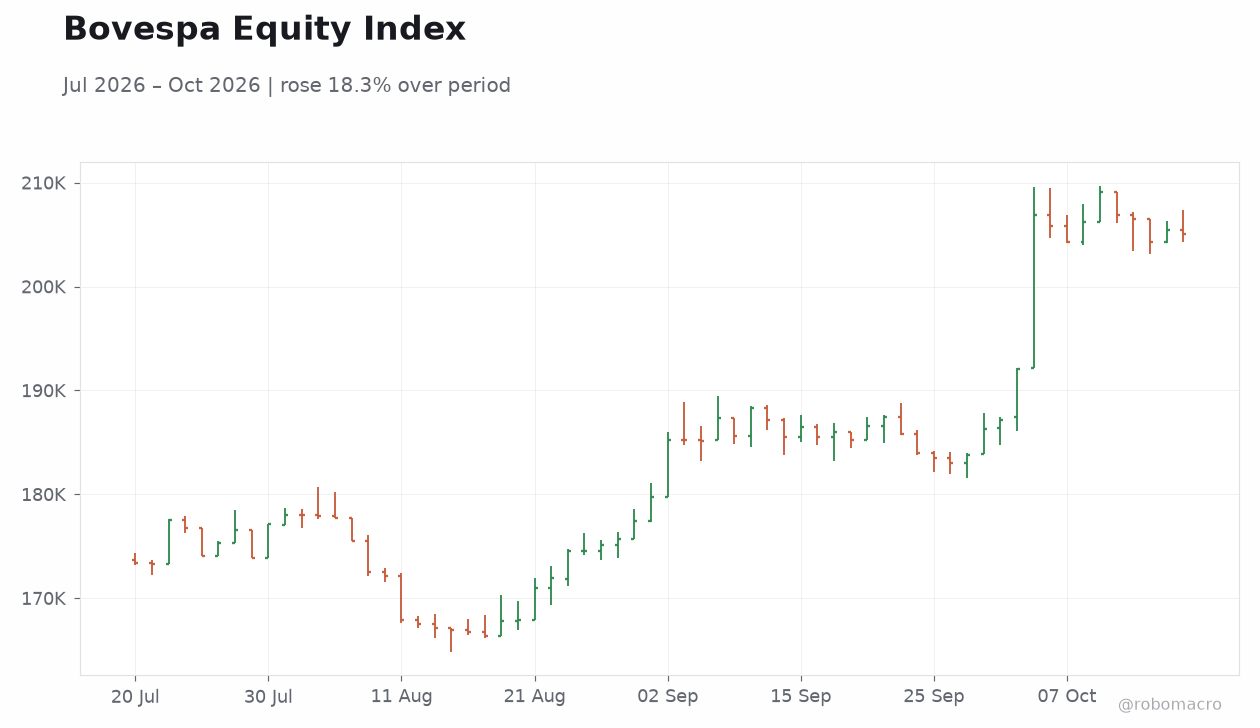
| Bovespa | 205,079.00 | -0.17% |
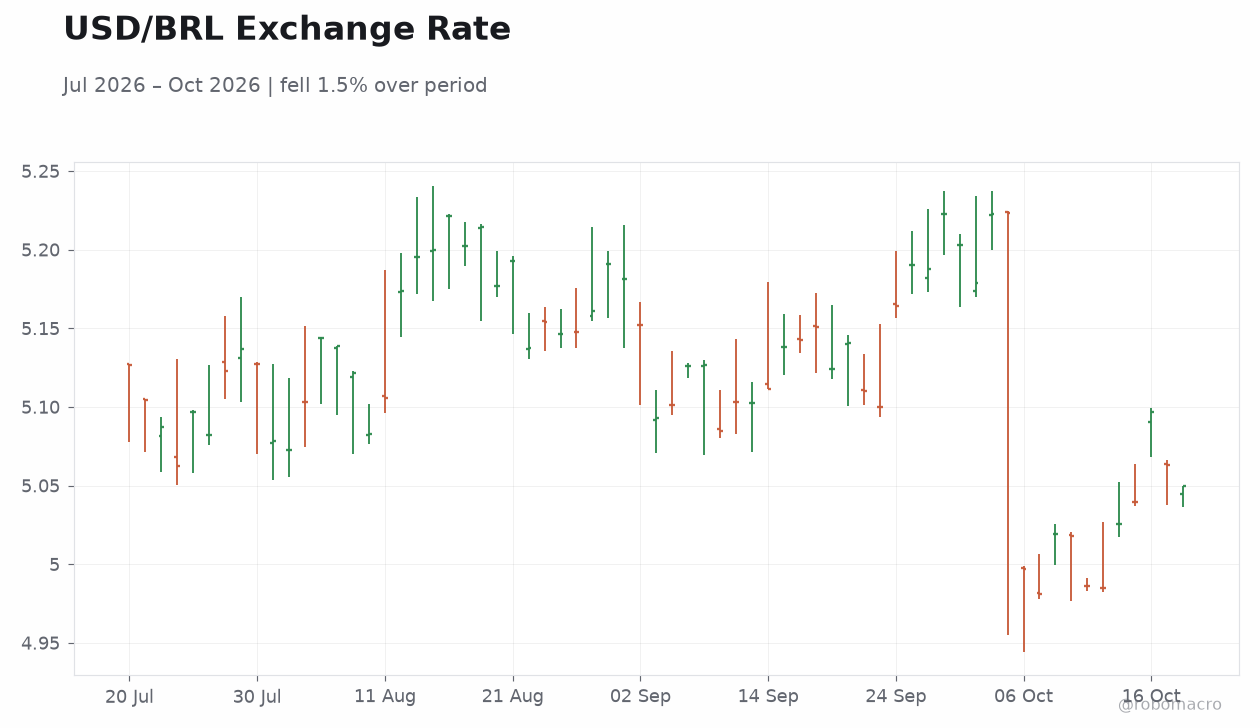
| USD/BRL | 5.05 | -0.26% |
| EUR/BRL | 5.66 | -0.47% |
| Vale | 13.11 | +0.38% |
| Petrobras | 25.56 | -1.69% |
| WTI Crude | 100.26 | -3.28% |
| Gold | 4,140.50 | -0.47% |
| Bitcoin | 81,441.18 | -0.50% |
| Brazil 5Y Govt Yield | 12.79% | +14 bp |
| Brazil 10Y Govt Yield | 12.87% | +16 bp |
Prior Economic Events
| Data | Prior | Cons | Actual |
|---|---|---|---|
| No events available | |||
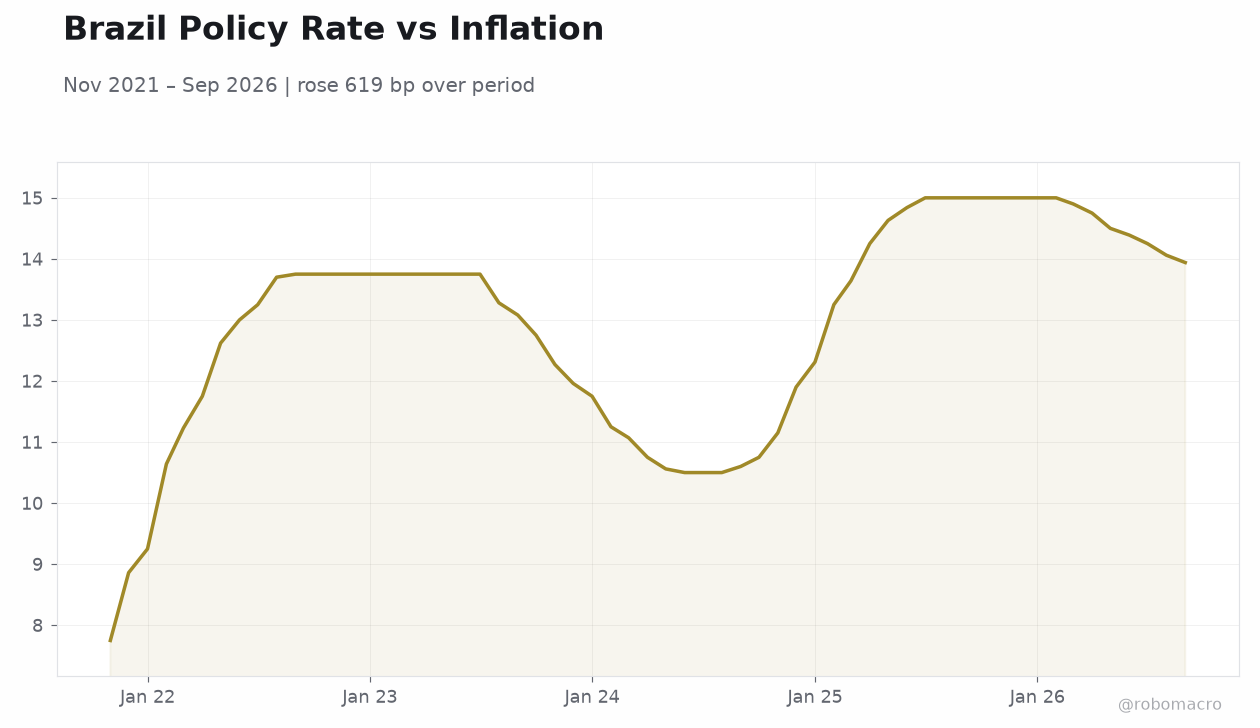 Brazil Policy Rate vs Inflation | Type: macro_line | Short-term Rate (%): 13.94 (2026-09-01) | Range: 7.75–15 | Trend(6pt): 7.75,13.75,11.07,14.63,14.25,13.94
Today's Economic Events
| Data | Prior | Cons | Time |
|---|---|---|---|
| No events available | |||
- Brazilian local rates sold off sharply, with the 5Y and 10Y government yields rising 14 bp and 16 bp respectively, as political noise ahead of the run-off election weighed on sentiment.
- The real held firm, with USD/BRL easing 0.26% to 5.05, while the Bovespa slipped 0.17% to 205,079 points.
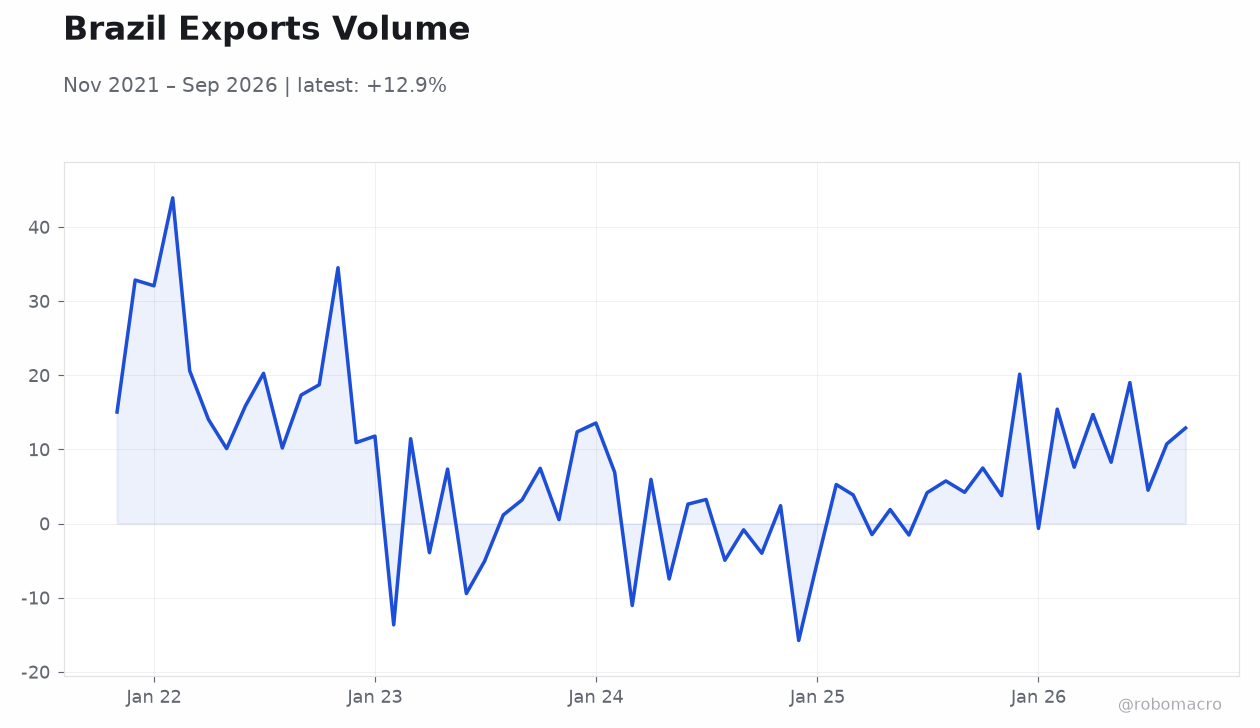
- A severe poultry disease detection threatens Brazil's position as the world's largest chicken exporter, adding a fresh agricultural export risk to the macro outlook.
Yesterday's Recap
Brazilian assets traded mixed-to-soft yesterday, with the equity benchmark Bovespa shedding 0.17% to close at 205,079 points while the real strengthened modestly, with USD/BRL falling 0.26% to 5.05. The standout move was in local fixed income, where the 5-year government yield climbed 14 bp to 12.79% and the 10-year rose 16 bp to 12.87%, a clear sign that investors are demanding a higher risk premium amid political uncertainty. Petrobras shares dropped 1.69% to 25.56, tracking a sharp 3.28% decline in WTI crude to $100.26, while Vale bucked the trend with a 0.38% gain to 13.11.
EUR/BRL fell 0.47% to 5.66, reflecting broad dollar softness rather than any Brazil-specific flow. The session's tone was dominated by headlines from the first televised run-off debate, where Lula and Flavio Bolsonaro traded corruption accusations and personal attacks, reinforcing the polarized political backdrop. No official Brazilian economic data releases were scheduled for the session, leaving markets to trade primarily on political and commodity signals.
The Day Ahead
The calendar is light for Brazil today, with no major official statistical releases scheduled, meaning markets will likely take their cue from political developments and external conditions. Investors will continue to parse commentary from the presidential campaign trail following the heated first run-off debate, with any shift in polling momentum likely to move local rates and the real. Attention will also focus on commodity price action, particularly oil, given Petrobras' sensitivity to crude moves, and iron ore for Vale.
With the 10-year yield now at 12.87%, the market's appetite for duration will be tested by any further fiscal or political headlines. Traders will also keep an eye on the poultry export story, which could weigh on agribusiness-linked names if trade partners impose restrictions.
Other Economic Notes
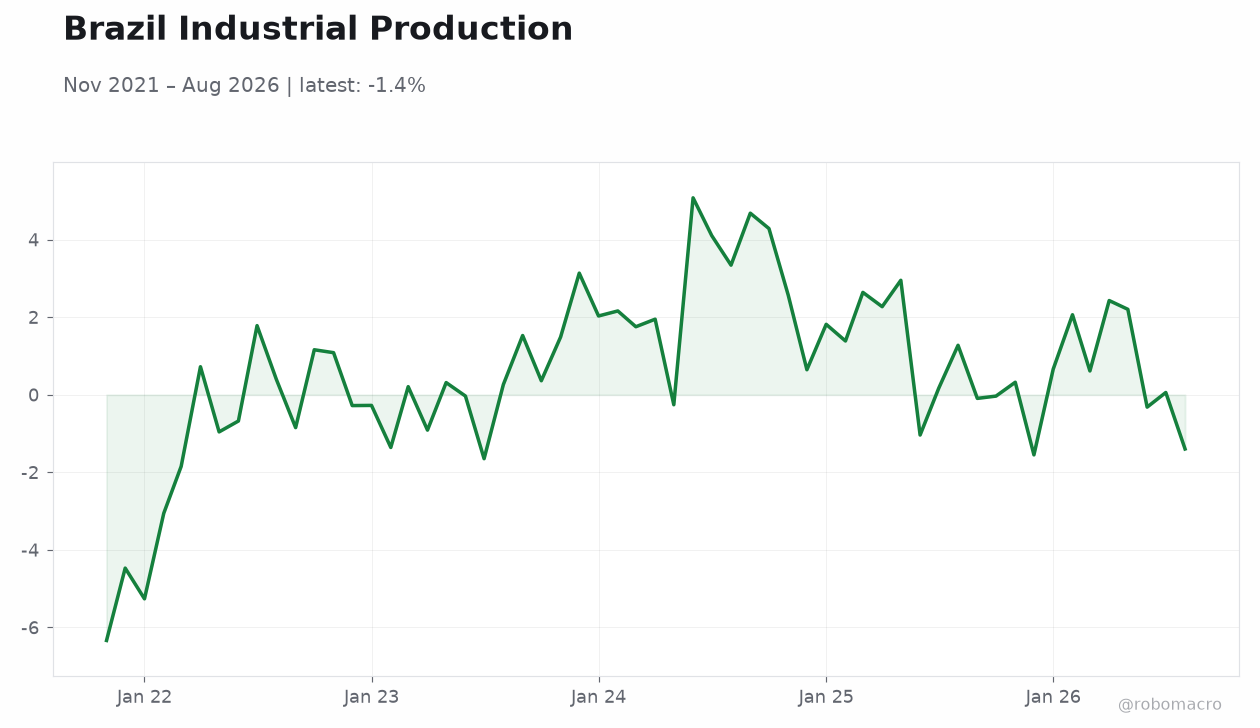
The broader Brazilian economic narrative continues to center on the growth slowdown expected next year, driven by high interest rates and lower government spending, a theme echoed in recent market commentary. ↓ p.2