Brazil Macro Daily(Beta Mode)
Brazil Assets Sink as Fiscal Fears Mount
Market Snapshot
| Asset | Level | Change |
|---|---|---|
| Bovespa | 175,710.00 | -0.51% |
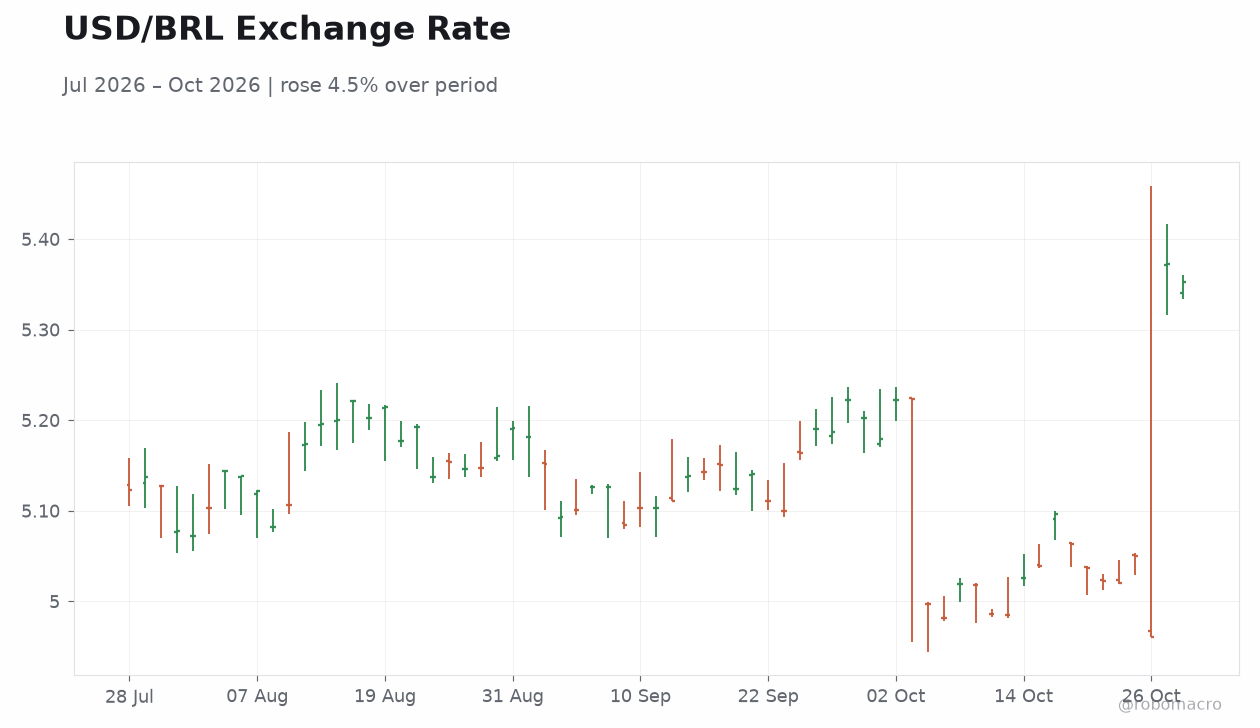
| USD/BRL | 5.35 | -0.44% |
| EUR/BRL | 5.95 | -0.80% |
| Vale | 11.84 | -1.33% |
| Petrobras | 22.30 | -0.89% |
| WTI Crude | 101.70 | +1.80% |
| Gold | 4,073.30 | -0.03% |
| Bitcoin | 80,750.27 | -0.07% |
| Brazil 5Y Govt Yield | 15.77% | +292 bp |
| Brazil 10Y Govt Yield | 15.42% | +252 bp |
Prior Economic Events
| Data | Prior | Cons | Actual |
|---|---|---|---|
| BCB Focus Market Readout | - | - | "" |
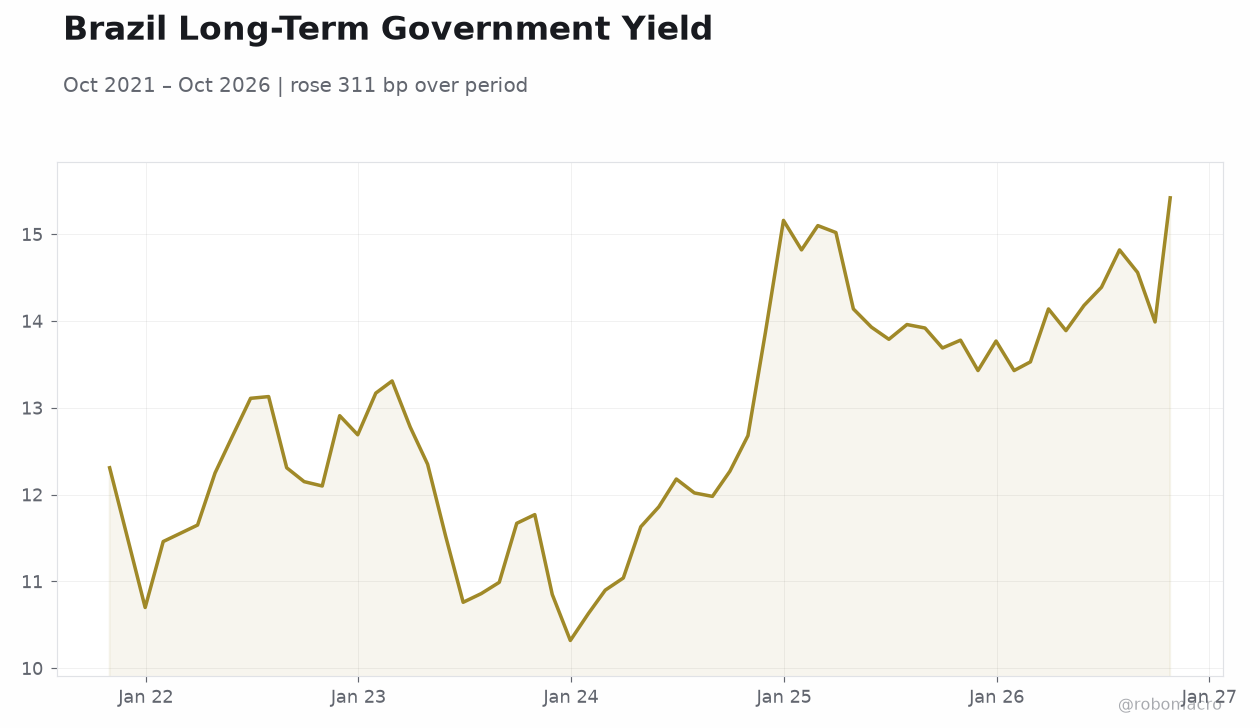 Brazil Long-Term Government Yield | Type: macro_line | 10Y Yield %: 15.42 (2026-10-26) | Range: 10.32–15.42 | Trend(5pt): 12.31,13.17,11.63,13.96,15.42
Today's Economic Events
| Data | Prior | Cons | Time |
|---|---|---|---|
| Friday (2026-10-30) | |||
| Headline Unemployment Rate | 5.30 | 5.20 | 08:00 |
- Brazilian assets sold off sharply, with the Bovespa down 0.51% while the real strengthened 0.44% against the dollar
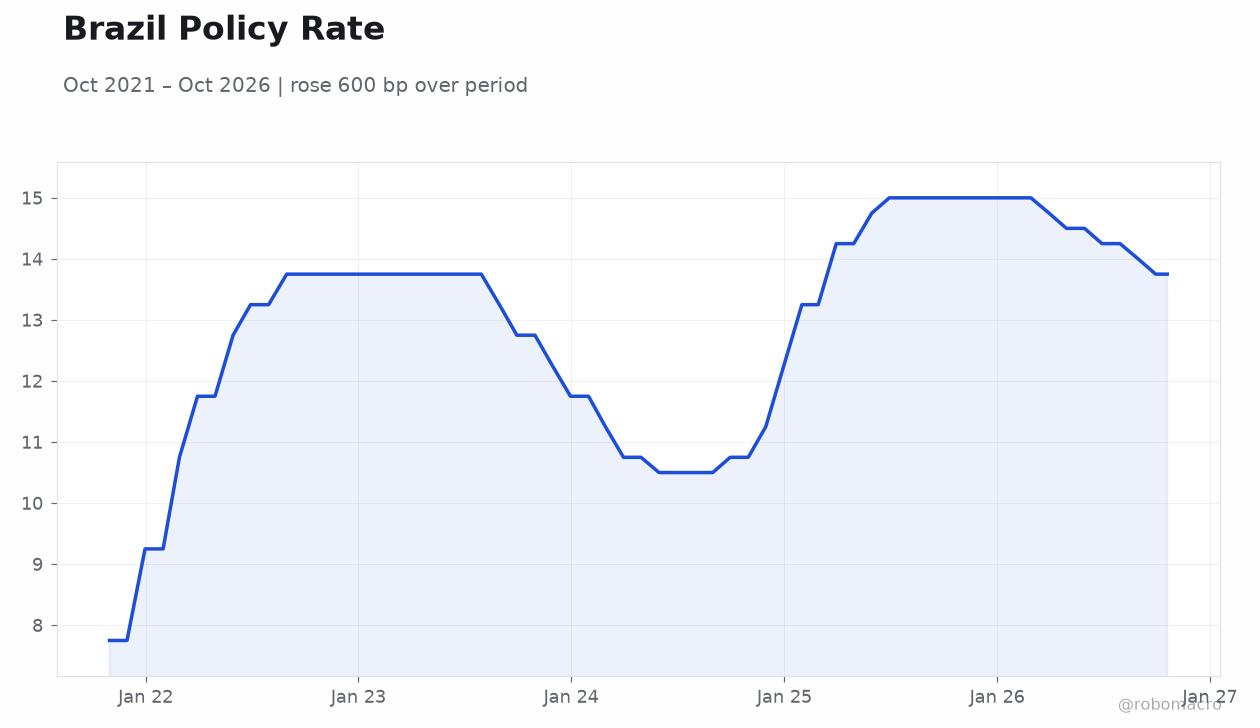
- Bond yields spiked dramatically, with the 5-year yield jumping 292 bp to 15.77% and the 10-year rising 252 bp to 15.42%
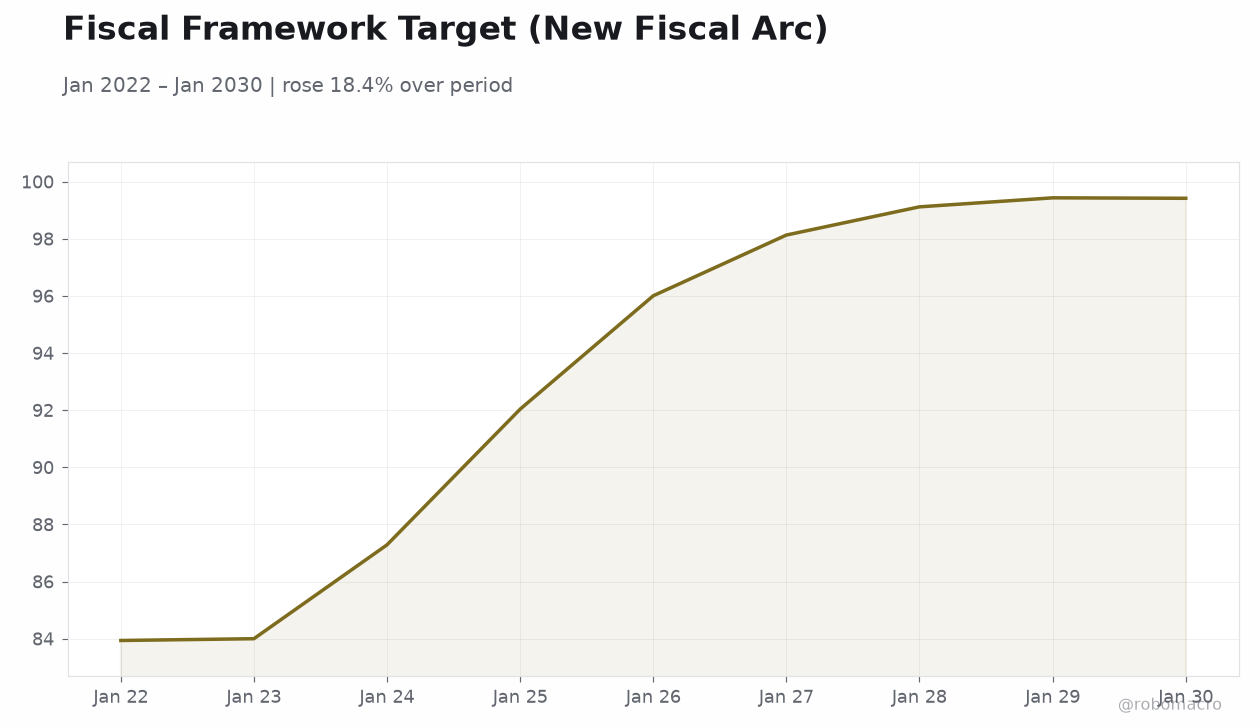
- Lula's election victory raises fiscal sustainability concerns as markets await policy direction from the incoming administration
Yesterday's Recap
Brazilian markets experienced a significant risk-off session as investors digested the implications of Lula's election victory. The Bovespa declined 0.51% to close at 175,710, while the real appreciated 0.44% to 5.35 per dollar, reflecting a complex mix of currency strength alongside equity weakness. The most dramatic move occurred in fixed income, where the 5-year government yield surged 292 basis points to 15.77% and the 10-year jumped 252 basis points to 15.42%, signaling a heightened fiscal risk premium.
Commodity-linked names underperformed, with Vale falling 1.33% and Petrobras declining 0.89%, despite WTI crude rising 1.80% to $101.70. The BCB Focus Market Readout was released but showed no actual figure, leaving markets to focus on political developments. The session underscored investor anxiety about fiscal discipline under the new administration.
The Day Ahead
The calendar is light for Brazil today, with no major economic releases scheduled. Market attention will remain fixed on political developments and any signals from the incoming administration regarding fiscal policy and cabinet appointments. The next significant data point arrives Friday, October 30, when the Headline Unemployment Rate is released at 08:00 ET, with consensus expecting 5.2% versus the previous 5.3%.
Traders will also monitor global risk sentiment and commodity price movements for directional cues. With no domestic catalysts, Brazilian assets may take their direction from external markets and political headlines.
Other Economic Notes
The Brazilian real's recent strength is shaping the fiscal response debate, as a stronger currency can help contain inflation but may also pressure export competitiveness. Fiscal sustainability remains the central concern, with analysts questioning whether the new administration can balance social spending commitments against debt sustainability. The sharp bond yield moves suggest investors are demanding higher compensation for holding Brazilian duration risk.
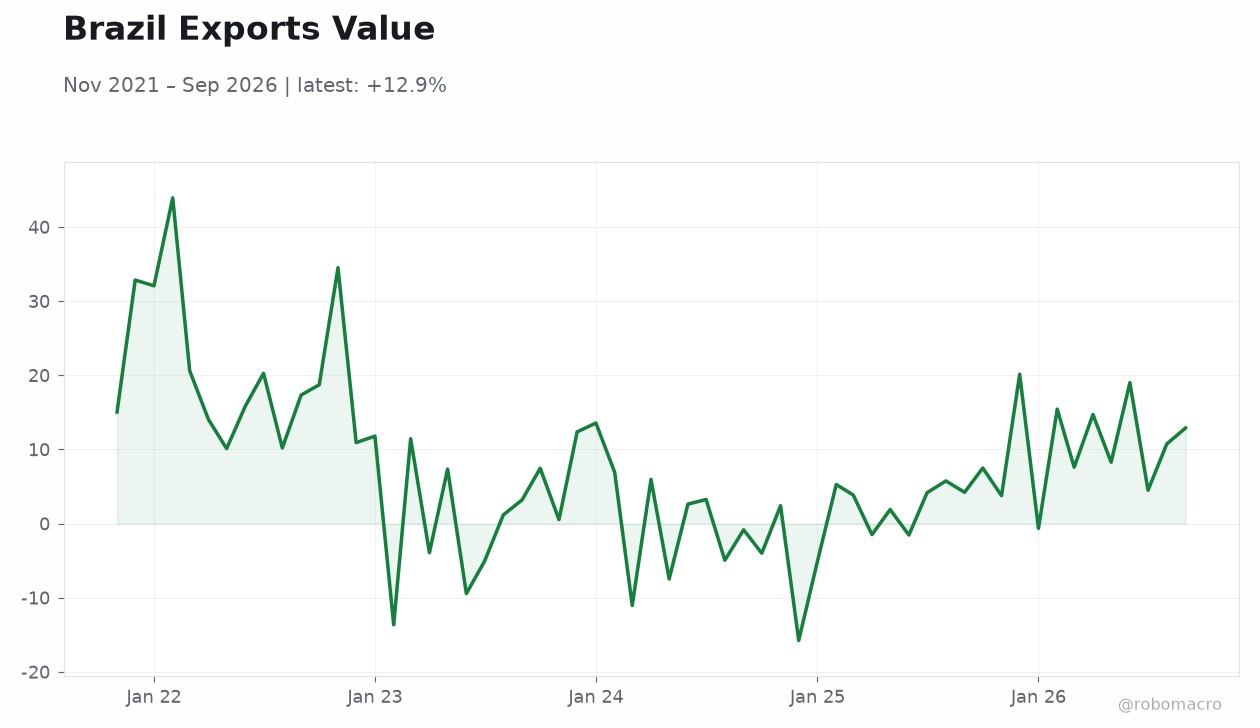
Commodity exports remain a critical support for the external accounts, though iron ore and oil price volatility add uncertainty to the trade balance outlook. ↓ p.2