Brazil Macro Daily(Beta Mode)
Copom Minutes Eyed as Rally Defies Fiscal Caution
Market Snapshot
| Asset | Level | Change |
|---|---|---|
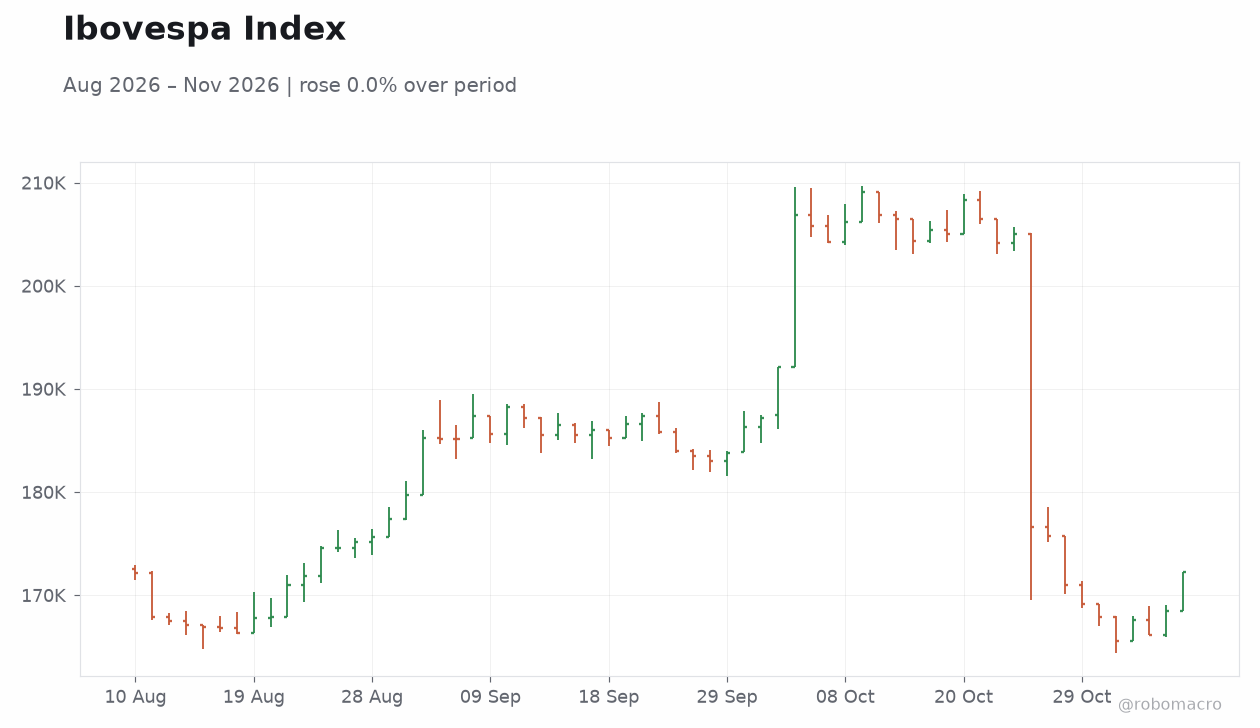
| Bovespa | 172,236.00 | +2.22% |
| USD/BRL | 5.51 | +0.14% |
| EUR/BRL | 6.19 | +0.99% |
| Vale | 11.97 | +3.28% |
| Petrobras | 18.35 | -0.97% |
| WTI Crude | 84.40 | -2.82% |
| Gold | 4,125.40 | +0.26% |
| Bitcoin | 74,265.67 | -1.27% |
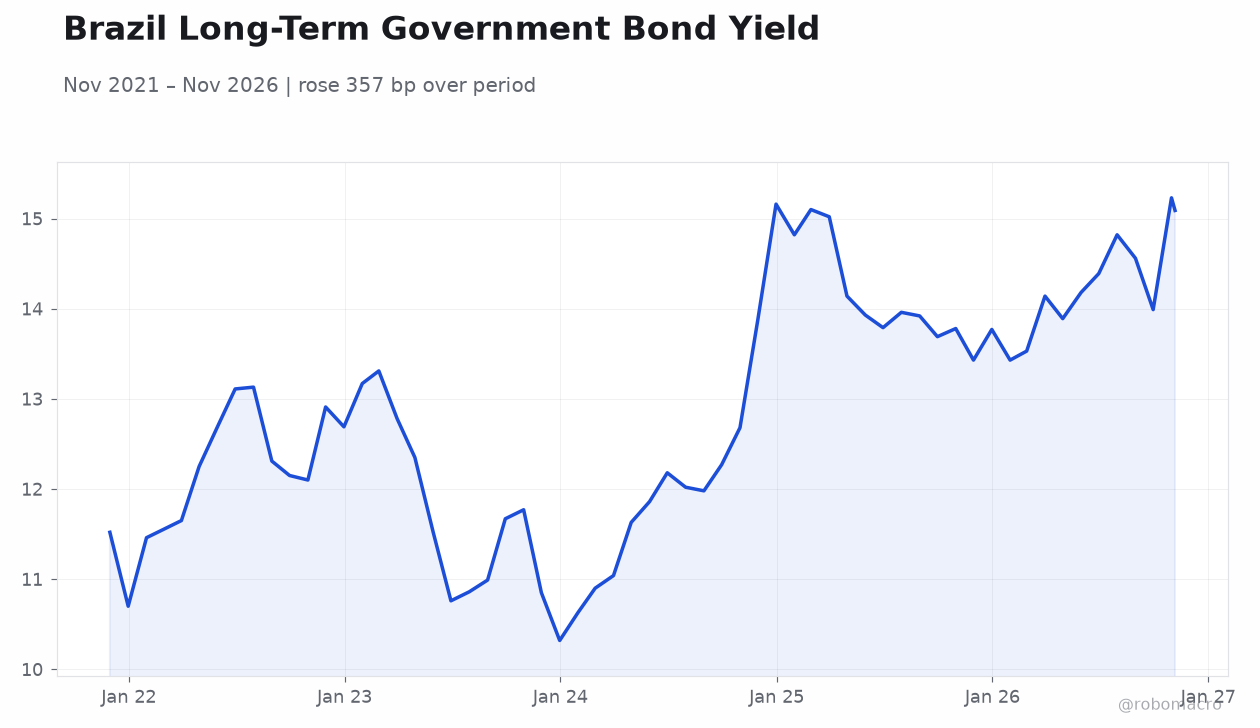
| Brazil 5Y Govt Yield | 15.08% | -18 bp |
| Brazil 10Y Govt Yield | 15.09% | -12 bp |
Prior Economic Events
| Data | Prior | Cons | Actual |
|---|---|---|---|
| BCB Focus Market Readout | - | - | - |
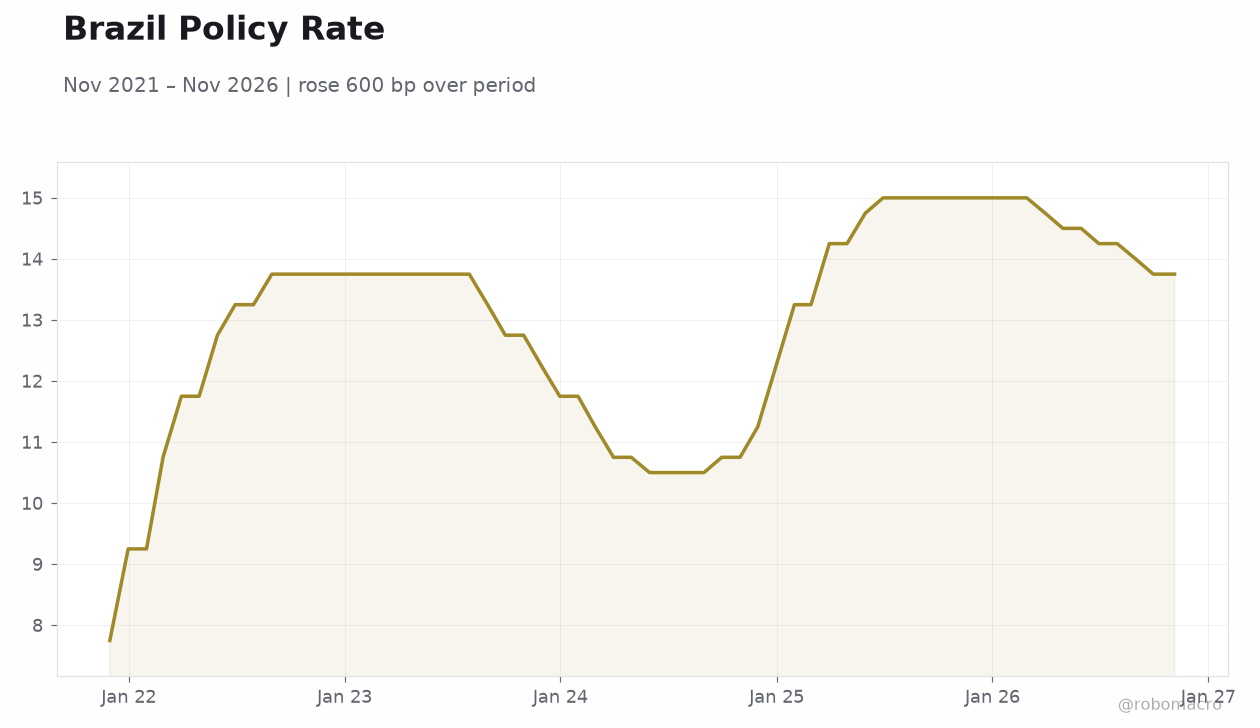 Brazil Policy Rate | Type: macro_line | Selic Policy Rate (%): 13.75 (2026-11-05) | Range: 7.75–15 | Trend(5pt): 7.75,13.75,10.5,15,13.75
Today's Economic Events
| Data | Prior | Cons | Time |
|---|---|---|---|
| BCB Copom Meeting Minutes | - | - | 06:00 |
| Thursday (2026-11-12) | |||
| Inflation Rate Month-over-Month | 0.82 | 0.26 | 07:00 |
| Inflation Rate Year-over-Year | 4.58 | 4.74 | 07:00 |
| Friday (2026-11-13) | |||
| Retail Sales Month-over-Month | 0.10 | -0.20 | 07:00 |
| Business Confidence Index | 46.20 | - | 09:00 |
- Ibovespa surged 2.22% to 172,236 despite a 2.82% drop in WTI and renewed fiscal caution, with Vale (+3.28%) leading gains while Petrobras slipped 0.97%.
- The 5Y sovereign yield eased 18 bp to 15.08% and the 10Y eased 12 bp to 15.09%, signaling the market is trimming near-term Selic hike risk ahead of today's Copom minutes.
- USD/BRL edged up 0.14% to 5.51 as Lula's weekend fiscal-responsibility pledge failed to reassure; Thursday's IPCA print (consensus 0.26% m/m, 4.74% y/y) is the week's key data risk.
Yesterday's Recap
Brazilian markets opened the week with a striking divergence: the Ibovespa jumped 2.22% to 172,236 even as commodities sold off sharply, with WTI crude down 2.82% to $84.40 and iron ore sentiment soft. Vale outperformed with a 3.28% gain to $11.97, while Petrobras fell 0.97% to $18.35, reflecting the oil price drag on the state-controlled producer. The real weakened modestly, with USD/BRL up 0.14% to 5.51 and EUR/BRL climbing 0.99% to 6.19, as fiscal caution persisted despite President Lula's Sunday national address reaffirming commitment to fiscal responsibility.
The BCB Focus Market Readout was released yesterday with no surprise headline. The standout move was in rates: the 5Y sovereign yield eased 18 bp to 15.08% and the 10Y eased 12 bp to 15.09%, front-end outperformance that suggests investors are reducing bets on additional Selic tightening ahead of today's Copom minutes. Gold firmed 0.26% to $4,125.40, while Bitcoin slipped 1.27% to $74,265.
The Day Ahead
The dominant event today is the BCB Copom Meeting Minutes at 06:00 ET (high impact), which will be scrutinized for the committee's reasoning behind the November 4 hold and any forward guidance on the Selic path. Markets will parse language on inflation persistence, fiscal risk premia, and the balance of risks for the December 9 meeting. Attention then shifts to Thursday's IPCA release at 07:00 ET, with consensus at 0.26% m/m and 4.74% y/y versus a prior 0.82% m/m and 4.58% y/y — a print near consensus would reinforce the disinflation narrative underpinning the front-end rally.
Friday brings retail sales (consensus -0.2% m/m versus prior 0.1%) and the Business Confidence Index (prior 46.2), both medium impact. No Brazilian releases are scheduled for Wednesday.
Other Economic Notes
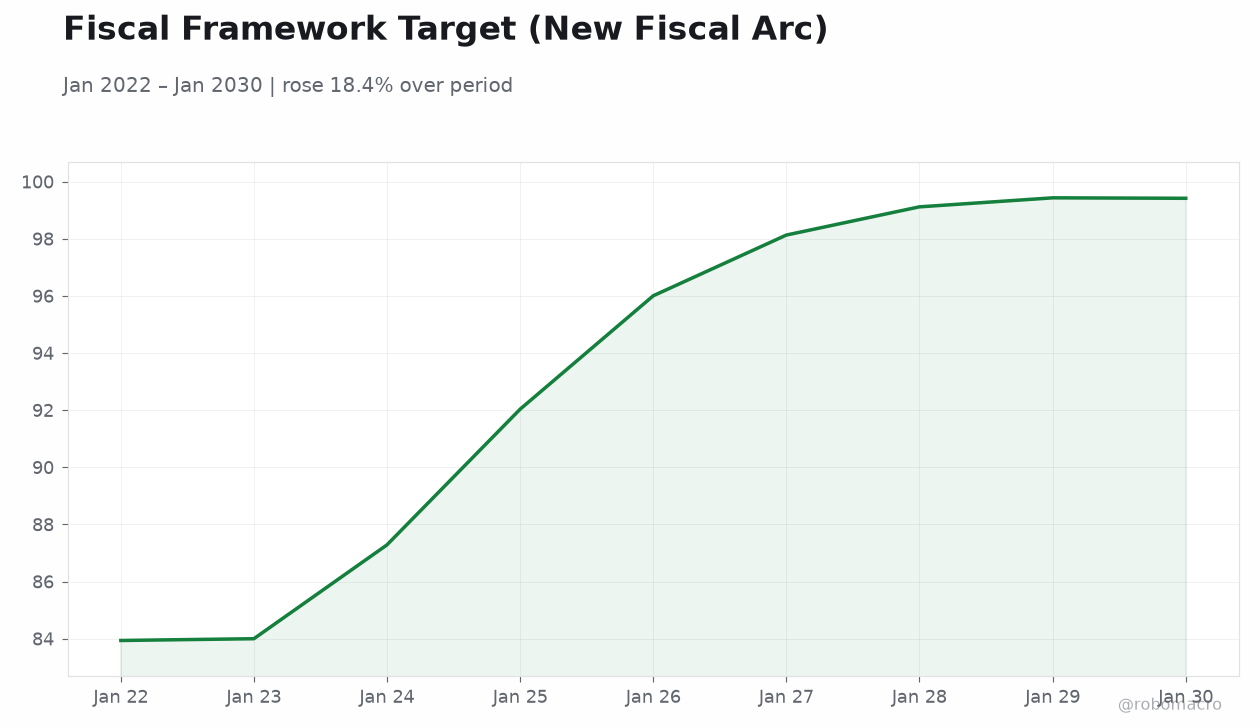
The 2027 outlook has darkened notably, with Valor International flagging mounting economic risk that complicates the fiscal anchor debate and could keep term premia elevated even as the front end rallies. Elevated Selic for longer is raising corporate credit risk, with Sparta noting that debentures are back under scrutiny as investors receive thin compensation for company risk. ↓ p.2