Brazil Macro Daily(Beta Mode)
Real Slides, Bond Premium Builds
Market Snapshot
| Asset | Level | Change |
|---|---|---|
| Bovespa | 166,376.00 | -0.69% |
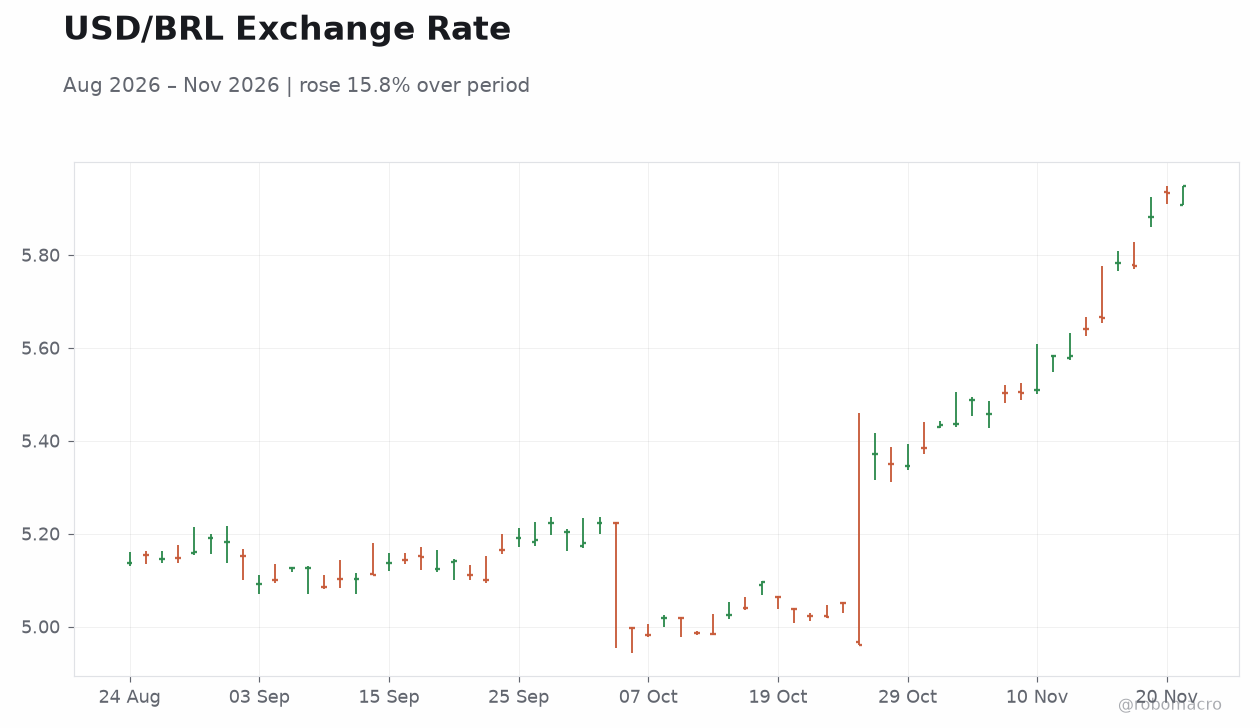
| USD/BRL | 5.95 | +0.26% |
| EUR/BRL | 6.53 | +0.43% |
| Vale | 9.49 | -3.46% |
| Petrobras | 16.01 | -1.72% |
| WTI Crude | 82.71 | -1.51% |
| Gold | 3,611.50 | +2.73% |
| Bitcoin | 61,629.80 | +0.77% |
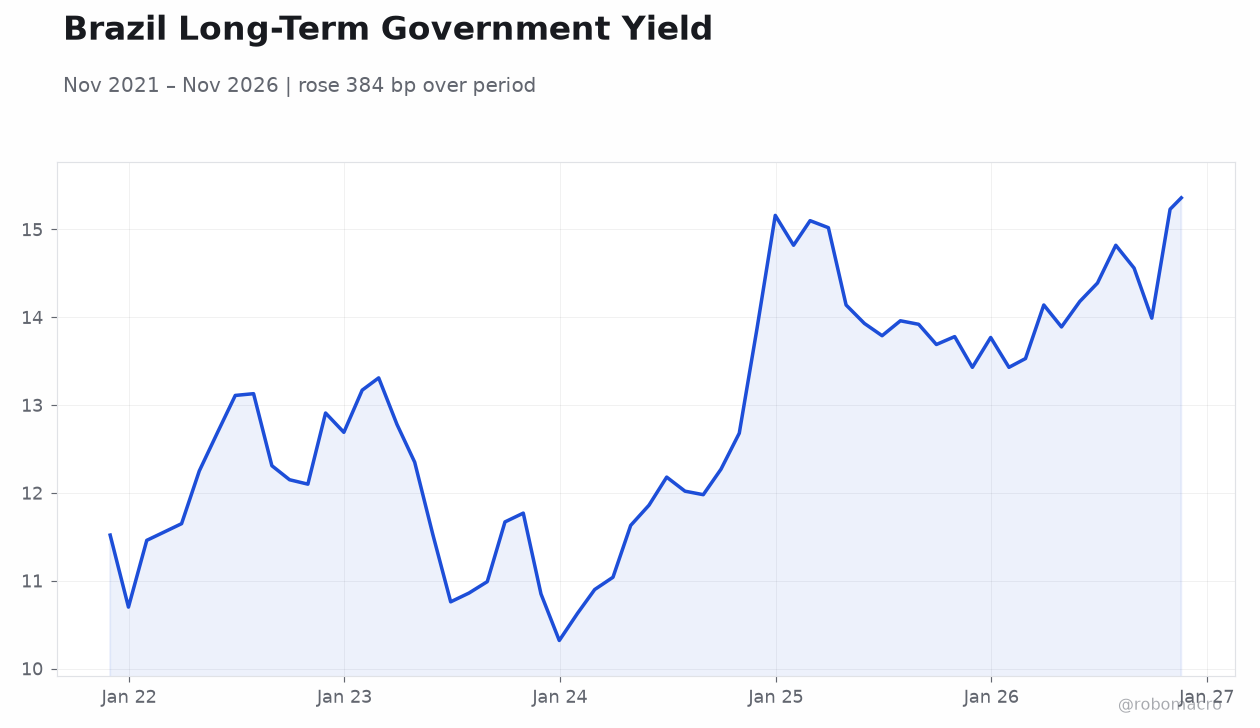
| Brazil 5Y Govt Yield | 15.34% | +15 bp |
| Brazil 10Y Govt Yield | 15.36% | +14 bp |
Prior Economic Events
| Data | Prior | Cons | Actual |
|---|---|---|---|
| No events available | |||
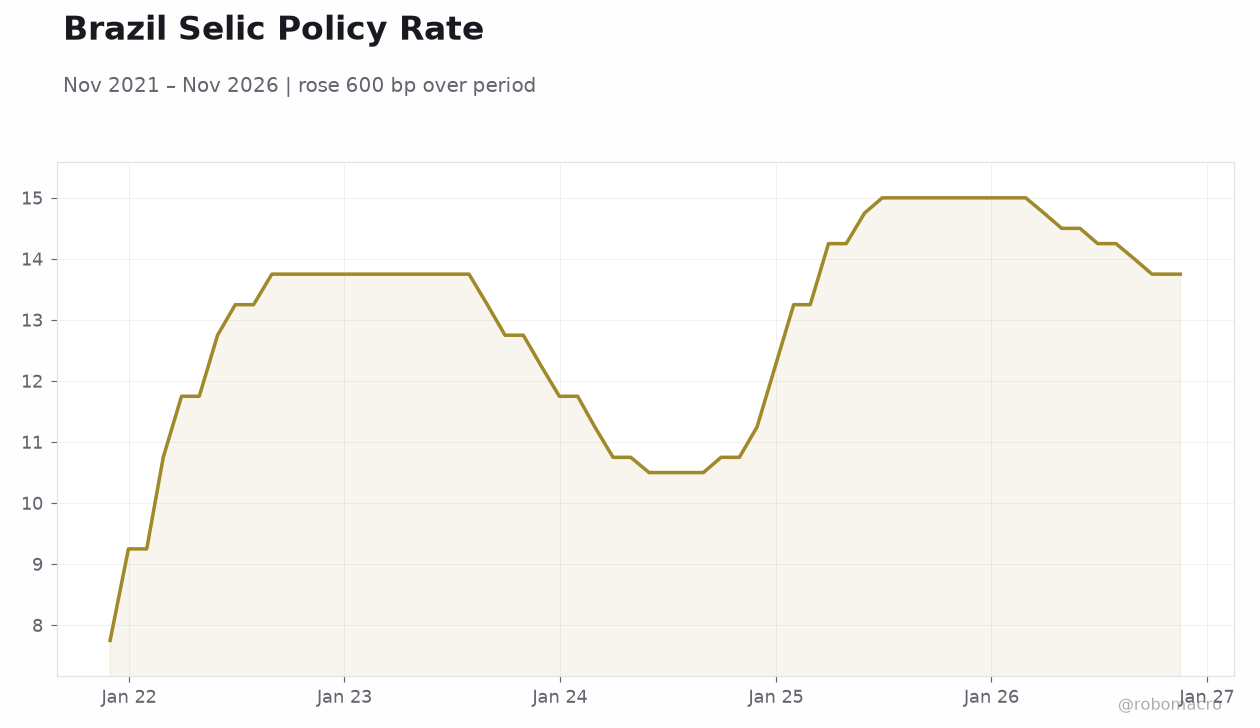 Brazil Selic Policy Rate | Type: macro_line | Selic (%): 13.75 (2026-11-17) | Range: 7.75–15 | Trend(5pt): 7.75,13.75,10.5,15,13.75
Today's Economic Events
| Data | Prior | Cons | Time |
|---|---|---|---|
| BCB Focus Market Readout | - | - | 06:30 |
| Friday (2026-11-27) | |||
| Headline Unemployment Rate | 5.20 | - | 07:00 |
- Brazilian assets sold off across the board yesterday, with the Ibovespa down 0.69% to 166,376 and USD/BRL up 0.26% to 5.95 as the real weakened further.
- Local rates bear-steepened, with the 5-year yield up 15 bp to 15.34% and the 10-year up 14 bp to 15.36%, signaling rising fiscal and inflation risk premia.
- Vale fell 3.46% and Petrobras 1.72% as WTI crude dropped 1.51% to $82.71, while gold surged 2.73% to $3,611.50 on safe-haven demand.
Yesterday's Recap
Brazilian assets sold off across the board yesterday, with the Ibovespa falling 0.69% to 166,376 points while the real weakened 0.26% against the dollar to 5.95. Local fixed income bore the brunt of the risk-off tone, with the 5-year government yield rising 15 bp to 15.34% and the 10-year up 14 bp to 15.36%, extending the steepening trend that has defined the curve in recent sessions. Equity losses were concentrated in commodities: Vale dropped 3.46% to 9.49 and Petrobras fell 1.72% to 16.01 as WTI crude slid 1.51% to $82.71, weighing on the export-heavy index.
The euro rose 0.43% against the real to 6.53, reflecting broad dollar strength rather than Brazil-specific flows. Gold's 2.73% jump to $3,611.50 underscored the defensive rotation into hard assets, while Bitcoin edged up 0.77% to 61,629.80. No official Brazilian data releases printed yesterday, leaving price action to reflect external risk appetite and positioning ahead of today's BCB Focus survey.
The Day Ahead
The BCB Focus Market Readout at 06:30 ET is today's key domestic event, with the survey expected to update median inflation and Selic expectations for 2026 and beyond. Given October CPI at 4.63% year-on-year and the Selic at 13.75%, the Focus survey will be scrutinized for whether analysts are revising inflation forecasts higher and pushing expected easing later into 2027. Friday's calendar also carries the Headline Unemployment Rate for November at 07:00 ET, with the prior reading at 5.2%, a level that keeps labor-market tightness in focus for wage-driven inflation.
No releases are scheduled for tomorrow, so today's Focus print and Friday's labor data anchor the week's domestic narrative. With the 10-year at 15.36%, any upward revision to inflation expectations in the Focus survey would likely reinforce the curve's bearish bias.
Other Economic Notes
Brazil's 13th-month salary is set to inject R$399 billion into the economy in 2026, benefiting nearly 100 million Brazilians, according to Dieese estimates, a meaningful consumption impulse that could complicate disinflation efforts. The circular economy is estimated to generate up to USD 15.8 billion in Brazil, highlighting the growing weight of sustainability-linked activity in the industrial base. ↓ p.2