Brazil Macro Daily(Beta Mode)
Brazil Rallies Despite Fresh US Tariff Threat
Market Snapshot
| Asset | Level | Change |
|---|---|---|
| Bovespa | 166,685.00 | +1.58% |
| USD/BRL | 5.83 | -1.33% |
| EUR/BRL | 6.39 | -1.15% |
| Vale | 9.81 | +4.70% |
| Petrobras | 16.05 | +2.43% |
| WTI Crude | 83.85 | +0.20% |
| Gold | 3,601.50 | +1.86% |
| Bitcoin | 60,775.91 | +0.66% |
| Brazil 5Y Govt Yield | 15.34% | +15 bp |
| Brazil 10Y Govt Yield | 15.36% | +14 bp |
Prior Economic Events
| Data | Prior | Cons | Actual |
|---|---|---|---|
| BCB Focus Market Readout | - | - | - |
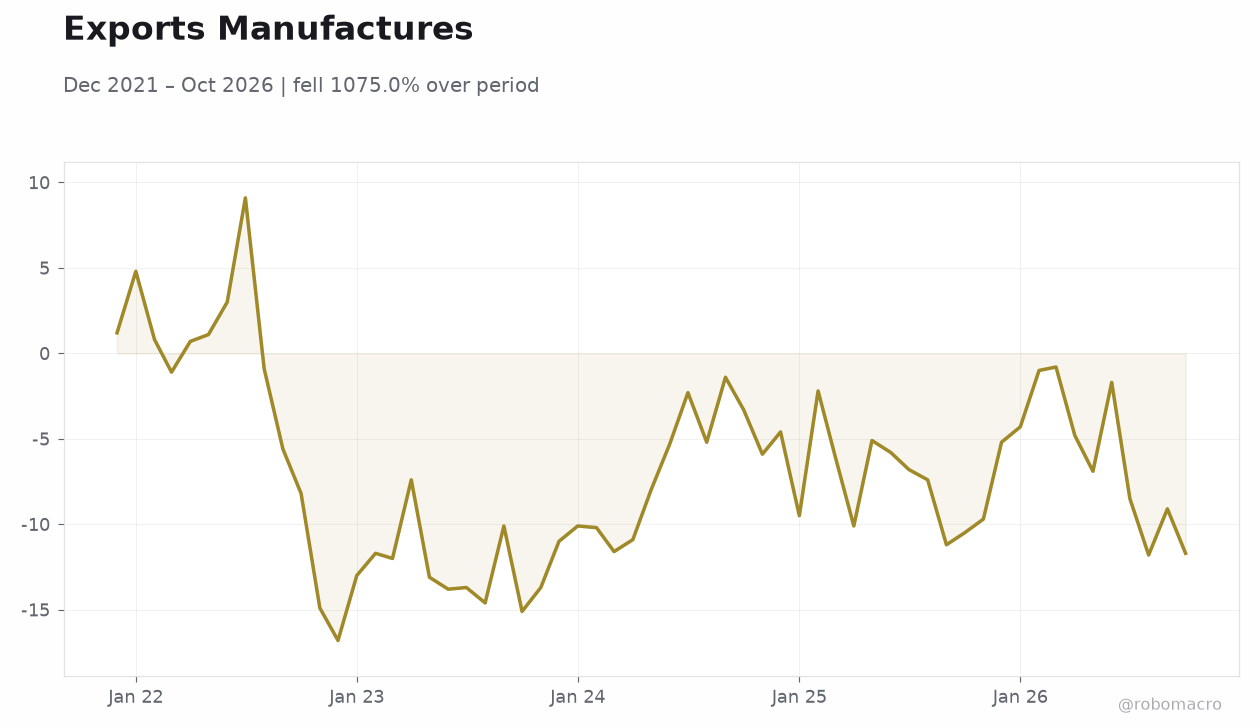 Exports Manufactures | Type: macro_line | Exports Manufactures: -11.7 (2026-10-01) | Range: -16.8–9.1 | Trend(6pt): 1.2,-11.7,-10.9,-5.8,-11.8,-11.7
Today's Economic Events
| Data | Prior | Cons | Time |
|---|---|---|---|
| Friday (2026-11-27) | |||
| Headline Unemployment Rate | 5.20 | 5.10 | 07:00 |
- Brazilian assets rallied sharply on Nov 25, with the Bovespa up 1.58% and the real strengthening 1.33% to 5.83/USD, shrugging off a surprise US proposal for new tariffs on Brazilian goods including a 10% duty on aircraft.
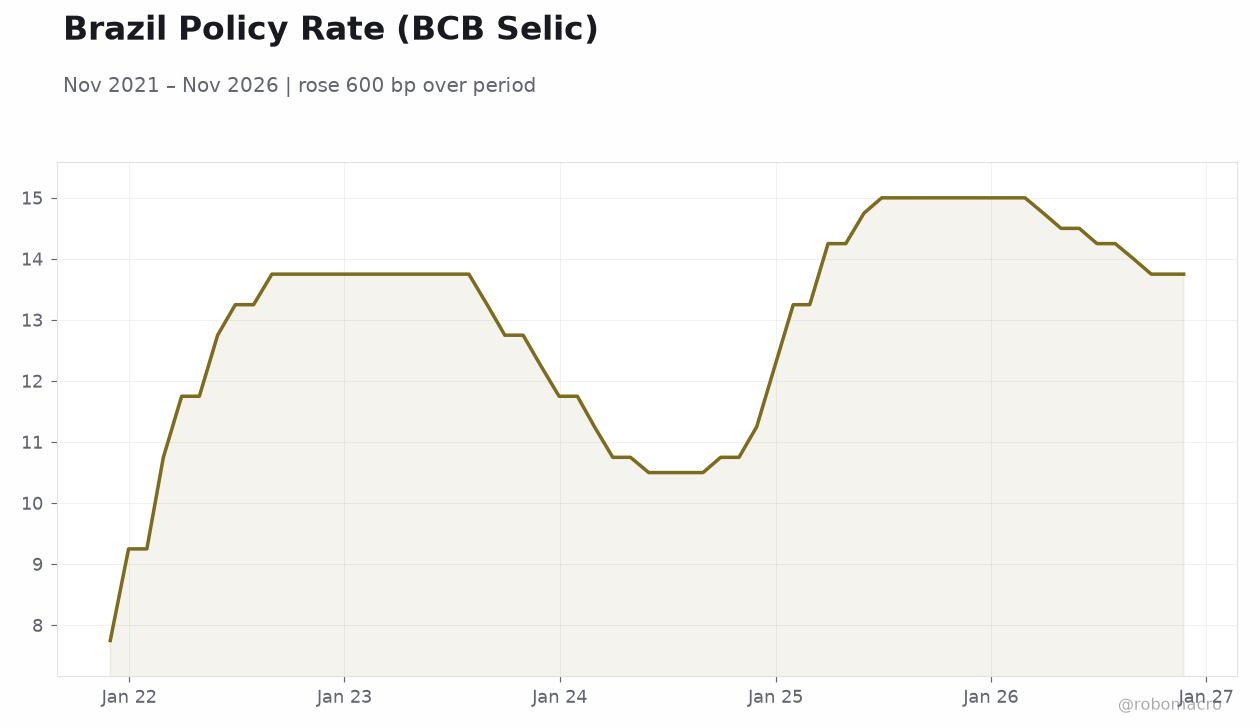
- The BCB Focus Market Readout was released on Nov 23; the committee's most recent decision on Nov 4 was a hold at 13.75%, following a -25bp cut at the Sep 16 decision.
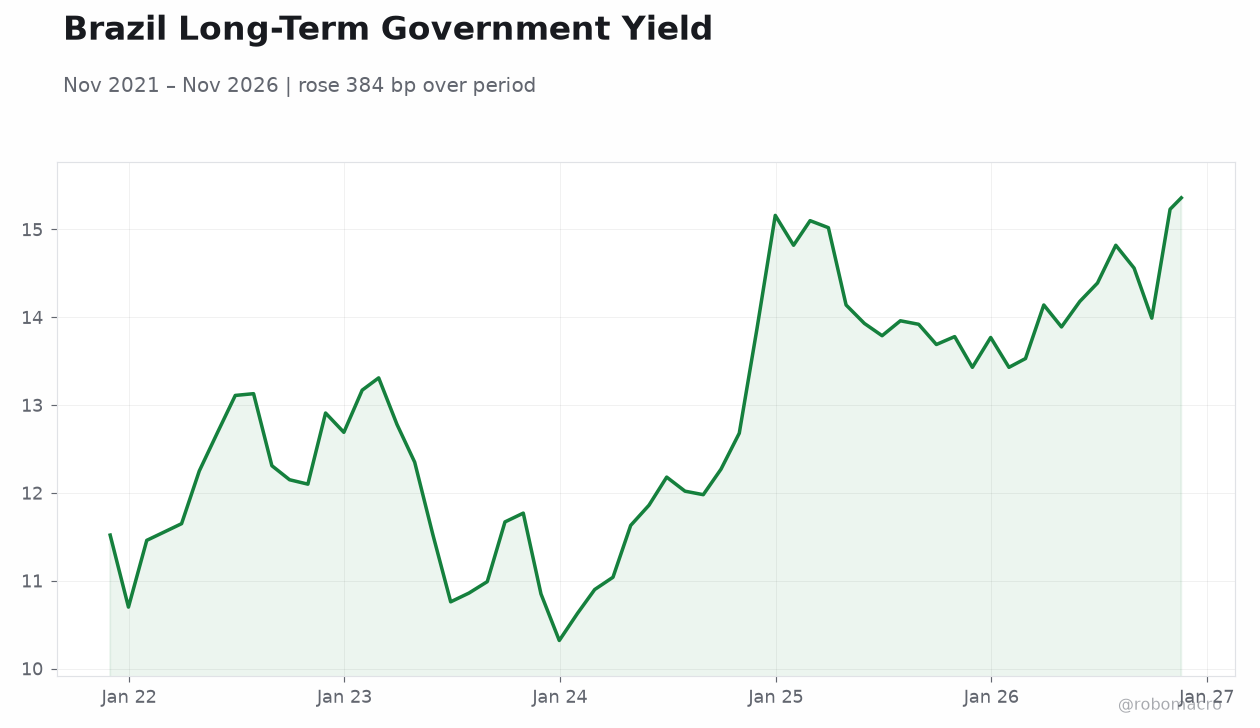
- Friday's headline unemployment rate print (consensus 5.1%, previous 5.2%) is the key domestic data point ahead, while fiscal concerns keep the 10-year yield elevated at 15.36%.
Yesterday's Recap
Brazilian markets staged a broad rally on Nov 25 despite Washington proposing fresh tariffs on Brazilian imports, including a 10% duty on aircraft and levies on sugar. The Bovespa closed up 1.58% at 166,685, led by Vale (+4.70%) and Petrobras (+2.43%), while the real appreciated 1.33% to 5.83/USD and 1.15% against the euro to 6.39. The BCB Focus Market Readout was published on Nov 23 with no surprises.
Despite the equity and FX strength, the local curve bear-steepened, with the 5-year yield rising 15 bp to 15.34% and the 10-year up 14 bp to 15.36%. Gold rose 1.86% to $3,601.50/oz and WTI edged up 0.20% to $83.85, supporting the commodity-linked equity bid. The divergence between a stronger real and higher yields underscores lingering fiscal risk premium even as risk appetite improves.
The Day Ahead
The calendar is light, with Friday's headline unemployment rate (07:00 ET) the sole domestic release; consensus sits at 5.1% versus a previous 5.2%. A print at or below consensus would reinforce the view of a tight labor market and complicate the BCB's easing bias. No other tier-one Brazilian data is scheduled, so markets will likely trade on tariff headlines and fiscal commentary.
Investors will also watch the real's reaction to the tariff proposal, given its outsized 1.33% move yesterday. Positioning into the weekend may favor caution ahead of the Dec 9 COPOM meeting.
Other Economic Notes
Revenue growth is being driven by oil and capital income taxes, per Valor International, suggesting the fiscal picture is supported by commodity-linked and financial-sector levies rather than broad-based activity. The US tariff proposal on sugar and aircraft adds sector-specific risk to agribusiness and Embraer-linked exporters. Coffee prices eased on Vietnamese and Brazilian supply, though an Arabica shortage keeps the market tight.
Datacenter demand for tin is driving an illegal mining rush in the Amazon, highlighting pressures on Brazil's commodity supply chains. These themes matter for the trade balance and the real's medium-term trajectory.