Brazil Macro Daily(Beta Mode)
Lula Taps Banker as Finance Chief; Brazil Assets Rally
Market Snapshot
| Asset | Level | Change |
|---|---|---|
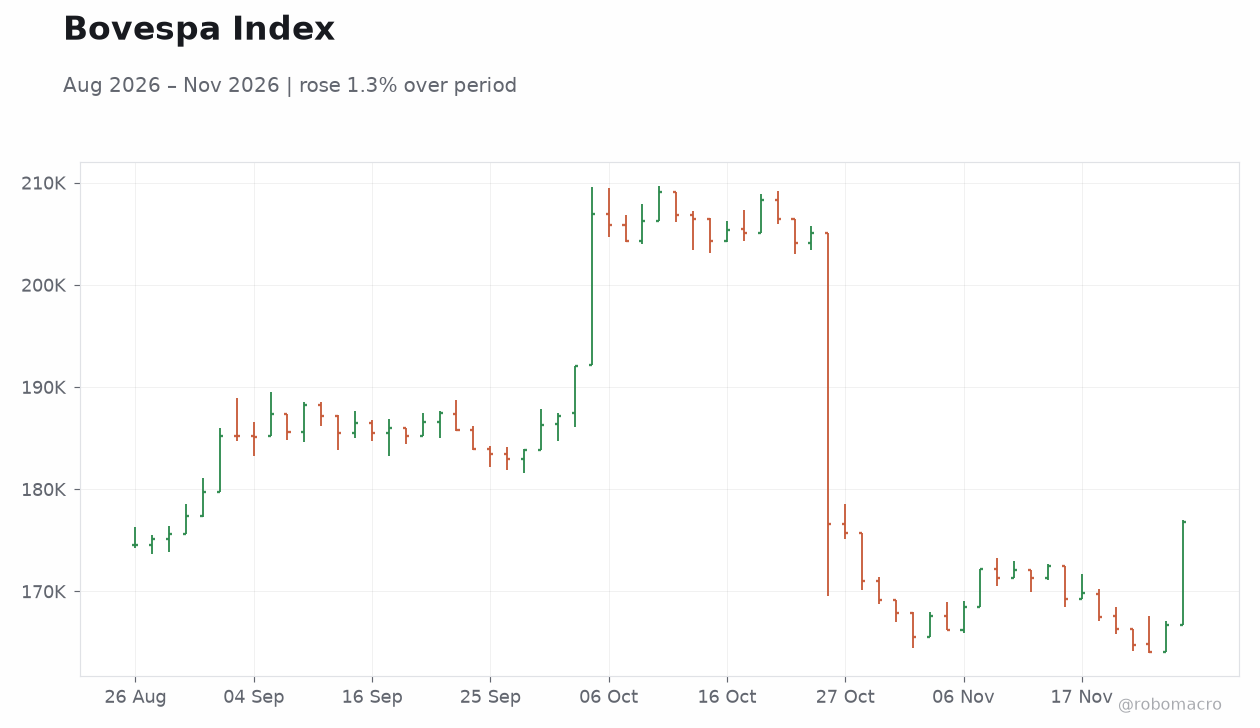
| Bovespa | 176,800.00 | +6.07% |
| USD/BRL | 5.65 | -2.91% |
| EUR/BRL | 6.20 | -2.91% |
| Vale | 9.81 | +4.70% |
| Petrobras | 16.05 | +2.43% |
| WTI Crude | 85.78 | +2.51% |
| Gold | 3,707.50 | +4.86% |
| Bitcoin | 61,662.70 | +1.93% |
| Brazil 5Y Govt Yield | 15.17% | -17 bp |
| Brazil 10Y Govt Yield | 15.36% | +14 bp |
Prior Economic Events
| Data | Prior | Cons | Actual |
|---|---|---|---|
| BCB Focus Market Readout | - | - | - |
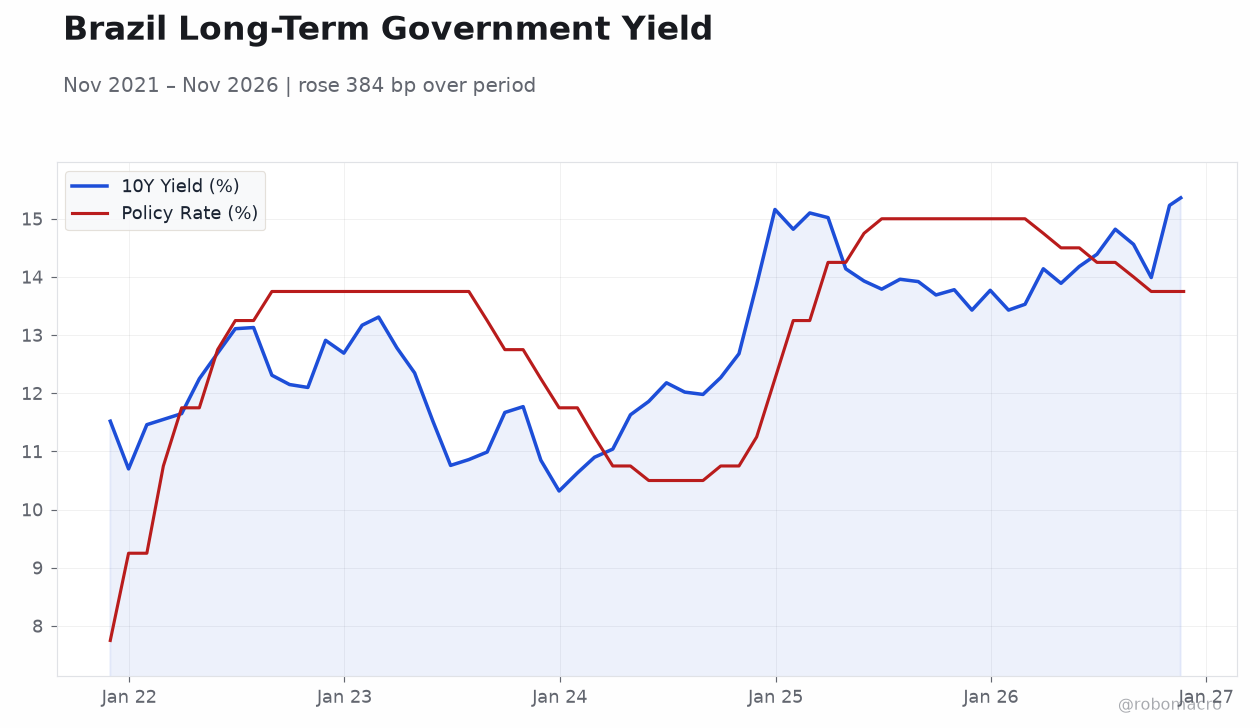
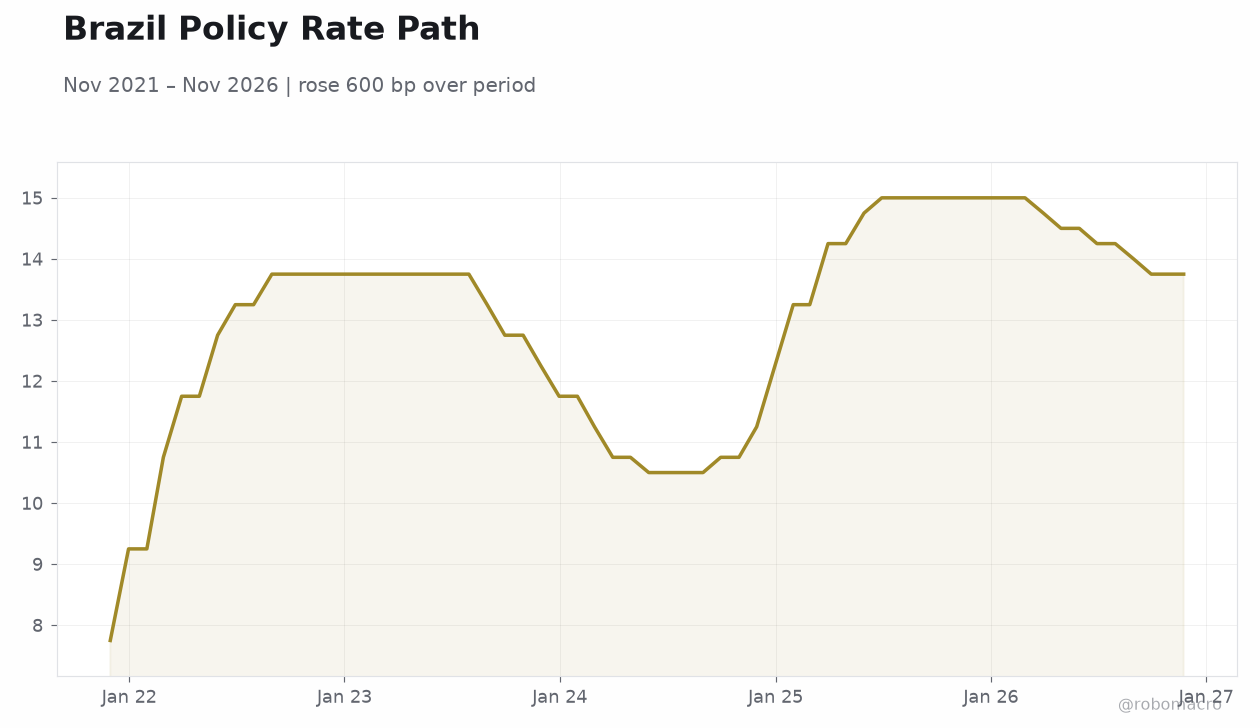 Brazil Policy Rate Path | Type: macro_line | Policy Rate (%): 13.75 (2026-11-24) | Range: 7.75–15 | Trend(5pt): 7.75,13.75,10.5,15,13.75
Today's Economic Events
| Data | Prior | Cons | Time |
|---|---|---|---|
| Headline Unemployment Rate | 5.20 | 5.10 | 07:00 |
- Brazilian assets staged a sharp risk-on rally, with the Bovespa surging 6.07% to 176,800 and the real appreciating 2.91% to 5.65/USD, as President Lula named banker Luiz Carlos Trabuco as finance minister in a bid to calm markets.
- The 5-year local yield fell 17 bp to 15.17%, though the 10-year yield rose 14 bp to 15.36%, steepening the curve as investors weighed fiscal relief against a still-elevated term premium.
- Headline unemployment for November is due today at 07:00 ET, with consensus at 5.1% versus a prior 5.2%, while a fresh US tariff proposal on Brazilian goods, including a 10% duty on aircraft, remains in focus.
Yesterday's Recap
Brazilian markets delivered a broad risk-on session on November 26, with the Bovespa jumping 6.07% to 176,800 and the real strengthening 2.91% to 5.65/USD against the dollar. The rally was catalyzed by President Lula's appointment of banker Luiz Carlos Trabuco as finance minister, a move investors read as a pivot toward fiscal pragmatism after a recent sell-off in Brazilian assets. Petrobras gained 2.43% to 16.05 and Vale rose 4.70% to 9.81, tracking firmer iron ore and a 2.51% gain in WTI crude to 85.78.
The 5-year local yield dropped 17 bp to 15.17%, reflecting improved near-term fiscal sentiment, while the 10-year yield added 14 bp to 15.36%, steepening the curve as longer-dated risk premia stayed elevated. The BCB Focus Market Readout was released on November 23 with no surprise. Gold climbed 4.86% to 3,707.50 and Bitcoin rose 1.93% to 61,662.70, underscoring a broadly constructive global risk backdrop.
The Day Ahead
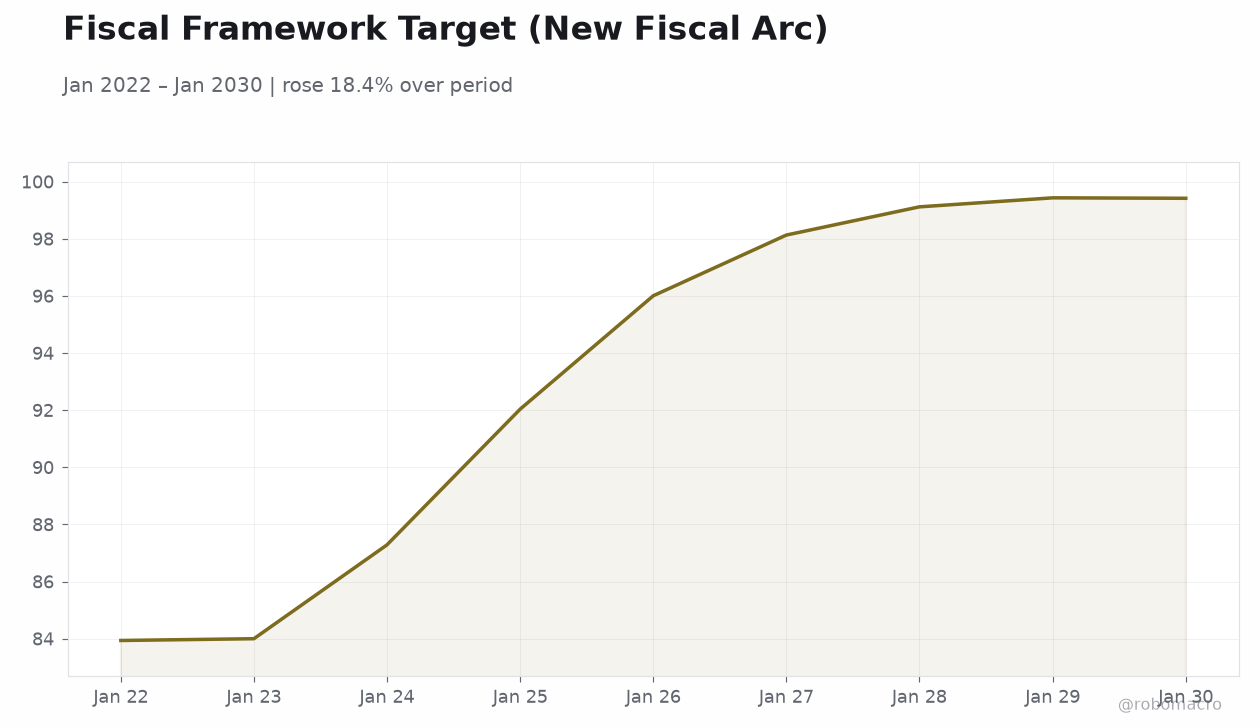
The key domestic release today is the November headline unemployment rate at 07:00 ET, with consensus at 5.1% versus a prior 5.2%, a print that will inform the BCB's read on labor-market tightness and wage-driven inflation. No other Brazilian data is scheduled for today or tomorrow, leaving markets to digest the political transition at the Finance Ministry and its implications for the fiscal framework. Investors will watch for any clarification from Trabuco on fiscal priorities and the 2027 budget trajectory.
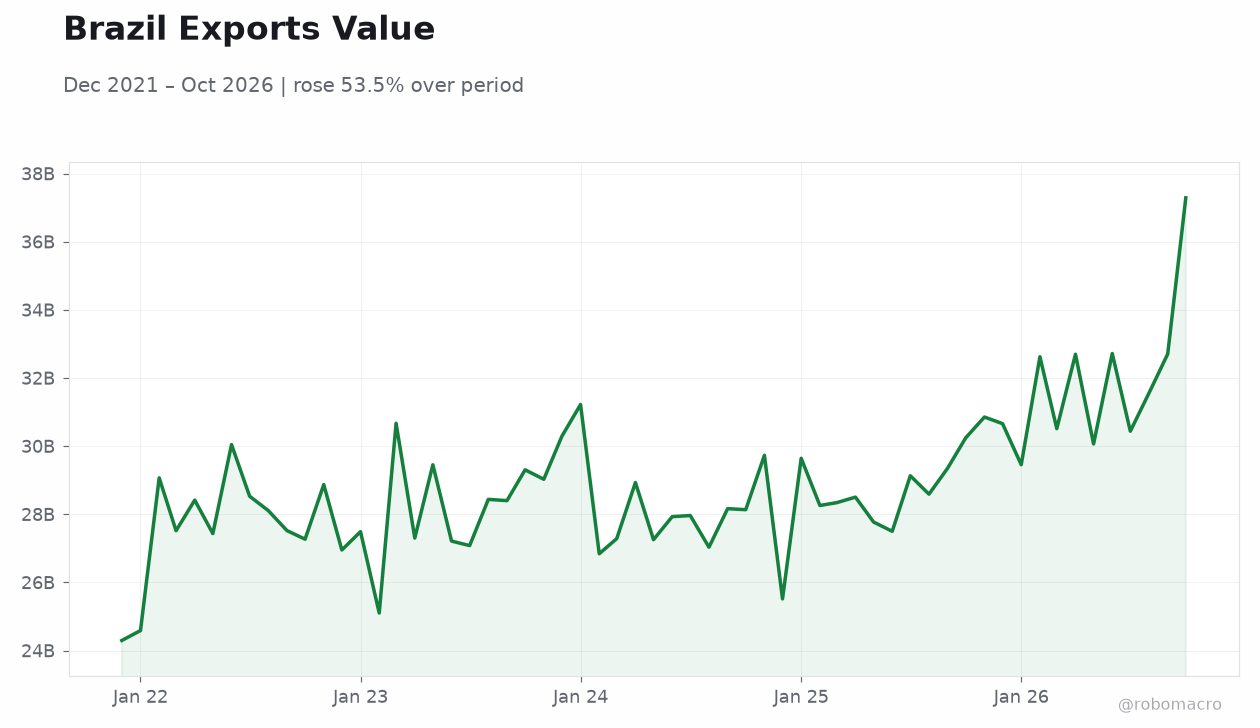
Abroad, the proposed US tariffs on Brazilian imports, including a 10% duty on aircraft, will be monitored for escalation risk given the importance of Embraer and manufactured exports. Liquidity should remain constructive if the unemployment print lands near consensus and the real holds its gains.
Other Economic Notes
Brazil's fiscal picture remains the central macro variable, with the diesel subsidy extension pushing fuel-relief costs to R$75bn and adding to the primary-deficit pressure that has kept long-end yields elevated at 15.36%. ↓ p.2