Canada Macro Daily(Beta Mode)
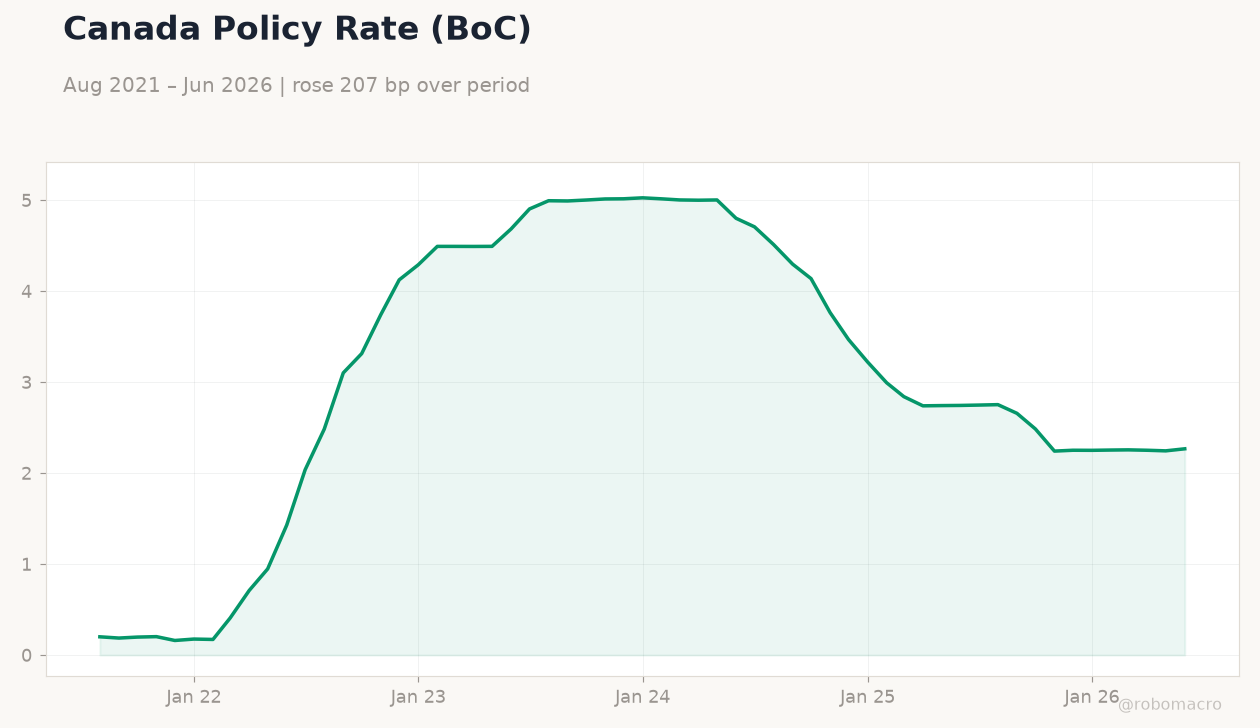
BoC Holds at 2.25% as Housing Starts Miss
Market Snapshot
| Asset | Level | Change |
|---|---|---|
| S&P/TSX | 35,340.20 | -0.21% |
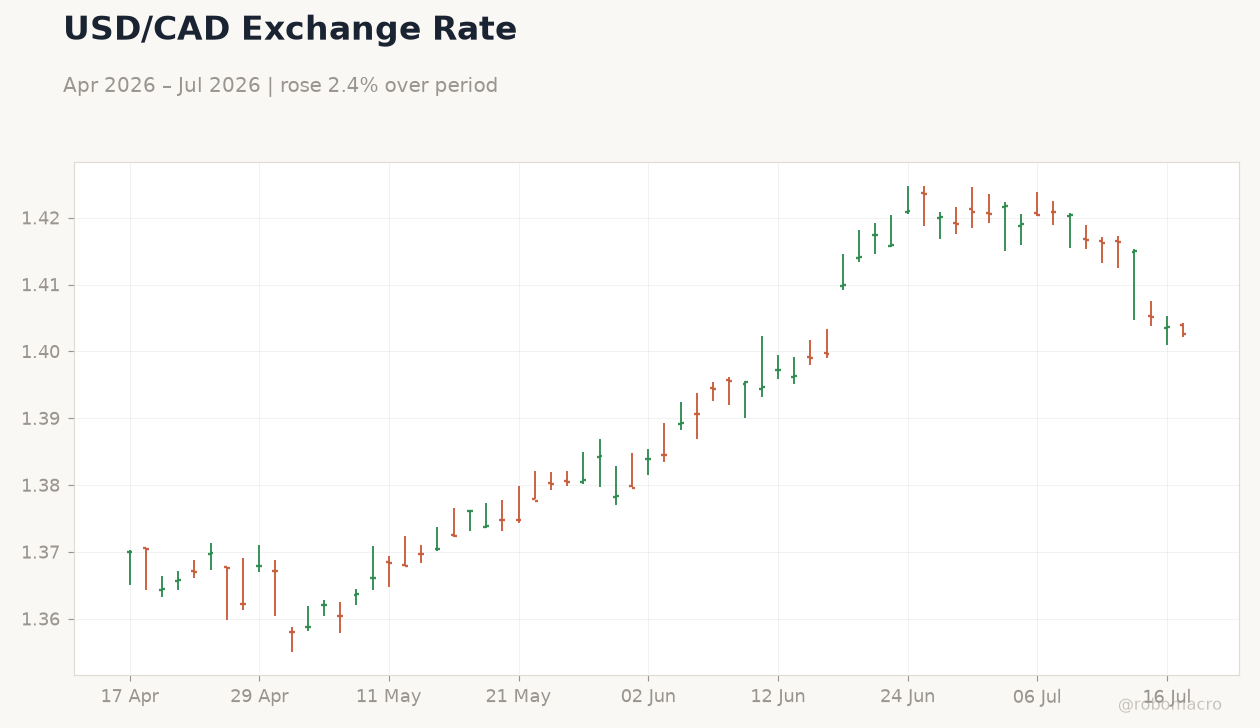
| USD/CAD | 1.40 | -0.08% |
| EUR/CAD | 1.60 | -0.34% |
| WTI Crude | 80.08 | +1.43% |
| Natural Gas | 2.87 | +0.38% |
| Gold | 3,999.00 | +0.34% |
| Brent Crude | 85.86 | +1.94% |
| Bitcoin | 63,226.63 | -0.88% |
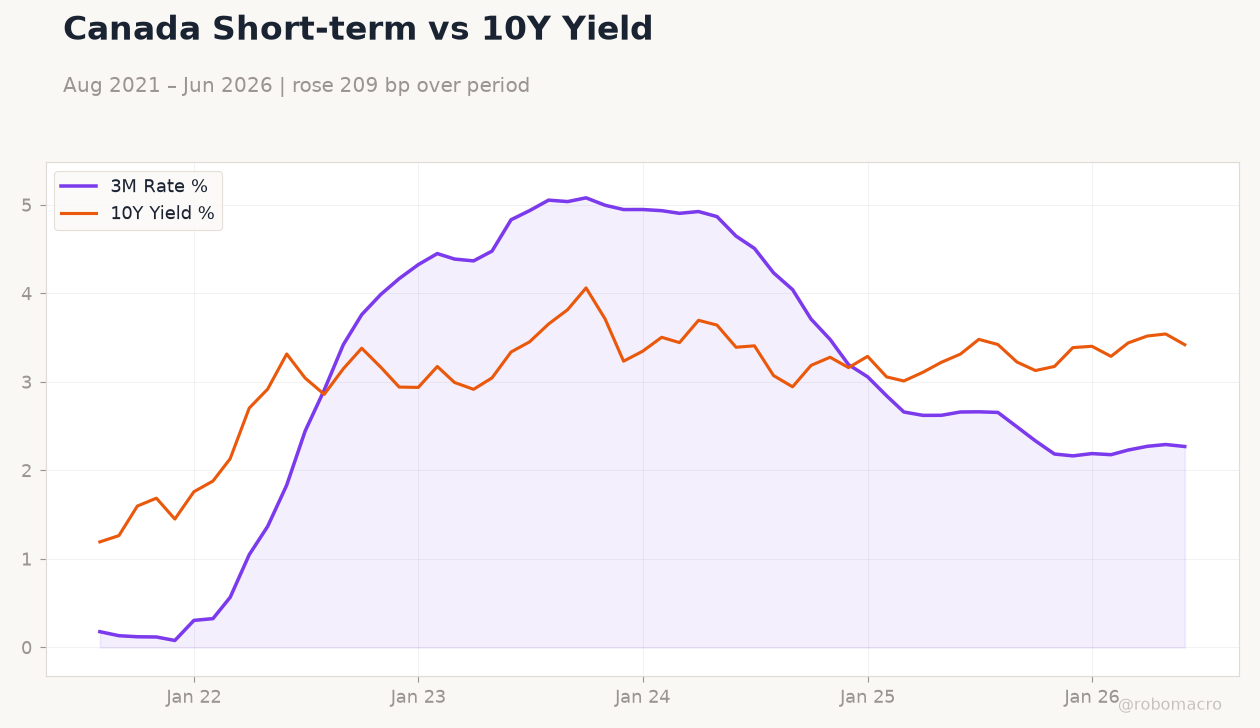
| Canada 2Y Govt Yield | 2.27% | +1.00% |
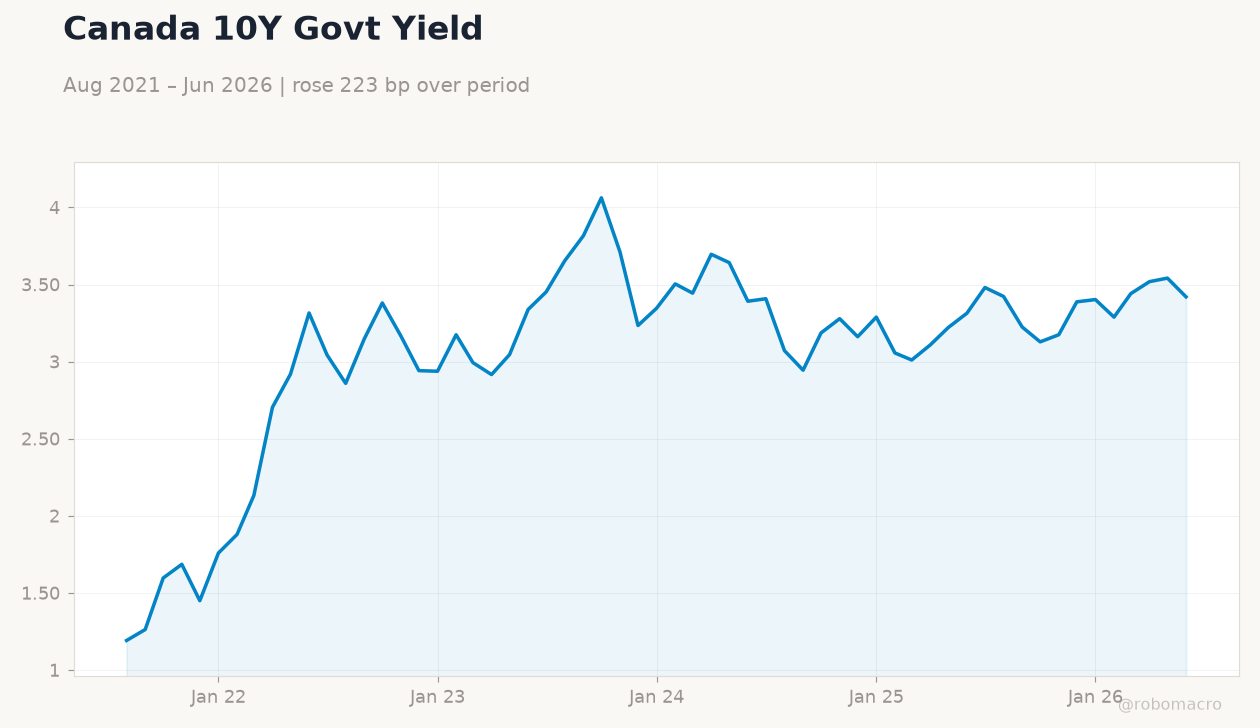
| Canada 10Y Govt Yield | 3.42% | -3.43% |
Prior Economic Events
| Data | Prior | Cons | Actual |
|---|---|---|---|
| BoC Interest Rate Decision | 2.25 | 2.25 | 2.25 |
| BoC Monetary Policy Report | - | - | - |
| BoC Press Conference | - | - | - |
| Housing Starts Level | 253,100 | 258,000 | 239,000 |
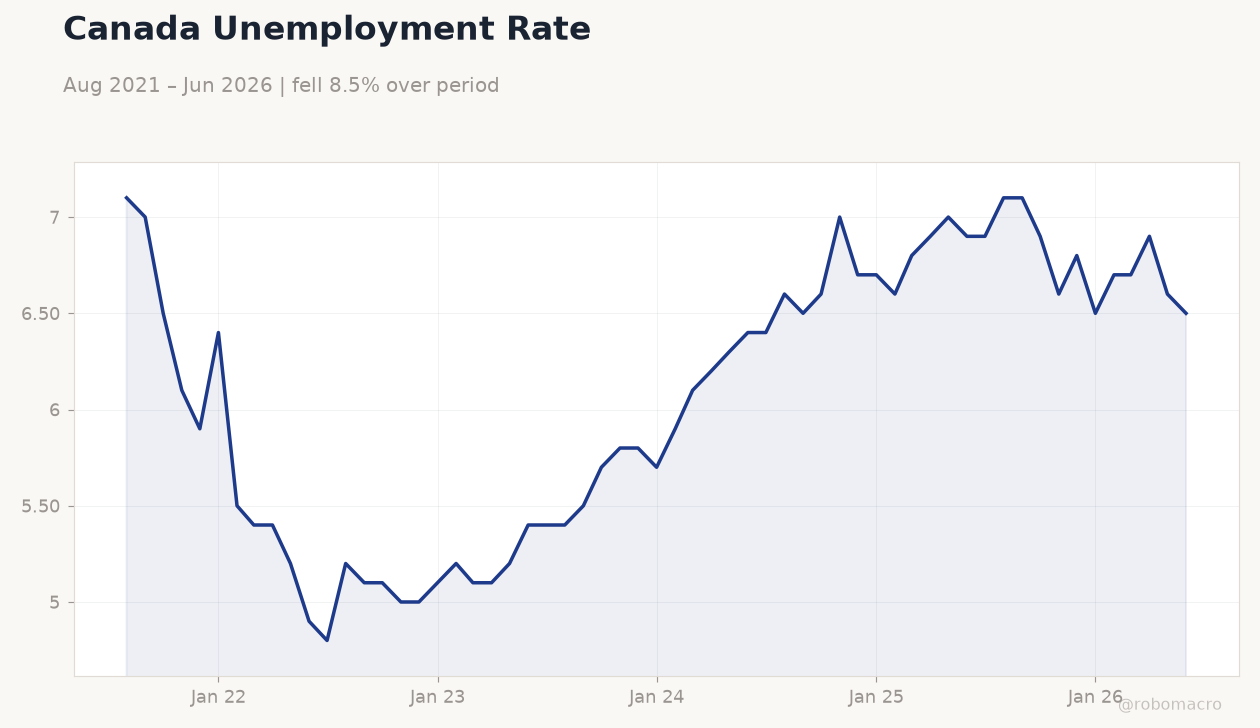 Canada Unemployment Rate | Type: macro_line | Percent: 6.5 (2026-06-01) | Range: 4.8–7.1 | Trend(6pt): 7.1,5.1,5.8,6.6,6.9,6.5
Today's Economic Events
| Data | Prior | Cons | Time |
|---|---|---|---|
| No events available | |||
- Bank of Canada kept the policy rate at 2.25 percent and released its Monetary Policy Report, signaling steady policy amid mixed growth signals.
- Housing starts fell to 239,000 in June, missing consensus forecasts and highlighting softness in residential construction.
- Canadian 10-year yields dropped 3.43 percent to 3.42 percent while the TSX slipped 0.21 percent and USD/CAD eased to 1.40.
Yesterday's Recap
The Bank of Canada held its benchmark rate at 2.25 percent and published the July Monetary Policy Report, noting that inflation pressures remain contained while the economy shows tentative signs of stabilization. Governor Macklem’s press conference emphasized data dependence and avoided fresh forward guidance on cuts. Housing starts printed at 239,000, well below the 258,000 consensus, pointing to continued weakness in residential investment.
The S&P/TSX closed 0.21 percent lower at 35,340.20 as energy gains were offset by broader equity caution. USD/CAD fell 0.08 percent to 1.40, supported by firmer oil prices, while the 2-year yield rose 1.00 percent to 2.27 percent and the 10-year yield declined 3.43 percent to 3.42 percent. WTI crude advanced 1.43 percent to 80.08 dollars per barrel and natural gas edged 0.38 percent higher.
Market participants interpreted the hold and MPR tone as consistent with a prolonged pause rather than imminent easing.
The Day Ahead
No high-impact Canadian data releases are scheduled for today or tomorrow, leaving markets to digest yesterday’s BoC communications. Attention will turn to upcoming retail sales and CPI prints later in the month for fresh inflation signals. Traders will also monitor U.S.
data and Fed speeches for spillover effects on CAD crosses and domestic yields. Energy markets remain sensitive to geopolitical developments in the Middle East that could influence WTI and natural gas prices. The absence of immediate catalysts suggests range-bound trading in USD/CAD near 1.40 until the next Statistics Canada releases.
Other Economic Notes
Canada’s May CPI at 3.23 percent year-over-year continues to anchor expectations that the Bank of Canada will maintain its current 2.25 percent policy rate for an extended period. Persistent food inflation highlighted in recent statements adds to the case for caution despite cooling housing activity. Government of Canada bond curves have flattened modestly, with the 10-year yield now at 3.42 percent, reflecting both domestic growth concerns and global rate differentials.
<i>↓ p.2</i>